
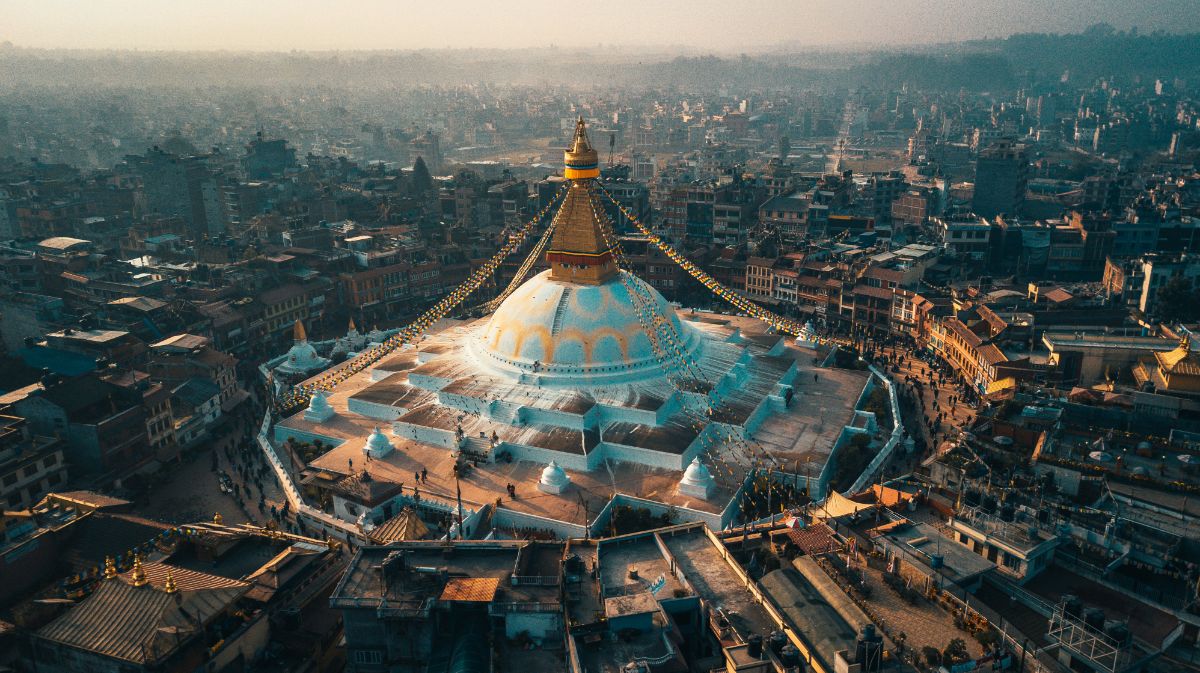
Kathmandu doesn’t overwhelm people because it’s chaotic. It overwhelms them because they enter it too fast. Boudha offers a different way in. Not as an escape from the city, but as a buffer that lets you understand it gradually, on your own terms.
For many travelers, Boudha isn’t just a neighborhood near a stupa. It’s a pacing tool. One that quietly makes Kathmandu make sense.
Why starting in Boudha changes your experience of Kathmandu
Boudha operates at a different speed from central Kathmandu. The streets are wider. The rhythms are steadier. Mornings begin with ritual instead of traffic. Evenings soften instead of intensify.
This doesn’t mean Boudha is quiet or detached. It means the signals are clearer. You hear bells before horns. You see people walking with purpose rather than rushing. You feel the city wake up instead of collide.
Starting here allows your senses to adjust before you encounter the denser parts of Kathmandu.
How to use mornings in Boudha to set your pace
Mornings are when Boudha teaches you how to be in Kathmandu. Locals walk kora around the stupa. Shops open gradually. Cafés fill slowly. Nothing demands your attention aggressively.
Spend your mornings locally. Walk once or twice around the stupa. Sit longer than you think you should. Let your internal pace slow down before you move anywhere else.
When travelers rush out early to “beat traffic,” they miss the grounding effect that makes the rest of the day easier.
When to leave Boudha and when to return
The mistake many travelers make is treating Boudha as a sightseeing stop instead of a base. Boudha works best when you leave it mid-morning and return by late afternoon or evening.
Late morning is the ideal time to head toward places like Patan, central Kathmandu, or old neighborhoods. You arrive after the early rush but before peak congestion.
Returning to Boudha later in the day gives your nervous system a reset. The stupa area absorbs the city’s energy instead of amplifying it. Evenings feel contained rather than chaotic.
Why Boudha makes Kathmandu feel smaller
Kathmandu feels overwhelming when it feels endless. Boudha breaks the city into manageable pieces. You don’t experience everything at once. You experience one neighborhood, then step back.
This back-and-forth movement creates contrast. Busy streets feel temporary. Noise feels contextual. You stop trying to conquer the city and start visiting it in segments.
That shift alone reduces fatigue dramatically.
How to explore Kathmandu without stacking destinations
From Boudha, the best approach is one major outing per day, not three or four. Choose a single area. Walk it slowly. Eat nearby. Sit somewhere unplanned.
Kathmandu rewards lingering, not coverage. Trying to combine Durbar Square, Patan, and another neighborhood in one day almost guarantees exhaustion.
When Boudha is your anchor, there’s no pressure to maximize. You know you’re returning to a calmer base.
Why Boudha helps first-time travelers read the city
Boudha is visually and behaviorally legible. Rituals are visible. Movement is predictable. You can watch before participating.
That observation skill carries into the rest of Kathmandu. You start noticing patterns instead of reacting to stimuli. You understand when streets are busy and why. You recognize when to pause and when to move.
By the time you’re deeper in the city, you’re no longer guessing.
How evenings in Boudha prevent burnout
Evenings are where many travelers break down. Noise accumulates. Energy drops. Decisions feel harder.
Boudha reverses that pattern. As traffic fades, the stupa area becomes more atmospheric. Butter lamps flicker. Conversations soften. Cafés turn inward.
Instead of stimulation stacking, it releases. This allows you to wake up the next day curious rather than tired.
Why Boudha works better than Thamel for orientation
Thamel throws everything at you at once. Shops, music, traffic, sales pitches. For some travelers, that’s exciting. For many, it’s draining.
Boudha offers orientation without performance. You’re not constantly being sold an experience. You’re watching life continue.
This difference matters most in the first few days, when your tolerance for intensity is lowest.
How to move between Boudha and the rest of Kathmandu
Movement from Boudha works best when you’re flexible. Traffic will vary. Routes will adjust. This isn’t a flaw. It’s part of the city’s rhythm.
Avoid planning tight return times. Let evenings be open-ended. Knowing you’re heading back to Boudha removes the stress of delays.
The journey becomes transitional rather than frustrating.
Why long-stay travelers gravitate toward Boudha
Travelers who stay longer in Kathmandu often shift toward Boudha instinctively. Not because it’s quieter in an absolute sense, but because it’s more sustainable.
You can think here. Rest here. Re-enter the city from a position of balance rather than depletion.
That’s the difference between visiting Kathmandu and living inside it, even briefly.
What this approach changes about your trip
Using Boudha as your base reframes Kathmandu from a challenge into a relationship. You stop asking how to handle the city and start noticing how it works.
Overwhelm fades not because the city changes, but because your pace does.
Staying near the stupa makes this rhythm easier to maintain, and places like Boudha Mandala Hotel naturally fit into this slower, more grounded way of experiencing Kathmandu.