Kathmandu comes alive through its gods, chariots, and processions. These events move through the streets the way seasons move through a valley. They show how deeply faith sits in everyday life here. If you’re visiting the city for the first time, watching a procession roll past you can feel both surprising and exciting. You hear drums, see ropes pulling a tall wooden structure, and notice how everyone around you pays attention in a way that feels old and personal. This guide helps you understand what you’re seeing without getting lost in details.
What role do gods play in Kathmandu’s major festivals?
Gods play a central role in Kathmandu’s major festivals because each celebration focuses on bringing a deity into the streets to bless the community.
Instead of staying inside temples, the gods come out so people can see them, offer food, and ask for protection.
How gods appear in festivals
• Placed in chariots
• Carried in palanquins
• Seated inside small shrines
• Dressed with flowers and fresh cloth
• Surrounded by music, drums, and dancers
These moments show the connection between homes, temples, and everyday life.
Why are chariots important in Kathmandu’s celebrations?
Chariots are important in Kathmandu’s celebrations because they carry the gods through neighborhoods and let entire communities join in the festival.
The chariots don’t move smoothly. They sway, roll, pause, and sometimes get stuck on narrow turns. That unpredictable movement is part of the excitement.
What chariots represent
• Movement of the gods
• Protection for the community
• Connection between people and deities
• Shared responsibility to pull together
• A tradition kept alive for centuries
When a chariot turns a corner, the energy shifts in the whole street.
How do processions work during these festivals?
Processions work by guiding the god’s chariot or shrine from one important point to another with drums, horns, and crowds leading the way.
These walks can be long or short. Some take a few hours. Some stretch across many days.
Common elements in processions
• Drummers setting the rhythm
• Elders leading the route
• Families lining the streets
• Children running alongside
• Offerings placed on the path
A procession feels like a moving piece of living history.
Which festivals in Kathmandu include large chariots and gods on the move?
Festivals in Kathmandu that include large chariots and gods on the move include Indra Jatra, Rato Machhindranath Jatra, Seto Machhindranath Jatra, and Bisket Jatra.
These are the events travelers often hear about because the chariots are tall, heavy, and full of meaning.
Major chariot festivals
• Indra Jatra in Kathmandu Durbar Square
• Rato Machhindranath Jatra between Patan and Bungamati
• Seto Machhindranath Jatra in central Kathmandu
• Bisket Jatra in Bhaktapur
Each one has its own personality and rhythm.
What makes Indra Jatra special for travelers?
Indra Jatra feels special for travelers because it mixes dance, chariots, masks, and powerful street energy in the center of Kathmandu.
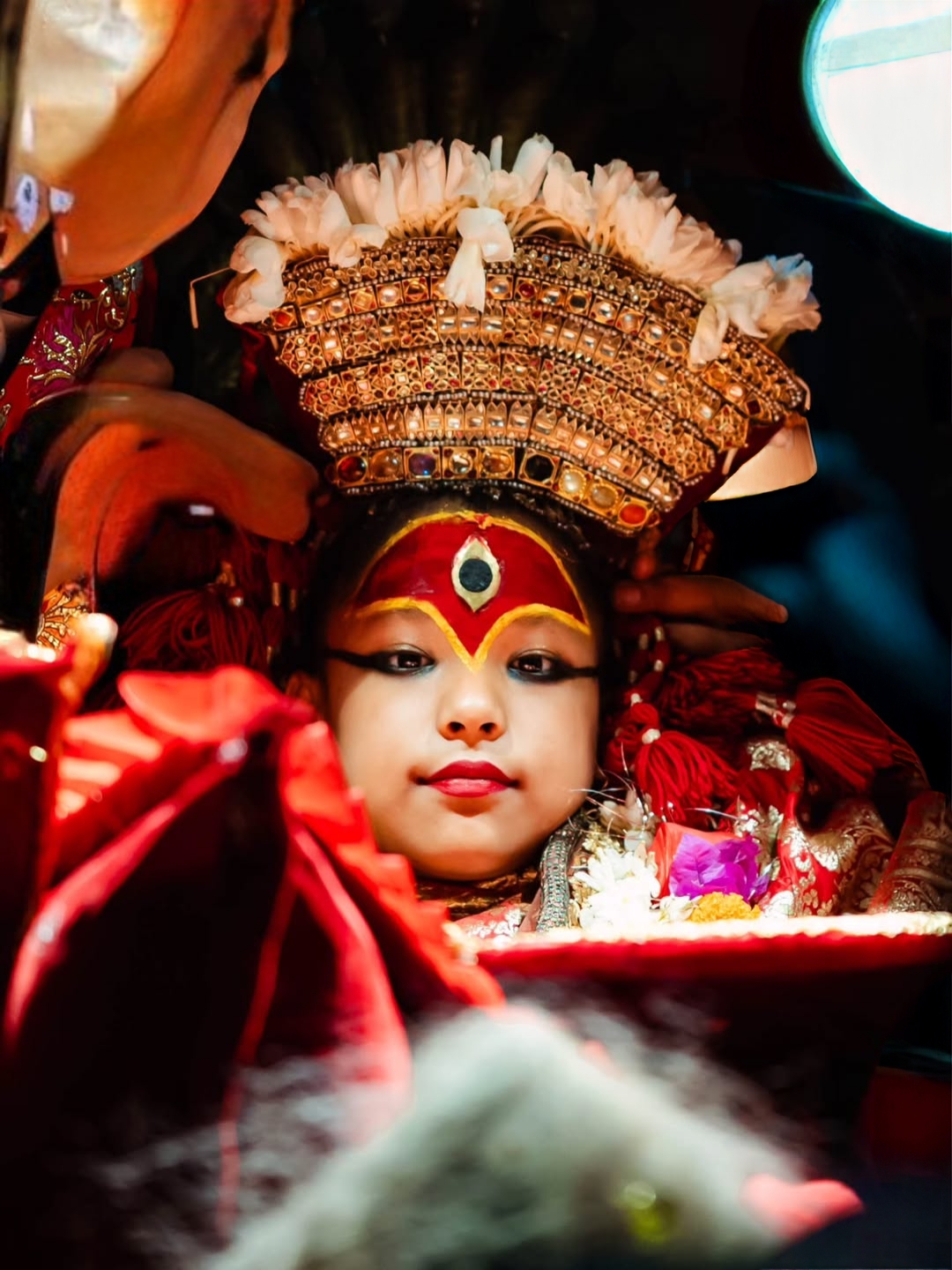
You see the Kumari chariot, the Bhairab mask, and processions that stretch across the square.
What you’ll notice
• The living goddess Kumari in her chariot
• Masked dancers moving through the crowd
• Tall ceremonial poles
• Drums echoing through Durbar Square
• Thousands of people watching together
Indra Jatra is one of the valley’s most exciting moments.
What makes Rato Machhindranath Jatra different from other chariot festivals?
Rato Machhindranath Jatra is different because it has one of the longest and slowest chariot journeys in Nepal.
The chariot moves between Patan and Bungamati over many weeks. The pace is slow, and the movement feels emotional for many locals.
Unique parts of this jatra
• A towering wooden chariot
• A long route that crosses neighborhoods
• People pulling ropes for hours
• Crowds blessing the path
• A deep sense of community
This jatra shows patience, strength, and devotion.
Why do Newar communities lead most of these traditions?
Newar communities lead most of these traditions because they have preserved the valley’s oldest cultural and religious practices.
Their festivals blend Hindu and Buddhist elements, family rituals, and community responsibilities.
How Newar culture shapes these festivals
• Strong ties between families and temples
• Skilled artisans building chariots
• Priests performing ancient rituals
• Drummers trained from childhood
• Communities working together
Without these traditions, the valley would feel very different.
How can travelers watch these festivals respectfully?
Travelers can watch these festivals respectfully by staying to the side, avoiding blocking the chariot path, and observing how locals behave.
You don’t need to push forward to see everything. The best views often come from calm spots slightly away from the crowd.
Simple respectful habits
• Stand back when ropes tighten
• Let elders pass first
• Avoid touching the chariot
• Keep a soft tone
• Follow the flow of the crowd
These festivals carry deep meaning, and small gestures matter.
How do these festivals show Kathmandu’s connection across the valley?
These festivals show Kathmandu’s connection across the valley through routes that link Kathmandu, Patan, and Bhaktapur.
Some celebrations travel through multiple cities. Others stay local but follow traditions shared across Newar communities.
Connections you’ll see
• Shared deities
• Shared music styles
• Shared artisan skills
• Shared rituals
• Shared community responsibilities
These links form the cultural foundation of the valley.
Why do these events feel emotional for locals?
These events feel emotional for locals because the deities represent protection, continuity, and identity.
Seeing a god move through the streets feels like part of life rather than a performance.
What creates the emotion
• Childhood memories
• Family involvement
• Community pride
• Blessings for the year
• The feeling of being together
Travelers can sense this energy even without knowing the full history.
Why is Boudha Mandala Hotel a comfortable base for exploring these festivals?
Boudha Mandala Hotel is a comfortable base for exploring these festivals because it sits in a calm neighborhood with easy access to all three cities.
You can visit Indra Jatra in Kathmandu, head to Patan for Machhindranath, or reach Bhaktapur for Bisket Jatra, then return to a peaceful place afterward.
Why the location works well
Quick taxi access
• Quiet evenings
• Easy morning starts
• Close to calm walking routes
• A relaxing space after busy festival days
The balance between cultural energy and rest makes your festival experience smoother and more enjoyable.