
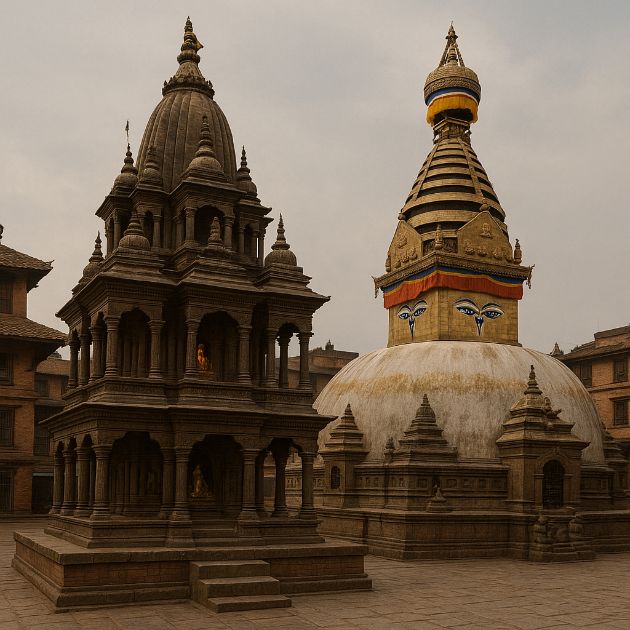
Nepal feels peaceful even when its streets are full because two major traditions share the same space without tension. Hindu and Buddhist influences sit side by side in temples, homes, festivals, and daily routines. Travelers sometimes expect these traditions to be separate, but Nepal blends them in ways that feel natural. This guide helps you understand the mix in a simple, friendly way so you can appreciate what you see on your walks through Kathmandu.
How are Hindu and Buddhist traditions connected in Nepal?
Hindu and Buddhist traditions are connected in Nepal through shared spaces, shared deities, and shared community life.
The blend shows up everywhere, from temples that honor both traditions to families who follow practices from each one.
Where the connection appears
• Shared festivals
• Temples with mixed symbols
• Daily rituals at shrines
• Deities respected in both traditions
• Monasteries and temples sitting close together
You see influence from both sides without clear lines dividing them.
Where can travelers see both traditions in one place?
Travelers can see both traditions in one place at temples, stupas, and shrines across the Kathmandu Valley.
These spots hold layers of history, and both traditions shaped how they look and feel today.
Places with a clear mix
• Swayambhu
• Boudhanath area
• Patan’s courtyards
• Kathmandu Durbar Square
• Small roadside shrines around Asan
Even a short walk shows you how naturally these worlds connect.
How do people in Nepal practice both traditions in daily life?
People in Nepal practice both traditions in daily life by following rituals that feel familiar across communities.
This blending doesn’t feel forced. It feels like part of daily rhythm.
Daily habits you’ll notice
• Offering flowers at both temples and stupas
• Lighting butter lamps in shared spaces
• Visiting different shrines based on need
• Using similar prayer gestures
• Including rituals in morning routines
The focus stays on meaning, not labels.
Why does Nepal honor deities from both traditions?
Nepal honors deities from both traditions because history and community ties brought these beliefs together over centuries.
Many gods and symbolic figures appear across both spiritual paths.
Shared or overlapping figures
• Avalokiteshvara
• Tara
• Ganesh seen near Buddhist spaces
• Local protective deities
• Guardians at shrines and gateways
These shared figures make the valley feel unified.
How do festivals show the blend between Hindu and Buddhist traditions?
Festivals show the blend between Hindu and Buddhist traditions through shared rituals, shared routes, and shared excitement across communities.
You can see both traditions in movement during major celebrations.
Festivals that blend cultures
• Indra Jatra
• Machhindranath Jatra
• Buddha Jayanti
• Tihar with Buddhist offerings
• Local neighborhood rituals that mix both practices
Festivals look different from block to block, but the spirit stays connected.
How does architecture reveal the blend of traditions?
Architecture reveals the blend of traditions by combining Buddhist shapes and Hindu symbols in the same structures.
One building can hold stories from both sides.
Architectural blends
• Temples shaped like pagodas with Buddhist symbols
• Courtyards with shrines from both traditions
• Carvings that mix deities
• Monasteries near Hindu homes
• Stupas with added local icons
The buildings themselves show you a long history of sharing.
What should travelers know about rituals that appear similar in both traditions?
Travelers should know that rituals appear similar in both traditions because gestures like offering flowers, lighting lamps, and touching shrines carry shared meaning.
You don’t have to know the full history to understand the respect behind them.
Shared ritual elements
• Lamps for light and clarity
• Flowers for respect
• Incense for purity
• Hands pressed together in greeting
• Clockwise movement around sacred spaces
These gestures help you understand Nepal’s rhythm quickly.
How can travelers appreciate the blend without overthinking it?
Travelers can appreciate the blend without overthinking it by watching how people move, how they pray, and how they treat sacred spaces.
Observation teaches more than explanations.
Simple ways to appreciate the blend
• Watch morning rituals quietly
• Notice shared symbols during walks
• Visit both temples and stupas
• Listen to bells and chants from different places
• Follow the flow of local routines
Let the city show you the meaning instead of trying to decode everything.
Why is Boudha one of the best places to understand this cultural mix?
Boudha is one of the best places to understand this cultural mix because Tibetan Buddhist life is strong here, yet Hindu traditions appear naturally in the surrounding neighborhoods.
You see both influences within minutes of each other.
What Boudha offers
• Monasteries
• Hindu shrines tucked into small lanes
• Prayer wheels next to street temples
• Morning kora mixed with daily routines
• Calm energy even on busy days
It’s an easy place to learn through simple observation.
Why is Boudha Mandala Hotel a helpful base for travelers wanting to understand these traditions?
Boudha Mandala Hotel is a helpful base for travelers wanting to understand these traditions because it sits steps from the stupa and close to everyday Hindu rituals in nearby lanes.
Travelers can explore both sides of Nepal’s spiritual world at a natural, comfortable pace.
Why the location works
• Two minute walk to Boudhanath Stupa
• Close to shrines, shops, and tea stalls
• Peaceful mornings for observing rituals
• Easy access to the rest of Kathmandu
• A calm return after cultural exploring
Boudha gives you space to understand Nepal’s traditions without rushing