Lotus in Buddhism: Meaning, Symbolism, and the Flower of Awakening

Key Takeaways

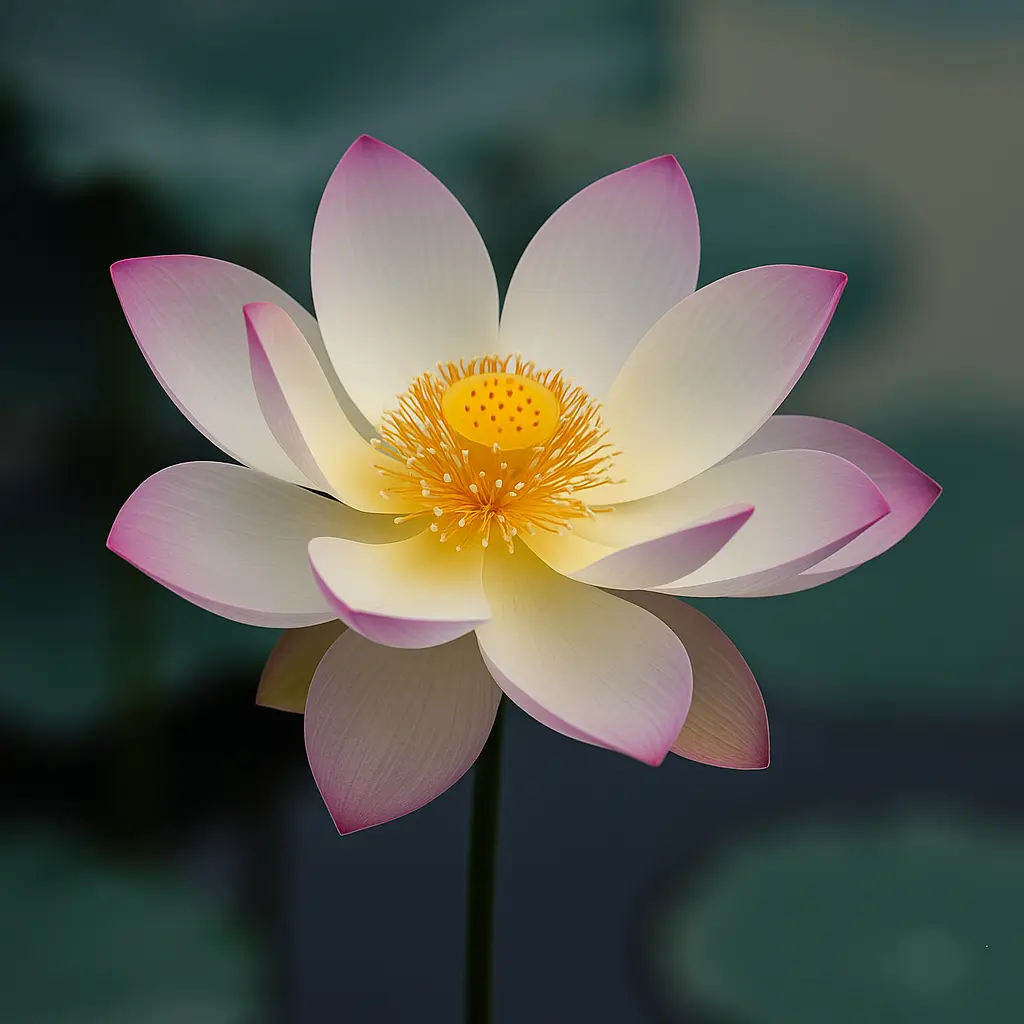
• The lotus flower in Buddhism symbolizes spiritual awakening, purity, and transformation

• It rises unstained from muddy waters, representing the path from ignorance to enlightenment

• Lotus imagery appears in statues, mantras, rituals, and meditation postures across Buddhist traditions

• The mantra Om Mani Padme Hum includes the lotus as a symbol of wisdom and compassion

• Different lotus colors carry different meanings, white for purity, pink for the historical Buddha and blue for wisdom

• Practicing with lotus symbolism can inspire resilience, calm, and presence in everyday life

Why the Lotus Matters in Buddhism

The lotus is more than a flower. It is a teaching, a metaphor, and a quiet revolution against despair. In the natural world, the lotus grows in still, muddy waters. Its roots are buried deep in the murk, yet the blossom rises untouched, blooming in the sunlight.

In Buddhist thought, this image is not a poetic accident. It reflects the very nature of the human path. We all begin in confusion, attachment, and suffering. But through practice, we rise,not by fleeing the mud, but by transforming through it.

That is why, in nearly every Buddhist tradition, the lotus is revered. It is the flower of awakening.

The Lotus as a Symbol of Spiritual Awakening

The Buddha is often shown seated upon a lotus. It is not meant to elevate him from the world, but to show his mastery of it. He did not escape suffering. He understood it deeply, and from that mud, clarity bloomed.

In Vajrayāna Buddhism, the lotus appears everywhere. The great teacher Padmasambhava, credited with bringing Buddhism to Tibet, is literally named “the Lotus-Born”. His life story begins not in a palace, but as a miraculous birth from a lotus on a lake.

When we see the lotus under the Buddha or cradling deities in thangka paintings, it reminds us: this, too, is possible for us. Enlightenment is not for the perfect. It is for the human.

Lotus Imagery in Meditation, Mantras, and Ritual

The lotus position (padmāsana) used in meditation is not just ergonomic. It reflects stability rooted in the earth, with openness at the crown. Like the lotus itself, the posture balances groundedness with spaciousness.

In chanting, the lotus also blooms. The most famous mantra in Tibetan Buddhism, Om Mani Padme Hum, translates loosely to “the jewel in the lotus.” The jewel is compassion, the lotus is wisdom. The phrase itself carries the complete intention of the Mahāyāna path.

As Tricycle explains in their deep dive on Om Mani Padme Hum, each syllable purifies aspects of our mind, helping us to unfold like the flower it praises.

Even lighting incense or placing a single lotus on an altar becomes a gesture of rising from the ordinary toward the sacred.

What the Different Lotus Colors Mean

In Buddhist iconography, color carries energy. The lotus is no exception. Each color reflects a specific quality of mind or spiritual stage.

• White lotus: Symbolizes spiritual purity, emptiness, and the awakened mind

• Pink lotus: Represents the historical Buddha and the supreme state of enlightenment

• Red lotus: Signifies heart-centered qualities like love, compassion, and emotional devotion

• Blue lotus: Associated with wisdom, intelligence, and insight into the true nature of reality

• Purple lotus: Rare and mystical, linked to esoteric teachings and hidden knowledge

These aren’t rigid categories. Sometimes, a flower simply speaks to you, regardless of color. The point is presence, not perfection.

For a trustworthy overview of these meanings, Learn Religions provides a detailed breakdown of lotus symbolism across Buddhist schools.

Lotus in Buddhist Art and Architecture

Walk into any monastery around Boudhanath, and you’ll see the lotus everywhere.

It forms the base of Buddha statues, suggesting that enlightenment rests on resilience. It’s woven into the painted mandalas of shrine rooms, used in offering bowls, carved into thrones, and shaped into butter lamp holders.

In temples across Nepal, India, Bhutan, Thailand, and beyond, the lotus is not a decoration. It is Dharma in visual form. It reminds practitioners that spiritual practice must grow from where we actually are mud, confusion, busy minds and from that, the sacred can rise.

Even the Boudhanath Stupa itself, viewed from above, forms a giant mandala that includes petal-like architecture around the base. The city moves around it, yet it remains still. Like a lotus, it holds space.

How You Can Practice With the Lotus in Daily Life

You don’t need to sit in a monastery to live with lotus energy. You can carry it into your morning routine, your workplace and your silence before sleep.

You might:

• Begin your day with one breath, imagining yourself rising like a lotus from any emotional mud

• Offer a flower or visualization of a lotus on your home altar

• Reflect on the mantra Om Mani Padme Hum, letting it unfold your heart

• Simply pause when life feels thick, and ask, “How would the lotus respond?”

The lotus does not rush. It grows slowly, rooted yet reaching. In a world that demands speed, its wisdom is radical.

Final Thoughts

The lotus is beautiful not in spite of the mud, but because of it. Its story is ours.

In Buddhist hospitality, we often welcome people who arrive not with answers, but with quiet questions. Sometimes they’ve left everything behind, hoping for peace. Sometimes they’re just curious.

And again and again, we return to the lotus. It doesn’t demand that you become pure first. It says, “Begin here. In this mess. This confusion. This longing.”

That is the invitation of Buddhism. That is the teaching of the flower.

Begin Your Journey Where the Lotus Blooms

If you are visiting Kathmandu to explore the spiritual path or simply seeking space to reconnect, staying near the sacred stupas and monasteries can open the way inward.

At Boudha Mandala Hotel, we offer more than rooms. We offer a quiet space to breathe, reflect, and bloom, just seconds from one of the world’s most revered stupas.

If you’re searching for the best hotel in Boudha, we hold a space where the flower of stillness has room to open.

Packing Guide for Your Spiritual Trip to Boudhanath

Key Takeaways

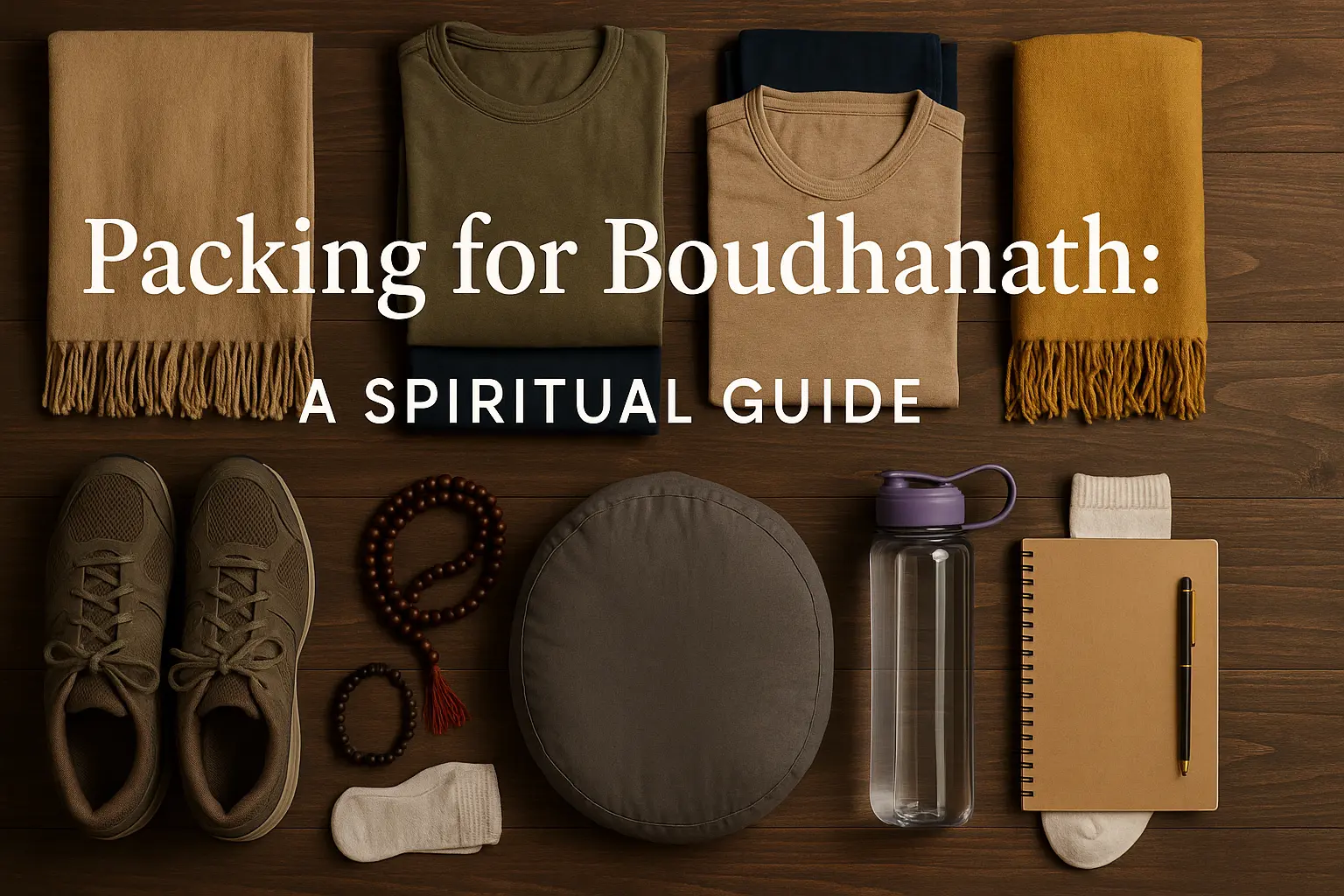
Packing for a spiritual trip to Boudhanath requires thoughtfulness and simplicity. Bring modest clothing that covers shoulders and knees, comfortable walking shoes for circumambulating the stupa, a scarf or shawl for temples, a journal, a meditation cushion (if needed), and weather-appropriate layers. Avoid flashy items, revealing clothes, or disruptive electronics. This guide helps you pack with intention and respect, so your journey begins in alignment with the spirit of Boudha.

Introduction

Packing for Boudhanath isn’t just about fitting things into a suitcase, it’s about preparing your mind and heart. Whether you’re coming for a retreat, a silent meditation, or simply to walk the sacred kora path around the stupa, how you pack will shape the tone of your experience.

Boudha is not just a destination, it’s a spiritual presence. Every scarf, every step, every offering reflects a deeper intention. So let’s begin where every pilgrimage begins, with awareness.

Clothing Essentials
In Boudhanath, the atmosphere is gentle, sacred, and quiet. Your clothing should reflect that.

• Light, breathable long pants or long skirts
• Shirts with sleeves (avoid sleeveless tops)
• Scarf or shawl for temple visits or cool mornings
• Layers for chilly mornings and warm days
• Avoid shorts, tight clothes, and bold graphics

Simple, clean clothing shows respect for the space, and invites calm into your own body.

Footwear for Sacred Ground

You’ll be walking a lot in Boudha, especially along the smooth stone paths of the kora.

• Comfortable walking shoes or sandals
• Easy-to-remove footwear (you’ll be taking them off often)
• Lightweight socks if entering temples barefoot

Heavy boots aren’t needed unless you plan to trek beyond the valley. Simplicity is key.

Meditation and Retreat Items

Many people come to Boudha for inner stillness. If that’s your path, pack with your practice in mind.

• Travel meditation cushion or seat pad
• Shawl or blanket for early morning sessions
• Mala beads (if you use them)
• Journal and pen for reflections
• Eye mask or earplugs if staying near the stupa (early mornings can be lively)

You don’t need much, just the tools that support your stillness.

Health, Safety and Self-Care

Boudha is generally very safe, but having a few basics can make your stay smoother.

• Refillable water bottle
• Natural sunscreen and lip balm
• Basic first aid (plasters, antiseptic, rehydration salts)
• Insect repellent (especially in warmer months)
• Any prescription medications

You’ll find pharmacies and clinics nearby, but it’s wise to bring essentials.

Digital and Practical Gear (Minimal and Mindful)

Your tech should support your peace, not distract from it.

• Unlocked smartphone with Nepali SIM (optional but helpful)
• Portable charger or power bank
• Flashlight or small headlamp (power outages still happen)
• Universal adapter for charging devices

Leave heavy gadgets behind. If possible, even try a digital detox for a day or two.

Items to Avoid

Boudhanath is a sacred space, and many temples are active places of practice.

• Loud tech or Bluetooth speakers
• Flashy jewelry or luxury accessories
• Revealing or tight clothing
• Drones or professional photography gear (unless approved)

When in doubt, ask yourself, “Does this support my spiritual intention?”

Seasonal Considerations

Kathmandu’s weather varies; here’s how to adapt:

Winter (Dec–Feb):
• Thermal base layers
• Wool socks and warm shawl
• Down jacket or puffer

Monsoon (Jun–Aug):
• Rain jacket or poncho
• Waterproof sandals or slip-on shoes
• Travel umbrella

Spring and Fall (Mar–May, Sept–Nov):
• Light sweaters
• Layerable tops
• Cotton pants and scarf

Packing with Purpose: A Spiritual Mindset

Imagine walking the kora at dawn, your backpack light, your steps steady. You’ve brought only what you need, and nothing more. In that quiet simplicity, something shifts.

Packing this way isn’t just practical, it’s spiritual. You make space, inside and out.

Quote:
“Take only what you need. Leave space for the sacred.”

Final Tips

Staying close to the stupa can simplify everything. Boudha Mandala Hotel offers:

• Safe space to store bags or excess luggage
• Peaceful rooms just 10 seconds from the kora path
• Helpful local staff who understand your spiritual needs

Forgot something? You’ll find local shops selling shawls, malas, incense, and travel essentials all around the circle.

When you pack lightly and mindfully, your whole journey feels more sacred.

Best Time to Visit Boudhanath: Festival & Season Guide

If you want to experience the deeper rhythms of life in Kathmandu, visiting Boudhanath during one of its sacred festivals can feel magical. But when exactly should you go?

The answer depends on what kind of experience you’re seeking: quiet reflection, cultural immersion, or high-energy celebration.

This guide is for spiritual travelers, solo seekers, and remote workers who want more than sightseeing. Here’s everything you need to know about the best time to visit Boudhanath for festivals.

Understanding the Spiritual Calendar at Boudhanath

Boudhanath follows both the Tibetan and Nepali lunar calendars, so festival dates shift each year. However, the seasonal rhythm remains predictable. If you time your visit right, you can witness age-old rituals, masked dances, and butter-lamp ceremonies that offer a window into Tibetan Buddhist life.

The most spiritually significant festivals include:

– Losar (Tibetan New Year) – Feb or March

– Buddha Jayanti (Vesak) – Full moon in May

– Mohani/Dashain – Late September to mid-October

– Tihar (Festival of Lights) – October to early November

– Monthly Full Moon Days (Purnima) – All year round

Spring (March to May): Clear Skies & Sacred Celebrations

Spring is arguably the best time to visit Boudhanath. The sky is clear and the stupa pulses with life during Losar and Buddha Jayanti. Flowers bloom along the kora path, monks chant in the courtyards, and the whole area feels vibrantly awake. Days are comfortably warm (15–25 °C), perfect for long, peaceful walks or outdoor rituals.
Ideal for: Spiritual immersion, mild weather, high-energy rituals.

Festivals: Losar (Feb–Mar), Buddha Jayanti (May).

Travel tip: Book accommodation early, monks and pilgrims arrive in waves.

Autumn (Mid-September to November)

Autumn is another best time to visit Boudhanath, especially for culture lovers. Mohani (Newar Dashain) and Tihar light up the stupa with sword dances, butter lamps, and ancestral rituals. The skies are crystal clear, and the weather is cool but pleasant (10–22 °C). It’s the perfect time to blend spiritual depth with rich local culture.

– Ideal for: Cultural travelers, photography, festive atmosphere

– Festivals: Mohani (Sept–Oct), Tihar (Oct–Nov)

– Travel tip: Arrive a few days before Tihar to experience the buildup of lights and energy.

Winter (December to February)

Winter at Boudhanath is quiet and soul-stirring. Cold mornings (as low as 5 °C) give way to bright, clear afternoons ideal for reflection and ritual. Losar often falls at the end of February, bringing the Tibetan New Year energy to life. This is a peaceful time for long-stay travelers or anyone seeking retreat-like calm.

– Ideal for: Meditators, long-stay guests, spiritual solitude.

– Festivals: Full Moon Pujas, Losar (late Feb).

– Travel tip: Book a room with a stupa view to watch morning kora from your balcony.

Monthly Full Moon Days

Every full moon, Boudhanath becomes quietly electric. Devotees circle the stupa at dusk, butter lamps line the base, and the energy shifts. Many locals say this is the most auspicious day to offer prayers.

– Ideal for: Solo travelers, spiritual seekers, retreat guests.
– Vibe: Intimate, candlelit, communal.
– Travel tip: Time your stay to include at least one full moon evening.

Planning Tips for a Festival-Season Visit

– Stay close to the stupa: Being within walking distance makes all the difference. Boudha Mandala Hotel is just 10 seconds from the stupa, offering peaceful rooms and long-stay options.

– Respect the space: Dress modestly, walk clockwise, and avoid photography during ceremonies.

– Book early: Especially in spring and autumn, accommodation near the stupa fills quickly.

– Carry cash: Offerings and local shops around the stupa often prefer it.

The best time to visit Boudhanath depends on the experience you’re seeking. Each season at Boudhanath offers its own rhythm. Whenever you come, come with intention and if you need a peaceful retreat just steps from the stupa, Boudha Mandala Hotel offers long-stay comfort and stupa view rooms with a deeply warm welcome.

Place of Worship of Buddhism: Where Stillness Meets Sacred Space

Key Takeaways

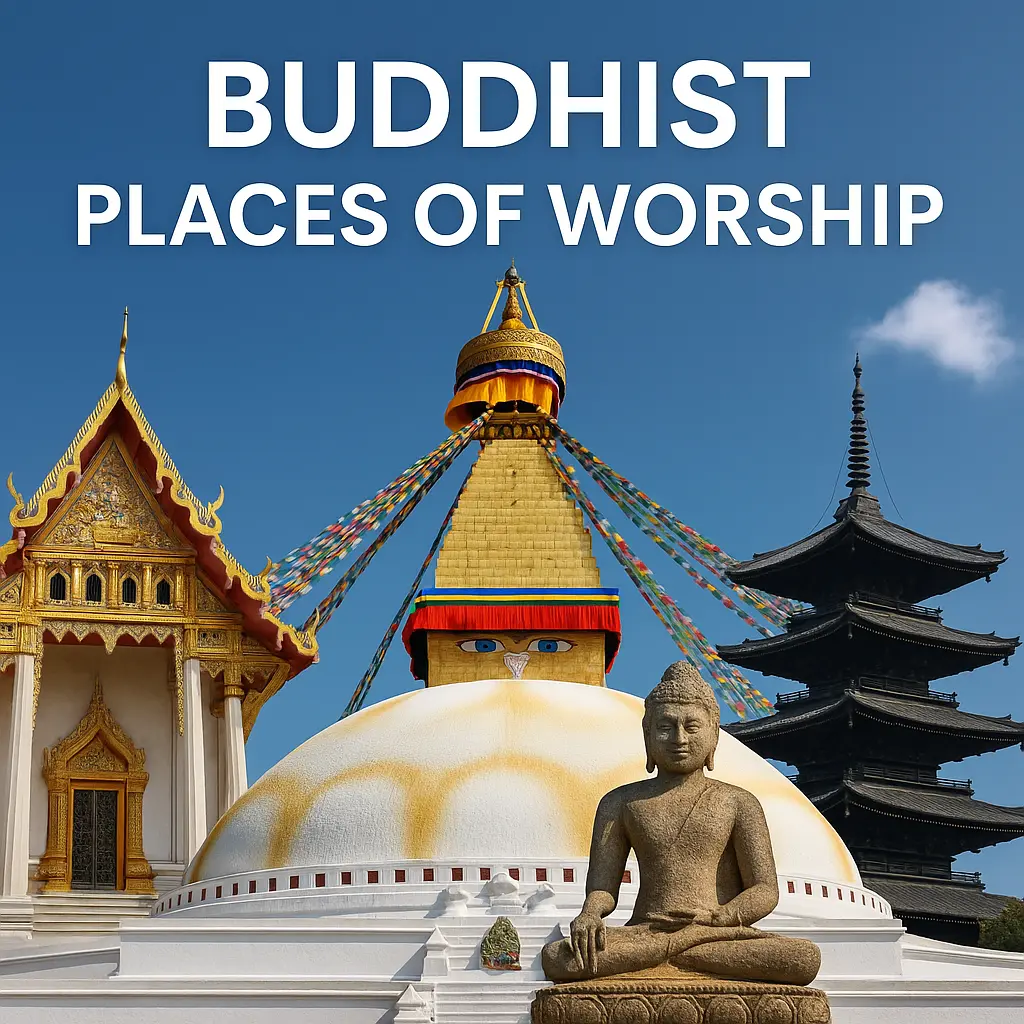
• Buddhist places of worship include monasteries (viharas, gompas), stupas, pagodas, temples (wats), and home altars

• These spaces are less about formal ritual, more about creating environments for meditation, generosity, and ethical living

• Different Buddhist traditions shape their spaces uniquely, but all encourage mindfulness and reflection

• Symbolic architecture, statues, offerings, and silence define these sacred spaces

• Famous worship sites like Boudhanath Stupa, Mahabodhi Temple, and Shwedagon Pagoda continue to serve as spiritual hubs

• Buddhist hospitality welcomes everyone with stillness, presence, and quiet belonging

What Is the Main Place of Worship in Buddhism?

In Buddhism, worship is not confined to a single building or weekly gathering. It is woven into daily life and inner experience. That said, most traditions gather around physical spaces where teachings can be heard, meditation practiced, and offerings made.

The most common public spaces for this are monasteries, often called viharas in Theravāda Buddhism or gompas in Tibetan Vajrayāna tradition. These monasteries typically include a shrine room with Buddha images, accommodation for monastics, and areas for group practice.

Rather than emphasizing worship as a formal act, Buddhism treats these spaces as environments that support the cultivation of the mind and heart. Even in the most ornate temples, the invitation is inward.

Core Types of Buddhist Worship Spaces

Monasteries (Viharas and Gompas)

Monasteries are the spiritual centers of Buddhist communities. They serve as homes for monks and nuns, but also as places for laypeople to study, receive teachings, and engage in devotional practices.

In Kathmandu, especially around Boudha, monasteries like Shechen and Ka-Nying are open to visitors for early morning chants or evening pujas. Inside, you’ll find altars adorned with statues, butter lamps, and ritual implements, yet the most powerful presence is often the silence between the rituals.

Stupas and Pagodas

The stupa is one of the oldest and most iconic forms of Buddhist sacred architecture. Shaped like a dome and often housing relics or scriptures, stupas represent the awakened mind of the Buddha. Devotees walk around them clockwise in meditative reflection, sometimes chanting quietly.

In East Asian countries, the stupa evolved into the pagoda, a vertical, multi-tiered structure that still carries the essence of Buddhist symbolism while adapting to local aesthetics.

Boudhanath Stupa in Nepal, Shwedagon Pagoda in Myanmar, and Sanchi Stupa in India are among the most spiritually vibrant of these forms.

Temples and Wats

In Southeast Asia, Buddhist temples are often part of a wat, which is more than a single building. It’s a complex that may include a teaching hall, meditation spaces, stupas, and monks’ quarters. These temples often feature bright murals, golden statues, and expansive courtyards filled with light and incense.

Temples in Thailand, Laos, and Cambodia reflect a deep blend of cultural artistry and spiritual symbolism, but always center around the teachings of the Buddha and the practice of mindfulness.

Home Altars and Personal Shrines

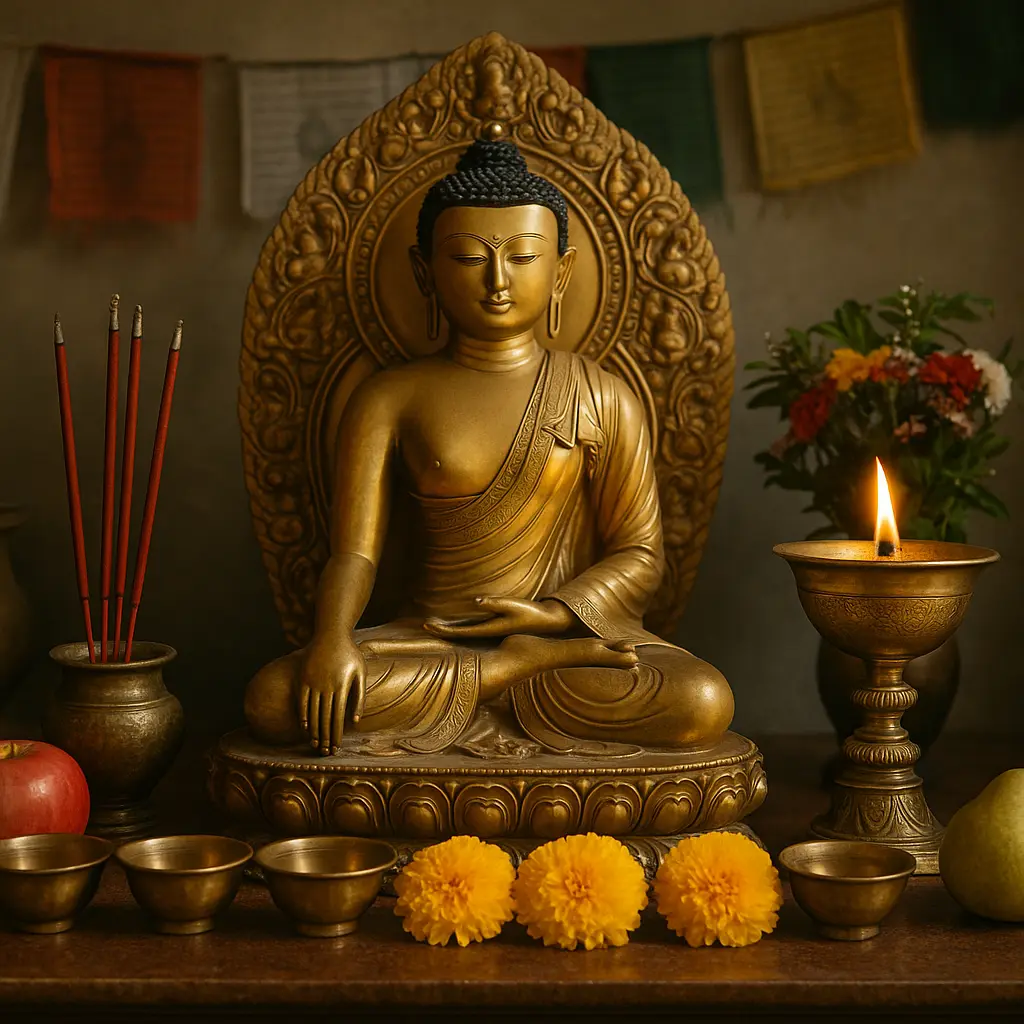
Many lay Buddhists maintain simple altars at home. These spaces are deeply personal, often including a Buddha image, a candle or butter lamp, fresh flowers, and offerings of water or fruit.

The practice of maintaining a home altar reflects the belief that awakening is not confined to a monastery, and that every home can become a sacred space.

What Do All Buddhist Worship Spaces Have in Common?

Despite differences in region and tradition, certain features consistently appear across Buddhist worship spaces.

Most include a central Buddha image, representing not just reverence for a teacher, but a reminder of one’s own capacity for awakening. Offerings like incense, flowers, and lamps are not given to a deity, but to cultivate generosity and reflect impermanence.

Silence is highly respected. Even in bustling temples, the atmosphere often invites stillness. Architecture is built with symmetry and symbolism in mind, guiding the eye and heart inward.

Prayer wheels and flags, especially in Tibetan regions, offer tactile and visual tools for mindfulness, while the act of circumambulating a stupa helps cultivate meditative attention and purification.

Symbolism Behind the Architecture

Buddhist places of worship are filled with symbolism meant to support contemplation. A stupa, for instance, is a visual map of the path to enlightenment. Its base represents morality, the dome symbolizes concentration, and the spire points toward wisdom and final liberation.

The design of monasteries, temples, and altars is not arbitrary. It is meant to embody the Dharma, not as doctrine, but as environment.
Colors, directions, shapes, and images are arranged with intention, inviting the practitioner to absorb not just the aesthetic, but the meaning behind it.

Important Buddhist Worship Sites Around the World

Some places have carried the spirit of Buddhist worship for centuries and remain active pilgrimage sites today.

Mahabodhi Temple in Bodh Gaya, India, is where the Buddha attained enlightenment beneath the Bodhi tree. It remains one of the holiest sites for Buddhists globally.

Boudhanath Stupa, in Kathmandu, is surrounded by monasteries and sacred shops, and acts as a daily gathering place for monks, nuns, and spiritual travelers who circle it at sunrise and sunset.
Other examples include the Shwedagon Pagoda in Yangon, Wat Pho in Bangkok, and the cave temples of Ajanta and Ellora in India. Each of these is not just a destination, but a vessel of accumulated devotion.

What It’s Like to Visit a Buddhist Worship Space

Entering a Buddhist temple, monastery, or stupa for the first time often evokes an unexpected emotional response. It’s not about being impressed, but about being invited to slow down.

Shoes are removed not just as a courtesy, but as a way to leave worldly dust behind. The smell of incense, the flicker of butter lamps, the gentle murmur of chanting, all of it pulls you into a rhythm deeper than thought.

Travelers who stay near sacred spaces like Boudhanath often speak of waking with a sense of peace they hadn’t expected. Many begin offering small gestures, flowers on an altar, a few minutes of meditation each morning, not because they are told to, but because the space itself calls for it.

At Boudha Mandala Hotel, which sits just seconds from the stupa, guests often describe the experience not as staying in a hotel, but as living inside a pilgrimage.

Final Thoughts

The place of worship in Buddhism is not defined by walls or rituals. It is defined by what happens to your heart when you enter.

Whether you’re lighting incense at a village stupa, sitting silently in a Himalayan gompa, or bowing before a modest home altar, you are practicing the Dharma.

And the real sacred space, the Buddha always said, is within.

A Place to Stay, Close to the Sacred

If you’re seeking a space where silence feels alive and devotion is part of the air, Boudha Mandala Hotel offers:

• Rooms with direct views of the Boudhanath Stupa

• Long-stay apartments for retreats or spiritual sabbaticals

• A quiet café with nourishing meals and peaceful corners

• Easy access to monasteries, teachings, and rituals

More than just a place to sleep, it is a space where the sacred becomes part of your everyday rhythm.

What is Boudhanath Stupa? A Sacred Guide to Kathmandu’s Spiritual Heart

Key Takeaway

Boudhanath Stupa is one of the most sacred Buddhist sites in Nepal, located in Kathmandu. This immense white dome, adorned with the all-seeing eyes of the Buddha, is a pilgrimage site, a spiritual hub, and a place of daily prayer for Tibetan Buddhists and Himalayan communities. It’s where ancient traditions meet modern life, creating a peaceful yet powerful atmosphere of devotion, stillness, and cultural richness.

Introduction

When you first step into Boudha, there is a moment,a hush. The sound of traffic softens. The air feels different. Prayer flags flutter like silent whispers across the sky. And at the center of it all stands the immense white dome of Boudhanath Stupa, like the heart of the valley itself.

For many, Boudhanath isn’t just a sacred site. It’s a place to return to. To walk in circles. To light a lamp. To breathe. It’s where monks chant, pilgrims prostrate, and seekers pause between journeys. Whether you come for peace, practice, or photography, Boudha welcomes you with presence.

What Is Boudhanath Stupa?

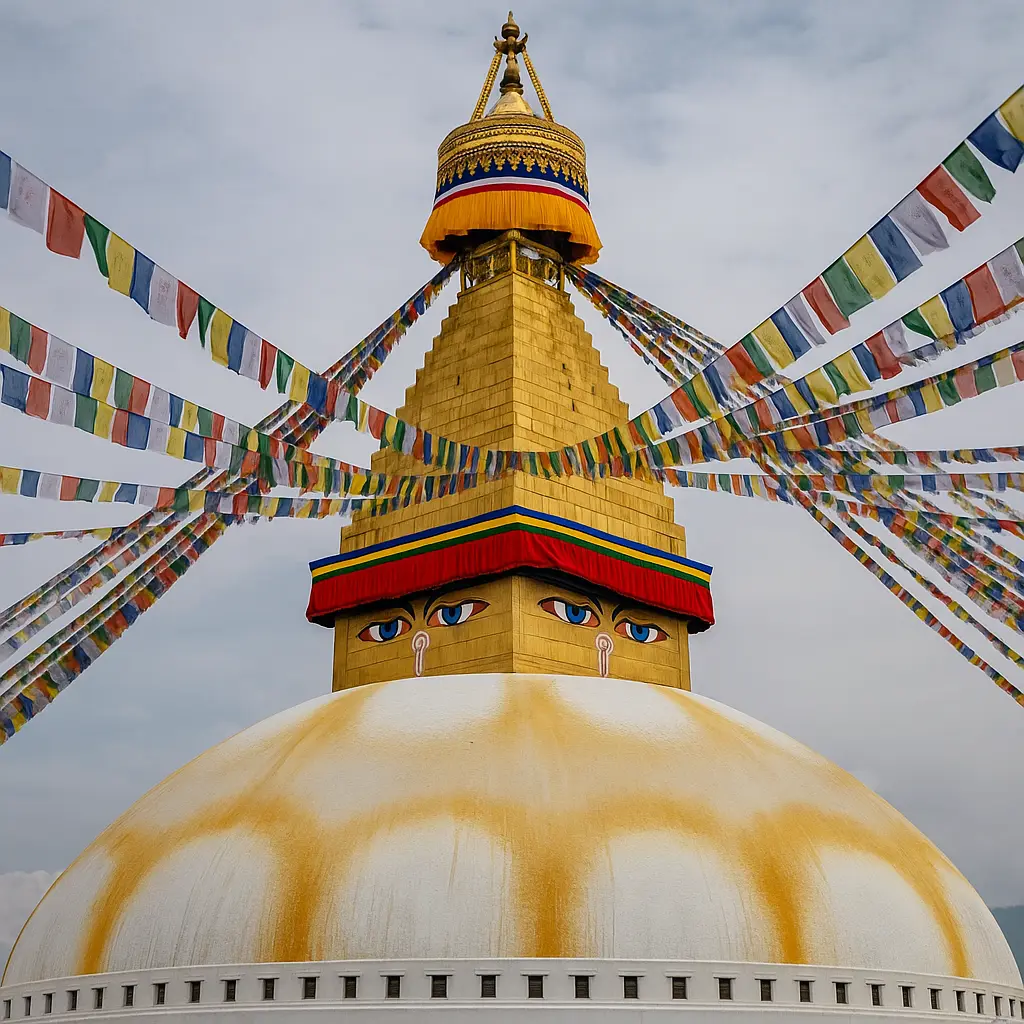
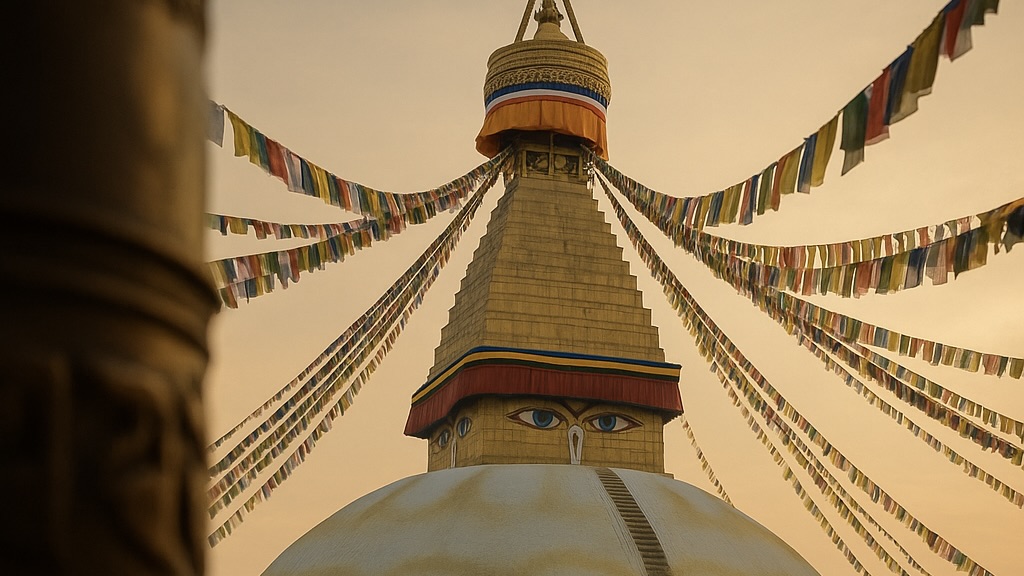
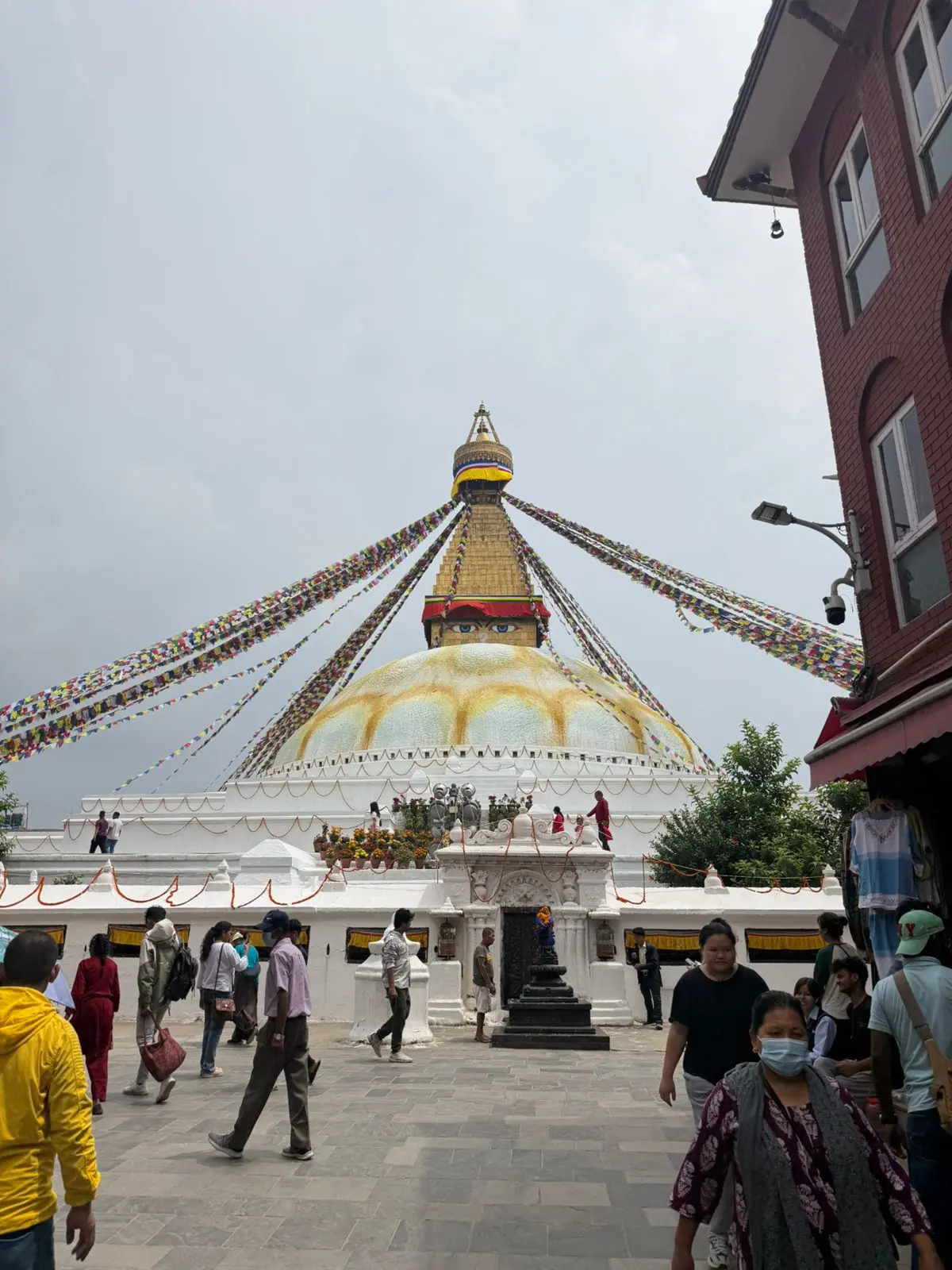
Boudhanath Stupa (also spelled Bouddhanath or Boudha) is one of the largest spherical stupas in the world and arguably the most important Tibetan Buddhist site outside of Tibet. Located in Kathmandu, it is both a spiritual magnet and a daily place of practice.

The structure itself is rich with symbolism:

– A massive white dome symbolizing the vastness of the universe

– The harmika and the 13-tiered spire representing the stages of enlightenment

– The Buddha’s eyes painted on all four sides, watching in compassion

– The base ringed with prayer wheels and mandalas, inviting movement and meditation

– It is not just a monument. It is a living, breathing site of devotion.

Historical Origins of Boudhanath

The origins of Boudhanath are wrapped in both legend and historical record. According to local myth, the stupa was built by an old woman who asked the king for permission to construct a shrine to enshrine the relics of Kassapa Buddha. Her devotion was so deep that even the king granted her land.

Historically, the stupa dates back to the Licchavi period, likely built in the 5th century CE. After the 1959 Chinese invasion of Tibet, thousands of Tibetan refugees settled in Boudha, turning it into the epicenter of Tibetan culture in Nepal.

In 1979, UNESCO recognized Boudhanath as a World Heritage Site, cementing its global spiritual and cultural importance.

Spiritual Significance: The Soul of Tibetan Buddhism in Nepal

For Vajrayana Buddhists, Boudhanath holds immense spiritual power.

It is said that circumambulating the stupa with a pure heart accumulates merit and purifies negative karma.

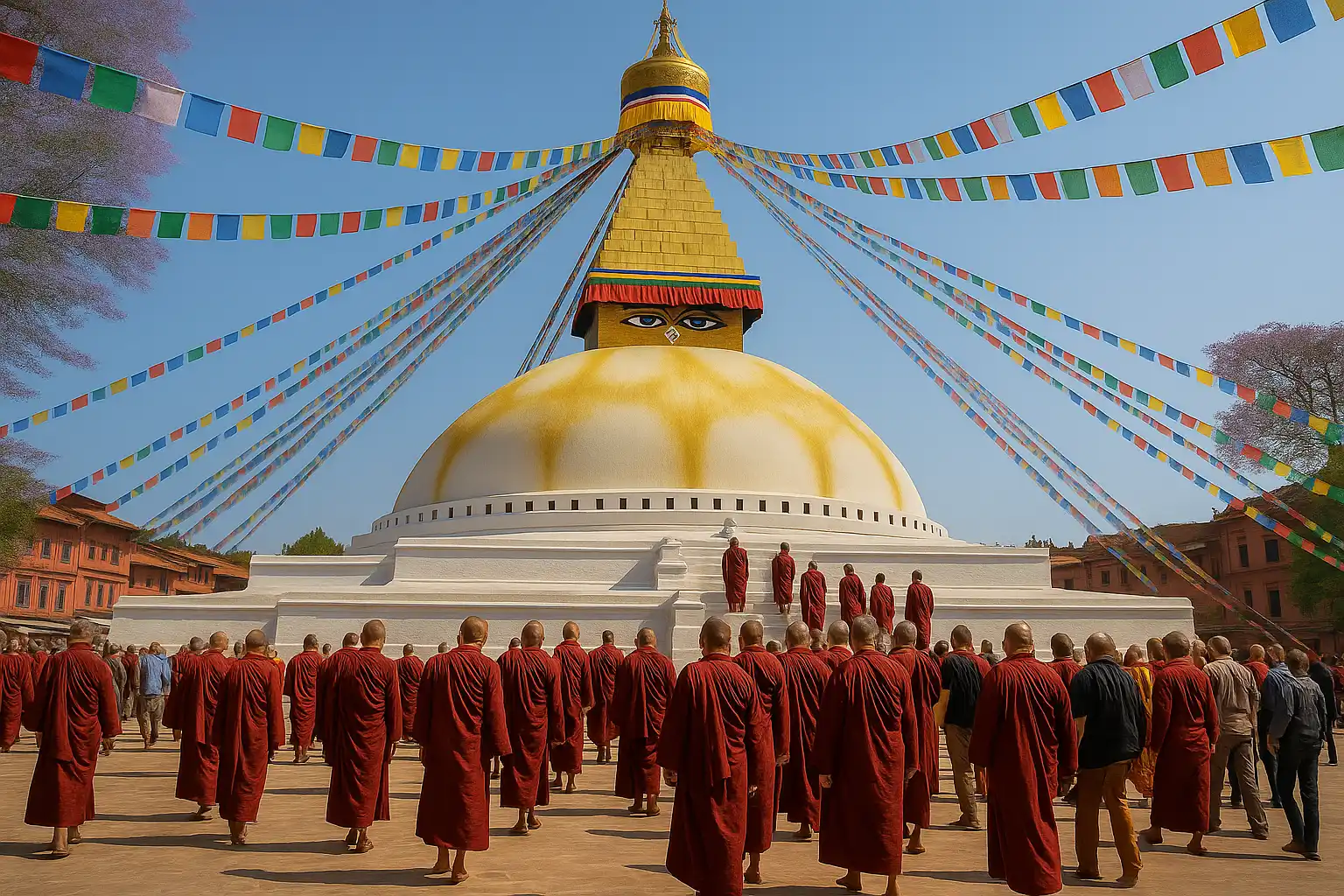
Around the stupa are over 50 Tibetan monasteries, many of them built after the Tibetan diaspora. Monks, nuns, lamas, and lay practitioners all engage in daily rituals:

– Kora (circumambulation): Always done clockwise, often with mala beads

– Offering butter lamps: A symbolic act of lighting the path to wisdom

– Hanging prayer flags: Sending blessings across space and wind

– Prostrations: Seen early in the morning and late in the evening, with deep reverence

Boudhanath is not just about belief,it’s about spiritual practice lived daily.

What to Expect When You Visit

Visiting Boudhanath is an experience that touches all senses:

– Sounds: Tibetan horns, chants, bells, and soft footsteps

– Scents: Incense, juniper, butter lamps

– Sights: Golden spires, maroon-robed monks, spinning prayer wheels

– Feeling: A deep, palpable calm

You can join the kora, sit on a rooftop cafe with a view, or simply observe. Vendors around the stupa sell thangka paintings, prayer beads, butter lamps, and ceremonial items. But unlike many tourist sites, the spiritual atmosphere stays intact.
At dawn and dusk, the stupa glows. Pilgrims arrive in hundreds, walking quietly or whispering mantras. The whole space feels like a mandala in motion.

Best Time to Visit Boudhanath

Time of Day:

– Sunrise: Ideal for quiet photography and observing morning prostrations

– Sunset: When butter lamps light the kora path and chants echo across the dome

Festivals:

– Losar (Tibetan New Year): Colorful, crowded, and deeply devotional

– Buddha Jayanti: Commemorating Buddha’s birth, enlightenment, and parinirvana

– Lhabab Duchen: Celebrating Buddha’s descent from heaven

Each festival fills Boudha with vibrant energy, but also reverent discipline.

How to Visit with Respect and Awareness

– Dress Modestly: Cover shoulders and knees

– Walk Clockwise: When circumambulating the stupa, always go clockwise

– No Loud Talking or Music: It’s a space for reverence

– Photography: Allowed, but not during rituals or too close to monks

– Participate Gently: Light a butter lamp or spin a prayer wheel with intention

Remember, Boudhanath is not a museum. It’s a sacred site still lived in and loved.

Staying Near the Stupa: A Spiritual Base for Slow Travel

Staying in Boudha allows you to experience the rhythm of stupa life:

– Morning kora with locals

– Afternoons reading in peaceful courtyards

– Evenings watching monks light lamps

For long-stay travelers, retreat-goers, or digital nomads seeking peace, it’s an ideal alternative to Thamel. You’ll find vegetarian cafes, organic bakeries, yoga spaces, and hidden gompas just steps away.

If you’re looking for a peaceful, spiritually aligned place to stay, Boudha Mandala Hotel offers stupa-view rooms, a calming rooftop, and long-stay comfort just 10 seconds from the stupa.

Personal Reflections: A Place That Changes You

I came to Boudhanath thinking I would see something. But I left having felt something.

Maybe it was the rhythm of the footsteps around the stupa. Maybe it was the silence inside the monastery. Maybe it was a little old woman, eyes closed, whispering Om Mani Padme Hum like a prayer to the sky.

Conclusion
Boudhanath is more than bricks, more than relics, more than tradition. It is a space of remembering. Of turning inward while walking outward. Of realizing that sometimes, the sacred isn’t something you find, but something you return to.

When you walk around Boudhanath, you don’t walk alone. You walk with centuries of seekers, saints, and silent prayers.
And when you leave, part of you stays.

Make your journey to Boudha deeper by staying close. Boudha Mandala Hotel is a spiritually aligned boutique hotel just steps from the stupa,perfect for retreat, reflection, or mindful work.

List of Poets Who Found Inspiration in Boudha

Introduction

There are places in the world where words come softly, like prayer. Boudhanath is one of them. Poets often describe it not as a location, but as a mood. A rhythm. A stillness that seeps into the soul and flows out as verse.

Walk a slow kora in the early morning, and you’ll feel it too. The air holds incense and possibility. The chants echo like ancient syllables still searching for paper. For many poets, foreign and Nepali alike, Boudha has been more than a setting. It has been a teacher.

This is a look at some of the voices who sat by its walls, listened, and wrote.

Allen Ginsberg (USA)

Ginsberg, one of the great American Beat poets, passed through Nepal in the 1960s during his spiritual explorations. His poetry from this period reflects his fascination with Buddhist practice and the sacred geography of Kathmandu.

Though he’s more often associated with Bodh Gaya or India, those who’ve traced his letters and journals know he visited Boudhanath too. The spinning wheels, butter lamps, and chants left a mark.
“Holy Boudhanath, great eye of Kathmandu…”

, A line scribbled in one of his travel journals

Yuyutsu Sharma (Nepal)

Born in Nepal and known internationally, Yuyutsu RD Sharma has written widely about Himalayan life, spirituality, and Kathmandu’s changing landscape. In his poems, Boudha appears not just as a holy site but as a breathing character, full of longing and wisdom.

From his collection “Annapurna Poems” to his meditations on Himalayan culture, Sharma weaves Boudhanath’s presence into metaphors of wind, silence, and light.

Jane Hirshfield (USA)

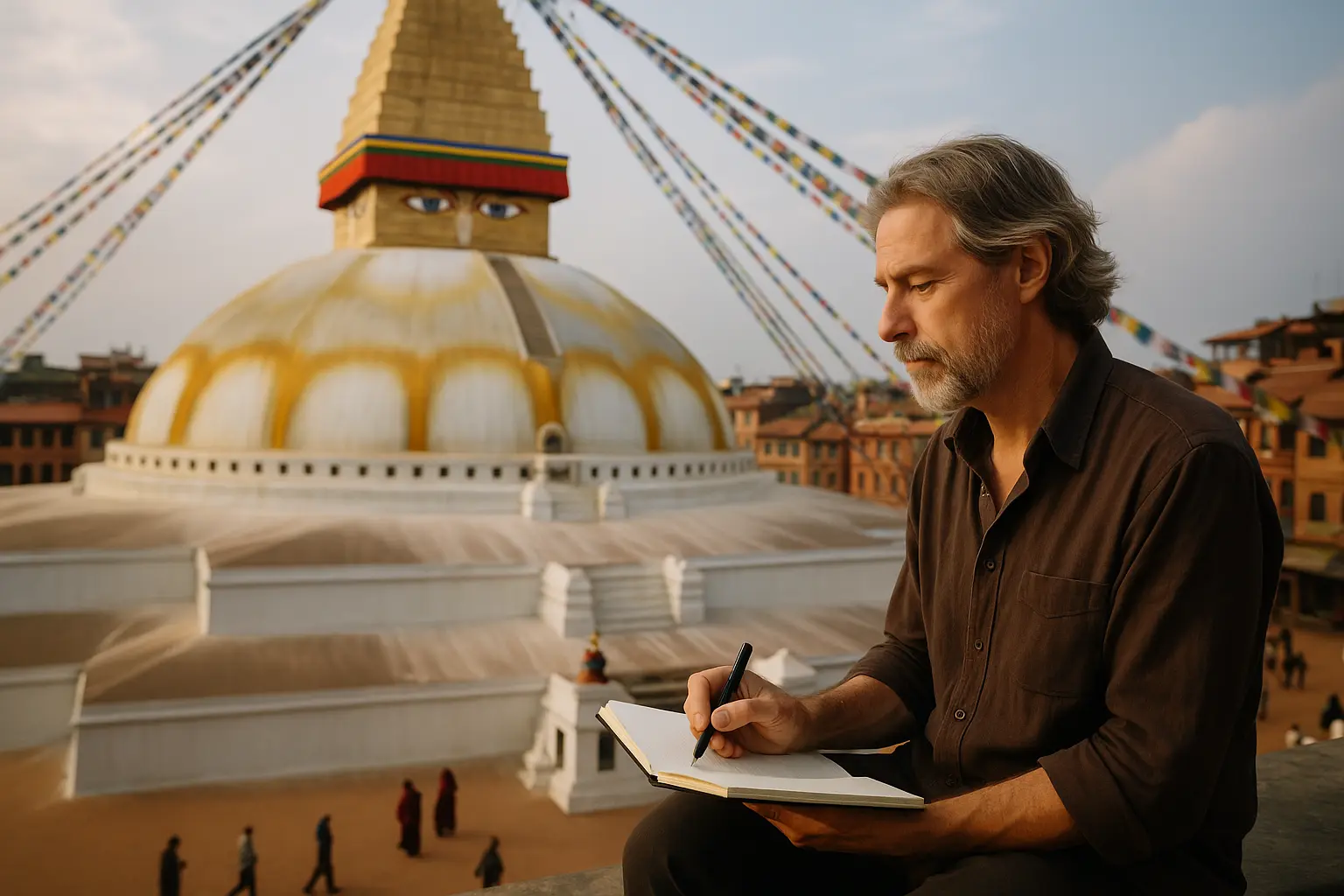
While not always directly associated with Boudha, Hirshfield’s retreat to Kathmandu in the early 2000s, documented through interviews and travel notes, sparked a wave of inward-facing poems. Visitors remember her sketching verses near stupa cafés, writing in silence as pigeons circled the dome.

Her Buddhist background and meditative style make it easy to imagine Boudhanath’s mandala-like presence shaping her metaphors.

Tsering Wangmo Dhompa (Tibet/Nepal)

Tsering, the first Tibetan female poet to be published in English, spent time in Boudha reconnecting with family, culture, and language. Her poetry often explores themes of displacement, identity, and longing.

In works like “My Rice Tastes Like the Lake”, the spiritual spaces of Boudha appear gently, almost like dream fragments, a butter lamp’s flicker, the sound of bells, the motion of devotion.

Her reflections on Tibetan diaspora are deeply resonant with the Boudha landscape, where many exiled Tibetans have built new sacred homes.

Manjushree Thapa (Nepal)

Though primarily a novelist and essayist, Thapa’s lyrical prose and occasional poetry often touch on the sacred geography of Kathmandu. She has written beautifully about ritual, place, and the quiet dignity of Buddhist tradition.

Boudhanath, as a recurring location in her essays, serves as a contemplative space, especially in moments where she describes the intersection of personal and cultural memory.

Michael Hettich (USA)

An American poet who spent a brief sabbatical time in Nepal, Hettich wrote about the “suspended quiet” of Boudhanath in several of his travel pieces and unpublished poems. One of his lines captures it simply:

“The stupa watched without blinking, as we whispered the rest of our lives.”

Though less known in literary circles connected to Nepal, his poems shared in writer retreats in the Valley held Boudha in soft reverence.

Boudha as Living Verse

Boudha does not perform for tourists. It breathes for those who sit and listen. For poets, that’s all it takes. In the slow movement of monks, the spiral walk around the dome, the thrum of chants that dissolve thought, language awakens.

Even anonymous poets, nuns with notebooks, and travelers scribbling lines into weather-worn journals find voice here. The outer kora becomes a page, each step a word.

Why Boudha Inspires Poets

It’s not just the architecture or the rituals, but the atmosphere. The sense that something ancient continues to unfold, without rush. For a poet, that’s nourishment.

Poets find in Boudha:
• Stillness that sharpens language.
• A rhythm that mirrors poetic breath.
• Symbols, like prayer flags or lamps, that become metaphors.
• A community where silence is shared, not feared.
• Moments that unfold, rather than demand to be captured.

Where to Stay for Poetic Retreats

If you’re a writer or poet planning a long stay in Boudha, being close to the stupa is a gift. Boudha Mandala Hotel, just 10 seconds from the main gate, offers quiet rooms with stupa views, perfect for journaling or reflection.

The on-site café serves local teas, and it’s not uncommon to see monks reading, writers scribbling, or someone quietly working on a poem about the morning light.

Final Reflection
You may come to Boudha with a pen, but you’ll leave with a pause. Something inside will have slowed, grown spacious. Perhaps that’s why so many poets return, or never quite leave, at least in verse.

Because Boudhanath doesn’t just inspire poetry.
It teaches you how to listen.

What Is a Buddha Shrine? Meaning, Ritual, and Sacred Spaces

A Buddha shrine, sometimes called a Buddhist altar or veneration space, is a sacred place where the presence of the Buddha is honored. Whether found inside temples, monasteries, homes, or tucked into corners of bustling city streets, these shrines serve as spiritual focal points, places for meditation, offerings, and remembrance of the awakened mind.

At its heart, a Buddha shrine is not about religion in the conventional sense. It’s about cultivating presence, gratitude, and mindfulness. Whether you’re a devout practitioner or simply a spiritually curious traveler, standing before a Buddha shrine often evokes a quiet sense of reverence ,like stepping into a moment outside of time.

Elements of a Buddha Shrine: What You’ll See and Why It Matters

No matter where you travel,whether it’s a remote monastery in Nepal or a quiet corner in someone’s home,the essential elements of a Buddha shrine remain surprisingly universal. These include:

• A statue or image of the Buddha, usually seated in meditation or teaching posture

• Offerings such as flowers, incense, butter lamps, fruit, or clean water

• Sacred texts or prayer flags

• A clean, respectful environment, often elevated above daily living spaces

Each element holds meaning. The offerings aren’t to please a god, but to cultivate qualities like generosity, devotion, and awareness. Lighting a butter lamp symbolizes removing ignorance and bringing light to the mind. Even the way the Buddha is seated,legs crossed, eyes lowered,serves as a silent teaching in stillness and equanimity.

Types of Buddha Shrines You’ll Find in Nepal

Temple Shrines

Step into any Buddhist temple in Nepal,whether it’s Boudhanath, Swayambhunath, or a local village monastery,and you’ll encounter grand, elaborately decorated Buddha shrines. These spaces are rich with:

• Thangka paintings of deities and mandalas

• Rows of butter lamps flickering in silence

• Chanting monks or lay practitioners doing circumambulations

At Boudhanath Stupa, for example, the main shrine faces inward from each cardinal direction, radiating blessings like a mandala turned inside out. These aren’t just aesthetic. Each detail is an embodiment of sacred geometry, history, and devotion.

2. Monastic Shrines

Inside Tibetan Buddhist monasteries, shrines often include not just a central Buddha image, but also statues of lineage masters, protector deities, and elaborate offerings arranged with ceremonial precision. These spaces are primarily used for daily pujas (prayer ceremonies) and deeper meditative practices.

If you’re staying near Boudhanath, you can often quietly join morning or evening rituals at monasteries like Shechen, Ka-Nying, or Nagi Gompa (further north in Shivapuri).

3. Home Shrines

Many Nepali and Tibetan families maintain simple home altars, typically located on a high shelf in the main living area. These might include:

• A photo or statue of the Buddha

• A row of small offering bowls filled with water

• Fresh flowers or incense

Even if you’re a traveler or digital nomad living in an apartment, creating a small personal shrine can transform your space into something sacred. A single candle and a peaceful image may be enough.

Why People Visit Buddha Shrines

People come to Buddha shrines not just to pray,but to remember who they are when the noise quiets down. Whether local pilgrims doing prostrations around Boudhanath or solo travelers lighting incense in silence, the reasons include:

• Seeking inner peace or answers

• Expressing gratitude or grief

• Marking the start or end of a journey

• Honoring someone who has passed

• Connecting to a lineage or teaching

Imagine waking up early in Boudha, stepping barefoot onto a balcony, and watching the morning light touch the stupa’s golden pinnacle. Below, an elderly nun offers marigolds to a shrine with a gaze so calm, it stills your thoughts. This is not sightseeing. This is soul-seeing.

How to Behave at a Buddha Shrine: Mindful Etiquette

When visiting a Buddha shrine,especially in Nepal,respect is key. Here are a few gentle reminders:

• Remove your shoes before entering temple areas

• Don’t point your feet toward the shrine or sacred objects

• Walk clockwise around stupas or shrines

• Refrain from loud conversation or selfies

• Don’t touch statues or offerings, unless invited

It’s also common to make a small offering,such as lighting a butter lamp or offering a few rupees for maintenance. But more than anything, your sincerity is the real offering.

Notable Buddha Shrines Around Boudhanath Stupa

If you’re staying at Boudha Mandala Hotel, you’re just seconds away from some of the most spiritually alive Buddha shrines in the world. Here are a few nearby highlights:

• Boudhanath Stupa: The heart of Tibetan Buddhism in Nepal, surrounded by dozens of small shrine rooms and temples

• Guru Lhakhang Monastery: A beautiful courtyard shrine tucked inside a monastery just off the stupa circle

• Samtenling Gompa: A peaceful monastery with a hidden inner shrine visited mostly by locals

• Shechen Monastery: Just a short walk away, with one of the most elaborate shrine halls in Kathmandu

Each of these places invites quiet, patient observation. Don’t rush. Let yourself be affected.

How to Create Your Own Buddha Shrine While Traveling

Even if you’re moving between places, it’s possible to carry a sense of shrine with you. Here’s how:

• Bring a small Buddha statue or image

• Use a scarf or cloth as a sacred base

• Include one or two personal tokens (like a stone from a sacred place or a mala bead)

• Light a candle or incense stick at sunrise or sunset

The goal is not to build something perfect, but something meaningful. Even five minutes in front of your travel altar can anchor you in presence, gratitude, and calm.

Final Thoughts

In an age of speed, distraction, and disconnection, Buddha shrines offer something rare stillness that asks nothing of you. Whether you bow, light a lamp, or simply pause and breathe, these spaces help you return to what matters: the clarity of mind, the depth of heart, and the awareness that peace is possible.

If you’re looking for a peaceful hotel just steps from the stupa, Boudha Mandala offers stupa-view rooms, long-stay options, and a warm local welcome. With calm interiors, nourishing food, and easy access to sacred shrines, it’s the perfect base for travelers seeking meaning, not just movement.

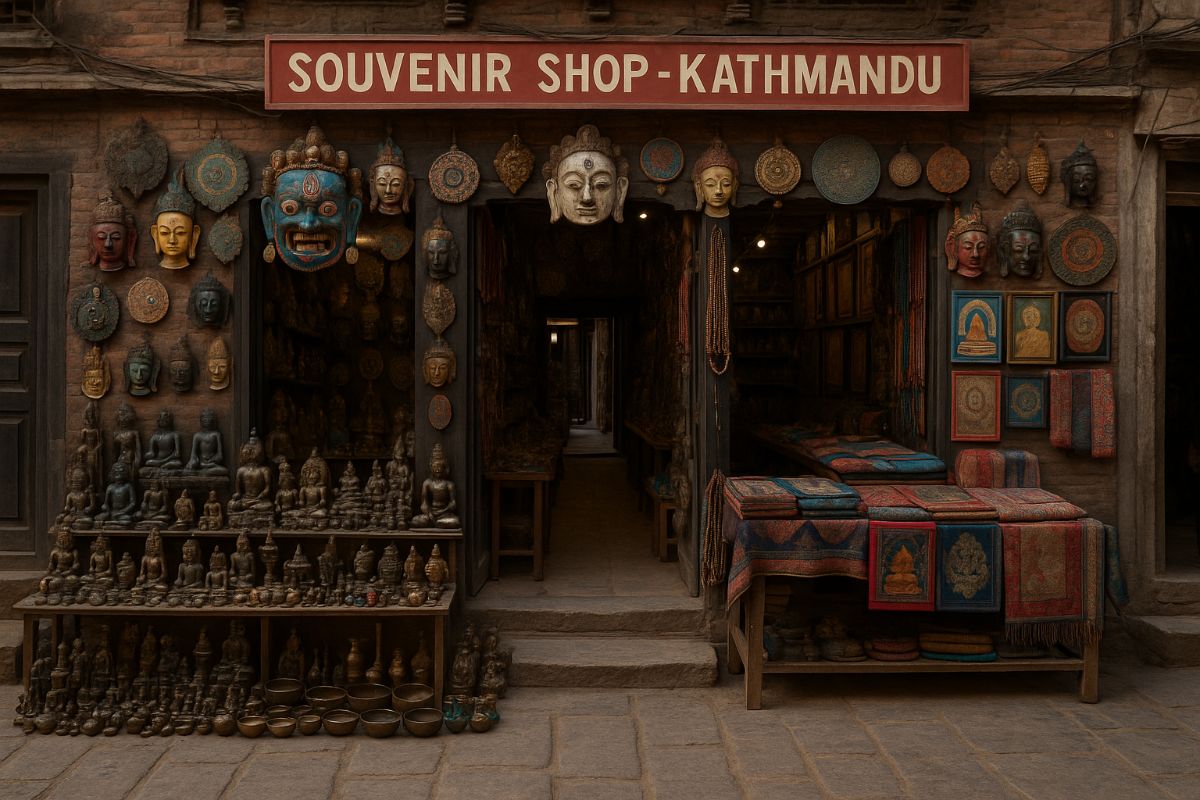
Best Places in Kathmandu for Souvenirs That Mean Something

Kathmandu makes it easy to buy souvenirs, but finding ones that actually mean something takes a little attention. You want items with stories, not things that feel mass-produced. The good news is that the valley is full of workshops, small markets, and calm side streets where meaningful items appear naturally. This guide shows you where to look and how to shop without stress.

Where can travelers find meaningful handcrafted souvenirs in Kathmandu?

Travelers can find meaningful handcrafted souvenirs in Kathmandu by visiting smaller artisan shops and local craft centers instead of big commercial streets.

These places show you how items are made and why they matter.

Great spots for handmade items

• Patan’s craft studios
• Bhaktapur’s pottery squares
• Workshops around Thamel’s back lanes
• Boudha’s Tibetan-run shops
• Lalitpur’s metalworking neighborhoods

Each of these places feels connected to real craft traditions.

Why is Patan one of the best areas for thoughtful souvenirs?

Patan is one of the best areas for thoughtful souvenirs because the city has deep craft roots that show up in metalwork, wood carving, jewelry, and small statues.

You meet artisans who still work using old methods that have been passed down through families.

What Patan offers

• Brass and copper statues
• Hand-carved wooden art
• Small jewelry studios
• Craft cooperatives
• Courtyards with active workshops

You leave with something linked to real skill, not bulk production.

What makes Bhaktapur ideal for travelers who want meaningful items?

Bhaktapur is ideal for travelers who want meaningful items because many crafts are still made in open courtyards and streets.

You can watch pottery, painting, and weaving happening in front of you.

Meaningful finds in Bhaktapur

• Clay pottery
• Traditional masks
• Thangka-inspired paintings
• Woven baskets
• Handcrafted wood frames

Buying directly from the maker adds a layer of connection.

Where can travelers buy Tibetan-inspired souvenirs with real cultural depth?

Travelers can buy Tibetan-inspired souvenirs with real cultural depth around Boudha.

The area is full of family-run shops that sell items used in daily spiritual life.

Thoughtful Tibetan items

• Prayer wheels
• Incense made locally
• Butter lamp holders
• Handmade jewelry
• Small altar items

These pieces reflect real living traditions, not tourist versions.

Which markets are best for travelers who want small, simple items with meaning?

The markets best for travelers who want small, simple items with meaning include Asan, Indra Chowk, and small lanes connecting the two.

These places are busy but full of items used in daily Nepali life.

Meaningful small items

Brass oil lamps
• Spices for home cooking
• Copper bowls
• Flower garlands
• Cloth used in local rituals

These objects carry pieces of everyday culture.

What souvenirs help travelers understand Kathmandu’s spiritual side?

Souvenirs that help travelers understand Kathmandu’s spiritual side include items that appear in rituals, homes, and temples.

These aren’t just objects. They reflect routines you see on the streets.

Spiritual souvenirs with meaning

• Butter lamps
• Incense holders
• Prayer flags
• Small deity statues
• Beads used for meditation

These items let you bring home a quiet part of the valley’s rhythm.

How can travelers make sure the souvenirs they buy are authentic?

Travelers can make sure the souvenirs they buy are authentic by checking quality, asking simple questions, and choosing shops where items look handmade.

Authentic pieces carry texture, weight, and small imperfections that add personality.

Easy ways to spot authenticity

• Look for hand-carved marks
• Check the weight of metal items
• Ask where the item was made
• Avoid identical copies
• Watch artisans when possible

A short chat often reveals more than any signboard.

Why does shopping slowly help travelers find better souvenirs?

Shopping slowly helps travelers find better souvenirs because you notice details, meet artisans, and understand the purpose behind each item.

Rushing leads to buying things you forget. Slowing down leads to buying things you keep.

Benefits of slow shopping

• Better choices
• Less pressure
• More meaningful items
• Real stories behind purchases
• Connection with the craft

Your favorite item usually comes from a quiet moment.

Where can travelers find unique items that aren’t typical souvenirs?

Travelers can find unique items that aren’t typical souvenirs by exploring local grocery markets, craft workshops, and home goods shops.

These items reflect how people live here.

Unexpected but meaningful items

• Tea used in local homes
• Traditional cooking utensils
• Simple cotton fabrics
• Nepali spices
• Handwoven mats

These objects carry daily life into your home.

Why is Boudha Mandala Hotel a helpful base for meaningful souvenir shopping?

Boudha Mandala Hotel is a helpful base for meaningful souvenir shopping because the area gives you access to Tibetan crafts, quiet alleys, and calm shops that focus on authentic handmade items.

Many shops are within a short walk, and reaching Patan, Bhaktapur, and Asan from here is easy.

Why the location works

• Steps from Boudha’s craft shops
• Close to incense makers and metalworkers
• Simple taxi access to Patan and Bhaktapur
• Calm evenings for sorting your finds
• A peaceful return after a busy shopping day

The neighborhood makes thoughtful shopping feel natural and relaxed.

Buddhism Flower: The Meaning and Symbolism Behind Sacred Blooms

Key Takeaways

• In Buddhism, flowers symbolize impermanence, beauty, and spiritual offering.

• The lotus flower is the most iconic Buddhist symbol, representing purity rising from suffering.

• Flowers are offered at temples, stupas and home altars as a gesture of devotion, impermanence, and mindfulness.

• Different flowers, like lotuses, champa, marigolds and blue poppies, carry specific meanings in Buddhist culture.

• The act of offering a flower is more than ritual, it’s a spiritual practice in itself, reminding us of transience and inner clarity.

• Sacred Buddhist sites like Boudhanath Stupa are surrounded by fresh flower stalls and monasteries where floral offerings shape daily life.

Why Flowers Matter in the Buddhist World

Spend a morning walking the kora path around Boudhanath Stupa, and you’ll see something deeply moving: hands, old and young, placing flowers at the feet of Buddha statues. No words. Just intention. A fresh bloom laid with care.

In the Buddhist tradition, a flower is never just a flower. It’s a mirror. A metaphor. A moment of beauty destined to fade, just like everything else in this world.

And yet, it’s precisely this impermanence that makes it sacred.
This is what makes the Buddhism flower not just botanical,but existential. It’s an offering. A teacher. A symbol of both the fleeting and the eternal.

The Lotus: Heart of Buddhist Flower Symbolism

Why the Lotus Is So Sacred

If you ask any Buddhist practitioner, whether in Nepal, Japan, or Tibet ,what flower represents Buddhism, the answer will be unanimous: the lotus.

Here’s why:

• It grows from the mud, yet rises unstained toward the light.

• Its petals unfold in still water, just like mindfulness and awareness in the calm of meditation.

• In Buddhist texts, the Buddha himself is called “The Lotus-Born” ,and many bodhisattvas are depicted seated on lotus thrones.

The lotus isn’t just beautiful, it’s a roadmap to liberation.

To live like the lotus is to rise from suffering with grace, without resentment, without clinging. This is the soul of the Buddhist path.

“Just like a lotus is born in water, grows in water, and rises out of water to stand above it unsoiled, so too does the Buddha rise above the world.”

, The Dhammapada

Flower Offerings in Daily Buddhist Life

The Ritual and Meaning of Offering Flowers

In Buddhism, offering a flower is an act of mindful generosity. It’s not meant to please a deity or bring luck, it’s a symbolic expression of:

• Impermanence: The flower will wilt. Like all things.

• Gratitude: To the Buddha, the Dharma (teachings), and the Sangha (community).

• Inner aspiration: To cultivate beauty, clarity, and presence within oneself.

When a pilgrim lays a single lotus at a shrine in Boudha, they’re not doing it out of habit. They’re saying: “I recognize the passing nature of this life, and I still choose to offer beauty.”

This is Buddhist hospitality at its deepest, not just welcoming the world, but offering it a heart that’s open, fleeting, and sincere.
Other Sacred Flowers in Buddhism (Beyond the Lotus)

While the lotus is the most well-known, many flowers hold symbolic weight across different Buddhist cultures. Here are a few you’ll find across Nepal and the wider Buddhist world:

1. Champa Flower (Plumeria)

Often used in Himalayan monasteries. Symbolizes devotion and fragrance of the heart. You’ll often see it in ritual garlands.

2. Marigold (Tika Phool)

Bright yellow and orange marigolds are common in Nepalese Buddhist ceremonies. They represent light, purification, and joy.

3. Blue Himalayan Poppy

Rare and native to high elevations. In Tibetan Buddhism, it’s sometimes associated with mystical states and visionary insight.

4. White Jasmine

Used in many Southeast Asian Buddhist temples. Represents purity, humility, and peaceful offering.
Each flower tells a story. Not in words, but in scent, texture, and quiet decay.

The Buddhist Lesson Behind Every Bloom: Impermanence

One of the Buddha’s core teachings is anicca, impermanence. Everything is changing, always. Nothing lasts.
The flower embodies this truth more beautifully than any scripture.

• It blossoms.

• It stirs awe.

• It withers.

And in that cycle is a silent teaching: Love what is here, while it is here. Because nothing, not even beauty, is permanent.

At temples across Nepal, from small village shrines to great stupas, you’ll see wilted flowers swept away each evening. Tomorrow, new ones will appear. This is the heartbeat of Buddhist life.

Buddhism, Flowers, and Sacred Spaces: A Living Experience

At Boudha Mandala Hotel, we see this every day.
Guests step out at dawn and walk the stupa path, often returning with fresh flowers bought from nearby stalls. Some leave them on their balcony altar. Others offer them at local monasteries. A few placed them by the hotel’s own small shrine.

They do this not as tourists, but as participants in a living tradition. A flower, in these moments, becomes more than a decoration. It becomes a prayer in form.

And in this small act, they enter the rhythm of Boudha, not just visiting, but belonging.

Final Thoughts

In the quiet act of offering a flower, we are reminded:

• That beauty is brief.

• That intention is everything.

• That even a simple bloom can point us toward enlightenment.

In Buddhism, the flower is not worshipped; it witnesses. It does not demand attention; it gives it freely. It teaches us, without speaking, how to live: openly, briefly, and in full bloom.

So the next time you pass a marigold garland or see a lotus opening in still water, pause. Bow your head. Remember.

“As a flower, beautiful and fragrant, blooms and fades, so too is this life. But from that fading, wisdom grows.”

Stay Where the Flowers Teach You Something

If you are seeking a space in Boudha that honors silence, presence, and small sacred gestures, Boudha Mandala Hotel offers:

• Stupa-view rooms for morning meditations and fresh flower offerings

• A peaceful café with locally sourced flowers and food

• Long-stay apartments for retreat, work, or study

• Warm staff who understand the rhythm of Buddhist life

Just steps from the stupa, yet tucked away in calm, this is a place to offer your own bloom to the shrine, to the moment, to yourself.

Swayambhunath Temple: A Spiritual and Architectural Marvel Above Kathmandu

The Living Legend Behind Swayambhu

Before there was a city, before the valley held even a whisper of Kathmandu, there was a sacred light shining from a lotus on a lake.

That light, say the ancient texts, is the origin of Swayambhunath.
“Swayambhu” means “self-arisen.” It’s believed that the hill and the stupa emerged from the lotus itself, not built by human hands but by divine forces. That story still pulses through the air here, especially in the early morning mist, when the stupa glows softly as if remembering its own myth.

At the heart of the stupa, the Eyes of the Buddha look out not with judgment, but with timeless calm. Between the eyes sits the Nepali number one, a symbol of unity. Above them, the thirteen golden steps of the spire represent the stages on the path to enlightenment.

This isn’t just a monument. It’s a living mandala, vibrating with the prayers of pilgrims who’ve walked these steps for generations.

Sacred Symbols in Stone and Wind

When you walk around the main dome, prayer wheels spin under your fingers and small chaityas line the paths like silent sentinels. The golden vajra at the stupa’s front rests on a base with four lions, symbolizing strength and protection.

What makes Swayambhunath so unique is its spiritual harmony. Though it’s one of the most important Buddhist sites in Nepal, Hindu shrines stand beside Buddhist temples with no contradiction. You’ll see a statue of Harati, a Hindu goddess turned Buddhist protector, lovingly tended with marigold offerings.

Everything here is intentional. The white dome represents the world. The square base with painted eyes is wisdom. The thirteen golden tiers of the spire mark spiritual realization. And the fluttering prayer flags carry the hopes and mantras of everyone who’s come seeking peace.

Climbing the Steps to Stillness

There are 365 steps to the top. One for every day of the year. Some say it’s a test of devotion, others call it a spiritual exercise. Whatever your reason, the climb is worth every breath.

You’ll pass wild monkeys playing near carved stone lions, old women in saris spinning wheels, young monks carrying water in metal buckets. The scent of juniper smoke blends with the faint ringing of bells.

At the top, all of Kathmandu stretches before you. But the real view is inward.

Come at sunrise when the sky is still a soft blue. Or come at dusk when golden light bathes the spire and pigeons circle like slow-moving prayers. There’s no wrong time. Only your own rhythm.

Visiting with Heart and Respect

To enter this sacred space, it helps to slow down. Move clockwise around the stupa. Step gently. Speak softly. Watch how others walk, pause, and bow.

Here are a few simple guidelines to honor the space:
• Take off your shoes before entering the shrine halls.
• Don’t point your feet at statues or altars.
• Avoid loud conversation or phone use.
• Ask before taking close-up photos, especially of people or pujas.
• Don’t feed the monkeys, no matter how curious they seem.

Respect isn’t a rule here, it’s a rhythm.

Around Swayambhu: Tea, Monasteries, and Hidden Corners

The temple grounds are just the beginning. Tucked into the hillside are several monasteries with resident monks, often open for quiet visitors. You’ll find murals, bells, and hidden courtyards with views few tourists discover.

Stop at a small teashop overlooking the valley. The masala tea tastes sweeter when sipped slowly, as prayer flags flutter in the wind.

You can also visit the nearby Natural History Museum or explore small ritual item shops selling butter lamps, incense, and carved singing bowls.

Every corner around Swayambhunath tells a story. You just have to listen.

Why Swayambhunath Still Matters

Some places fade with time. This one deepens. Swayambhunath is still an active pilgrimage site, alive with monks in red robes and elders counting beads under ancient trees.

But it’s more than ritual. It’s a rare symbol of religious harmony. A place where Hindu and Buddhist energies coexist without division. A place where travelers, artists, seekers, and locals come not just to take pictures, but to feel something ancient, something still.

It’s also a living teacher. Its architecture holds wisdom. It’s silence, a kind of teaching. It’s rituals, a reminder that the sacred isn’t always loud.

Where to Stay for a Deeper Connection

If Swayambhunath stirs something in you, consider staying nearby in a place where that sense of quiet can continue.

Just a short drive away in Boudha, you’ll find Boudha Mandala Hotel, a peaceful, spiritually aligned retreat just ten seconds from the great stupa. With long-stay apartments, stupa-view balconies, and an in-house café serving organic meals, it’s designed for pilgrims, creatives, and digital nomads alike.

When you stay nearby, you don’t just visit sacred sites, you live alongside them. You hear the morning chants. You sip your tea under prayer flags. You become part of the rhythm.

Final Reflection

As you descend the steps from Swayambhunath, don’t be surprised if you feel lighter, quieter, somehow more spacious.

Because this temple isn’t just watching over the city. It’s inviting you to remember the stillness within yourself.
And perhaps, that’s the real pilgrimage.