What Buddhist Festivals Are Celebrated at Boudhanath?

If you’re planning to visit Boudhanath, don’t just come for the view, come for the feeling. The festivals celebrated here are not tourist spectacles; they are sacred, vibrant moments that reveal the beating heart of Tibetan Buddhist life in Nepal. Walk the kora during Losar and you’ll feel it: incense in the air, chants echoing from monastery walls, every step soaked in centuries of devotion.

This guide offers a clear, heartfelt path to experiencing the most important Buddhist festivals at Boudhanath and how you can witness them meaningfully.

Key Takeaways:

If you want to experience the living heart of Buddhist culture in Kathmandu, time your visit to Boudhanath during a local festival. From the vibrant colors of Losar to the quiet devotion of Gunla, each celebration offers a window into centuries-old traditions and the deep spirituality that surrounds the stupa. Come not just to watch, but to listen, learn, and feel the pulse of this sacred place.

The Magic of Boudhanath During Festival Season

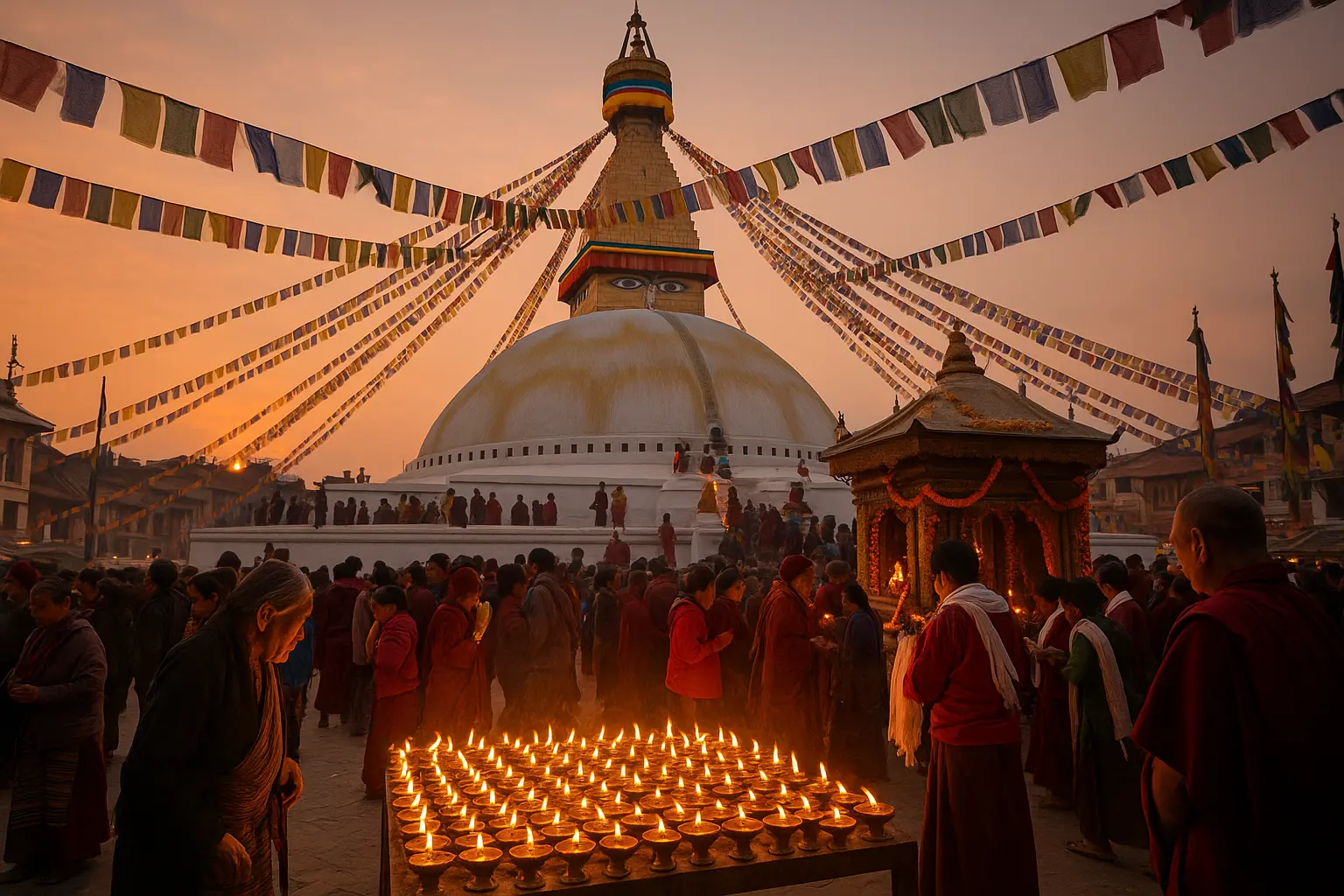
I still remember my first Losar at Boudhanath. The air smelled like juniper smoke. The stupa shimmered with rows of butter lamps, each flame flickering a silent prayer. Children darted between pilgrims. Monks chanted late into the night. It wasn’t just beautiful, it was deeply moving.
Festivals at Boudhanath aren’t tourist events. They’re living rituals that shape the rhythm of the community. They mark time, honor ancestors, call blessings, and bring people together. If you’re planning a visit to Boudha, aligning it with one of these festivals can turn your stay into something unforgettable.

1. Losar (Tibetan New Year)

  • When: Usually February or March, depending on the lunar calendar

– Why It Matters: Losar is the most important festival in Tibetan Buddhism. It marks the beginning of a new year, and with it, a deep spiritual reset.

During Losar, Boudhanath becomes a vibrant sea of color, movement, and sound. Monks perform traditional Cham dances in the monasteries. Families clean their homes and offer khatas (white scarves) at the stupa. Butter lamps are lit by the thousands, sending prayers into the coming year.

Local Tip: Arrive early on the main day to witness monks at Shechen Monastery perform the intricate Vajrakilaya rituals.

2. Buddha Jayanti (Buddha Purnima)

– When: Full moon of Baisakh (April–May)

– Why It Matters: This day celebrates the birth, enlightenment, and parinirvana (passing) of the Buddha, all in one.

At Boudhanath, thousands gather to offer prayers, chant sutras, and circumambulate the stupa in silence and reverence. It’s one of the most peaceful yet powerful days of the year.

I once watched a young boy offer a single marigold with both hands, eyes closed in sincerity. That tiny moment said more than any ceremony could.

3. Gunla (Sacred Month for Newar Buddhists)

– When: August–September

– Why It Matters: Gunla is a month-long devotional period where Newar Buddhists walk to Boudha from different parts of the valley, often at dawn, playing traditional Gunla Bajan music.

The atmosphere is rich with the sound of dhime drums and long flutes. Sacred art and scriptures are displayed publicly, and daily rituals intensify in monasteries.

Don’t Miss: The morning processions. They’re humble, musical, and deeply rooted in local devotion.

4. Mamla Jatra

– When: Full moon of Magh (January–February)

Why It Matters: Unique to the Boudha area, this jatra (festival) honors Mamo Pukasi, a protective deity. A chariot procession encircles the stupa, invoking her blessings.

You’ll see offerings made in every corner, rice, flowers, and torma (ritual cakes). There’s a quiet sense of protection woven through the day.

5. Chechyu Puja (Guru Rinpoche Day)

– When: 10th day of each lunar month; major celebration in January

– Why It Matters: This puja honors Padmasambhava (Guru Rinpoche), who brought Vajrayana Buddhism to Tibet. It’s especially important to the Nyingma school.

Monks chant long-form texts like the Seven-Line Prayer. Butter sculptures and torma are created. Laypeople offer kataks and seek blessings.
Reflection: During one Chechyu, I sat for hours just watching an elder repeat his mantra bead by bead. He wasn’t performing. He was communing.

6. Tamu Lhosar (Gurung New Year)

– When: December–January

– Why It Matters: Though not traditionally Tibetan, Tamu Lhosar is celebrated widely at Boudhanath by the Gurung community, who are also Buddhists.

Expect lively processions, traditional dress, and flag hoisting at the stupa. It’s a joyful, family-centered celebration.

How to Experience These Festivals Respectfully

If you’re visiting Boudhanath during any of these festivals, remember:
Dress modestly. Cover shoulders and legs.

– Don’t point your feet at monks, statues, or shrines.

– Always walk clockwise around the stupa.

– Ask before taking photos, especially during rituals.

– Consider lighting a butter lamp with a prayer or intention.

Locals will welcome your presence if you arrive with humility.

Final Thought

Boudhanath isn’t just a place; it’s a living mandala of community, devotion, and rhythm. When you witness its festivals, you’re stepping into an ancient story that’s still unfolding today.

And if you’re looking for a peaceful space just steps from the stupa, Boudha Mandala Hotel offers a warm, quiet retreat where you can experience these moments with intention and comfort.

7 Things to Expect When Visiting Boudha Stupa

Key Takeaways
Boudhanath Stupa in Kathmandu is a sacred site where Tibetan Buddhist rituals and daily life blend into one peaceful rhythm. When visiting, expect to walk clockwise in kora, spin prayer wheels, light butter lamps, and witness monks chanting in nearby monasteries. The air smells like incense and juniper, and the best times to go are early morning or at dusk. Whether you’re a pilgrim or curious traveler, Boudha offers a rare sense of stillness and spiritual presence.

Introduction
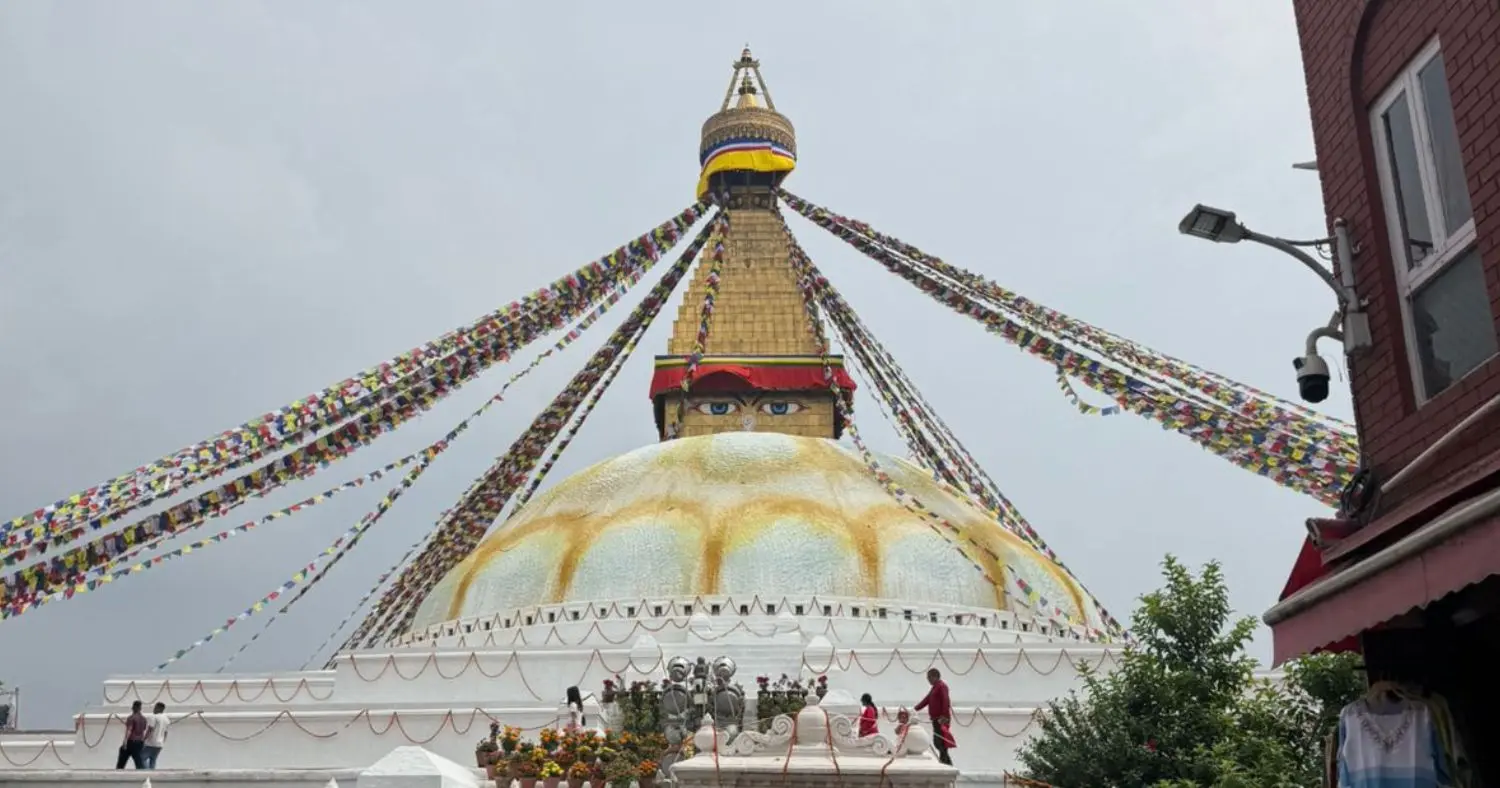
There’s a moment when you first arrive at Boudhanath that stays with you forever. You leave the noise of Kathmandu’s traffic behind and step into a quiet, sacred circle. The giant white dome rises in front of you, wrapped in a constant flow of footsteps, mantras, and prayers. Colorful flags stretch across the sky. Monks in maroon robes walk in silence. Pigeons lift and land like wind-borne thoughts.

You’re no longer just a visitor. You’re part of something timeless.

This is what makes Boudha Stupa different. It isn’t a sightseeing stop , it’s a spiritual pulse that still beats, every day, every dusk, every dawn.

1. The Daily Rhythm of Boudhanath

Boudha lives in cycles. From morning prostrations to evening butter lamps, there’s a rhythm you’ll feel just by being present.

– Kora: Locals and pilgrims walk clockwise around the stupa, spinning prayer wheels as they pass. Many hold mala beads, softly reciting Om Mani Padme Hum.

– Butter Lamp Offerings: Along the base of the stupa, you’ll find small platforms where butter lamps flicker in the wind. Each flame is a prayer, a light for someone’s path.

– Prostrations: You’ll see devoted practitioners stretch flat to the ground in full-body bows, especially early morning. It’s humbling to witness.

– Monastery Chants: Listen carefully, some sounds come from inside nearby monasteries. Morning pujas, conch shells, chanting. The whole neighborhood breathes in unison.

No matter when you visit, the stupa is always alive.

2. Sights, Sounds, and Scents: What You’ll Feel

Boudha isn’t just something you see , it’s something you feel with every sense.

– Eyes: The all-seeing eyes of the Buddha gaze out in every direction. Golden spires shine in the sun. Prayer flags flutter like messages on the wind.

– Ears: Bells ring gently. Monks chant from hidden gompas. Footsteps pat the brick path. Sometimes, there’s a silence so deep it feels sacred.

– Nose: The smell of incense and juniper is everywhere. Butter from lamps. Flowers laid gently at shrines.

Many visitors say Boudha is the only place in Kathmandu where they immediately feel peace.

3. Best Time to Visit Boudha Stupa

You can visit Boudha any time of day, but here’s what makes each moment special:

– Dawn (5:30–7:00 am): Monks start morning pujas. The air is cool. Serious practitioners begin their prostrations. The light is soft and golden.

– Late Morning to Afternoon: More cafes open. Good for photography. Busier, but still calm.

– Dusk (5:00–7:00 pm): Butter lamps are lit. The kora path fills. The sky glows. For many, this is the most moving time of day.

Bonus: Visit during a festival.

– Losar (Tibetan New Year): Joyful chaos, color, and celebration

– Buddha Jayanti: A sacred full-moon event
Lhabab Duchen: Celebrates Buddha’s descent from heaven

During these days, the stupa becomes a full mandala of activity.

4. How to Participate Respectfully

Boudha is not a tourist attraction; it’s a living shrine. Here’s how to walk with care:

– Walk clockwise: Always. Never go the other way.

– Dress modestly: Shoulders and knees covered is best. Scarves are common.

– Speak softly: The stupa is sacred to many. Keep voices low.
Don’t point feet at shrines or monks: It’s considered disrespectful.

– Photography: Allowed, but not during rituals or in people’s faces. If unsure, ask.

– Offer a butter lamp: You can light one with quiet intention. It’s simple, beautiful, and meaningful.

5. Where to Pause and Reflect

Boudha isn’t just for walking. It’s also for sitting. Watching. Breathing.

– Rooftop cafés: Order a butter tea or masala chai, and just sit. Let the stupa unfold below you.

– Hidden benches: Tucked along the kora path, these are perfect for journaling or quiet prayer.

– Monastery courtyards: Some are open during the day. Step in. Remove your shoes. Feel the stillness.

If you’re in a rush, you’ll miss what Boudha is offering. The slower you go, the deeper it feels.

6. Staying Nearby: Deepening the Experience

If you stay overnight in Boudha, the experience becomes something else entirely.

– You’ll hear the first bells at dawn from your window.

– You can join kora before sunrise and feel like a local.

– You’ll find hidden cafes, quiet gompas, rooftop meditations that you miss if you only visit once.

If you’re seeking retreat, purpose, or just quiet to work , Boudha is ideal.

If you’re looking for a peaceful hotel just steps from the stupa, Boudha Mandala Hotel offers stupa-view rooms, long-stay options, and a warm local welcome.

7. Personal Reflection: My Most Unexpected Moment

One morning, while walking in the soft light, I saw an old Tibetan woman walking clockwise in complete silence. Her back was bent. Her mala moved slowly in her hands. As I passed her, she whispered, barely audibly, “Om Mani Padme Hum.”

She had probably walked this circle thousands of times. Yet, each step was fresh, prayerful. It reminded me, spiritual places don’t shout. They whisper.

Conclusion
Visiting Boudha isn’t about ticking a box. It’s about slowing down long enough to feel something sacred.

You’ll leave with incense on your clothes, a stillness in your chest, and a quiet knowing that something real still exists in this world.

If you can, stay close. Let Boudha become part of your rhythm. Boudha Mandala Hotel can be your spiritual home just seconds away.

A Traveler’s Look at the Role of Gods, Chariots, and Processions in Kathmandu

Kathmandu comes alive through its gods, chariots, and processions. These events move through the streets the way seasons move through a valley. They show how deeply faith sits in everyday life here. If you’re visiting the city for the first time, watching a procession roll past you can feel both surprising and exciting. You hear drums, see ropes pulling a tall wooden structure, and notice how everyone around you pays attention in a way that feels old and personal. This guide helps you understand what you’re seeing without getting lost in details.

What role do gods play in Kathmandu’s major festivals?

Gods play a central role in Kathmandu’s major festivals because each celebration focuses on bringing a deity into the streets to bless the community.

Instead of staying inside temples, the gods come out so people can see them, offer food, and ask for protection.

How gods appear in festivals

• Placed in chariots
• Carried in palanquins
• Seated inside small shrines
• Dressed with flowers and fresh cloth
• Surrounded by music, drums, and dancers

These moments show the connection between homes, temples, and everyday life.

Why are chariots important in Kathmandu’s celebrations?

Chariots are important in Kathmandu’s celebrations because they carry the gods through neighborhoods and let entire communities join in the festival.

The chariots don’t move smoothly. They sway, roll, pause, and sometimes get stuck on narrow turns. That unpredictable movement is part of the excitement.

What chariots represent

• Movement of the gods
• Protection for the community
• Connection between people and deities
• Shared responsibility to pull together
• A tradition kept alive for centuries

When a chariot turns a corner, the energy shifts in the whole street.

How do processions work during these festivals?

Processions work by guiding the god’s chariot or shrine from one important point to another with drums, horns, and crowds leading the way.

These walks can be long or short. Some take a few hours. Some stretch across many days.

Common elements in processions

• Drummers setting the rhythm
• Elders leading the route
• Families lining the streets
• Children running alongside
• Offerings placed on the path

A procession feels like a moving piece of living history.

Which festivals in Kathmandu include large chariots and gods on the move?

Festivals in Kathmandu that include large chariots and gods on the move include Indra Jatra, Rato Machhindranath Jatra, Seto Machhindranath Jatra, and Bisket Jatra.

These are the events travelers often hear about because the chariots are tall, heavy, and full of meaning.

Major chariot festivals

• Indra Jatra in Kathmandu Durbar Square
• Rato Machhindranath Jatra between Patan and Bungamati
• Seto Machhindranath Jatra in central Kathmandu
• Bisket Jatra in Bhaktapur

Each one has its own personality and rhythm.

What makes Indra Jatra special for travelers?

Indra Jatra feels special for travelers because it mixes dance, chariots, masks, and powerful street energy in the center of Kathmandu.

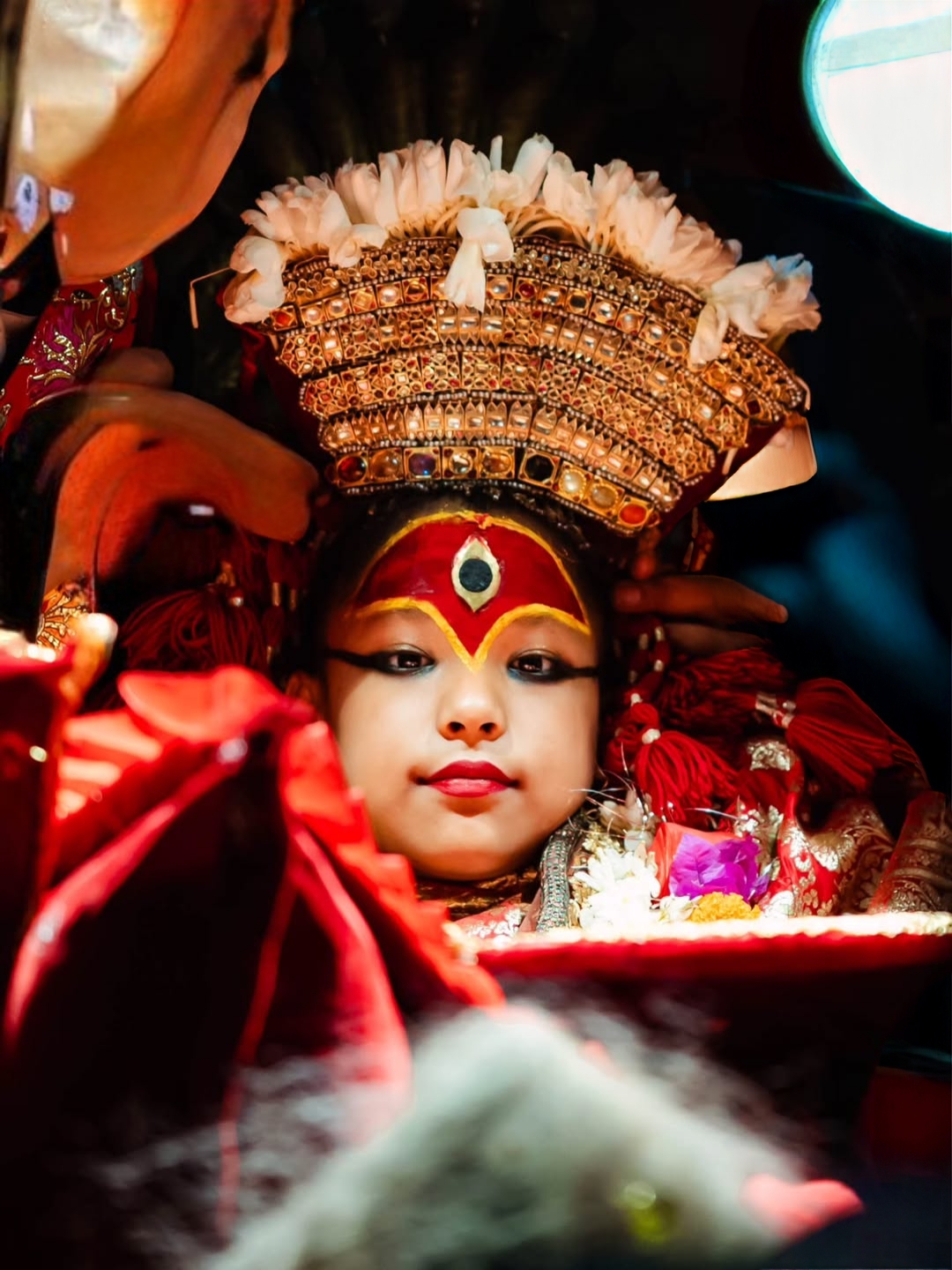
You see the Kumari chariot, the Bhairab mask, and processions that stretch across the square.

What you’ll notice

• The living goddess Kumari in her chariot
• Masked dancers moving through the crowd
• Tall ceremonial poles
• Drums echoing through Durbar Square
• Thousands of people watching together

Indra Jatra is one of the valley’s most exciting moments.

What makes Rato Machhindranath Jatra different from other chariot festivals?

Rato Machhindranath Jatra is different because it has one of the longest and slowest chariot journeys in Nepal.

The chariot moves between Patan and Bungamati over many weeks. The pace is slow, and the movement feels emotional for many locals.

Unique parts of this jatra

• A towering wooden chariot
• A long route that crosses neighborhoods
• People pulling ropes for hours
• Crowds blessing the path
• A deep sense of community

This jatra shows patience, strength, and devotion.

Why do Newar communities lead most of these traditions?

Newar communities lead most of these traditions because they have preserved the valley’s oldest cultural and religious practices.

Their festivals blend Hindu and Buddhist elements, family rituals, and community responsibilities.

How Newar culture shapes these festivals

• Strong ties between families and temples
• Skilled artisans building chariots
• Priests performing ancient rituals
• Drummers trained from childhood
• Communities working together

Without these traditions, the valley would feel very different.

How can travelers watch these festivals respectfully?

Travelers can watch these festivals respectfully by staying to the side, avoiding blocking the chariot path, and observing how locals behave.

You don’t need to push forward to see everything. The best views often come from calm spots slightly away from the crowd.

Simple respectful habits

• Stand back when ropes tighten
• Let elders pass first
• Avoid touching the chariot
• Keep a soft tone
• Follow the flow of the crowd

These festivals carry deep meaning, and small gestures matter.

How do these festivals show Kathmandu’s connection across the valley?

These festivals show Kathmandu’s connection across the valley through routes that link Kathmandu, Patan, and Bhaktapur.

Some celebrations travel through multiple cities. Others stay local but follow traditions shared across Newar communities.

Connections you’ll see

• Shared deities
• Shared music styles
• Shared artisan skills
• Shared rituals
• Shared community responsibilities

These links form the cultural foundation of the valley.

Why do these events feel emotional for locals?

These events feel emotional for locals because the deities represent protection, continuity, and identity.

Seeing a god move through the streets feels like part of life rather than a performance.

What creates the emotion

• Childhood memories
• Family involvement
• Community pride
• Blessings for the year
• The feeling of being together

Travelers can sense this energy even without knowing the full history.

Why is Boudha Mandala Hotel a comfortable base for exploring these festivals?

Boudha Mandala Hotel is a comfortable base for exploring these festivals because it sits in a calm neighborhood with easy access to all three cities.

You can visit Indra Jatra in Kathmandu, head to Patan for Machhindranath, or reach Bhaktapur for Bisket Jatra, then return to a peaceful place afterward.

Why the location works well

Quick taxi access
• Quiet evenings
• Easy morning starts
• Close to calm walking routes
• A relaxing space after busy festival days

The balance between cultural energy and rest makes your festival experience smoother and more enjoyable.

Why Progress in Nepal Happens Quietly and Still Works

Progress in Nepal rarely announces itself. It doesn’t arrive with grand openings, glossy campaigns, or dramatic before-and-after moments. It appears slowly, quietly, and often without claiming credit. Travelers expecting visible transformation sometimes miss it entirely. Those who stay longer begin to notice it everywhere.

In Nepal, progress isn’t about replacing the old. It’s about adjusting within it.

Why progress in Nepal doesn’t look dramatic

Because Nepal has never worked in extremes. Change here happens through adaptation rather than disruption. New systems layer onto existing ones. Old habits soften rather than disappear.

A shop adds digital payments but keeps handwritten ledgers. A village gains road access, but footpaths remain essential. Smartphones spread, yet face-to-face communication still dominates daily decisions.

Progress isn’t framed as a break from the past. It’s framed as something that must coexist with it.

How infrastructure improves without reshaping daily life

Roads, electricity, and internet access have expanded dramatically in recent years. What’s notable is how little this is talked about. Power cuts that once defined daily schedules are now rare in many areas. Mobile data reaches places that were recently disconnected. Travel between regions is easier than it was a decade ago.

Yet daily life hasn’t been reorganized around these improvements. People still plan cautiously. Backup options remain normal. Reliability is appreciated, not assumed.

This quiet pragmatism keeps progress functional instead of fragile.

Why technology adoption feels subtle

Nepal adopts technology quickly, but without spectacle. Digital wallets sit alongside cash. Online services coexist with in-person processes. Social media is widespread, but word of mouth still carries weight.

There’s no rush to declare anything “fully modern.” People test new tools, keep what works, and ignore what doesn’t. This selective adoption avoids dependency and disappointment.

Technology here serves life. Life doesn’t reorganize itself around technology.

How education reflects quiet change

Education in Nepal has expanded steadily, especially outside major cities. More families prioritize schooling, language skills, and higher education than ever before. Migration for study and work has reshaped expectations at home.

This progress doesn’t show up as a single achievement. It shows up in conversations. Parents thinking long-term. Young people balancing ambition with responsibility. Returnees bringing skills back without fanfare.

The shift is generational, not performative.

Why social change happens without confrontation

Nepal rarely frames progress as a fight. Change is negotiated, not demanded. New ideas move slowly through families and communities. Resistance is expected. Compromise is normal.

This doesn’t mean progress is absent. It means it moves in ways that preserve relationships. Social roles evolve without being publicly challenged. Norms bend rather than break.

From the outside, this can look like stagnation. From within, it feels stable.

How migration shapes progress invisibly

Millions of Nepalis work or study abroad. The impact of this migration is everywhere, even when it’s not visible. Remittances fund education, healthcare, homes, and small businesses. Exposure to other systems changes expectations.

Yet migration isn’t romanticized. It’s treated as sacrifice, not success. Progress funded this way carries emotional weight, which keeps it grounded.

Homes improve quietly. Villages adapt subtly. Life moves forward without celebration.

Why cities change faster than attitudes

Kathmandu, Pokhara, and other urban centers show visible growth. Cafes multiply. Lifestyles diversify. Work patterns shift. But attitudes change more slowly, and intentionally so.

Respect for elders remains strong. Community obligations still matter. Ritual and routine anchor daily life even as environments modernize.

This balance prevents cultural whiplash. Cities feel dynamic without feeling unmoored.

How resilience becomes a form of progress

Nepal has faced earthquakes, political transitions, and economic challenges. Resilience here isn’t branded as strength. It’s treated as normal behavior. People rebuild because there’s no alternative. Systems adjust because survival requires it.

This produces a population skilled at incremental recovery. Progress isn’t measured by speed of rebound, but by ability to continue.

Stability, not acceleration, is the goal.

Why progress isn’t centralized

Nepal doesn’t move forward in a straight line. Different regions change at different speeds, in different ways. What feels progressive in one place may feel unnecessary in another.

This decentralization prevents uniform narratives. Progress isn’t something everyone experiences the same way. It’s contextual, local, and uneven.

That unevenness frustrates planners but protects communities from one-size-fits-all solutions.

How this changes the traveler’s perspective

Travelers used to loud progress often overlook Nepal’s version. There are fewer signs saying “look how far we’ve come.” Instead, there are countless small adjustments that make life more workable than before.

Understanding this shifts expectations. Delays feel less like failure. Imperfection feels intentional. Change becomes something you observe over time, not something you tick off a list.

Nepal teaches that progress doesn’t need to prove itself.

Why quiet progress lasts longer

Because it isn’t performative. Changes that grow quietly are more likely to stick. They’re tested in real conditions. They’re adapted to fit existing systems. They survive stress.

Nepal’s version of progress may not photograph well, but it functions. And in the long run, function matters more than appearance.

What this reveals about Nepal as a whole

Nepal isn’t resisting change. It’s filtering it. Accepting what strengthens daily life and discarding what doesn’t. That discernment comes from history, geography, and lived experience.

Progress here isn’t loud because it doesn’t need to be. It speaks through continuity.

Staying somewhere that understands this pace helps travelers appreciate it more fully, and places like Boudha Mandala Hotel offer a calm base for observing Nepal’s quiet evolution without rushing to define it.

How to Explore Kathmandu Without Getting Stuck in Traffic

Kathmandu can surprise first-time visitors with its traffic. Some days the roads crawl. Some days they move fine. But once you learn the rhythm of the city, you realize you can explore almost everything without sitting in long lines of cars. If you’re staying at Boudha Mandala Hotel, you already start in a neighborhood that helps you avoid the worst bottlenecks. This guide shows you practical ways to see the city while keeping traffic stress low.

Why does Kathmandu traffic feel overwhelming for new visitors?

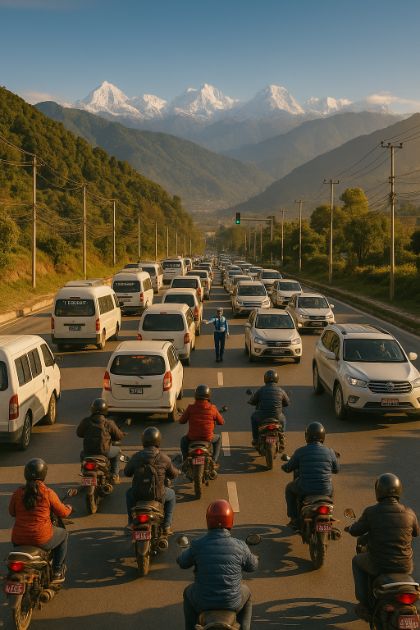
Kathmandu traffic feels overwhelming for new visitors because the roads are narrow, the population is dense, and cars, bikes, and pedestrians move closely together.

If you’re not used to this style of movement, it can feel like everything is happening at once. But most of Kathmandu’s traffic follows predictable patterns once you keep a few things in mind.

What causes slowdowns

• Morning and late afternoon rush
• School drop-off and pickup times
• Markets opening or closing
• Festival days
• Roads near the city center

Once you know when and where these happen, moving around becomes easier.

What is the best time of day to explore Kathmandu?

The best time of day to explore Kathmandu is early morning, between 6:30 and 9:00, before the roads fill up.

This is when the city feels light and open. You can reach major places quickly, and the weather is comfortable.

Why mornings help you avoid traffic

• Fewer taxis on the road
• Schools haven’t opened yet
• Cooler temperature for walking
• Markets are not crowded
• Shorter ride times to almost every landmark

A morning start often saves you more time than any shortcut.

Which neighborhoods are easiest to explore without heavy traffic?

The neighborhoods that are easiest to explore without heavy traffic include Boudha, Patan, Swayambhu surroundings, and Bhaktapur’s inner areas.

These places let you walk between many points of interest without needing long car rides.

Traffic-light neighborhoods

• Boudha for monastery visits and food
• Patan for art, museums, and temples
• Bhaktapur for slow walking streets
• Swayambhu hilltop for views without cars nearby

Once you choose the right area for the day, you avoid cross-city travel that causes the biggest delays.

How can walking help you explore faster than cars in Kathmandu?

Walking helps you explore faster than cars in Kathmandu because many attractions sit close together, and walking lets you bypass traffic completely.

People often underestimate how compact Kathmandu Valley is. A 15 minute walk can replace a 25 minute taxi ride during busy times.

Walking tips for smoother exploring

• Use back lanes instead of main roads
• Follow local footpaths around markets
• Carry a mask for dusty areas
• Wear comfortable shoes
• Start walking before the day gets hot

Walking also lets you discover small shops, tea stalls, and local moments you would miss in a car.

How can choosing the right route reduce traffic delays?

Choosing the right route reduces traffic delays by keeping you away from main roads that get clogged during peak hours.

Most traffic piles up on the same few roads. If you avoid them, even by a small margin, you save time.

Routes to avoid at busy times

• Chabahil to Gaushala
• Kalanki junction
• New Road area
• Thamel’s central lanes
• Koteshwor toward mid-afternoon

Routes that stay smoother

• Outer Ring Road sections
• Side lanes around Boudha
• Inside Bhaktapur and Patan squares
• Early-morning roads to Swayambhu

Knowing even one alternate path helps a lot.

How does staying in Boudha help you avoid traffic?

Staying in Boudha helps you avoid traffic because the neighborhood is self-contained, walkable, and close to major attractions without needing to cross the busiest parts of the city.

You can visit the stupa, monasteries, cafés, and markets on foot. You only need a short taxi ride when you want to explore other parts of the valley.

Why Boudha is a strong base

• Quick access to Pashupatinath
• Shorter rides to Patan
• Easy back routes to Thamel
• Early morning calm for walking
• Fewer congested roads within the neighborhood

This is one reason many travelers choose Boudha over busier areas.

What transport options help you move quickly during busy hours?

Transport options that help you move quickly during busy hours include taxis, ride-hailing apps, motorcycles, and short walking connections between pickup points.

Taxis work well if you choose roads wisely. Motorbikes move fastest but require comfort with local traffic style. Mixing walking with short rides works best for many travelers.

Fastest movement options

• Taxis using side routes
• Ride-hailing apps for predictable pickups
• Motorbike taxis
• Walking between key areas
• Starting early or after peak traffic

If your schedule is flexible, choose movement times instead of rushing into the busiest hours.

How do simple planning habits reduce traffic frustration?

Simple planning habits reduce traffic frustration by helping you avoid bottlenecks before they happen.

A little preparation makes your day smoother.

Helpful planning habits

• Visit faraway places early
• Save nearby spots for midday
• Check festival days in advance
• Keep some buffer time
• Plan one major area per day instead of many

Kathmandu rewards slow, steady exploration.

Why is returning to Boudha after exploring the city easier than other areas?

Returning to Boudha after exploring the city is easier than other areas because traffic tends to thin out as you approach the neighborhood.

The roads leading into Boudha usually stay clearer than those leading into Thamel or central Kathmandu, especially in the late afternoon.

Evening advantages
• Smoother ride from Patan
• Better flow from Durbar Square
• Easy access from the airport
• Calm streets once you arrive
• Simple walking routes back to your hotel

Ending your day in a peaceful area improves the whole experience.

Why is Boudha Mandala Hotel a convenient base for traffic-free exploring?

Boudha Mandala Hotel is a convenient base for traffic-free exploring because it sits close to the stupa, allows easy walking, and offers fast access to taxis without stepping into crowded roads.

Guests appreciate that they can start early without noise, explore on foot, and return to a quiet place after busy outings.

Why the location helps

• Two minute walk to Boudhanath Stupa
• Calm mornings for early starts
• Easy taxi access for quick rides
• Food, cafés, and shops within walking distance
• Less traffic stress throughout the trip

The hotel’s surroundings make the rest of Kathmandu feel more manageable.

Why Life in Nepal Runs on Negotiation, Not Rigid Rules

In Nepal, very little is final on the first attempt. Plans adjust, rules bend, timing shifts, and outcomes evolve through conversation. For visitors used to fixed systems, this can feel uncertain or inefficient. For Nepalis, it’s simply how life stays workable in a complex environment.

Everyday life here isn’t governed by rigid rules. It’s guided by negotiation.

This isn’t chaos. It’s a social skill developed over generations.

What does it mean to say life is negotiated in Nepal?

It means outcomes depend on context, relationships, and timing, not just written rules or stated expectations. Prices are discussed. Deadlines are flexible. Solutions are shaped through dialogue rather than enforcement.

Negotiation doesn’t always look like bargaining. Often it’s subtle. A pause before answering. A suggestion instead of a refusal. A delay that signals conditions aren’t right yet.

Life moves forward through adjustment, not insistence.

Why fixed systems don’t dominate daily life

Nepal has layers of formality and informality running side by side. Formal systems exist, but they aren’t always reliable or accessible. Informal negotiation fills the gaps.

This doesn’t mean rules are ignored. It means they’re interpreted through human judgment. Circumstances matter. Intent matters. Relationships matter.

A fixed rule applied without flexibility can break social balance. Negotiation preserves it.

How negotiation shapes time and plans

Time in Nepal is rarely absolute. “Later” can mean today, tomorrow, or when conditions align. This frustrates travelers who expect precision, but it allows daily life to absorb unpredictability without conflict.

Plans adjust to traffic, weather, family needs, festivals, and availability. Rather than treating change as failure, people renegotiate expectations.

The goal isn’t to keep schedules intact. It’s to keep relationships intact.

Why direct refusal is uncommon

Saying “no” outright can shut down negotiation. Nepalis often avoid direct refusal to keep options open. Responses may sound vague or noncommittal to outsiders, but they carry meaning locally.

A delayed response, a conditional answer, or a gentle redirection often means circumstances don’t allow agreement right now. It’s an invitation to revisit later, not a dismissal.

This style prioritizes harmony over clarity and flexibility over finality.

How negotiation works in everyday transactions

Markets, transport, services, and even simple errands often involve discussion. Prices reflect context. Availability shifts. Terms adjust. None of this is personal. It’s situational.

For locals, negotiation is practical communication. For visitors, it can feel uncomfortable at first. But once understood, it becomes predictable. You learn when to engage, when to wait, and when to accept an outcome as settled for now.

Negotiation isn’t about winning. It’s about arriving at something workable.

Why rules bend but trust still matters

Flexibility doesn’t mean anything goes. Reputation and trust are quietly enforced. Someone who negotiates unfairly or constantly breaks agreements loses standing.

Because systems aren’t always strict, personal credibility carries weight. People remember how you act. Consistency matters more than authority.

This is why long-term relationships often produce smoother outcomes than one-off interactions. Familiarity reduces the need for negotiation.

How this affects work and responsibility

Work in Nepal often involves overlapping roles and shifting responsibilities. Tasks are defined broadly, not narrowly. People adapt based on need rather than job description.

This flexibility keeps things moving when resources are limited. It also means accountability looks different. Responsibility is shared and adjusted rather than assigned rigidly.

Progress happens through cooperation, not strict hierarchy.

Why negotiation prevents open conflict

In many situations, negotiation acts as a pressure valve. Instead of confrontation, issues are softened, delayed, or reframed. This reduces open conflict but can confuse outsiders who expect direct resolution.

Problems are often solved sideways rather than head-on. Compromise arrives gradually. Agreement emerges without a clear moment of decision.

This approach values social stability over decisive closure.

How travelers misread this system

Visitors often interpret negotiation as disorganization or lack of professionalism. In reality, it’s a survival strategy in a place where conditions constantly change.

Once travelers stop expecting fixed outcomes, frustration drops. Interactions become smoother. Delays feel less personal. Solutions feel more collaborative.

Understanding negotiation turns confusion into competence.

When negotiation ends

Not everything is negotiable forever. Some limits are firm, even if they’re not stated directly. You learn them through repetition rather than instruction.

Silence, repeated deferral, or lack of engagement often signals the boundary has been reached. Recognizing these cues is part of learning how life works here.

Negotiation isn’t endless. It’s calibrated.

Why this system persists

Because it works. Negotiation absorbs uncertainty without breaking social ties. It allows life to continue when infrastructure, systems, or conditions fall short.

Fixed systems demand stability. Negotiated systems create it.

In Nepal, adaptability isn’t a personality trait. It’s a cultural necessity.

What this teaches travelers

Nepal teaches you to listen for nuance. To read context. To value process over outcome. You learn that certainty is less important than continuity.

Once you adapt, everyday life feels less unpredictable and more responsive. The country stops resisting your expectations because you’ve stopped forcing them.

Staying somewhere that understands this rhythm helps travelers settle in more quickly, and places like Boudha Mandala Hotel offer a calm base for experiencing Nepal without pressure to fix every detail.

Best Foods in Kathmandu: A Local’s Guide

Kathmandu has a way of sneaking into your memory through its food. You think you’re just grabbing a quick bite, then suddenly you realize you’re back at the same tiny shop the next day because you can’t stop thinking about the flavor.

If you’re in Boudha, you’re already surrounded by delightful dishes worth seeking out. This guide simplifies your search for the food that locals actually enjoy.

What makes Kathmandu’s food scene special?

Kathmandu’s food scene is special because it blends Nepali, Tibetan, Newari, and Indian influences into dishes that feel comforting, bold, and deeply local.

You’re not dealing with complicated menus or high-skill dining rules. You’re dealing with food that families cook at home, items sold on street corners, and recipes that haven’t changed for centuries. That’s what makes eating in Kathmandu feel grounded and real.

What gives the city its flavor

• Nepali home-style cooking with slow-cooked lentils and rice
• Tibetan dishes around Boudha with warm spices and soft textures
• Newari cuisine that brings fire, crunch, and rich seasoning
• Street snacks sold fresh and fast
• Winter foods that warm your hands and your mood

Now let’s get into the dishes that truly matter.

Momo

Momo is a steamed or fried dumpling filled with meat or vegetables, and they are the most loved snack in Kathmandu.
They’re simple. They’re cheap. They hit the spot at any time of day. People treat momo like a comfort food, which explains why you’ll see a momo shop every few meters.

Types worth trying

• Steamed momos with chicken or buff
• Fried momos with crispy edges
• Jhol momos served in warm spiced broth
• Kothey momos that are half steamed and half pan-fried
• Open momos shaped like little cups

Where they taste best near Boudha

• Small family-run momo shops
• Tibetan restaurants inside the stupa circle
• Cafés around the monastery lanes

Dal Bhat

Dal bhat is a plate of steamed rice, lentil soup, vegetable curry, and pickles, and it fuels daily life in Nepal.

People eat it because it’s filling, balanced, and comforting. It keeps you going whether you’re working at a shop, trekking in the mountains, or exploring the city.

What a typical plate includes:

• Lentil soup poured over rice
• Seasonal vegetables cooked with spices
• Achar made from tomato, radish, or chili
• Optional meat curry
• A refill of anything you want

If you try only one proper Nepali meal in Kathmandu, this should be it.

Newari Cuisine

Newari cuisine is the traditional food of the Newar community in the Kathmandu Valley, and it offers the boldest flavors in the city.

It can be spicy, tangy, smoky, and crunchy all at once. Travelers love it because it feels completely different from ordinary Nepali food.

Newari dishes worth trying

• Yomari, a sweet rice-flour dumpling filled with molasses
• Bara, a soft lentil pancake
• Chatamari, a rice-flour crepe with toppings
• Choila, grilled and spiced meat
• Samay baji, a full traditional set

For many visitors, yomari becomes the surprise favorite.

Tibetan Foods

Tibetan foods near Boudha are worth trying because they reflect the neighborhood’s roots and daily life.

Around the stupa, you hear Tibetan chants, see monks walking to prayer, and smell butter tea drifting from cafés. The food fits that atmosphere perfectly.

Must-try Tibetan dishes

• Thukpa, a warm noodle soup that’s perfect on cooler days
• Shabhaley, fried meat pies with crisp edges
• Tingmo, fluffy steamed bread
• Thenthuk, hand-pulled noodle soup
• Butter tea, salty and rich

You’ll find some of the best Tibetan meals in Kathmandu within a few minutes of the hotel.

What street foods should travelers try in Kathmandu?

Street foods in Kathmandu are worth trying because they give you fast flavor for very little money.

You just need to choose clean, busy stalls. The busiest places usually serve the freshest items.

Street foods to look for

• Pani puri with spicy and tangy fillings
• Chatpate, a crunchy snack mixed with noodles, peanuts, and chili
• Aloo chop, a potato patty with a crispy coating
• Samosas filled with potato and spices
• Sel roti, a sweet ring made from rice batter

Chatpate is the one locals eat when they want something quick and lively.

What sweets should travelers try in Kathmandu?

Kathmandu has several sweets that carry memories for people who grew up here.

They’re not complicated desserts. They’re comforting snacks that families buy on holidays, market days, and long walks.

Local sweets worth tasting

• Juju dhau from Bhaktapur, thick and creamy
• Lal mohan, soft fried dough balls soaked in syrup
• Yomari during festival season
• Barfi made from milk and sugar
• Gudpak, a dense sweet made from khuwa and nuts

What drinks are common in Kathmandu?

Common drinks in Kathmandu include tea, lassi, and traditional butter tea.

You’ll see people sipping tea on balconies, in alleys, in cafés, and outside shops. Tea is practically a break built into everyone’s day.

Popular drinks

• Milk tea simmered with cardamom
• Sweet lassi made from yogurt
• Butter tea in Tibetan restaurants
• Black tea for a lighter option
• Fresh lemonade in warmer months

Tea breaks become one of those small joys during your stay.

What are the best places near Boudha to try these dishes?

The best places near Boudha to try these dishes include Tibetan cafés, small momo shops, and restaurants just outside the stupa circle.

You don’t need to walk far because most of the neighborhood’s best food sits around the main pathway.

Where to eat near the hotel

• Tibetan restaurants inside the stupa circle
• Family kitchens serving dal bhat on the northern side
• Momo shops around the alleyways
• Cafés with rooftop views of the stupa
• Small bakeries selling fresh pastries and tea

Walking around Boudha at mealtime feels like a slow and warm experience.

Why is Boudha Mandala Hotel a key place to stay for food lovers in Kathmandu?

Boudha Mandala Hotel is a helpful base for food lovers because it sits steps away from Tibetan eateries, Nepali kitchens, and street snacks that travelers enjoy.

Guests like starting and ending their days in a calm area filled with real cooking. You aren’t surrounded by chain restaurants or loud commercial streets. You’re surrounded by places with steam rising from momo pots and fresh roti being made through open kitchen windows.

What makes the location ideal

• 2 minute walk to the stupa and its food circle
• Easy access to Tibetan and Nepali meals
• Quiet streets for slow morning walks
• Close to cafés, bakeries, and local eateries
• Short drive to Thamel for more variety

Where Travelers Can Witness Everyday Rituals Without Tours

Kathmandu’s rituals are everywhere if you know where to look. You don’t need a tour guide or a schedule. You just need a bit of patience and a willingness to stand still for a moment. People here pray, light lamps, turn prayer wheels, and leave small offerings as naturally as breathing. These rituals happen quietly in streets, temples, and courtyards all over the valley, and travelers can watch them in a respectful way without joining or interrupting.

Where can travelers see morning rituals without joining a tour?

Travelers can see morning rituals without joining a tour by visiting stupas, temples, and small neighborhood shrines before 9 am.

Morning is when the city feels honest. People come out early to start their day with simple spiritual routines.

Reliable morning ritual spots

• Boudhanath Stupa for kora and prayer wheels
• Pashupatinath’s outer courtyards
• Patan’s old neighborhood shrines
• Bhaktapur’s early offerings in open squares
• Small roadside temples around Asan

You get a clear view of daily life without feeling out of place.

How can travelers witness rituals around stupas?

Travelers can witness rituals around stupas by walking clockwise and observing how locals move, pray, and touch the prayer wheels.

The atmosphere stays calm even when many people are present.

What you’ll see near stupas

• Monks walking slowly
• Hands brushing prayer wheels
• Butter lamps glowing in corners
• People whispering short prayers
• Offerings of flowers and rice

These rituals are gentle and open to anyone who watches respectfully.

Where can travelers see rituals related to Hindu temples?

Travelers can see rituals related to Hindu temples in outer courtyards, smaller shrines, and surrounding walkways.

You don’t need to enter inner sanctums to understand what’s happening. Most rituals take place in open spaces.

Hindu ritual moments to look for

• Lamps placed in front of deities
• Flowers offered to stone icons
• Priests preparing vessels for worship
• People ringing bells
• Devotees touching temple entrances with their hands

These moments happen all day in small pockets of the city.

How can travelers witness everyday rituals connected to Tibetan culture?

Travelers can witness everyday rituals connected to Tibetan culture by spending time near monasteries and markets in Boudha.

These rituals feel calm and rhythmic.

Common Tibetan ritual scenes

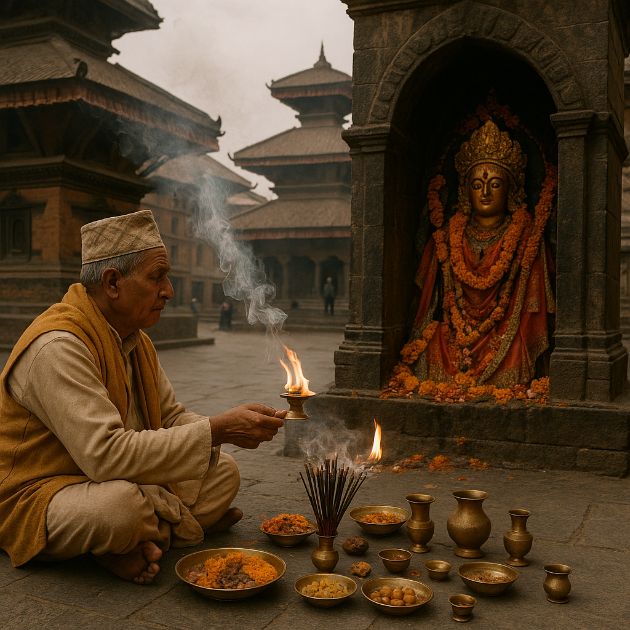
• Incense carried in small metal burners
• Prayer flags being adjusted or tied
• Butter lamps lit in quiet rooms
• Short chants drifting from monastery windows
• Offerings placed at small altars

These actions happen naturally, not as performances.

Which neighborhood routines feel like rituals even if they aren’t formal ceremonies?

Neighborhood routines that feel like rituals include water collection, sweeping courtyards, and placing flowers at small shrines.

These routines shape everyday life and show the deeper rhythm of the valley.

Daily routines with ritual energy

• Women sweeping steps at sunrise
• Neighbors sharing tea in front of houses
• Families lighting lamps in the evening
• People offering water to small roadside shrines
• Vendors placing flowers at the start of their day

These quiet actions carry meaning even without formal prayers.

Where can travelers see evening rituals without tours or guides?

Travelers can see evening rituals without tours by visiting temples, stupas, and small neighborhood lanes after sunset.

Evenings bring a soft glow and a relaxed pace.

Evening ritual scenes

• Butter lamps lined in rows
• Soft chanting from monasteries
• Bells marking the end of the day
• People offering incense
• Families pausing at shrines on their way home

It’s one of the most peaceful times to observe daily spirituality.

How can travelers watch these rituals respectfully?

Travelers can watch these rituals respectfully by standing to the side, keeping quiet, and avoiding direct interference with the ritual flow.

A little awareness goes a long way.

Respectful habits

• Keep a small distance
• Do not touch ritual items
• Ask before taking photos
• Move slowly around worshippers
• Allow elders to pass first

Rituals continue naturally when watchers remain gentle.

How can travelers find these rituals without using guides or apps?

Travelers can find these rituals by following the sound of bells, the smell of incense, or the movement of people heading toward temples and shrines.

Kathmandu communicates through its senses.

Clues that lead to rituals

• The smell of burning incense
• Groups walking with purpose
• Soft chanting from inside buildings
• Flower vendors gathering in one area
• Bells ringing through neighborhoods

Your senses guide you better than any schedule.

Why do everyday rituals matter for understanding Kathmandu?

Everyday rituals matter for understanding Kathmandu because they reveal how spirituality fits into normal life.

You see devotion in simple actions rather than grand ceremonies.

What rituals teach you

• How people start and end their day
• The connection between family and spirituality
• The link between community and worship
• The quiet beauty of daily faith
• The role of small shrines in daily routines

These details help travelers understand the city more deeply.

Why is Boudha Mandala Hotel a peaceful base for witnessing everyday rituals?

Boudha Mandala Hotel is a peaceful base for witnessing everyday rituals because it sits within walking distance of monasteries, tea shops, and calm lanes where rituals happen all day.

A short morning walk takes you into the heart of daily life around the stupa.

Why the location works

• Two minute walk to Boudhanath Stupa
• Close to monasteries with morning chanting
• Calm evening scenes after sunset
• Safe lanes for early walks
• A quiet return after exploring the city’s rituals

Staying in Boudha makes everyday spirituality easy to experience.

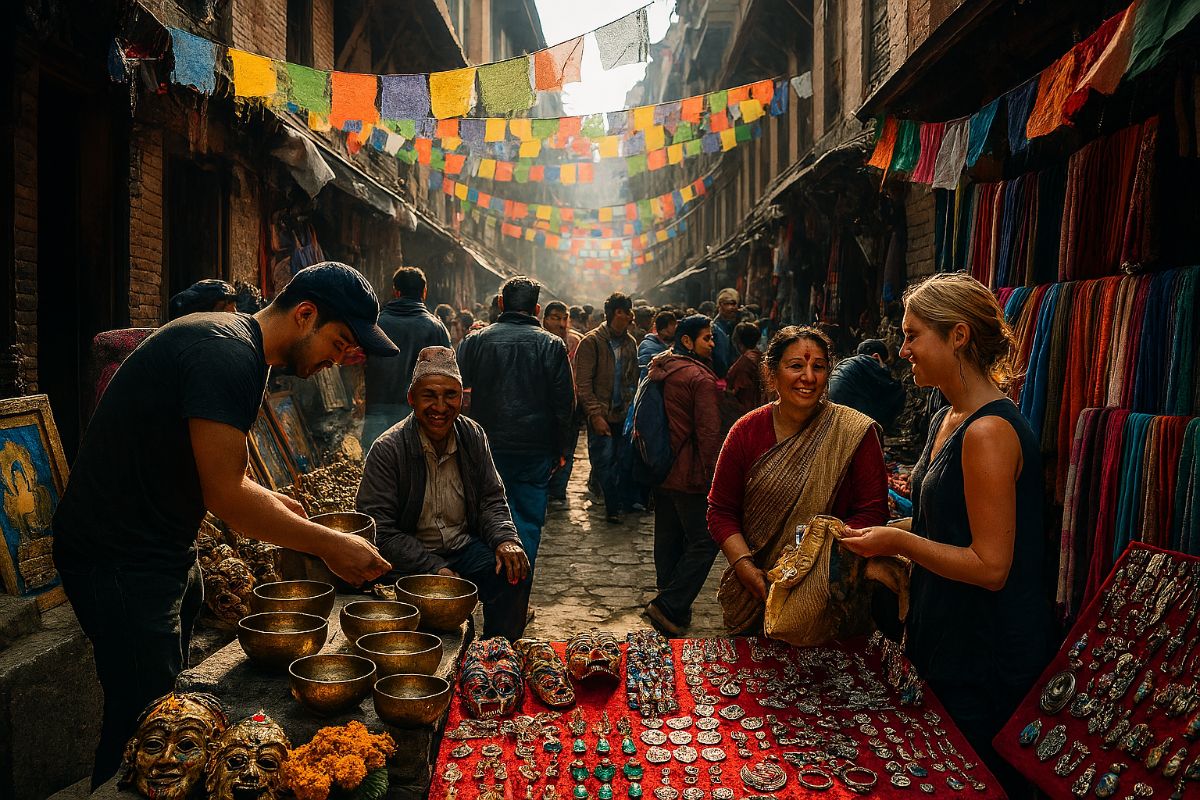
What makes markets in Kathmandu so good for handicrafts and souvenirs?

Markets in Kathmandu are good for handicrafts and souvenirs because many of the items are made by local artists who still rely on traditional methods.

You don’t just see finished products. You often see the process behind them. A man is carving wood outside his shop. Women weaving shawls inside small studios. Artists painting mandalas with slow, steady movements. It feels personal.

Why these markets stand out
• Real Nepal-made items instead of imported copies
• Shops run by artists and families
• Unique pieces you don’t find elsewhere
• Reasonable prices if you ask politely
• Items with cultural meaning or spiritual symbolism

What is Boudha Market and why is it great for hotel guests?

Boudha Market is the most convenient market for hotel guests because it sits around Boudhanath Stupa, only steps from Boudha Mandala Hotel.

The shops sell items tied to Buddhist culture, Tibetan traditions, and local crafts. It’s peaceful to walk around because the stupa creates a calm loop where you can take your time.

What to buy in Boudha ?

• Singing bowls
• Prayer flags
• Tibetan jewelry
• Butter lamps
• Mandala paintings
• Incense and handmade soaps

If you want a market that feels relaxed and easy to browse, start here.

What is Thamel Market known for?

Thamel Market is known for its busy lanes filled with handicrafts, trekking gear, and souvenir shops that stay open from morning until late night.

It has more energy than Boudha. You hear music from cafés, see backpackers bargaining, and pass shops selling everything from scarves to statues.

What to buy in Thamel ?

• Pashmina shawls
• Handmade journals
• Carved wooden masks
• Metal statues
• Felt crafts
• Local spices

If you want variety, Thamel has more than any other area.

What is Asan Bazaar and why do travelers love it?

Asan Bazaar is a historic street market in the heart of old Kathmandu, and travelers love it because it shows daily life alongside traditional goods.

It’s busy, packed with colors and sounds, and the narrow lanes feel like a living museum. You see fresh produce, old temples, spice shops, and small stalls selling handmade items.

What to buy in Asan

• Spices
• Beads and jewelry
• Brass items
• Traditional cooking tools
• Incense
• Festive decorations

Asan feels less touristy, which makes it a favorite for travelers who enjoy authentic local scenes.

What is Patan Market and what makes it unique?

Patan Market is unique because it sits next to Patan Durbar Square, an area known for Newari art, stone carvings, and metalwork.

The shops around Patan often sell items made by artists who specialize in sculptures and traditional crafts. You see metalworkers shaping statues by hand in nearby workshops.

What to buy in Patan

• Stone carvings
• Bronze statues
• Thangka paintings
• Newari crafts
• Handmade jewelry

If you love detailed artistic work, Patan is the place to explore.

What can travelers find in Bhaktapur Market?

Travelers can find pottery, traditional masks, and handmade crafts in Bhaktapur Market, which sits inside a beautifully preserved old city.

Walking through Bhaktapur feels different from the rest of Kathmandu. The brick streets, old wooden windows, and open courtyards give everything a slower pace.

What to buy in Bhaktapur

• Pottery
• Hand-carved masks
• Juju dhau in clay pots
• Wood carvings
• Traditional puppets
• Decorative plates

If you enjoy slow shopping and historic surroundings, Bhaktapur is your ideal stop.

What is Indra Chowk good for?

Indra Chowk is good for buying traditional clothing, glass bead necklaces, and small handcrafted items.

It sits between Asan Bazaar and Kathmandu Durbar Square, so you can visit all three in one outing. The area is tight and busy, but the shopping feels rewarding.

What to buy in Indra Chowk

• Glass bead necklaces
• Traditional Nepali fabrics
• Small silver items
• Hand-knotted strings
• Festive jewelry

If you want something colorful and distinctly Nepali, this is a great place.

Where should travelers go for art and paintings in Kathmandu?

Travelers should go to local art galleries and small studios in Boudha, Patan, and Thamel for high-quality paintings and mandalas.

Artists spend days or weeks on a single canvas. You can watch them work in some studios, which makes the piece feel more personal.

Where to look

• Mandala studios around Boudhanath Stupa
• Small galleries in Patan
• Thangka painting schools near Boudha
• Art shops in Thamel

If you want one special item to take home, art is a meaningful choice.

How can travelers shop respectfully and avoid mistakes?

Travelers can shop respectfully by asking questions kindly, comparing prices, and supporting local artists rather than mass-produced shops.

Shopping in Kathmandu is simple, but a few small habits make the experience smoother.

Helpful tips

• Ask before taking photos inside shops
• Compare prices at two or three places
• Politely negotiate if you feel comfortable
• Check quality on pashmina and metal items
• Support small studios when possible

A little kindness goes a long way, and shopkeepers usually remember friendly guests.

Why is Boudha Mandala Hotel a helpful base for shopping in Kathmandu?

Boudha Mandala Hotel is a helpful base because it sits inside one of the best shopping neighborhoods for Tibetan and Buddhist crafts and gives easy access to the rest of the city.

You can shop in Boudha in the morning, visit Thamel or Asan in the afternoon, and return to a quiet neighborhood in the evening.

Why shoppers like this location

• Steps from Boudhanath Stupa shops
• Quick taxi access to Thamel and Asan
• Close to art studios and mandala painters
• Calm evenings for relaxing after busy markets
• Easy to return to the hotel for breaks between outings

For guests who love handicrafts and meaningful souvenirs, this part of Kathmandu feels like the right home base.

How to Do a Kora Around Boudha Stupa (Respectfully)

Key Takeaways
Kora around Boudhanath Stupa is a meditative ritual rooted in Tibetan Buddhist tradition. It involves circumambulating the stupa clockwise while spinning prayer wheels, chanting quietly, and walking with full presence. To do it respectfully, one must dress modestly, avoid loud speech or intrusive photography, and observe the behavior of locals. The early morning and dusk are ideal times to experience the stillness and devotion this practice embodies. More than a ritual, kora is a quiet act of connection to yourself, the community, and something timeless.

Introduction
You arrive in Boudha and pause at the entrance of the kora path. Around you, the stupa rises with gentle power, prayer flags flicker above, and the hum of spinning wheels wraps the space in a sacred rhythm. No one tells you what to do, yet something in you understands: walk, slowly, clockwise, with care.

Kora at Boudhanath is a silent invitation to join a centuries-old practice of healing, devotion, and inner stillness. This guide shares how to do a kora respectfully and meaningfully, whether you’re a first-time visitor or a spiritual seeker.

What is Kora and Why It Matter

In Tibetan Buddhism, kora (བསྐོར་བ་) means circumambulation, walking clockwise around a sacred site like a stupa, temple, or monastery while focusing on mantras or intentions. Each step is part of a prayer. Each round is an offering.

At Boudhanath, this act isn’t symbolic. It’s lived. Elders walk dozens of koras a day. Nuns with malas chant under their breath. Children learn the flow of clockwise footsteps early.

Kora is believed to purify negative karma, accumulate merit, and stabilize the mind. It’s meditation in movement.

When to Do Kora at Boudhanath

The beauty of Boudha is that it never sleeps. The kora path is alive from sunrise to well after dusk, but these are the most resonant times:

Early Morning (5:30 to 7:00 am): The stillness is almost otherworldly. Monks chant, the light is golden, and local practitioners begin their day in quiet rhythm.

Dusk (5:00 to 7:00 pm): Butter lamps are lit. The stupa glows. It’s the most emotionally powerful time to join the circle.

On Holy Days: During festivals like Lhabab Duchen or Buddha Jayanti, thousands of people move in prayerful silence. The atmosphere is electrifying.

How to Do Kora with Respect

If you’re new, start by watching. Observe the body language, pace, and gestures of those around you. Then, join in with humility.

Walk Clockwise: Always circle the stupa in a clockwise direction, keeping it to your right.

Spin Prayer Wheels Gently: Use your right hand, moving each wheel as you pass. It’s not about speed.
Keep a Peaceful Pace: Walk slowly and mindfully. This isn’t a hike, it’s sacred ground.

Dress Modestly: Cover shoulders and knees. Avoid flashy outfits.

Stay Quiet: Speak softly or not at all. Listen to the space. Let silence guide you.

Avoid Photography Mid-Kora: Don’t snap selfies while walking. It disrupts the atmosphere.

Offer a Lamp or Prayer: You can light a butter lamp before or after your walk, or recite the mantra Om Mani Padme Hum.

What You’ll Notice Along the Path

Kora isn’t just a motion. It’s full of presence. As you walk, the scent of juniper incense follows you. Pigeons flap overhead, settling and lifting like breath. The low murmur of prayers creates an unbroken sound current. Children walk with grandparents, passing this ritual down gently.

There’s something deeply human about this circle. You are alone, yet surrounded. Anonymous, yet connected.

Common Mistakes to Avoid

Even well-meaning visitors sometimes misstep. Here’s what to be mindful of:

  • Don’t walk against the flow , it disturbs the energy and practice.
  • Don’t interrupt others , especially those prostrating or praying intently.
  • Don’t touch monks or nuns , respect their boundaries.
  • Don’t point feet at the stupa , in Buddhist etiquette, feet are seen as unclean.
  • Don’t treat it like a spectacle , Boudha is not a performance. It’s devotion in motion.

Deepen the Experience: Stay Nearby

To truly understand kora, stay in Boudha for a few days. The rhythm sinks in. You begin to notice the same faces each day, quietly circling. The shifting sky above the dome. Your own breath syncing with the flow.

Boudha Mandala Hotel, just 10 seconds from the stupa, is ideal for this. You can step into the circle before dawn, return for tea, and feel part of the sacred village life.

Final Reflection
One morning, I passed a man in his 70s, eyes half-closed, mala beads worn smooth. He walked barefoot, one hand on the prayer wheel, the other resting gently on his chest.

We didn’t speak. But for a moment, our pace aligned. It felt like a transmission, not of words, but of presence.

That’s what Kora offers. Not just movement, but meaning.
In this sacred circle, you don’t just walk around the stupa, the stupa walks you.