
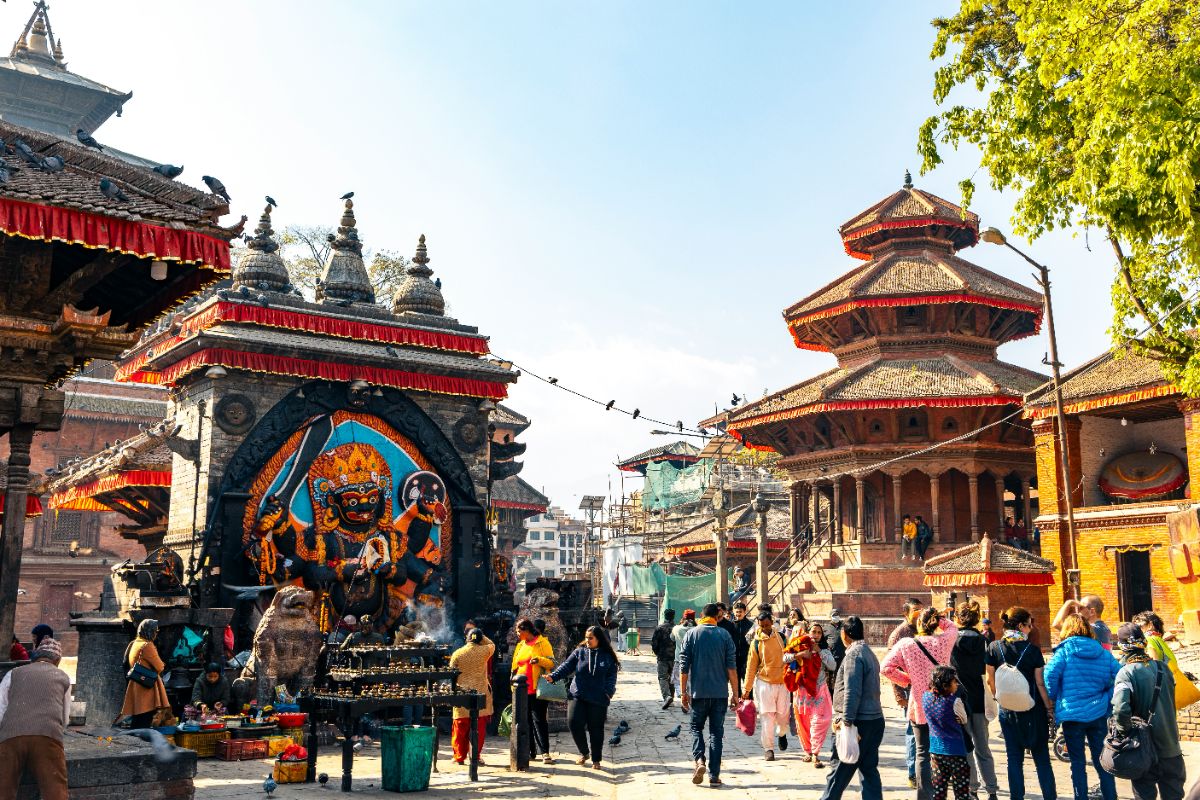
The Kathmandu Valley is not something you understand all at once. You absorb it slowly, through repetition and exposure, until one day the noise makes sense, the smells feel familiar, and the pace stops feeling chaotic. This valley isn’t designed to impress on arrival. It’s designed to be lived in.
What does the Kathmandu Valley sound like throughout the day?
The valley wakes up before sunrise, and sound is the first sign of life. Temple bells ring in short, deliberate bursts. Prayer wheels hum as they turn. Brooms scrape stone courtyards. Footsteps echo through narrow brick lanes long before traffic arrives.
By mid-morning, engines and horns layer over voices and movement. To visitors, this can feel loud at first, but it isn’t random. Sound in the valley marks time and activity, not urgency. Horns are communication, not aggression. Bells signal prayer cycles. Music announces festivals and processions. Even noise follows a pattern.
At night, sound softens but never disappears. Chanting drifts from monasteries. Dogs bark in the distance. Conversations carry farther in the cooler air. The valley doesn’t fall silent. It exhales.
Why are smells such a strong part of the Kathmandu Valley experience?
Because life here happens in the open. Shrines face the street. Kitchens open directly onto alleys. Food, prayer, dust, smoke, and flowers share the same air.
Incense is constant, but never identical. Some shrines burn sweet sticks. Others use heavier resins. Butter lamps add a faint smokiness that lingers on brick walls. Nearby, mustard oil heats in pans, releasing sharp, nutty aromas. Chilies, garlic, ginger, and onions cut through the air during cooking hours.
After rain, everything changes. The valley smells clean and metallic, like wet stone and soil. Dust settles. Brick darkens. For many travelers, this moment marks the first time the city feels calm.
Smell here is information. It tells you when prayer is happening, where food is being prepared, and when seasons are shifting.
How do daily rhythms in the valley actually work?
Life in the Kathmandu Valley moves in cycles, not schedules. Mornings belong to worship, errands, and movement. Late mornings and early afternoons fill with work, deliveries, and steady traffic. Mid-afternoon slows, especially in older neighborhoods, where shops close briefly and streets quiet.
Evenings bring people back outside. Families walk. Street food appears. Shops shut gradually, not all at once. There is no sharp transition between day and night, only a soft change in energy.
Festivals override everything. Streets close without warning. Traffic reroutes instinctively. Music replaces engines. Time pauses, then resumes. This rhythm can confuse first-time visitors, but it’s intentional. Ritual takes priority over efficiency.
Why does the valley feel intense but rarely rushed?
Because constant activity doesn’t equal hurry. People stop to talk in narrow lanes. Shopkeepers chat while customers wait. Processions move through traffic and nobody argues.
The valley teaches patience without instruction. Movement is continuous, but rarely fast. This is why travelers often feel overwhelmed on day one and strangely relaxed by day three. Once you stop resisting the pace, it carries you.
How do old cities shape the valley’s sensory experience?
Kathmandu, Patan, and Bhaktapur were built long before modern transport. They were designed for walking, gathering, and ritual. Streets curve instead of running straight. Courtyards pull life inward. Sound echoes differently off brick and timber.
Smells linger longer in tight alleys. Voices carry through shared spaces. Movement bends and adapts rather than flows cleanly. This compression makes everything feel close and layered. What seems crowded at first often feels intimate once you understand the pattern.
What changes in the Kathmandu Valley after dark?
Night doesn’t quiet the valley. It reorganizes it. Traffic thins. Incense becomes more noticeable. Voices soften. Chanting grows clearer. Street food replaces daytime meals, and the smell of frying oil drifts through neighborhoods.
This is when many travelers finally feel the valley slow down enough to notice it. Sitting still at night often reveals more than walking all day.
Why do travelers remember the valley long after leaving?
Because sensory memory lasts longer than visual memory. You may forget temple names or routes, but you remember bells at dawn, incense at dusk, and streets that never felt empty.
The Kathmandu Valley stays with people because it doesn’t perform. It doesn’t simplify itself for visitors. It continues as it always has, and those who take time to listen eventually understand.
How should travelers approach the valley to truly experience it?
Slow down deliberately. Walk more than you plan. Sit longer than feels productive. Let the sounds blur before they separate. Let the smells confuse you before they become familiar.
Understanding here doesn’t arrive through explanation. It arrives through repetition. The valley reveals itself only after you stop trying to decode it.
Staying in a calmer neighborhood helps with this transition, and places like Boudha Mandala Hotel offer a peaceful base while keeping travelers connected to the everyday rhythms of the Kathmandu Valley.