
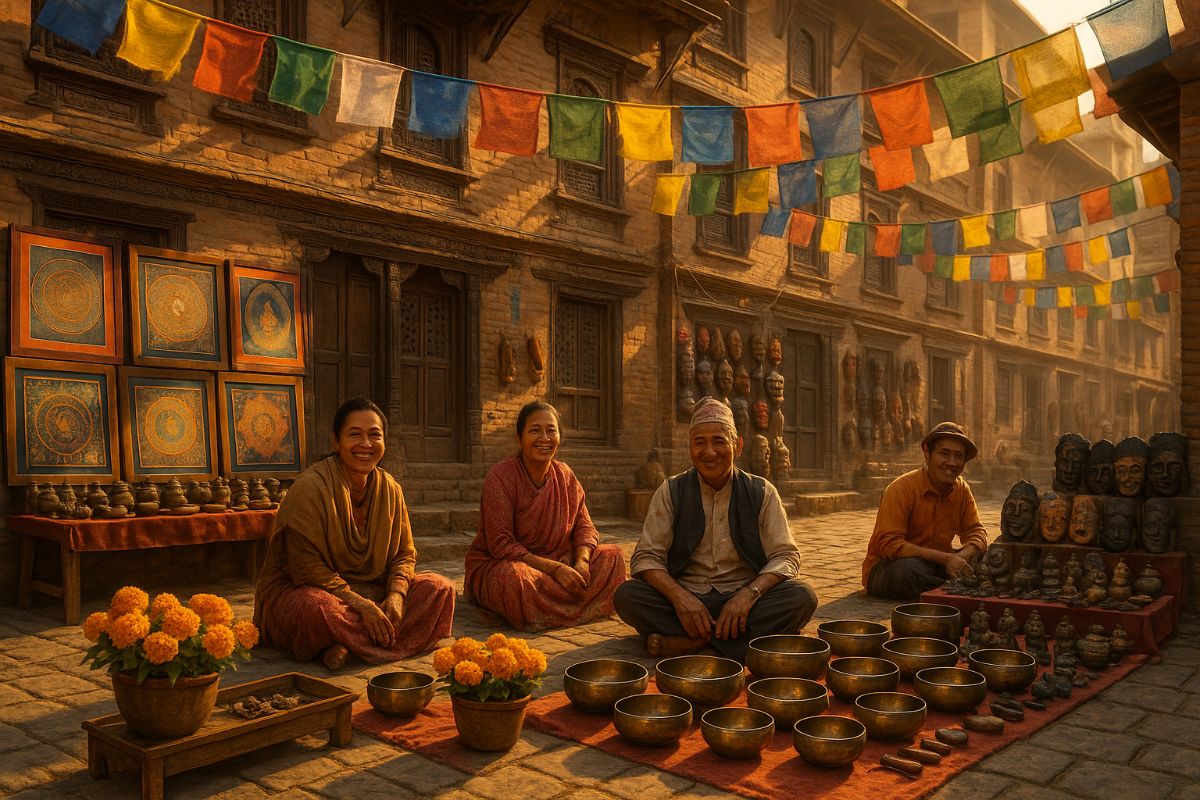
Local culture in Kathmandu is everywhere, but it’s easy to miss when you’re focused on schedules, transportation, and sightseeing lists. The good news is that adding cultural moments to your trip doesn’t need planning or deep research. With a few simple habits, you end up experiencing more than most visitors do, and you do it in a way that feels natural instead of forced.
Where should you begin if you want to add culture without planning too much?
You should begin by spending time in places where locals already gather.
You don’t need a guide to understand the atmosphere. You just need to stand still for a moment and let the environment show you what matters here.
Good starting points
• A stupa circle during early morning
• A small tea shop where locals sit
• A neighborhood market
• A monastery courtyard
• Any place where you see people slowing down
These spots give you real culture without effort.
How can food help you connect with the local rhythm?
Food helps you connect with the local rhythm because meals in Kathmandu reflect everyday life, not just tourist menus.
When you eat where locals eat, you see what people actually enjoy, how families gather, and what flavors matter to them.
Simple food choices for cultural connection
• Try momos from a small kitchen instead of a big restaurant
• Order dal bhat at a home-style eatery
• Sip milk tea at a street-side tea stall
• Taste thukpa on a slow afternoon
• Pick a fresh snack from a local bakery
Nothing here requires planning. You just follow your curiosity.
What small cultural habits can travelers try without feeling awkward?
Small cultural habits travelers can try without feeling awkward include greetings, walking clockwise around stupas, and observing rituals quietly.
These gestures help you blend in without needing to learn long rules.
Easy habits to try
• Say “namaste” with a slight nod
• Walk clockwise around sacred sites
• Remove shoes when entering inner temple areas
• Keep a calm tone during active rituals
• Step aside respectfully when priests or monks pass
These small actions show awareness without pressure.
How can travelers appreciate rituals without needing explanations?
Travelers can appreciate rituals without needing explanations by focusing on the mood, the sounds, and the movement.
You don’t need to know every detail to feel connected. Rituals in Kathmandu carry their own atmosphere, and your presence as an observer is enough.
Watch for these moments
• Butter lamps being lit
• Prayer wheels spinning
• Chanting drifting from a monastery
• Incense rising in small temples
• People walking in quiet circles
These moments tell you plenty without any words.
How can walking help you experience culture naturally?
Walking helps you experience culture naturally because it brings you into contact with moments cars always miss.
A simple walk through Boudha, Patan, or Bhaktapur shows you how people move through their day, how shops open, and how the city breathes.
Walk slowly and notice
• Old houses with carved windows
• Women buying vegetables at roadside stalls
• Monks heading to morning prayers
• Kids running to school
• Local artists working outside their shops
The more you walk, the more the city shares.
What cultural experiences can you enjoy through small purchases?
Cultural experiences you can enjoy through small purchases include buying incense, local snacks, handmade crafts, or small souvenirs linked to daily life.
You’re not only shopping. You’re connecting with makers, shop owners, and little traditions that people still keep alive.
Simple cultural purchases
• Handmade incense
• A clay pot of yogurt
• A small mandala print
• Fresh bread from a local bakery
• Prayer flags in cotton fabric
These items carry the feeling of the neighborhood with them.
How can travelers understand local spirituality without formal tours?
Travelers can understand local spirituality without formal tours by visiting one monastery or temple, sitting quietly for a few minutes, and observing how people move.
Spiritual life in Kathmandu is woven into daily actions, not only ceremonies.
Look for these signs
• People offering flowers
• Soft bell sounds
• Rows of butter lamps
• Short prayers whispered quickly
• Community spaces inside temple walls
Spirituality makes more sense when you see it up close at a slow pace.
How can you keep cultural experiences simple and avoid overwhelm?
You can keep cultural experiences simple by choosing one cultural moment per day instead of trying to learn everything at once.
Trying to do too much creates stress. Picking one moment creates a memory.
Simple daily cultural choices
• One tea stall
• One local meal
• One quiet temple
• One slow walk
• One meaningful purchase
This approach keeps your trip light and enjoyable.
Why does Boudha make it easier to add culture without trying hard?
Boudha makes it easier to add culture without trying hard because the neighborhood stays calm, walkable, and filled with spiritual and everyday life right outside your door.
You don’t need to chase cultural experiences here. They simply appear as you move through your morning or evening.
Why Boudha helps
• The stupa creates natural rhythm
• Monasteries surround the neighborhood
• Tea shops and markets feel welcoming
• Rituals happen openly throughout the day
• You can join or observe without pressure
Travelers often say culture feels effortless here.
Why is Boudha Mandala Hotel a helpful base for cultural travel?
Boudha Mandala Hotel is a helpful base for cultural travel because it sits only a short walk from the stupa, the monasteries, and the quiet paths where daily life unfolds.
You step out the door and culture is already happening around you.
What the location offers
• A two minute walk to Boudhanath Stupa
• Easy access to morning rituals
• Close to tea shops and local markets
• Quiet nights after cultural days
• A natural starting point for slow exploring
For travelers who want culture without pressure, this neighborhood makes everything simple.