
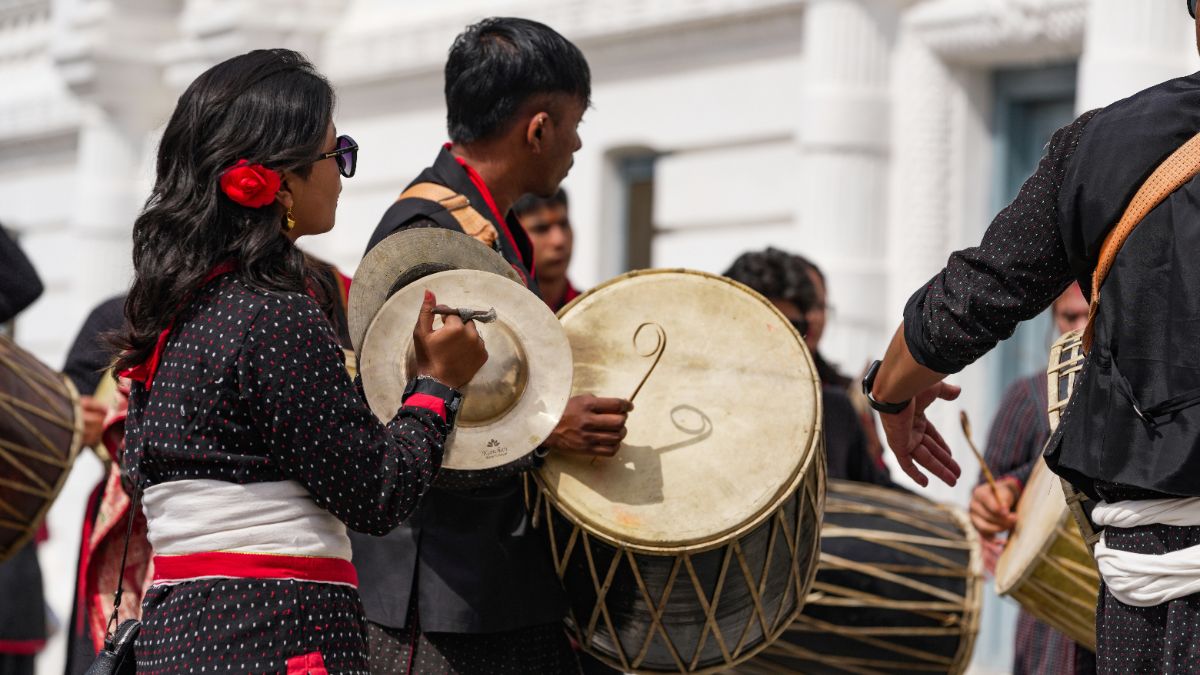
Newari culture is the historical and living foundation of the Kathmandu Valley, shaping its cities, rituals, festivals, food, and daily rhythms for over a millennium.
Who are the Newars of the Kathmandu Valley?
The Newars are the indigenous inhabitants of the Kathmandu Valley, with a documented presence dating back more than 1,500 years. They developed the valley’s earliest urban settlements, trade networks between India and Tibet, and highly refined systems of art, architecture, and craftsmanship. Today, Newari communities remain deeply rooted in Kathmandu, Patan (Lalitpur), and Bhaktapur, especially in historic city centers.
Why is Newari culture considered the backbone of the valley?
Because most of what defines the Kathmandu Valley today was created by Newars. This includes the Durbar Squares of Kathmandu, Patan, and Bhaktapur, the classic pagoda-style temples seen across Nepal, dense clusters of UNESCO World Heritage Sites, and traditional neighborhoods organized around courtyards and community shrines. The valley’s layout and visual identity are direct results of Newari urban planning and religious life.
What makes Newari culture unique in Nepal?
Newari culture blends Hinduism and Buddhism into a shared daily practice. Hindu and Buddhist deities are worshipped side by side, festivals often include rituals from both traditions, and many temples serve multiple religious communities. This fusion explains why the valley feels spiritually active year-round, not limited to a few major holidays.
How does Newari culture shape daily life today?
It still governs time, space, and community behavior. You’ll see frequent festivals and processions that temporarily reshape traffic and routines, local calendars that don’t follow the Gregorian year, and neighborhoods centered around bahals and bahi courtyards. Even in modern Kathmandu, Newari customs quietly influence work schedules, social gatherings, and religious observance.
Why are festivals so central to Newari culture?
Festivals are essential to Newari identity and social order. Events like Indra Jatra in Kathmandu, Bisket Jatra in Bhaktapur, and Rato Machhindranath Jatra in Patan combine chariot processions, masked dances, traditional music, offerings, and communal feasting. For travelers, these festivals are immersive experiences often encountered unexpectedly while exploring the city.
What is Newari food and why is it important?
Newari cuisine is one of the oldest and most ritualized food traditions in Nepal. It’s known for its use of buffalo meat, fermented and spiced dishes, and ceremonial platters like Samay Baji, served during festivals and life events. Food here is tied to season, caste, and religious observance, not just flavor.
How does understanding Newari culture change your visit?
It helps you understand what you’re seeing instead of feeling lost in it. With cultural context, travelers can move respectfully through temples, recognize the meaning behind processions, and appreciate why the cities feel layered and alive. The Kathmandu Valley isn’t chaotic. It’s organized by centuries of living tradition.
Where can travelers experience Newari culture most clearly?
In the historic cores of Kathmandu, Patan, and Bhaktapur. Look for neighborhoods near Durbar Squares, early-morning rituals at local shrines, traditional Newari restaurants, and hidden courtyards just off busy streets. Slow walking reveals far more than guided highlights.
Why is Newari culture still central to the valley today?
Because it continues to evolve without disappearing. Newari culture adapts to modern life while remaining practiced, not preserved, and it still defines the valley’s identity at every level. The Kathmandu Valley is not just a collection of monuments. It’s a living cultural landscape shaped by Newari society.
Staying in culturally rich parts of the valley makes these traditions easier to experience, and places like Boudha Mandala Hotel offer a calm base close to neighborhoods where heritage is part of everyday life.