
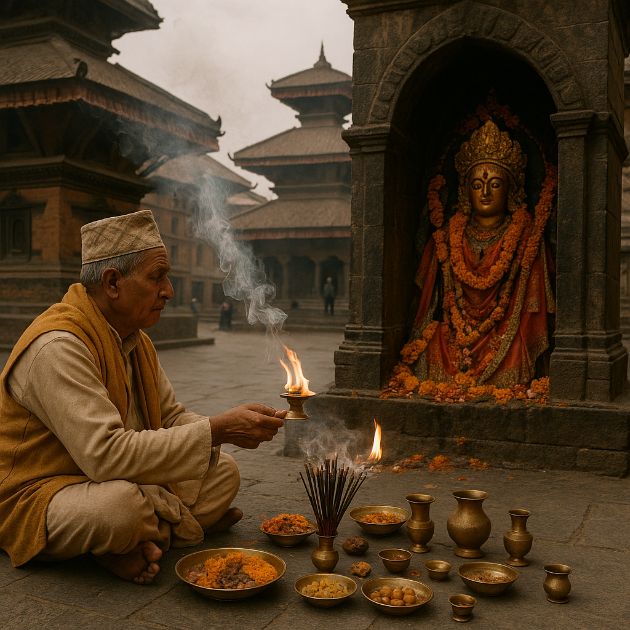
Kathmandu’s rituals are everywhere if you know where to look. You don’t need a tour guide or a schedule. You just need a bit of patience and a willingness to stand still for a moment. People here pray, light lamps, turn prayer wheels, and leave small offerings as naturally as breathing. These rituals happen quietly in streets, temples, and courtyards all over the valley, and travelers can watch them in a respectful way without joining or interrupting.
Where can travelers see morning rituals without joining a tour?
Travelers can see morning rituals without joining a tour by visiting stupas, temples, and small neighborhood shrines before 9 am.
Morning is when the city feels honest. People come out early to start their day with simple spiritual routines.
Reliable morning ritual spots
• Boudhanath Stupa for kora and prayer wheels
• Pashupatinath’s outer courtyards
• Patan’s old neighborhood shrines
• Bhaktapur’s early offerings in open squares
• Small roadside temples around Asan
You get a clear view of daily life without feeling out of place.
How can travelers witness rituals around stupas?
Travelers can witness rituals around stupas by walking clockwise and observing how locals move, pray, and touch the prayer wheels.
The atmosphere stays calm even when many people are present.
What you’ll see near stupas
• Monks walking slowly
• Hands brushing prayer wheels
• Butter lamps glowing in corners
• People whispering short prayers
• Offerings of flowers and rice
These rituals are gentle and open to anyone who watches respectfully.
Where can travelers see rituals related to Hindu temples?
Travelers can see rituals related to Hindu temples in outer courtyards, smaller shrines, and surrounding walkways.
You don’t need to enter inner sanctums to understand what’s happening. Most rituals take place in open spaces.
Hindu ritual moments to look for
• Lamps placed in front of deities
• Flowers offered to stone icons
• Priests preparing vessels for worship
• People ringing bells
• Devotees touching temple entrances with their hands
These moments happen all day in small pockets of the city.
How can travelers witness everyday rituals connected to Tibetan culture?
Travelers can witness everyday rituals connected to Tibetan culture by spending time near monasteries and markets in Boudha.
These rituals feel calm and rhythmic.
Common Tibetan ritual scenes
• Incense carried in small metal burners
• Prayer flags being adjusted or tied
• Butter lamps lit in quiet rooms
• Short chants drifting from monastery windows
• Offerings placed at small altars
These actions happen naturally, not as performances.
Which neighborhood routines feel like rituals even if they aren’t formal ceremonies?
Neighborhood routines that feel like rituals include water collection, sweeping courtyards, and placing flowers at small shrines.
These routines shape everyday life and show the deeper rhythm of the valley.
Daily routines with ritual energy
• Women sweeping steps at sunrise
• Neighbors sharing tea in front of houses
• Families lighting lamps in the evening
• People offering water to small roadside shrines
• Vendors placing flowers at the start of their day
These quiet actions carry meaning even without formal prayers.
Where can travelers see evening rituals without tours or guides?
Travelers can see evening rituals without tours by visiting temples, stupas, and small neighborhood lanes after sunset.
Evenings bring a soft glow and a relaxed pace.
Evening ritual scenes
• Butter lamps lined in rows
• Soft chanting from monasteries
• Bells marking the end of the day
• People offering incense
• Families pausing at shrines on their way home
It’s one of the most peaceful times to observe daily spirituality.
How can travelers watch these rituals respectfully?
Travelers can watch these rituals respectfully by standing to the side, keeping quiet, and avoiding direct interference with the ritual flow.
A little awareness goes a long way.
Respectful habits
• Keep a small distance
• Do not touch ritual items
• Ask before taking photos
• Move slowly around worshippers
• Allow elders to pass first
Rituals continue naturally when watchers remain gentle.
How can travelers find these rituals without using guides or apps?
Travelers can find these rituals by following the sound of bells, the smell of incense, or the movement of people heading toward temples and shrines.
Kathmandu communicates through its senses.
Clues that lead to rituals
• The smell of burning incense
• Groups walking with purpose
• Soft chanting from inside buildings
• Flower vendors gathering in one area
• Bells ringing through neighborhoods
Your senses guide you better than any schedule.
Why do everyday rituals matter for understanding Kathmandu?
Everyday rituals matter for understanding Kathmandu because they reveal how spirituality fits into normal life.
You see devotion in simple actions rather than grand ceremonies.
What rituals teach you
• How people start and end their day
• The connection between family and spirituality
• The link between community and worship
• The quiet beauty of daily faith
• The role of small shrines in daily routines
These details help travelers understand the city more deeply.
Why is Boudha Mandala Hotel a peaceful base for witnessing everyday rituals?
Boudha Mandala Hotel is a peaceful base for witnessing everyday rituals because it sits within walking distance of monasteries, tea shops, and calm lanes where rituals happen all day.
A short morning walk takes you into the heart of daily life around the stupa.
Why the location works
• Two minute walk to Boudhanath Stupa
• Close to monasteries with morning chanting
• Calm evening scenes after sunset
• Safe lanes for early walks
• A quiet return after exploring the city’s rituals
Staying in Boudha makes everyday spirituality easy to experience.