
Key Takeaways
• Guests love the quiet location just a short walk from Boudhanath Stupa, close enough for dawn and dusk koras, calm enough for good sleep.
• Reviews highlight kind, attentive staff and a home-like welcome, from help during tough moments to thoughtful upgrades.
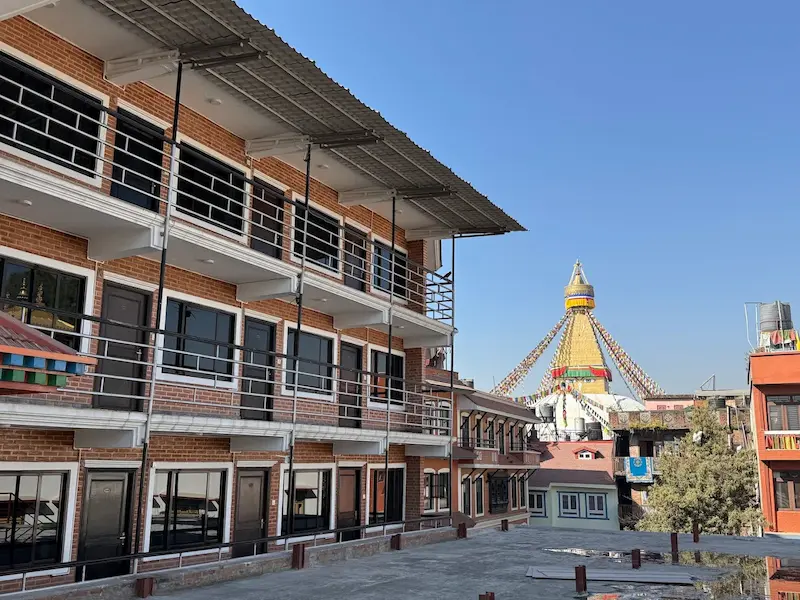
• Many rooms are spacious and clean, some with balconies and stupa views, which guests call unforgettable.
• Long-stay travelers appreciate practical comforts, including kitchenettes, reliable Wi-Fi, and complimentary laundry.
• Cafe de Mandala and easy access to local cafés and monasteries make slow mornings and reflective evenings part of daily life.
• Independent ratings on platforms like Tripadvisor and Booking.com consistently mention peace, location, and staff warmth.
Why listen to the reviews at all
Before you compare room sizes and rate cards, it helps to hear from travelers who have already slept here, prayed here, and watched the stupa glow at sunrise. We read through dozens of recent notes from Google, TripAdvisor, and Booking.com. Together they trace a clear picture, a small hotel that takes hospitality personally, a location that feels close to the sacred rhythm, and a stay that slows the heart.
If you want mornings that begin with soft chants and evening light on the dome, our peaceful hotel near Boudha steps away from the circle, close enough to feel the kora, quiet enough to rest well.
What guests say about the location and quiet
Again and again, guests talk about how easy it is to reach the stupa on foot, and how calm the nights are. One guest wrote that the hotel is “just a short walk to Boudhanath Stupa,” which made morning and evening koras feel natural, not rushed. Another called the apartment view “fantastic,” a line you can almost hear as you picture the early light over prayer flags.
Several reviewers notice a detail we value, near but not too near. Close enough for the bells and the turning wheels, far enough to avoid the late night noise that can echo on the inner circle. For many, that balance is the difference between a good trip and a restorative one.
If you are new to this ritual, you can learn how to walk the kora with respect. Dawn is best, when the air is cool, the alleyways are blue with shadow, and the circle moves like one quiet breath.
Hospitality that feels human
In the reviews, the word that repeats is kindness. A guest from Japan describes staff who were “very friendly,” a simple sentence that carries weight after a long flight and a first night in a new city. Another guest stayed for a month during monsoon and said the team helped her find a more affordable room for the remaining weeks, then welcomed her like family each time she returned.
You will also see the owner’s name in replies. Mark answers with gratitude and small details from the day, an honest note that reminds you the staff know their guests by face and story, not just by room number. That tone shows up in the lobby too, a place where a latte in the morning can become a quiet conversation about where to meditate or which monastery is holding evening puja.
If you want that kind of welcome on your next trip, you can book directly. We keep it simple, and we keep it warm.
Rooms, views, and the feel of the space
Guests describe rooms that are clean, spacious, and restful, with sunlight in the mornings and soft lamps in the evenings. Many mention balconies or windows that frame the white dome, a sight that makes breakfast taste different and evenings slower. One reviewer wrote that the stupa view was “truly unforgettable,” another called the mornings on the rooftop “magical.”
For travelers planning longer stays, practical comforts matter. Several reviews point to kitchenettes, strong Wi-Fi, and complimentary laundry as small things that change a month into a manageable rhythm. A guest who stayed for three months called the hotel quiet and peaceful, the kind of steadiness you need when you are working by day and studying or meditating in the evenings.
You can explore rooms designed for presence, not distraction. Some are simple and bright, some have balconies that catch the early sun, all are set up for rest.
Boudha Cafe de Mandala and nearby cafes
Many reviews mention Boudha Cafe de Mandala for fresh breakfast and a relaxed mood, especially on weekends when live music gives the space a gentle lift. Outside the door, the alleys lead to family kitchens, Tibetan bakeries, and modern coffee bars. It is easy to keep your days simple here, café for an hour, kora for a few circles, a visit to the thangka ateliers, then back to rest.
If you want to plan your first morning well, learn the best time to visit Boudhanath. Dawn gives you the light and the quiet, evening gives you the lamps and the low chant that sits in the chest.
A home for long stays, studies, and work
Boudha draws people who need time, students heading to Kopan for teachings, artists searching for stillness, NGO staff who need a steady base, and remote workers who want reliable internet and a walkable neighborhood.
Reviews from long-stay guests highlight the same three threads, fair pricing for extended stays, staff who make adjustments when life changes, and a space that keeps its calm even when the city is noisy.
When guests write that they will return, it is usually for these reasons, not only the location, but the way the days feel. Quiet mornings, respectful service, and a view that keeps the purpose of travel in sight.
What independent platforms highlight
It helps to check what the wider world says too. On Tripadvisor, recent notes describe the hotel as peaceful and well located, with friendly staff and good value for a quiet stay near the stupa. On Booking.com, travelers use words like quiet, friendly, comfortable, and superb location, and several highlight stupa views from balconies or the upper floors.
These summaries matter because they are written by guests from many countries and travel styles, solo, couple, family, student. Different voices, same pattern, kindness, cleanliness, and calm.
Planning your stay in Boudha
Most guests arrive from Tribhuvan International Airport in about twenty minutes, traffic willing. The walk to the stupa takes just a couple of minutes, easy at dawn when the streets are soft and the bakeries open. Monasteries are close, cafés are many, and shops stay open late enough for a last circle after dinner.
If you want to build a simple day, try this, a slow breakfast, a visit to the art schools, a pause in the garden, then evening kora when the lamps come on. If you are exploring the city, Thamel is around thirty minutes by taxi, and Swayambhunath sits high over the valley, best in the late afternoon when the monkeys are sleepy and the light is long. When you want a day of stillness, remain in the circle and let the rhythm do its work.
You can also discover our local experiences. We keep things close to the ground, simple food, gentle music on weekends, and guidance when you need it.
What the replies reveal
It is easy to scan review scores and miss the conversation beneath. Read the owner’s replies and you will notice something steady, a thank you with specifics from the day, a promise to pass praise to staff by name, a note about ongoing renovations, an honest acknowledgment when something needs fixing. That tone spreads through the building because people work better when they know they are seen.
In time, the reviews become more than ratings. They become a small community of voices that care about the same things, clean rooms, soft mornings, kind service, and a roof that looks toward the stupa.
If you want to feel that for yourself, you can book your stay near the stupa. We will keep a room ready and the coffee warm.
A few guest moments that stayed with us
A traveler wrote that staff waited near the stupa to escort her down the lane because taxis stop before the inner circle. Another said that during a hard week, the team made space for quiet, then moved her to a balcony room so she could breathe easier. A guest who stayed for months said the laundry service and kitchen kept life simple enough to focus on study and practice.
Small gestures add up. In Boudha, they always have.
Practical notes for first-time visitors
Entry to the stupa for foreign visitors is paid at the gate, and the ticket is valid for the day. Dress with shoulders covered when you plan to enter monasteries. Walk clockwise on the kora, spin the wheels with the right hand, and keep your phone on silent in the evening when lamps are lit. If you need an early taxi, reception is twenty-four hours and can help at any time.
When you are ready to rest, sit by the window and watch the circle turn. It is enough.
Conclusion
When different travelers, from different countries and reasons for coming, describe the same feeling, you begin to trust the pattern. Reviews of Boudha Mandala Hotel keep pointing to the same three notes, quiet near the stupa, kindness that feels like family, and rooms that hold their calm. The rest is detail, light on a white dome, a bell at dawn, the soft thread of a mantra in the hall.
If you want your own version of that story, book directly with Boudha Mandala Hotel. We are just a few steps from the stupa, and we keep our welcome simple, sincere, and steady.
You can read recent notes on the Tripadvisor’s page for Boudha Mandala Hotel and the Booking. com review feed.