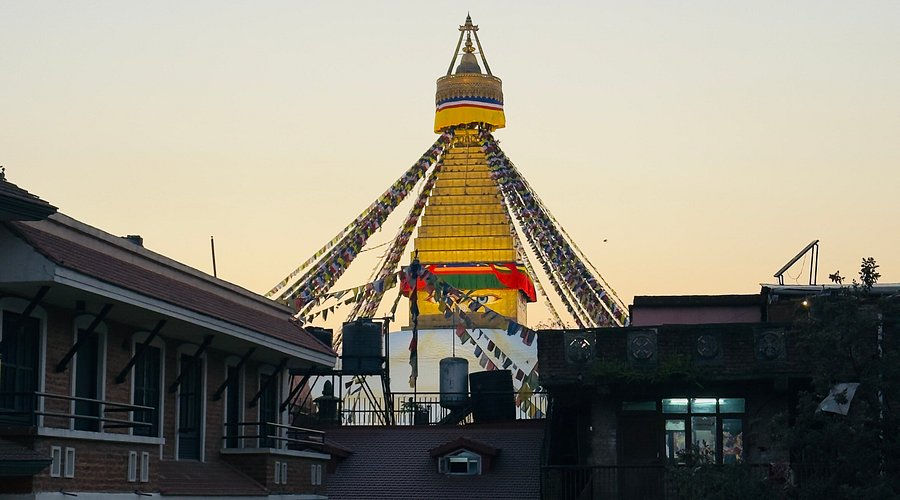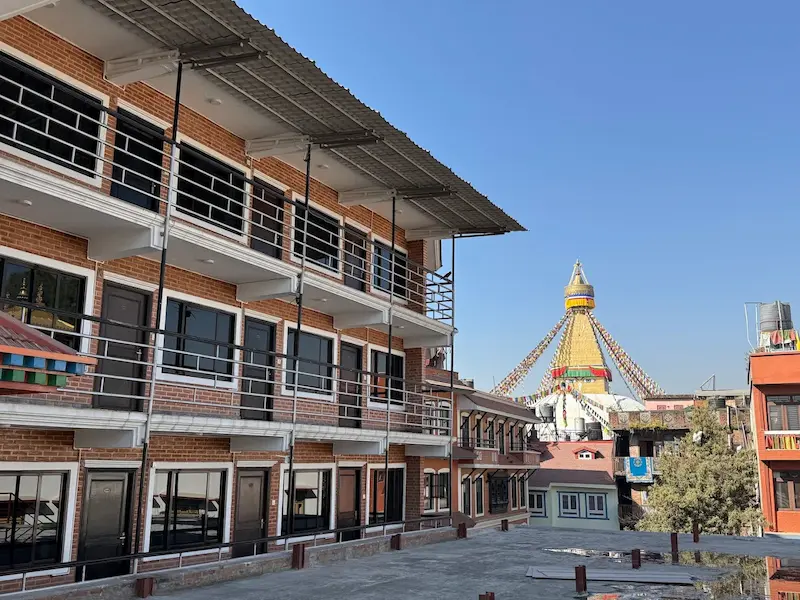
Boudha Stupa (Boudhanath) Visitor Guide: What to Know Before You Go

Boudha Stupa is part of the UNESCO-listed Kathmandu Valley World Heritage Site and one of Kathmandu’s most iconic Tibetan Buddhist pilgrimage landmarks. Known for its giant white dome, all-seeing Buddha eyes, prayer wheels, and the daily kora (clockwise circumambulation), Boudhanath is one of the best places in the city for cultural immersion in a powerful spiritual atmosphere, especially outside peak festival times.

Tip: For an easy sunrise visit, staying in the Boudha neighborhood lets you walk over before the crowds and traffic build. Boudha Mandala Hotel is located near Boudhanath Stupa, making early-morning and evening visits effortless.

Boudhanath Stupa quick visitor essentials

  • Where: Boudha, Kathmandu (near Tribhuvan International Airport)
  • Best time to visit: dawn or sunset
  • What to do: kora (clockwise; keep the stupa on your right), spin prayer wheels, light butter lamps, visit nearby monasteries
  • Ticket: required for non-Nepali visitors (SAARC discounted); Nepalis and children under 10 enter free


1. Boudhanath Stupa at a Glance (Quick Facts for Visitors)

Boudhanath sits in the Boudha neighborhood of Kathmandu, a short ride from Tribhuvan International Airport. It’s among the world’s largest stupas and the spiritual heart of Tibetan Buddhism in Nepal, especially vibrant at dawn and dusk when locals, monks, and visitors circle the stupa with prayer beads and spinning wheels.

Quick facts (visitor-friendly):

  • Location: Boudha, ~6–8 km northeast of central Kathmandu
  • Entry fee: NPR 400 (foreign nationals), NPR 100 (SAARC), free for Nepalis and children under 10
  • Access & hours (important distinction):
  • Stupa area/plaza: often accessible very early and late
  • Ticketed entry points/booths: typically run morning to evening (commonly reported around ~5:00 AM–9:00 PM, but can vary; booths may close earlier)

For the most peaceful experience (and best photos), arrive early before the plaza fills or come near sunset when butter lamps glow and chanting drifts from nearby monasteries.

2. Why Boudhanath Is a UNESCO World Heritage Site

Boudhanath is recognized by UNESCO as one of the seven “Monument Zones” that make up the Kathmandu Valley World Heritage property, inscribed in 1979. In the UNESCO listing, Boudhanath is singled out as the largest stupa in Nepal, an extraordinary religious ensemble that still functions as a living pilgrimage site rather than a museum piece.

UNESCO highlights the Valley’s Outstanding Universal Value through its rare concentration of sacred architecture, exceptional craftsmanship, and continuous cultural life. The Kathmandu Valley inscription is based on criteria (iii), (iv), and (vi) recognizing it as an exceptional testimony to the Valley’s civilization and Newar traditions, an outstanding set of architectural ensembles, and a place deeply tied to rituals, legends, and festivals in Boudha. UNESCO also notes that the integrity of these monument zones is safeguarded within formally defined boundaries (with a boundary modification accepted in 2006).

Boudhanath embodies those values in a single, instantly recognizable landmark: its massive white dome and gilded tower with the all-seeing Buddha eyes express powerful Buddhist symbolism, while the daily rhythm of prayer, circumambulation (kora), and monastic life keeps the heritage actively practiced.

3. History of Boudhanath Stupa (Origins, Legends, and Timeline)

The history of Boudhanath blends verifiable records with powerful sacred storytelling. Many visitor-facing histories date the stupa to around the 5th century CE, during the Licchavi era, when Kathmandu Valley was emerging as a major Buddhist crossroads. Its location mattered: Boudha lay along historic trade and pilgrimage routes linking Tibet and the Kathmandu Valley, making it a natural place for merchants and pilgrims to rest, pray, and exchange culture.

Local and Tibetan traditions add the legends that made Boudhanath unforgettable. One of the best-known stories tells of Jhazima (or Jyazima) a poor widow/poultry keeper who requested land “as big as a buffalo skin,” then cleverly cut it into a long strip to mark out enough space to build the stupa. In Tibetan Buddhism, this origin myth is closely tied to the name Jarung Khashor and the idea that devotion (not wealth) can create a monument of immense merit.

4. Architecture and Symbolism (Dome, Mandala, Buddha Eyes, Prayer Flags)

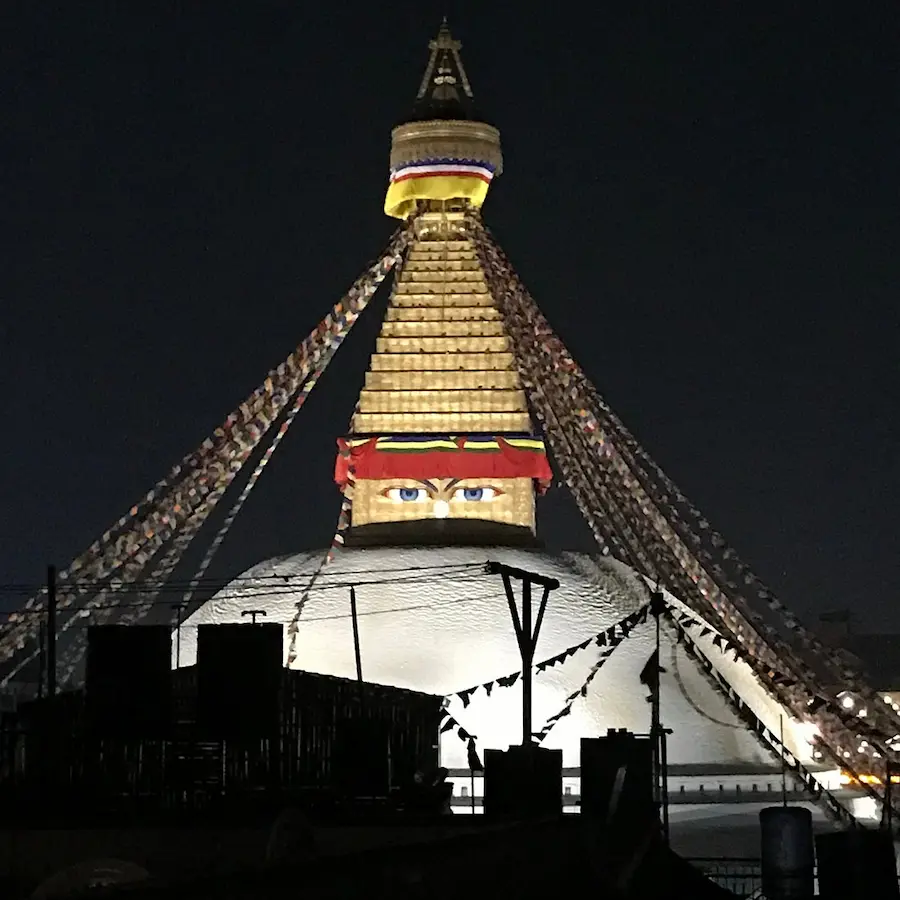
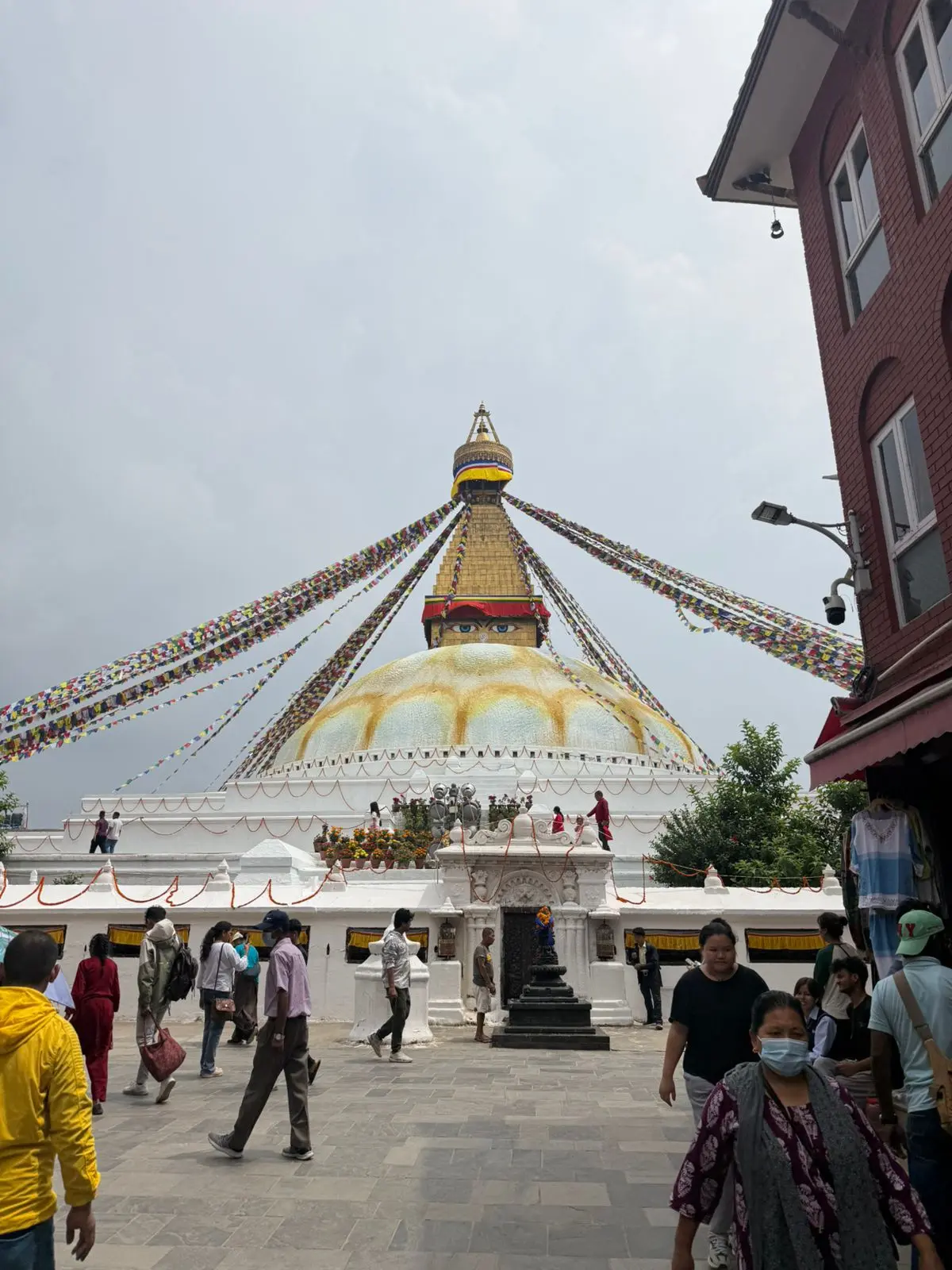
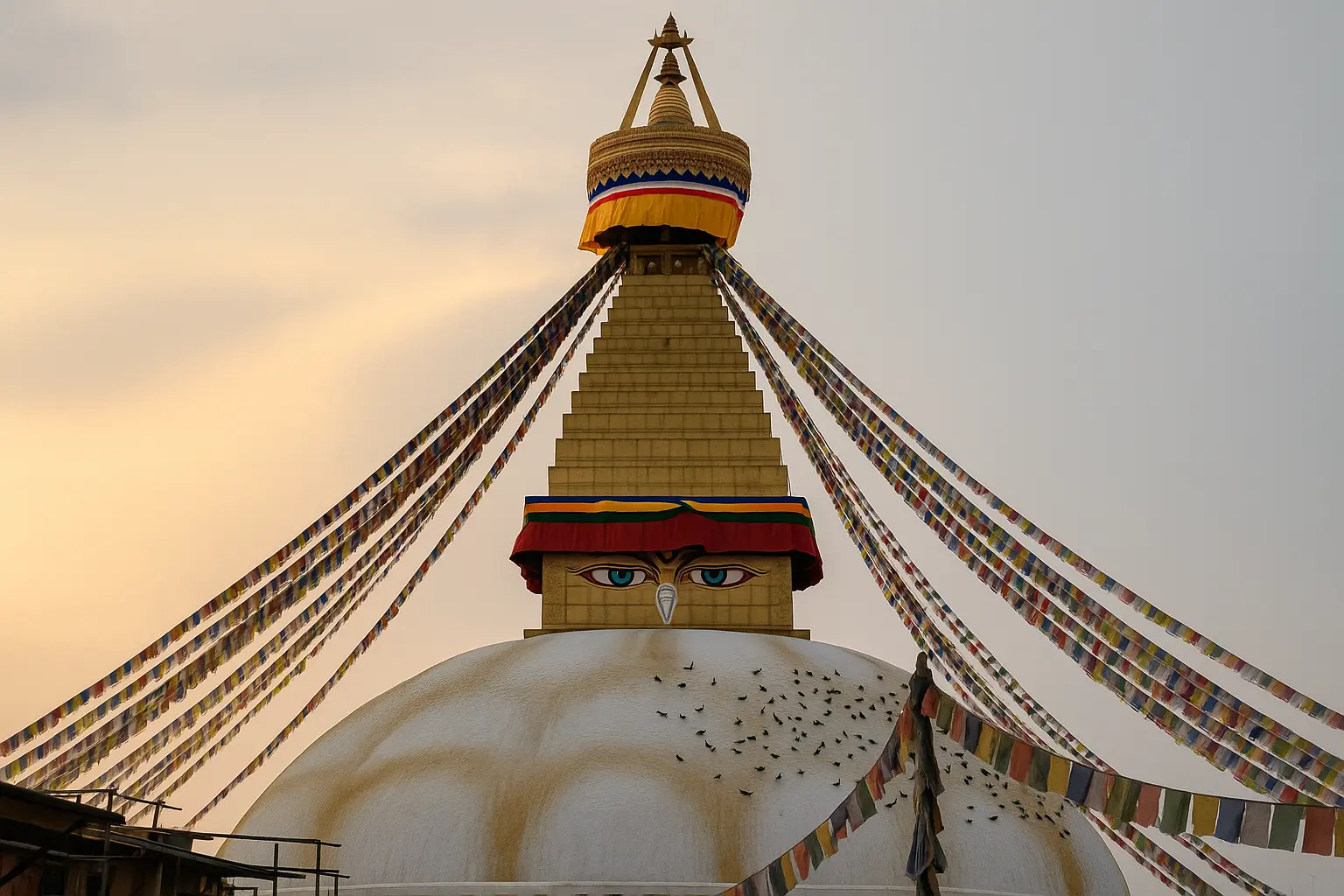
Boudhanath’s design is often described as a three-dimensional mandala, a sacred map of the universe built as a massive white hemispherical dome crowned by a square tower (harmika) and a gilded spire. The harmika, clad in gilded metal, features the Buddha’s all-seeing eyes painted on each side.

Symbolically, every layer reads like a visual teaching. The mandala base represents the ordered cosmos and the spiritual path; the dome is often explained as the universe or a “treasure vase” of blessings; the harmika is the “seat” of enlightened mind; and the 13 steps on the spire are commonly interpreted as progressive stages toward awakening. The famous Buddha Eyes looking out in all directions reinforce the idea of wisdom and awareness that sees beyond appearances.

Prayer flags strung around the stupa flutter as wind-borne prayers Tibetan tradition holds that mantras on the flags spread goodwill on the breeze. The classic five-color set (in order blue, white, red, green, yellow) represents the five elements, which is why you’ll often see them kept together rather than separated.

5. Tibetan Buddhist Culture Around Boudha (Monasteries and Local Life)

Boudha isn’t just a stupa, it’s Kathmandu’s most visible pocket of Tibetan Buddhist life. After the 1959 Tibetan uprising, many Tibetans settled around Boudhanath, and the neighborhood grew into a dense ring of gompas (monasteries), pilgrim hostels, cafés, and artisan shops the kind of place where you’ll see monks, elders, and families doing kora from dawn to nightfall.

Monasteries near Boudha shape the area’s daily rhythm. Shechen Tennyi Dargyeling, reviving the lineage of one of Tibet’s great Nyingma monasteries, was re-established in exile near Boudha under Dilgo Khyentse Rinpoche and remains a major center for teachings and ceremonies. Nearby, Ka-Nying Shedrub Ling (a Kagyu–Nyingma community) became another cornerstone of practice and education in the 1970s.

For visitors, “local life” at Boudhanath is wonderfully tangible: prayer wheels turning clockwise, offerings at shrines, lanes lined with thangkas and ritual items, and rooftop viewpoints where the stupa feels close enough to touch. For a quieter extension of the same culture, Kopan Monastery on the valley’s hills is a well-known Tibetan-tradition monastery welcoming visitors for courses and practice.

6. Things to Do at Boudhanath Stupa (Kora, Rooftops, Markets, Meditation)

Start with a kora (clockwise circumambulation) the classic Boudhanath experience. Join pilgrims as you circle the stupa clockwise, keeping the stupa on your right, pausing to spin prayer wheels and watch offerings being made at shrines around the square. If you can, come at dawn or dusk when the atmosphere feels most devotional and at night you may see rows of butter lamps/candles glowing around the base.

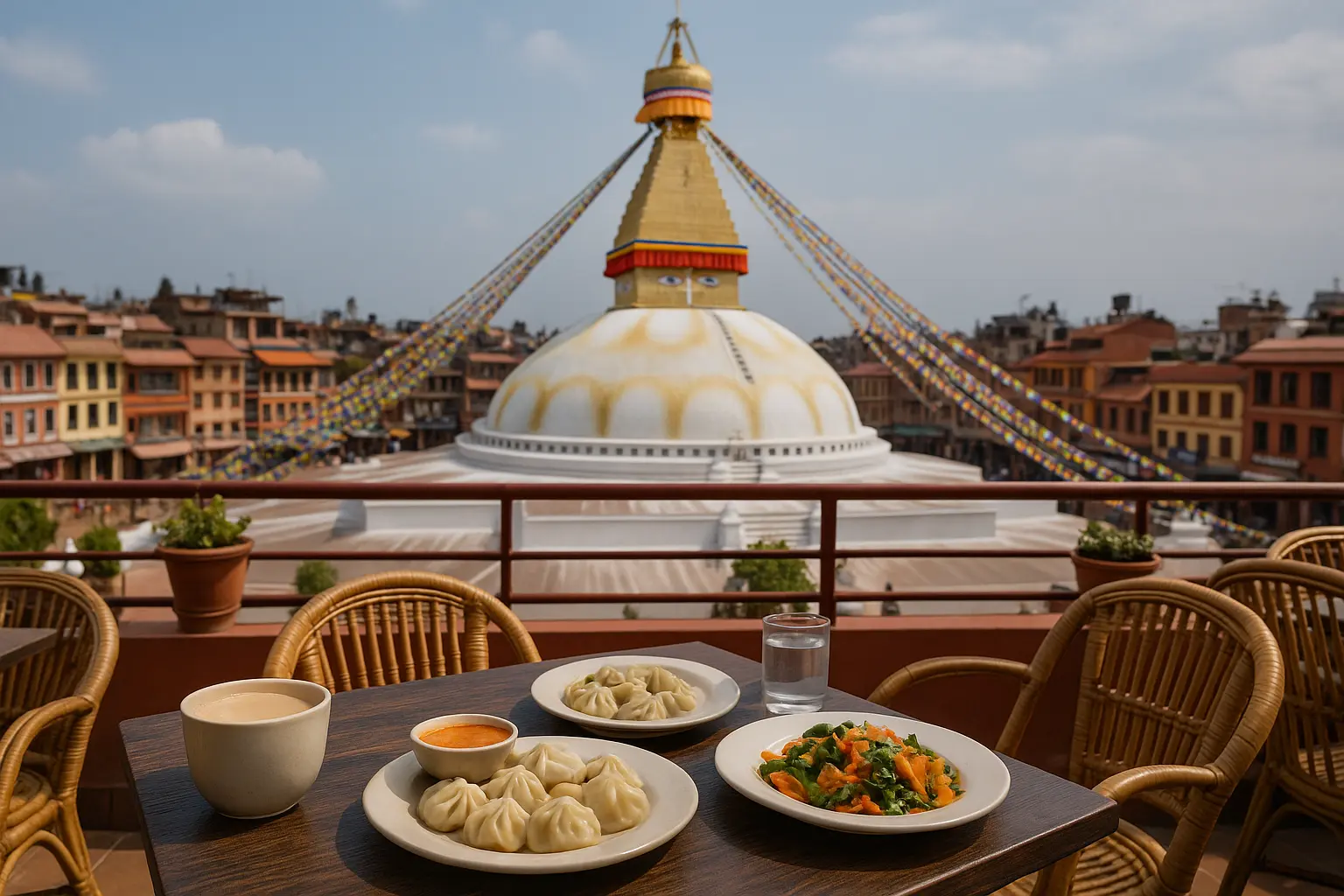
Next, head upstairs: the ring of buildings around the stupa is packed with rooftop cafés and restaurants designed for one thing, stupa views. A slow tea or meal from a rooftop is one of the easiest ways to appreciate the scale of Boudhanath and the constant movement of the kora below.

Finally, explore the markets and mindful corners around the plaza. The lanes are lined with shops selling thangkas, malas, incense, statues, and ritual items, making it a great place for meaningful souvenirs (and people-watching). For a quieter reset, step into nearby gompas respectfully or pair your visit with a dedicated meditation experience at a Tibetan-tradition monastery like Kopan, which welcomes visitors for courses and retreats.

7. Entry Fee and Access Hours (Visitor Info)

For most travelers, Boudhanath entry fees are straightforward: NPR 400 for foreign nationals, NPR 100 for SAARC nationals, and free for Nepali citizens (children under 10 are also free).

On hours, it helps to separate two meanings of “open”:

  • The stupa area/plaza can often be experienced very early and late.
  • Ticket checks/booths and controlled entry points typically follow a more limited daily schedule (commonly reported around ~5:00 AM–9:00 PM, and booths may close earlier).

Pro tip: Buy your ticket at the entry point and keep it handy especially if you plan to step out for a rooftop café and come back in. If anything seems different on the day (holiday, festival, or local adjustments), follow onsite signage.

8. Rules, Etiquette, and Dress Code (What Tourists Should Know)

At Boudhanath, etiquette is simple yet important because the site is both a major tourist destination and an active place of worship. Always walk clockwise (pradakṣiṇa) around the stupa, keeping the stupa to your right and if you spin prayer wheels, do so clockwise as well. Keep the flow moving by avoiding sudden stops in narrow sections, and don’t block the kora path, especially during busy prayer hours.

Dress and behavior should match the sacred setting. Aim for modest clothing (cover shoulders and knees) and keep your voice low; this is one of the easiest ways to show respect to monks, pilgrims, and families doing their daily rounds. If you enter monasteries or prayer halls, remove your shoes and follow any signs or instructions from residents and caretakers.

Photography is generally fine around the stupa, but be mindful: avoid interrupting rituals, and assume you’ll need permission inside gompas/shrines. If someone is praying, chanting, or making offerings, give them space capturing the moment should never come before honoring it.

9. How to Reach Boudhanath (From Thamel, Airport, and Patan)

From Thamel: The easiest option is a taxi/private car, a straightforward cross-city ride, with travel time varying widely by traffic. Public buses/minivans also go to Boudha via the Ring Road (slower, more “local” experience).

From Tribhuvan International Airport (TIA): Boudhanath is one of the closest major landmarks. Many travelers use a taxi, which takes roughly 15–30 minutes, depending on congestion. Pre-arranged pickups through hotels/tour operators can be simplest if you have luggage.

From Patan (Lalitpur), you’ll usually head toward eastern Kathmandu. A taxi or private car is the most direct; public options often involve switching vehicles at busy junctions.

Tip: In Kathmandu, time matters more than distance, plan buffer time during rush hours, and aim for dawn or sunset for the best atmosphere.

10. Earthquake Damage, Repairs, and Restoration (2015 and After)

The 7.8-magnitude Gorkha earthquake on April 25, 2015, shook Boudhanath hard, damaging key parts of the monument most notably the gold spire (pinnacle) while the main white dome was largely spared. Because the stupa is a focal point for daily pilgrimage, the impact was immediate for worship and the wider Boudha community.

Restoration moved forward through a mix of private donations from Buddhist groups and local community support. After about a year and a half of work, the stupa reopened to the public on November 22, 2016, marked by ceremonies and a surge of pilgrims returning to complete their kora.

11. Festivals and Best Time to Visit (Buddha Jayanti, Losar, Quiet Hours)

Boudhanath comes alive during major Buddhist dates, and two big ones to know are Buddha Jayanti (Buddha Purnima/Vesak) and Losar (Tibetan New Year).

  • Buddha Jayanti is observed on the full moon of Vaisakha/Baishakh (usually April–May) and is one of the most atmospheric days to be at Boudhanath except butter lamps, offerings, and devotional crowds into the evening.
  • Losar falls in late winter to early spring, typically February or March, and Boudha becomes a focal point for Tibetan community celebrations, fresh prayer flags, incense, monastery rituals, and families gathering for the new year. Dates shift each year because Losar follows the Tibetan lunisolar calendar.

For the best overall visit, aim for autumn (late September–November) when skies are clearer, and conditions are comfortable. Within a day, the most peaceful quiet hours are early morning and late afternoon to sunset.

12. Nearby Attractions (Pashupatinath, Kopan, and More)

A classic combo with Boudhanath is Pashupatinath Temple, a vast Hindu temple complex on the Bagmati River and, like Boudhanath, one of the key monument zones inside UNESCO’s Kathmandu Valley World Heritage listing. Many travelers visit them back-to-back for two different (but equally powerful) sides of Kathmandu’s sacred life.

For a quieter, panoramic escape, head to Kopan Monastery, set on a hill just north of Boudhanath. Kopan is known for calm grounds, sweeping valley views, and a meditation-friendly atmosphere.

If you want “nearby but less crowded,” look toward Chabahil, home to the Licchavi-era Dhando Chaitya (often cited as among the valley’s oldest stupas), plus the nearby Guhyeshwari Temple, a Shakti shrine associated with the Pashupati area. And if you’re up for another iconic stupa with big views, Swayambhunath (Monkey Temple) is also part of the same UNESCO Kathmandu Valley listing and makes a great half-day add-on.

Tip: Visit Boudha Stupa, experience one of the holiest buddhist pilgrimage sites in the world. Boudha Mandala Hotel is located near Boudhanath Stupa, making early-morning and evening visits effortless allowing you to be at peace with the all seeing eyes of Buddha.

Frequently Asked Questions

1) Where is the Boudha Stupa located in Kathmandu?

Boudha Stupa (Boudhanath Stupa) is in the Boudha/Boudhanath neighborhood in northeastern Kathmandu, close to Tribhuvan International Airport (TIA) and an easy taxi ride from Thamel.
For navigation, search “Boudhanath Stupa” or “Bouddhanath Stupa” on Google Maps (both work). The location is approximately 27.721° N, 85.362° E.

2) How far is Boudha Stupa from Tribhuvan International Airport (TIA), and how long does it take?

Boudha Stupa is very close to Kathmandu airport, typically about 4–6 km by road, depending on the route.
By taxi/private car, it usually takes 15–30 minutes, but traffic in Kathmandu can increase travel time during rush hours.

3) What are the opening hours for Boudha Stupa, and when do ticket counters open/close?

Boudha Stupa is an open public monument zone, so “hours” can mean two things:
Outer area (streets, cafés, outer ring): often accessible early and late
Ticketed monument zone (main stupa plaza/kora area): entry is typically enforced during daytime hours
In practice, many travelers plan around a rough window from early morning to evening (often cited as ~5:00 AM–9:00 PM, though it can vary). Always follow on-site signage and local guidance, especially on festivals/holidays.

4) How much is the Boudha Stupa entry fee?

Boudha Stupa entry fees are usually tiered by nationality. A commonly posted structure is:
Foreign nationals: NPR 400
SAARC nationals: NPR 100
Nepali citizens: free
Children under 10: free
Tickets are purchased at the entry gates. Fees can change, so treat the ticket booth signage as the final word on the day you visit.

5) Is the Boudha Stupa entry ticket valid for same-day re-entry?

Usually, yes. If you plan to step out for a rooftop café or shopping and return, keep your ticket and be ready to show it at the gate.
Tip: snap a quick photo of the ticket as a backup.

6) What is “kora” at Boudha Stupa, and why do people walk clockwise?

Kora means clockwise circumambulation, a devotional walking loop around the Boudha Stupa that serves as both a pilgrimage and a moving meditation.
People walk clockwise as a sign of respect, typically keeping the stupa on their right. Prayer wheels are also spun clockwise.

7) What are the key etiquette rules at Boudha Stupa?

 Boudha Stupa is a living religious site, so small etiquette details matter:
Walk clockwise (stupa on your right) and don’t block the kora flow
Dress modestly (cover shoulders and knees), especially if entering monasteries
In gompas (monasteries): remove shoes (and often hats)
Photography: fine in open areas, but be discreet, avoid interrupting rituals and ask before photographing people up close.
Treat butter lamps/offerings as look, don’t touch.

8) Is Boudha Stupa safe to visit alone, including in the evening?

Generally, yes the main plaza is often active in the evening with pilgrims doing kora and cafés open.
Basic precautions apply: stick to well-lit central areas, watch for pickpocketing, and take a taxi back if it’s late rather than walking quiet side streets. If there are protests/large gatherings, avoid the area and follow local guidance.

9) Is Boudha Stupa wheelchair- and stroller-friendly?

Mostly yes, especially compared to many heritage sites in Kathmandu. The main kora path is generally wide and manageable, but expect:
uneven paving and occasional curbs/short steps
tight spots when crowds are heavy
limited access in many rooftop cafés and older monasteries (stairs are common)
Best tip: visit early morning for fewer crowds and easier movement.
Is There an IGLTA-Listed Hotel Near Boudhanath Stupa?

Key Takeaways

• The International LGBTQ+ Travel Association (IGLTA) promotes safe, inclusive hospitality for LGBTQ+ travelers worldwide.

• Nepal is one of South Asia’s most progressive countries for queer rights and inclusion.

• While no hotel near Boudhanath Stupa is officially IGLTA-listed yet, Boudha Mandala Hotel embodies the spirit of IGLTA hospitality through warmth, respect, and mindful service.

• Guests consistently describe the hotel as peaceful, welcoming, and safe, regardless of background or identity.

• The broader Boudha area itself is known for its spiritual tolerance, kindness, and community-centered culture.

Every traveler who circles the great dome of Boudhanath Stupa feels it, that invisible calm that welcomes everyone. The neighborhood is a rare place in Kathmandu where silence feels alive. Monks, nuns, artists, and digital nomads walk the same narrow lanes, bound by a simple rhythm of prayer and purpose.

But beyond its spiritual presence, Boudha is quietly becoming one of Nepal’s most inclusive spaces for global travelers, a sanctuary where respect comes before labels. And that makes it a natural destination for LGBTQ+ travelers seeking safe, peaceful stays in Nepal.

So, is there an IGLTA-listed hotel near Boudhanath Stupa?.

What Is IGLTA and Why It Matters

The International LGBTQ+ Travel Association (IGLTA) is a global network of tourism businesses committed to equality and inclusion. Hotels, tour companies, and destinations that join IGLTA publicly commit to offering safe, welcoming experiences for LGBTQ+ guests.

For travelers, an IGLTA listing means peace of mind. It’s a sign that they’ll be treated with dignity, not questioned or judged. It’s also a way to connect with places that see diversity as something to celebrate, not tolerate.

While Kathmandu’s hospitality industry is still catching up to international certification, many small hotels, especially around cultural centers like Boudha—are already practicing this kind of openness in everyday ways.

Nepal’s Quiet Leadership in LGBTQ+ Inclusion

Nepal might surprise first-time visitors. Though small and deeply traditional in some ways, it has been one of Asia’s most progressive voices in queer rights for over a decade.
Since 2007, Nepal’s Supreme Court has recognized the rights of LGBTQ+ people, and the country’s 2015 Constitution was the first in Asia to explicitly protect people from discrimination based on sexual orientation or gender identity.

Today, Kathmandu is home to several LGBTQ+ advocacy groups, artists, and entrepreneurs. Pride parades, film screenings, and queer-friendly cafés appear more frequently each year, quietly shaping a culture where travelers can move freely and safely.

And within that evolving landscape, Boudhanath stands out. Its spiritual energy, rooted in compassion and non-judgment, naturally attracts open-minded hosts and respectful travelers from around the world.

Boudha: A Naturally Inclusive Space

Walk through Boudha in the early morning, and you’ll see people from every background walking the kora around the stupa. Monks in crimson robes walk beside business travelers in sneakers, locals spin prayer wheels beside tourists holding cameras. Nobody stands out, and nobody feels out of place.

This is one of the unspoken beauties of Boudha: it teaches inclusion through rhythm. The act of walking together becomes a quiet meditation in equality.
Around the circle, guesthouses, cafés, and hotels mirror this spirit of acceptance. You’ll find people who greet you with the same sincerity whether you are a monk, artist, or couple on retreat.

There is no pretense here, no forced politeness, just genuine curiosity and respect.
It’s this social harmony that makes Boudha one of the safest and most spiritually welcoming places in Nepal for LGBTQ+ travelers.

Introducing Boudha Mandala Hotel: Inclusive by Nature

While Boudha Mandala Hotel is not yet officially listed with IGLTA, it has become a quiet favorite among global travelers seeking authentic hospitality without judgment. Located just a few steps from the stupa, the hotel is run by a team that sees guests as part of the Mandala family. The owners’ philosophy is simple: every person who walks through the door deserves warmth, peace, and respect.

In hundreds of verified reviews, visitors mention the same things again and again:
“Staff were kind and attentive.”
“I felt safe and respected.”
“They treated me like family.”

That kind of feedback speaks to something deeper than comfort. It reflects a culture of genuine care. Whether you’re traveling solo, with a partner, or as part of a group, Boudha Mandala Hotel is the kind of place that allows you to exhale fully and feel at home.

Experience it for yourself: book your peaceful stay near the stupa.

What Guests Say About Their Stay

Guests from Europe, Asia, and the Americas often mention that the hotel feels “like a home away from home.” One traveler who stayed for a month during monsoon season said the staff “helped me find a room that suited my budget” and treated her “like family.”

Another guest noted that the location near the stupa but slightly removed from its noise was “perfect for reflection and rest.”

Many long-stay guests include international volunteers, artists, and retreat participants. The hotel’s Boudha Cafe De Mandala has become a small hub for conversations that cross cultures, beliefs, and identities, a place where inclusion isn’t a policy, it’s a feeling.

If you want to see what guests say firsthand, you can read recent reviews of Boudha Mandala Hotel for a sense of how peaceful and kind the atmosphere truly is.

Why Spiritual Travelers Feel at Home Here

Unlike most tourist districts, Boudha doesn’t rush you. It holds you. The neighborhood’s rhythm naturally slows the mind and invites introspection. For LGBTQ+ travelers, that sense of ease and inner quiet can feel especially healing.

The non-judgmental culture of Buddhist practice, rooted in compassion and impermanence, creates an environment where everyone can simply exist as they are.

Boudha Mandala Hotel mirrors this tone. Its design is minimal, its atmosphere calm, and its staff unhurried. The team greets each guest with small gestures of care: tea upon arrival, help with local monasteries, or simple advice on where to sit and watch the sunset behind the dome.

For travelers looking to reconnect with themselves, it’s not just a stay, it’s a pause in the noise of the world.

Practical Tips for LGBTQ+ Travelers in Nepal

Nepal is generally safe and open for LGBTQ+ travelers, but cultural sensitivity goes a long way in creating mutual respect. Here are a few simple practices:

• Dress modestly when visiting temples and monasteries, shoulders covered and long pants or skirts.

• Public displays of affection are uncommon across all couples, regardless of gender. Keeping interactions subtle is seen as respectful.

• Ask before taking photos of monks, nuns, or rituals, especially around sacred spaces.

• Support inclusive local businesses, from art cafés to spiritual centers that employ or welcome diverse staff.

At Boudha Mandala Hotel, you’ll find the staff ready to offer local advice, quiet monasteries to visit, safe routes for evening walks, or peaceful cafés nearby.

The Future of Inclusive Hospitality in Nepal

The next decade will be defining for tourism in Nepal. As the country rebuilds its travel identity post-pandemic, inclusion is no longer optional, it’s essential.

Hotels like Boudha Mandala are helping shape that future by normalizing diversity and emotional intelligence in hospitality. Instead of labels or marketing slogans, they focus on simple human values: respect, listening, and genuine care.

It may take time before Nepal has a full directory of IGLTA-certified hotels, but the groundwork is already there. And Boudha, with its mix of ancient wisdom and modern openness, is leading by example.

Why You Should Stay Near the Stupa

If you’re planning your first visit to Kathmandu, few places offer what Boudha does. You can meditate in the morning, meet local artists in the afternoon, and enjoy live music under prayer flags by night. The stupa’s light changes through the day, reminding you of impermanence, of peace, of belonging.

And when you return to your room at Boudha Mandala Hotel, you’ll find that same sense of quiet waiting inside. A clean room, soft light, maybe a cup of tea, small comforts that matter more than luxury.

Experience mindful hospitality in the heart of Boudha. Book your stay directly and be part of a place where kindness and respect come naturally.

Conclusion

Boudhanath has always been a meeting place of worlds, faiths, and hearts. Inclusion here doesn’t come from policy, it comes from presence. Every prayer flag, every circle around the stupa, every smile in the market reminds you that belonging can be simple.

While Nepal still builds its formal recognition through organizations like IGLTA, places like Boudha Mandala Hotel are already living the values that matter most: openness, compassion, and peace. If you’re seeking a space where you can truly arrive, rest, and be yourself, you’ve already found it, just steps from the stupa.

Book your peaceful hotel near Boudha today and experience what inclusive hospitality really feels like.

Discover the Refreshed Apartment at Boudha Mandala Hotel

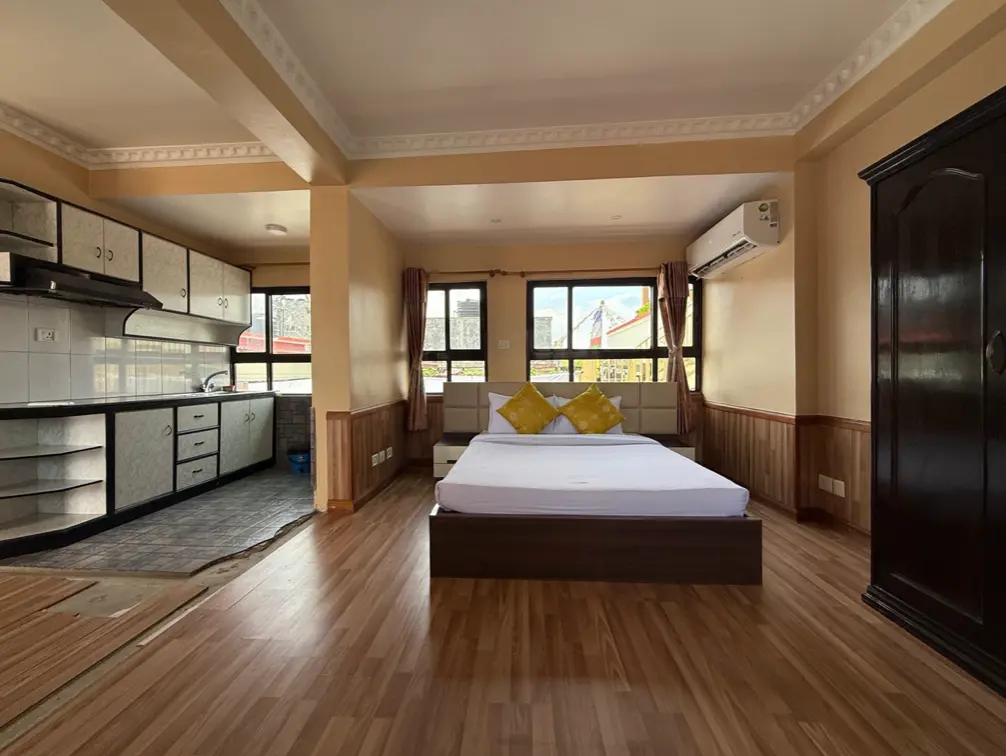
At Boudha Mandala Hotel, we always aim to make your room more elegant and comfortable. Nothing showy, just elegant simplicity and comfort. We understand that after a day of exploring the energy of Boudhanath Stupa or navigating the vibrant streets of Kathmandu, a comfortable and tranquil room is essential. That’s why we’re thrilled to announce a significant upgrade to our suite apartment.

For those familiar with Boudha Mandala Hotel, you might recall our previous suite, which offered a spacious layout and a convenient kitchenette area, providing a practical base for your travels, but nowhere near as elegant as it is now.

Look Back:

apartment suite.webp

Our previous suite apartment offered a comfortable and spacious stay with the convenience of a kitchenette. The room though large was a bit bare.

While practical, we envisioned spaces that offered an even greater sense of peace, comfort, and contemporary style.

Introducing Our Refreshed Sanctuary

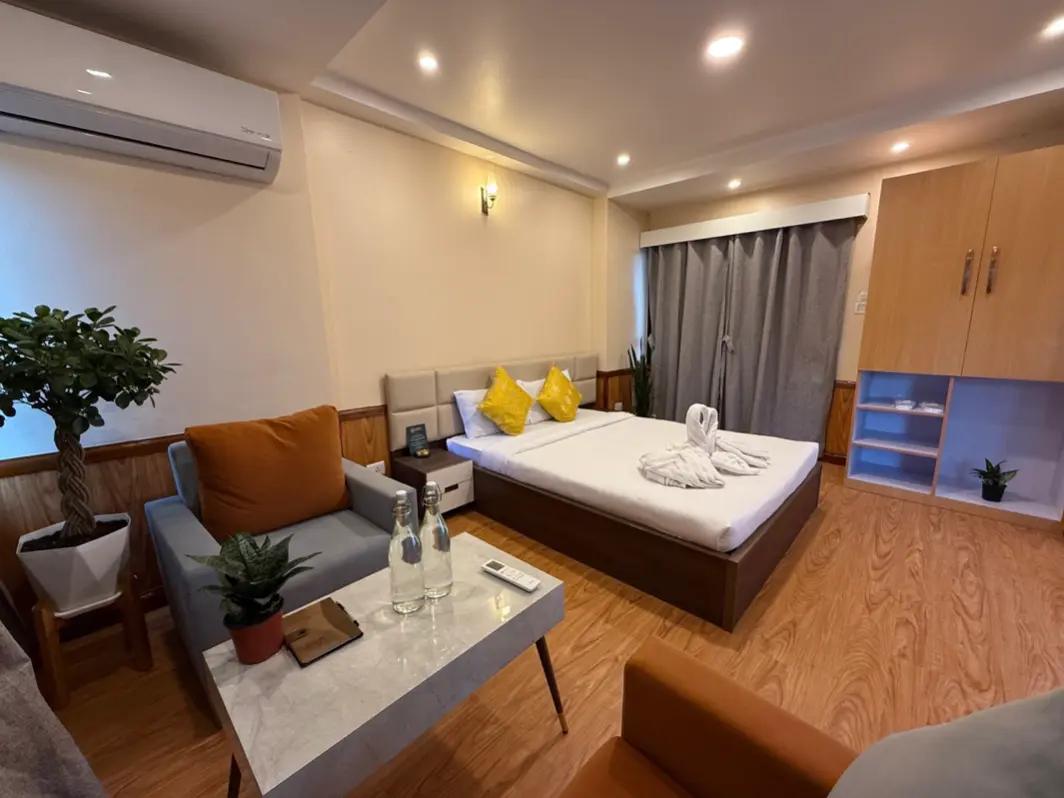
new apartment suite.webp

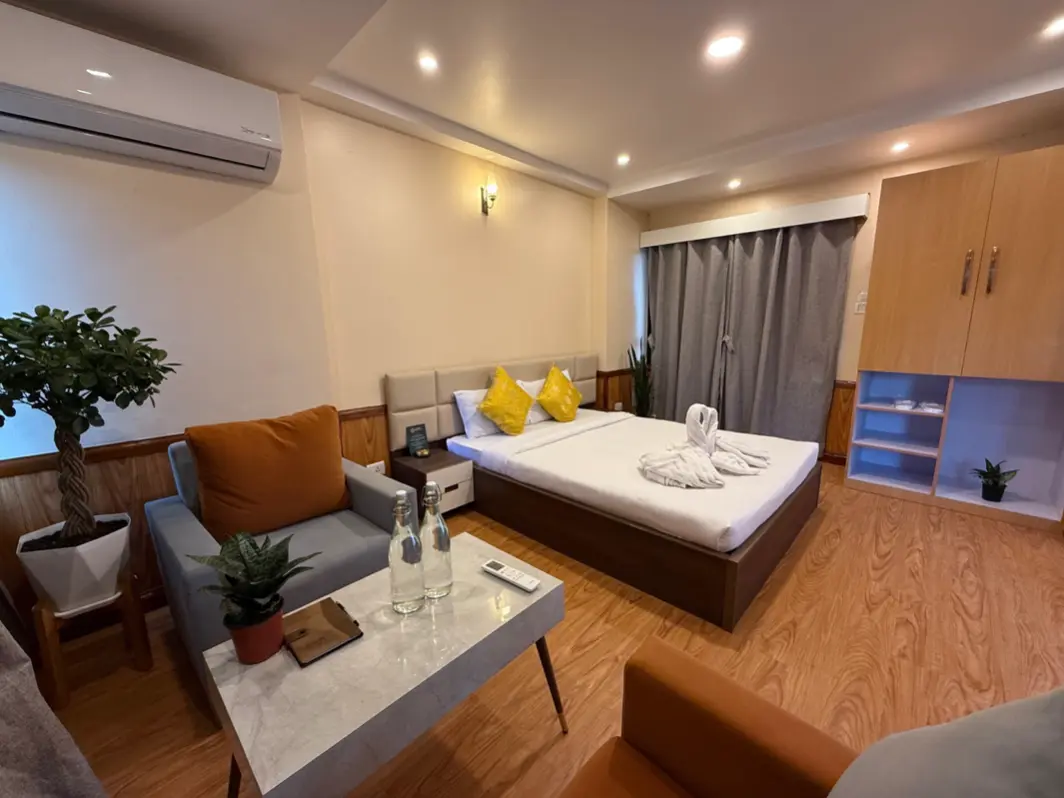
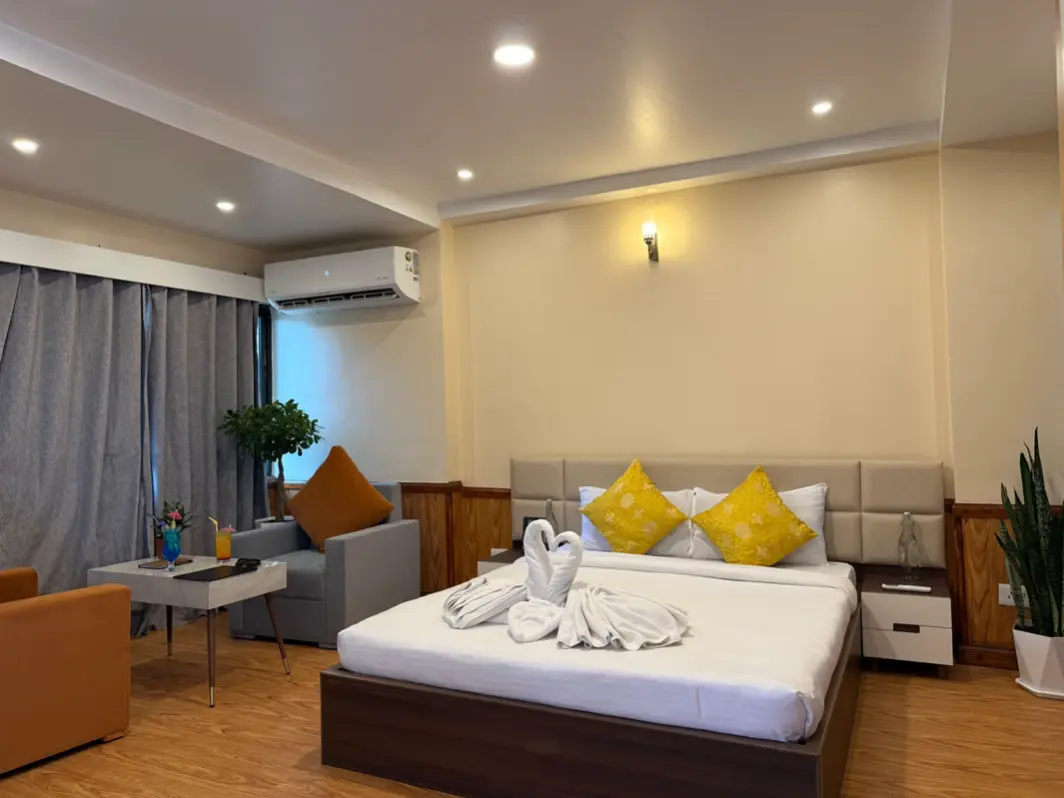
Experience the tranquility of our newly renovated rooms, designed for your comfort with a modern aesthetic. The closet is spacious and can handle most luggage on the bottom holder. The chairs are very comfortable and the plants make the room feel alive.

modified apartment suite.webp

Step into a new era of relaxation at Boudha Mandala Hotel. Our renovated rooms have been thoughtfully redesigned to create a serene and inviting ambiance. We’ve focused on enhancing every aspect of your stay, from the moment you enter until the time you depart.

What’s New?

• Enhanced Comfort: Comfortable armchairs with pillows provide a dedicated space for relaxation and coffee.

• Soothing Aesthetics: Experience a significantly lighter and brighter feel with fresh, neutral paint palettes.

• Kitchenette: You can cook safely on an induction stove and store your food in our refrigerator.

• Enhanced Sleep Quality: To ensure you get the best possible rest, we have installed new blackout curtains. They make the room perfectly dark for your sleeping ease and also help to reduce noise, ensuring a peaceful night.

• Warm Lights: New, recessed lighting provides a warm and inviting glow, enhancing the peaceful ambiance of the room for any time of day.

• Air-Purifying Greenery: We’ve introduced carefully selected indoor plants that not only enhance the room’s beauty but also help to naturally purify the air, creating a healthier and more refreshing environment for your stay.

• Eco-Conscious Hydration: In our commitment to respecting Mother Earth, we provide complimentary drinking water in elegant glass bottles to avoid the use of plastic bottles.

• Improved Functionality: We’ve added conveniently placed charging ports, optimized the layout for better flow, and introduced modern closet and shelving units for efficient storage.

We believe these enhancements will significantly improve your experience at Boudha Mandala Hotel, providing you with a true sanctuary just steps away from the spiritual heart of Boudhanath.

We invite you to be among the first to experience the revitalized comfort of our rooms. Book your stay today and discover the perfect blend of traditional Nepali hospitality and modern convenience at Boudha Mandala Hotel and Cafe de Mandala – your peaceful haven by the Stupa.

Click here to view our room types and book your stay!

How to Explore Kathmandu’s Hidden Corners on Foot

Kathmandu looks busy at first glance, but once you start walking, you find quiet lanes, tiny courtyards, old homes, and peaceful corners that most visitors never see. Exploring on foot gives you a softer view of the city and reveals places you’d never reach by taxi. You don’t need a plan. You just need a pair of comfortable shoes and a bit of curiosity.

Why is walking the best way to find Kathmandu’s hidden corners?

Walking is the best way to find Kathmandu’s hidden corners because the city is filled with narrow alleys and side paths that cars cannot enter.

These small routes show a different rhythm. You hear kids heading to school, smell bread from corner bakeries, and pass temples tucked between homes. None of this appears from car windows.

What walking lets you see

• Courtyards with small shrines
• Old wooden houses with carved windows
• Local markets tucked behind main streets
• Tea stalls filled with neighbors chatting
• Artists working outside their shops

Kathmandu rewards people who slow down.

Where should you start your walking exploration?

You should start your walking exploration in a neighborhood that already feels calm, such as Boudha, Patan, or Bhaktapur.

These areas give you safe lanes, interesting architecture, and easy walking routes.

Good starting areas

• Boudha’s alleys around the stupa
• Patan’s old city with narrow brick lanes
• Bhaktapur’s heritage squares and side paths
• Thamel’s backstreets early in the morning
• Small neighborhood markets around Asan

Starting in these places helps your walk unfold naturally.

Which hidden corners in Boudha are worth exploring on foot?

Hidden corners in Boudha that are worth exploring on foot include the quiet lanes behind the stupa, monastery paths, and markets used by locals.

Even though Boudhanath Stupa is well known, the small streets around it hold some of the softest scenes in Kathmandu.

Boudha corners to explore

• Back alleys where monks walk to class
• Small mandala studios
• Tea stalls run by families
• Monastery courtyards open in the morning
• Shops selling handmade incense and bread

A simple 20 minute wander often reveals something memorable.

What hidden corners in Patan are great for walking?

Hidden corners in Patan that are great for walking include small stone pavements, temple courtyards, and quiet lanes filled with workshops.

Patan feels like an open-air museum, but the magic sits in the lanes behind the main square.

Patan spots to look for

• Narrow lanes with brick houses
• Patan’s hidden inner courtyards
• Small metalworking studios
• Temples tucked between homes
• Stone fountains running gently

These paths show the real heart of the old city.

Which places in Bhaktapur feel special when explored on foot?

Places in Bhaktapur that feel special when explored on foot include pottery squares, traditional homes, and old walkways away from the main squares.

Walking here feels calm and historic.

Bhaktapur hidden corners

• Pottery Square
• Curve-shaped alleys with brick walls
• Small temples outside crowded areas
• Local homes with hand-carved windows
• Side streets where craftsmen work quietly

You can spend hours walking without feeling rushed.

How can you find hidden corners in crowded areas like Thamel?

You can find hidden corners in crowded areas like Thamel by avoiding the main lanes and choosing early mornings.

Thamel looks chaotic during the day, but at 7 am, the streets are quiet and easy to walk.

Thamel walking tips

• Start before shops open
• Follow side streets instead of the main road
• Visit small courtyards behind buildings
• Look for old homes behind shops
• Stop at small cafés that open early

You’ll see a different side of the neighborhood.

How can markets help you discover hidden parts of the city?

Markets help you discover hidden parts of the city because they lead into narrow lanes filled with everyday life.

You don’t stay in the market long. You use it as a doorway into nearby streets that tourists rarely enter.

Markets with walkable hidden paths

• Asan Market
• Indra Chowk
• Small fresh markets near Boudha
• Local spice alleys
• Residential lanes beside market squares

These places help you understand Kathmandu beyond the guides.

How can travelers stay comfortable while walking through hidden corners?

Travelers can stay comfortable while walking through hidden corners by staying hydrated, choosing good shoes, and taking breaks whenever something catches their eye.

Walking here is not about speed. It is about noticing.

Walking comfort tips

• Wear comfortable shoes
• Carry a bottle of water
• Take breaks for tea
• Avoid midday heat
• Follow your curiosity instead of a strict route

The best moments appear when you pause.

How can you explore hidden corners without getting lost?

You can explore hidden corners without getting lost by using simple waypoints, such as temples, squares, or tall buildings.

Kathmandu neighborhoods form loops. If you take a wrong turn, you usually end up back on a main street within minutes.

Easy navigation habits

• Remember the direction of the stupa or main square
• Follow larger roads when returning
• Keep your phone for reference
• Ask locals with simple gestures
• Move slowly and observe landmarks

People are helpful, and walking rarely takes you far from where you started.

Why is Boudha Mandala Hotel a good point for exploring hidden corners on foot?

Boudha Mandala Hotel is a good base for exploring hidden corners on foot because it sits inside one of Kathmandu’s most walkable neighborhoods.

You can step outside and immediately enter calm lanes, monasteries, and markets that reveal the city’s quieter side.

Why the location works

• Two minute walk to the stupa
• Easy access to peaceful alleys
• Short rides to Patan and Bhaktapur
• Safe routes for morning and evening walks
• A calm place to return to after long walking days

For travelers who want to explore slowly and discover places most people miss, Boudha is the perfect starting point.

What is the Average Nightly Rate at Hotel Mandala Near Boudhanath Stupa?

Key Takeaways
• Standard rooms at Hotel Mandala cost $35-$45 per night during peak season (October-March)
• Monsoon season rates drop to $25-$35 per night with 10-30% discounts
• Deluxe rooms and suites with stupa views range from $50-$70 per night in peak season
• Long-term stays (7+ days) receive 15-30% discounts, bringing monthly rates as low as $17-$22 per night
• All rates include free breakfast, WiFi, and parking
• Direct bookings offer better rates than third-party platforms
• Location steps from Boudhanath Stupa justifies premium over Thamel budget hotels

Let’s cut straight to the numbers. A standard room at Hotel Mandala near Boudhanath Stupa costs $35 to $45 per night during peak season (October through March) and $25 to $35 per night during monsoon season (June through September). If you’re staying a week or longer, those rates drop further with discounts of 15-30%.

But pricing at hotels near the stupa isn’t just about the nightly rate. It’s about what you’re actually getting for that money, proximity to one of the world’s most sacred Buddhist sites, included amenities that other hotels charge extra for, and the kind of personal hospitality that makes extended stays feel like coming home rather than checking into a hotel.

The question isn’t really “what does it cost?” It’s “what’s the value?” Let’s break down exactly what you’re paying, what’s included, and how to get the best rate for your stay in Boudha.

Peak Season Rates: October Through March

Standard Rooms: $35-$45 Per Night

During Kathmandu’s peak tourist season, when clear skies and comfortable temperatures bring travelers from around the world, Hotel Mandala’s standard rooms range from $35 to $45 per night. This is the best time to visit Boudhanath, which means higher demand and correspondingly higher rates.

What you get for that rate:
• Clean, comfortable room with private bathroom
• Air conditioning and comfortable bedding
• Free breakfast to start your day before walking the kora
• Free WiFi throughout the property
• Free parking if you’re renting a vehicle
• Location within 2 minutes walking distance of the stupa

Compare this to Thamel budget hotels at similar rates. You’d be dealing with noise, traffic, and a 30-minute taxi ride each time you want to visit the stupa. Factor in taxi costs of $3-5 each way, and you’re spending an additional $6-10 daily just on transportation, not to mention the time lost to Kathmandu traffic.

Deluxe Rooms and Suites: $50-$70 Per Night

If you want more space, better views, or additional amenities, deluxe rooms and suites range from $50 to $70 per night during peak season. These rooms typically feature:

  • Balconies with direct stupa views
  • Larger floor space
  • Better furnishings and decor
  • Some include sitting areas

The stupa view matters more than you might think. Waking up to see the all-seeing eyes of Boudhanath from your balcony, watching butter lamps flicker at dusk, observing the flow of pilgrims circling below, these aren’t just aesthetic pleasures. They’re part of the experience that brings people to Boudha in the first place.

For photographers, artists, or travelers who want to observe the stupa’s rhythms without leaving their room, the extra $15-25 per night represents genuine value.

At Boudha Mandala Hotel, our deluxe rooms with stupa views offer that perfect balance of comfort and connection. You’re not just looking at the stupa, you’re living with it. Morning chants reach you before your alarm goes off. Evening pujas provide a natural rhythm to your day. This proximity isn’t just convenience, it’s transformation.

Off-Season Rates: June Through September

Monsoon Season Discounts: $25-$35 Per Night

During monsoon season, rates drop significantly. Standard rooms cost $25 to $35 per night, representing 10-30% discounts off peak season pricing. Deluxe rooms and suites see similar percentage reductions.
The trade-off is weather. June through September brings afternoon rains, occasional flooding in Boudha’s narrow streets, and the green stillness that defines Nepal’s wet season. But for travelers who don’t mind working around the weather, monsoon season offers exceptional value.

Consider this: a month-long stay in a standard room during monsoon season, with long-term discounts applied, could cost as little as $17-22 per night. That’s $510-660 for an entire month in one of Kathmandu’s most spiritually significant neighborhoods, with breakfast included daily.

For digital nomads choosing Boudha as a base, these rates make extended stays financially sustainable. The cost of living in Kathmandu becomes remarkably manageable when accommodation costs this little.

What Monsoon Season Actually Means

Let’s be honest about the challenges. Afternoon rains are predictable but can be heavy. Some streets flood temporarily. The humidity is higher. Fewer tourists mean some restaurants and shops have reduced hours.

But there are advantages too. The stupa is less crowded. Sacred monasteries near Boudhanath have more space for visitors. The neighborhood feels more local, less performative. And the rain brings a particular kind of contemplative atmosphere that some travelers prefer.

If your schedule is flexible and you’re here for spiritual practice rather than trekking, monsoon season offers the best value in Boudha.

Long-Term Stay Rates: Where Real Value Emerges

Weekly and Monthly Discounts: 15-30% Off

This is where Hotel Mandala’s pricing becomes genuinely compelling. For stays of 7 days or longer, discounts typically range from 15% to 30% off the nightly rate. The longer you stay, the better the rate.
Let’s do the math:

Peak Season (October-March):
• Standard room nightly rate: $35-45
• 7-night stay at full rate: $245-315
• 7-night stay with 20% discount: $196-252 ($28-36 per night)
• Monthly stay with 30% discount: approximately $735-945 ($24.50-31.50 per night)

Off-Season (June-September):
• Standard room nightly rate: $25-35
• 7-night stay with 20% discount: $140-196 ($20-28 per night)
• Monthly stay with 30% discount: approximately $525-735 ($17.50-24.50 per night)

These aren’t theoretical numbers. They represent the actual value available to travelers willing to commit to longer stays.

Apartment-Style Accommodations for Extended Stays

For long-term guests, Hotel Mandala offers apartment-style accommodations with additional features that standard hotel rooms lack:

  • Private kitchenettes for preparing your own meals
  • Separate living spaces for work and rest
  • More storage for extended stay belongings
  • Laundry facilities or services

When you’re staying weeks or months, these amenities matter. The ability to cook occasionally saves money on restaurant meals. A proper work space supports productivity for remote workers. Storage means you can actually unpack rather than living out of a suitcase.

The apartment rates vary based on size and features, but the value proposition is clear: more space, more functionality, and rates that make extended stays practical.

Our apartment-style rooms at Boudha Mandala Hotel are designed specifically for long-term travelers. With high-speed fiber WiFi, 24-hour power backup, dedicated work desks, and kitchenettes, you’re getting functionality that standard hotel rooms simply don’t provide. Over 60% of our guests extend their original booking, many staying for months. That tells you something about the value and the atmosphere we’ve created.
Room Type Breakdown and What You Actually Get

Standard Rooms: The Practical Choice
Standard rooms represent the best value for travelers who want clean, comfortable accommodation without paying for amenities they won’t use. You get:

• Private bathroom with hot water
• Air conditioning
• Comfortable bed with quality linens
• Work desk and chair
• Free toiletries
• Daily housekeeping

What you don’t get: balcony, stupa views, extra space. If you’re spending most of your time exploring Boudha, attending pujas at Boudhanath, or experiencing authentic local culture, the standard room provides everything you need.

Deluxe Rooms: The View Makes the Difference

Deluxe rooms add:

  • Private balcony
  • Direct stupa views
  • Larger floor space
  • Better furnishings
  • Sometimes a small sitting area

The $15-25 premium over standard rooms buys you the ability to experience the stupa’s rhythms without leaving your room. For photographers documenting Boudha, artists seeking inspiration, or travelers who want to observe without always participating, this matters.

Apartments and Suites: Built for Extended Stays

The larger accommodations include:
Full or partial kitchenette
Separate bedroom and living area
Dining space
More storage
Sometimes washing machine access

These work best for stays of two weeks or longer, when the functionality justifies the higher rate. Families, couples, or solo travelers planning extended stays find the extra space and cooking facilities worth the investment.
Comparing Hotel Mandala Rates to Other Boudha Options
vs. Monastery Guesthouses: $10-20 Per Night
Monastery guesthouses represent the budget option in Boudha, typically costing $10-20 per night. But you’re trading significant comfort:

Shared bathrooms in most cases
Basic rooms with minimal furnishings
Stricter rules about noise and visitors
Limited or no air conditioning
No breakfast included
Sometimes cold water only

For serious practitioners attending teachings or retreats, monastery guesthouses make sense. For travelers who want a comfortable base to explore Boudha, Hotel Mandala’s extra $15-25 per night provides tangible benefits that justify the cost.
vs. Other Mid-Range Hotels: $30-50 Per Night
Hotel Mandala competes directly with other 3-star properties in Boudha. Rates across this category are similar, typically $30-50 per night for standard rooms. The differentiators aren’t price but location, hospitality, and atmosphere.

Properties directly on the stupa roundabout but not set back might cost slightly more while dealing with more noise. Properties on quieter side streets might cost slightly less but require a longer walk to the stupa. Hotel Mandala’s positioning, on the roundabout but set back from the main chaos, offers the best of both worlds.
vs. Luxury Boutique Hotels: $80-150 Per Night
At the high end, Boudha has boutique properties charging $80-150 per night or more. These offer:
Designer interiors
Rooftop restaurants with stupa views
Spa services
Polished, formal service
Premium furnishings throughout

Whether this is worth 2-3 times Hotel Mandala’s rates depends entirely on your priorities. The stupa doesn’t care which hotel you’re staying at. The authenticity of your experience isn’t enhanced by thread count. For travelers focused on spiritual practice or cultural immersion, the luxury premium rarely translates to a better experience.

How to Explore Kathmandu’s Spiritual Side Without Feeling Lost

Kathmandu holds a quiet kind of spiritual energy that’s easy to sense but hard to understand at first. You see temples everywhere, people lighting lamps, monks walking with prayer beads, and rituals happening in open spaces. It can feel confusing if you don’t know where to begin. The good news is that you don’t need special knowledge to experience it in a genuine way. You just need simple steps and a calm approach.

Where should you start if you want to understand spirituality in Kathmandu?

You should start by visiting one major spiritual site early in the morning, when everything feels calm and open.

Morning shows the real rhythm of spirituality in Kathmandu. You see how locals pray, how monks move, and how energy around temples shifts from quiet to more active as the day starts.

Good starting points

• Boudhanath Stupa for Tibetan Buddhism
• Swayambhunath for a blend of Buddhism and Hindu elements
• Pashupatinath Temple for Hindu rituals
• Patan’s monastery courtyards for a quieter setting

Each place teaches you something different without needing explanations.

How can you experience a temple or stupa without feeling out of place?

You can experience a temple or stupa without feeling out of place by observing first and joining gently.

Most people worry about doing something wrong. You don’t need to. Locals care more about your respect than your knowledge of rituals.

Simple ways to feel comfortable

• Walk clockwise around stupas
• Keep a soft tone when speaking
• Remove shoes when entering inner areas
• Step aside during active rituals
• Watch how locals move and follow their cues

These small habits help you blend in naturally.

What rituals will you see in Kathmandu and what do they mean?

The rituals you see in Kathmandu usually include lighting butter lamps, spinning prayer wheels, offering flowers, chanting, and walking in circular paths around sacred sites.

Each ritual has meaning, but travelers don’t need full explanations to appreciate them. Watching with attention can feel grounding.

Common rituals you’ll notice

• Butter lamps meant as offerings for clarity and compassion
• Prayer wheels are believed to release mantras into the air
• Kora, the clockwise walk around sacred structures
• Incense offerings for purification
• Chanting inside monasteries

Seeing these up close gives you a clear sense of how spirituality shapes daily life.

Which places in Kathmandu feel the most spiritual for quiet moments?

Places in Kathmandu that feel the most spiritual for quiet moments include monasteries, inner courtyards, and early-morning stupa paths.

Some spots feel peaceful even when crowded because the energy stays focused and gentle.

Calm spiritual locations

• The upper walkways of Boudhanath Stupa
• The back courtyards of Swayambhunath
• Monastery gardens in Boudha
• Patan’s surrounding monastery lanes
• Small chapels around Pashupatinath

These areas give you time to breathe and sit without pressure.

How can you learn respectfully while visiting monasteries?

You can learn respectfully while visiting monasteries by entering slowly, observing quietly, and following simple manners that locals appreciate.

Monasteries welcome visitors, but they work best when you move with awareness.

Helpful habits

• Pause at the doorway before entering
• Sit quietly if monks are chanting
• Avoid stepping over prayer books
• Keep your phone silent
• Ask before taking photos

These small details show respect for the space.

How can travelers understand Tibetan and Hindu symbolism without guides?

Travelers can understand Tibetan and Hindu symbolism by focusing on a few key elements instead of trying to decode everything.

Kathmandu is full of symbols. You don’t need to know the full history to gain insight.

Look for these simple elements

• Eyes on stupas representing awareness
• Prayer flags meant to spread good intentions
• Carved deities showing protection or wisdom
• Mandalas symbolizing balance
• Bells marking the start or end of ritual moments

Understanding even three or four symbols makes the whole environment feel clearer.

How can visitors avoid feeling overwhelmed by spiritual sites?

Visitors can avoid feeling overwhelmed by visiting fewer places, staying longer at each one, and choosing calmer times.

Trying to see too much creates stress. Staying with one moment creates meaning.

Ways to keep things easier

• Pick one or two sites per day
• Visit early mornings or late evenings
• Sit for a few minutes before walking
• Watch rituals without rushing
• Take breaks for tea or quiet walks

Slow travel works best for Kathmandu’s spiritual side.

What simple route can travelers follow to explore spirituality in a single day?

A simple route travelers can follow begins at a stupa, continues to a monastery, and ends at a Hindu site in the afternoon.

This mix gives you a full picture of how spirituality flows through the city.

Suggested day route

• Start at Boudhanath Stupa for morning kora
• Visit a nearby monastery to listen to chanting
• Stop for tea and a slow break
• Head to Pashupatinath for afternoon rituals
• End at Swayambhunath for sunset views

This route keeps the day calm while giving you depth.

Why does ending your spiritual day in Boudha feel so grounding?

Ending your spiritual day in Boudha feels grounding because the neighborhood holds a soft atmosphere that stays steady from morning to night.
The stupa lights up, the chanting continues, and the walking path remains active but peaceful.

Evening feelings in Boudha

• Warm lights
• Quiet corners
• Monks heading to evening prayers
• Tea stalls still open
• Calm energy all around

It’s one of the easiest places in Kathmandu to unwind after a day of exploring.

Why is Boudha Mandala Hotel a good base for exploring the city’s spiritual side?

Boudha Mandala Hotel is a good base for exploring the city’s spiritual side because it sits within a short walk of Boudhanath Stupa and several monasteries, with easy access to taxis for the rest of Kathmandu.

Travelers appreciate having a quiet place to start and end their days, especially when exploring spiritual sites that rely on calm energy.

What the location offers

• A two minute walk to the stupa
• Close access to monasteries for morning visits
• Peaceful nights after long days
• Simple routes to Pashupatinath and Swayambhu
• A steady, gentle neighborhood atmosphere

For anyone who wants to experience Kathmandu’s spiritual side without feeling overwhelmed, Boudha is the right place to stay.

Must Visit Places in Kathmandu: A Local Guide

Kathmandu has a unique way of captivating its visitors, drawing them in with an intoxicating blend of vibrant sounds, aromatic spices, and a variety of experiences that contrast quite a spiritual escape with bustling streets.

In this guide, we’ll help you navigate the city’s rich cultural landscape and pinpoint the must-see attractions so that you can bypass the overwhelming noise and distractions. Discover the hidden gems and iconic landmarks that truly define Kathmandu, making your journey memorable and fulfilling.

What makes Kathmandu worth visiting?

Kathmandu is worth visiting because it blends sacred sites, ancient architecture, and living culture within a few kilometers of each other.
Travelers often expect chaos. They find that, yes. But they also find quiet monasteries, sunrise viewpoints, old royal squares, and food you think about long after you leave. You get layers of history in a compact valley that you can explore without wasting time in long transfers.

Here’s a simple breakdown of what Kathmandu offers:

• Spiritual sites in Boudha, Pashupatinath, and Swayambhu that offer daily rituals, prayer wheels, and temples that feel alive
• Ancient palaces in Kathmandu, Patan, and Bhaktapur Durbar Squares that showcase carvings, courtyards, and centuries-old architecture
• Food and culture in Thamel, Patan, and Boudha with momos, Newari dishes, and Tibetan restaurants
• Relaxing spaces like the Garden of Dreams and cafés in Boudha that give you a breather from traffic
• Viewpoints at Swayambhu with wide views of the entire valley

Boudhanath Stupa

Boudhanath Stupa is a massive white dome featuring watching eyes painted on its tower, serving as a focal point for Tibetan Buddhist life in Kathmandu.

As soon as you enter the circle, the energy of the place envelops you. Locals walk in a clockwise direction around the stupa, while monks in red robes pass by quietly. The flickering of butter lamps and the swarms of pigeons flying around the stupa enhance the atmosphere.

Why it stands out

• Built in the 5th century
• One of the largest spherical stupas in Asia
• A perfect sunrise and sunset spot
• Surrounded by rooftop cafés with warm tea and views
• Safe and walkable at all hours

Distance from Boudha Mandala Hotel:
About 2 minutes on foot. Most guests wander here more than once.

Pashupatinath Temple

Pashupatinath Temple is a sacred Hindu temple complex on the Bagmati River that shows the spiritual side of Nepali life without filters or staging.
It feels raw. Priests chant. Families gather. Rituals happen in real time. You see life and death as part of the same rhythm, something Nepalis understand deeply.

Key points

• UNESCO-listed temple complex
• Known for the evening aarti ritual on the riverbank
• Home to sadhus who sit in painted ash
• A strong cultural experience rather than a sightseeing stop

Distance from Boudha Mandala Hotel:
It’s about 2.2 kilometers. You can take a leisurely walk from Boudha Mandala Hotel to Pasupatinath and experience the vibrant chaos of Kathmandu along the way.

Thamel

Thamel is a busy neighborhood packed with shops, cafés, trekking stores, and live music spots.

Most travelers end up here at least once to pick up warm jackets, handmade crafts, or trekking gear. It’s also the easiest place to find international food if you need a break from dal bhat or momos.

Useful tips:

• Avoid buying the first thing you see. Prices vary a lot.
• Mornings are quieter.
• Roads can feel tight, so walk on the left side and stay alert.

Who enjoys it most

• Shoppers
• Food lovers
• Anyone planning a trek

Distance from the hotel:

Around 5 to 6 kilometers.

Kathmandu Durbar Square

Kathmandu Durbar Square is an old royal palace area filled with carved wooden temples, courtyards, and traditional architecture.

People visit to see the Kumari House (Kumari is a living goddess of the indigenous Newar people of Kathmandu Valley), the former royal palace, and the stacked pagoda temples that survived earthquakes and time.

Best for

• History fans
• Photographers
• Architecture admirers

Distance from the Hotel:

Around 6km.

Swayambunath Stupa ( Monkey Temple )

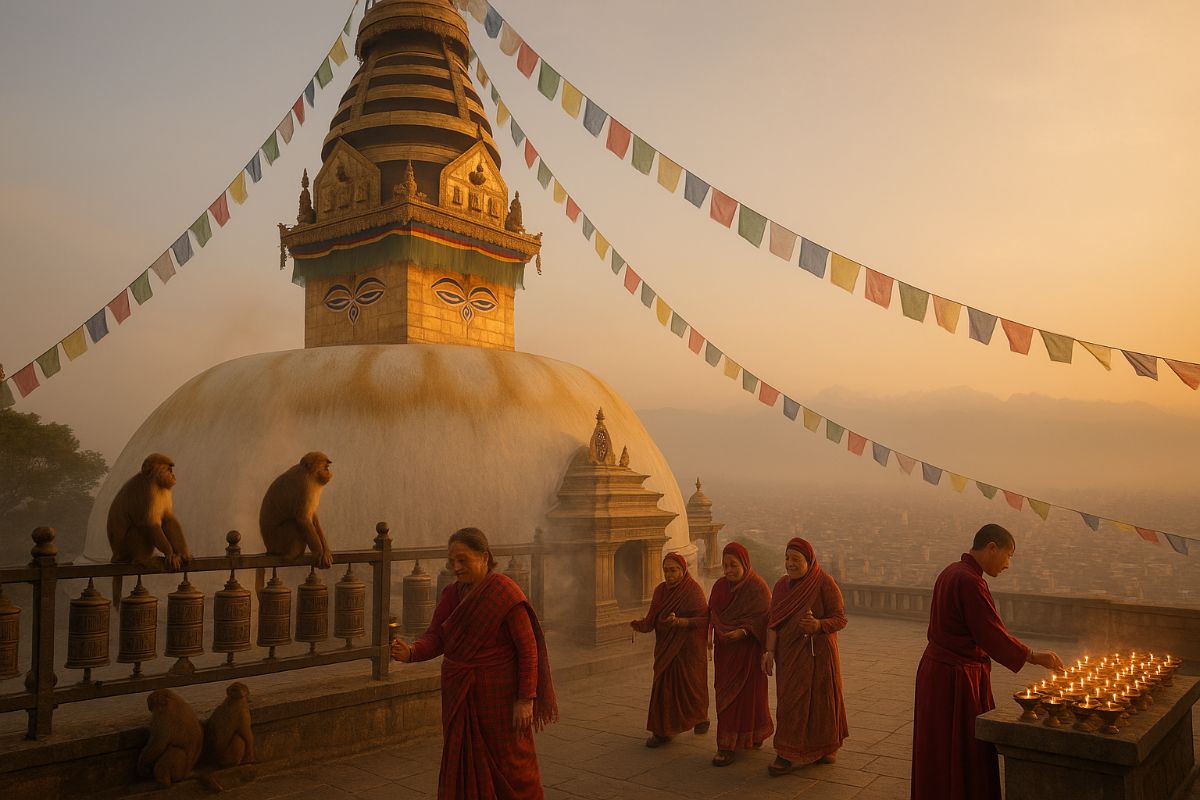
Swayambhunath is a stupa located on a hilltop at the outskirts of Kathmandu Valley, providing one of the best views of the valley and blending Hindu and Buddhist symbolism.
You meet monkeys on the steps, so keep snacks tucked away. Once you reach the top, the air feels fresh, and prayer flags stretch across the sky.

What stands out:

• A panoramic view of all of Kathmandu
• Prayer wheels around the stupa
• A great sunrise location

Travel distance:
About 7 to 8 kilometers from the Boudha Mandala Hotel.

Patan Durbar Square

Patan Durbar Square is a historic district known for Newari art, stone statues, and temples with incredibly detailed carvings.

It feels calmer than Kathmandu Durbar Square. You find artists working on metal statues, wood carvings, and handmade crafts in the surrounding alleys.

Highlights:

• Krishna Mandir
• Patan Museum
• Traditional courtyards

Many visitors say Patan is their favorite square because it feels more lived-in.

Bhaktapur Durbar Square

Bhaktapur Durbar Square is an old city center filled with medieval architecture, narrow brick lanes, and traditional workshops.

People love Bhaktapur because the streets are clean, the buildings feel timeless, and the city still makes pottery the old way.

Don’t miss:

• Nyatapola Temple
• Pottery Square
• Juju dhau, which is a thick and sweet yogurt

Distance from the hotel:
About 12 kilometers

Garden of Dreams

The Garden of Dreams is a restored neoclassical garden that gives travelers a quiet space to rest, read, or take a break from traffic.

It’s not huge, but it feels peaceful. The pathways, ponds, and small pavilions offer a simple reset.

Good for:

• A slow afternoon
• Sitting with coffee
• Travel recovery days

Located near the entrance of Thamel.

What are the best hidden places near Boudha for travelers staying at Boudha Mandala Hotel?

The best hidden places near Boudha include small monasteries, traditional workshops, and peaceful alleys around the stupa circle.

Guests often enjoy these quiet spots because they feel like small pauses in the day.

Notable stops:

• Shechen Monastery
• Ka-Nying Shedrub Ling Monastery
• Local tea shops with salty butter tea
• Small mandala shops run by Kathmandu artists

These places stay close enough that you can return to the hotel for a break any time.

What travel tips help visitors get the most out of Kathmandu?

Useful travel tips for Kathmandu help visitors save time, avoid common mistakes, and enjoy the city more comfortably.

Here is a list of the essentials:

• Visit during October to December or February to April for comfortable weather
• Use cash because small shops prefer it
• Take taxis, but agree on a rate before starting
• Expect cooler mornings and warmer afternoons
• Wear comfortable walking shoes and bring layers

Why is Boudha Mandala Hotel a good base for exploring Kathmandu?

Boudha Mandala Hotel is a good base because it places travelers within walking distance of Boudhanath Stupa and within a short ride of every major spot in Kathmandu.
Guests appreciate quiet rooms, friendly staff, and the ability to walk to the stupa for sunrise or dinner. After long days, returning to a calm neighborhood helps you recharge faster.

What makes the location comfortable?

• 2-minute walk to Boudhanath Stupa
• Easy taxi access
• Close to cafés, bakeries, monasteries, and shops
• Welcoming atmosphere for both short and long stays

Kathmandu has many corners worth exploring, and staying in Boudha gives you a gentle start and finish to every day.

Nepal’s Discord Revolution: How 7,586 Youth Voted for a Prime Minister Online

Nepal is safe now.

That’s the answer for anyone wondering whether to book a flight to Kathmandu. Tourism has resumed. Trekking permits are being issued and daily life has returned to its rhythm across the country.

But the full answer requires understanding what happened in September 2025 and why, despite the protest, Nepal emerged with functioning institutions and a path forward. What the world witnessed wasn’t just another protest. It was the Discord Revolution: the first time in history a prime minister was chosen via social media online vote, and a generation’s announcement that democracy could be reimagined in real time.

From Prague to Kathmandu- A New Kind of Change

In 1989, students in Prague stood in Wenceslas Square and jangled their keys. That metallic chorus meant: time’s up, unlock the door, let us through. Within a week, Czechoslovakia’s government stepped aside. They called it the Velvet Revolution because change arrived softly but irreversibly.

Thirty-five years later, Nepal’s Gen-Z didn’t have keys to jangle. They had Discord, Instagram, and other social media platforms. They also had frustration that had been building for years: youth unemployment at 22.7 percent and corruption cases involving billions of rupees.

When the government banned 26 social media platforms on September 4, 2025, including WhatsApp, Facebook, Instagram, Twitter, Reddit, and YouTube claiming it needed to regulate content, young Nepalis saw it as an attempt to silence the #NepoBaby campaign that had been highlighting the gap between politicians’ children and ordinary youth. The ban became the spark.

The Discord Revolution: How it Unfolded

September 6-8: From Online to the Streets

Activist Sudan Gurung, founder of the NGO Hami Nepal, put out a call on Instagram on September 6: “Do not stay silent. Do not stay home. Bring your friends, your family, your courage, and your voice” . On September 8, he announced the Discord channel “Youths Against Corruption” as the central communication system for the protest.

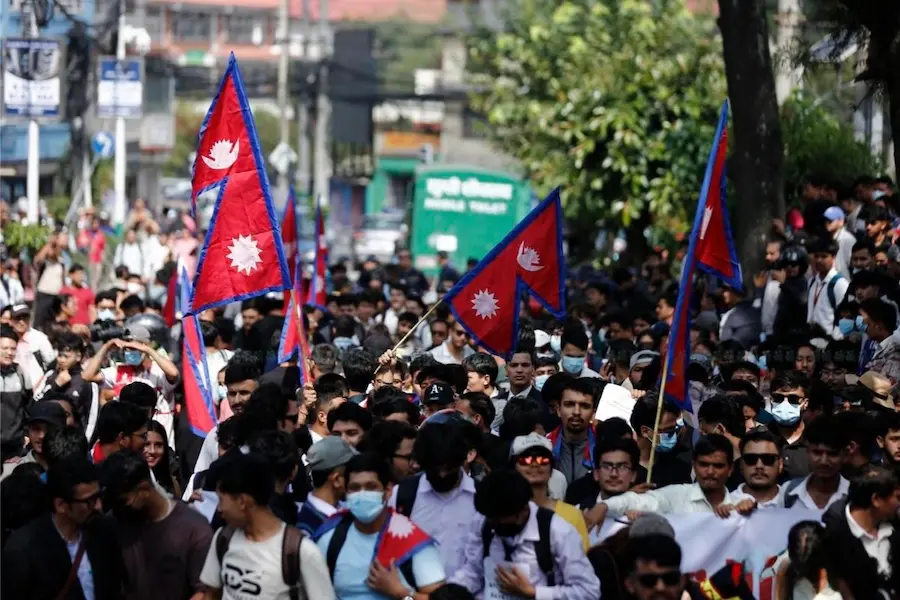
Thousands of young people, many in school and college uniforms, gathered in Kathmandu and other cities. They carried placards. Some skateboarded alongside the crowd. Leaders announced they wouldn’t destroy property or leave trash behind . One of their symbols was the Jolly Roger flag from the manga One Piece, representing resistance against oppression .

Then chaos erupted. Some protesters stormed Parliament. Security forces responded with tear gas, water cannons, rubber bullets, and eventually live ammunition. By nightfall, 19 protesters were dead across the country, most under the age of thirty .

September 9: The Breaking Point

The deaths on September 8 sparked widespread anger. On September 9, violent incidents occurred across Nepal, with government buildings, political party offices, and other structures destroyed in multiple cities. The scale of the unrest included the Prime Minister’s Office, Parliament, the Supreme Court, and numerous provincial and municipal facilities.

Prime Minister K.P. Sharma Oli resigned on September 9. By September 10, the Army assumed responsibility for security as the nation faced a significant institutional crisis.

September 10-12: Discord Revolution Democracy Reimagined

On the evening of September 10, something unprecedented happened. As chaos threatened to engulf Kathmandu, 7,586 young Nepalis voted on the Discord channel “Youths Against Corruption” for their candidate to lead an interim government. The vote was livestreamed on YouTube, TikTok, and Facebook.

Former Chief Justice Sushila Karki won. It was perhaps the first time in history that a prime minister had been chosen via an online vote. On September 12, President Ram Chandra Poudel invoked the “doctrine of necessity” to appoint her as Nepal’s first woman prime minister, tasked with overseeing elections within six months and subsequently dissolved Parliament.

The total toll: at least 72 deaths, including 19 young students and one child as young as 12. Over 200 were hospitalized. The government lifted the social media ban and launched investigations into both the violence and police actions.

Why “Discord Revolution” Captures What Happened

The term isn’t official. No organization claims it. But it’s emerged as the most accurate way to describe what occurred in Nepal in September 2025.

According to analysis by the Wilson Center, “Nepal’s political landscape has undergone an extraordinary and rapid change. The protests revealed a force the traditional political parties had long ignored: the youth. The Discord Revolution represents both the tool (the app) and the outcome (institutional transformation through digital democracy).

Like the Velvet Revolution in Prague, the Orange Revolution in Ukraine, or the Arab Spring across the Middle East, the Discord Revolution has become shorthand for a specific moment when a generation demanded change. The difference is the method: this was democracy reimagined in real time, on anonymous online forums rather than in newspapers or TV studios.

Nepal’s Discord Revolution in the Global Context

Nepal’s protests were part of a broader pattern in 2025. Gen-Z Youth-led movements emerged in Indonesia, Madagascar, and Morocco, all challenging corruption and demanding reforms through digitally coordinated action.

The most striking evidence of Nepal’s influence came in October 2025, when thousands of youths in Tbilisi, Georgia, surrounded the presidential palace demanding sweeping political reforms. The outlet quoted a demonstrator as saying the Georgian government had “put itself into the Nepalese scenario”, a direct reference to Nepal’s recent Discord Revolution that led to the fall of its previous government.

Lonely Planet’s 2025 travel safety update notes that “Nepal’s period of civic unrest resolved with a government transition and commitment to elections, with tourism infrastructure recovering rapidly.

Nepal Now- Safe, Stable, and Moving Forward

Today, Nepal is functioning normally. Tribhuvan International Airport processes international arrivals on schedule. Trekking permits are issued without delay. Hotels across Kathmandu, Pokhara, and mountain regions are filling with travelers.

The U.S. Department of State’s Nepal travel advisory maintains its Level 2 rating (Exercise Increased Caution), the same classification it held before September, primarily due to terrain and infrastructure considerations common to mountain regions, not political instability. The interim government under Prime Minister Sushila Karki has focused on three priorities: investigating the September violence, addressing corruption cases that sparked the protests, and preparing for elections within six months.

Her cabinet reflects a technocratic approach, with ministers appointed based on merit and specialization rather than political loyalty. Electoral rolls are being revised to ensure young people can register to vote. The rhythms of Nepal haven’t changed. The country you’ve been reading about, the one with the Himalayas, the prayer flags, the impossibly kind people, is still here.

What the Discord Revolution Means Beyond Nepal

Nepal did something difficult in September: it absorbed a crisis, transitioned peacefully (despite the violence), and emerged with institutions intact.

According to the Wilson Center analysis, “Any future discussions around government formation and constitutional amendments must ensure the participation of younger marginalized voices, especially from nonurban Nepal”. The Discord Revolution has raised questions about how democracy functions in the digital age.

India and the United States have both emphasized support for democratic principles as Nepal regroups. The international community recognizes that what happened in Nepal, despite its chaos, ultimately strengthened rather than weakened democratic institutions.

Frequently Asked Questions

Is Nepal safe for tourists now?

Yes. Nepal is safe for tourists after the Gen Z protest. Tourism infrastructure operates normally. An interim government is in place with elections scheduled within six months. Daily life has returned to normal across the country.

What was the Discord Revolution?

The Discord Revolution refers to Nepal’s September 2025 youth-led movement that resulted in the first-ever prime minister chosen via online vote. On September 10, 7,586 young Nepalis voted on Discord for former Chief Justice Sushila Karki to lead an interim government. The term captures both the digital nature of the organizing (Discord app) and the rapid institutional transformation.

Is Boudha a safe neighborhood?

Yes. Boudhanath remained calm throughout September and continues to be one of Kathmandu’s most peaceful areas. The spiritual center maintained its tranquil atmosphere even during the peak of unrest elsewhere in the city.

How does this compare to other recent movements?

Nepal’s Discord Revolution was part of a wave of youth-led uprisings in Asia during 2025, including in Indonesia, Madagascar, and Morocco. It shares similarities with Bangladesh (2024) and Sri Lanka (2022) in terms of youth-driven change, but differs in its rapid resolution and the unprecedented use of an online vote to choose leadership.

The Revolution That Rewrote Democracy

On September 10, 2025, as Nepal faced a significant institutional crisis, 7,586 young Nepalis participated in an online vote via Discord to select a candidate for interim leadership. Former Chief Justice Sushila Karki emerged as their choice. The vote was livestreamed on YouTube, TikTok, and Facebook, a reflection of how democracy was being reimagined in real time through digital platforms rather than traditional political channels.

The Discord Revolution demonstrated that digitally connected generations can organize rapid institutional change. Nepal’s youth, frustrated by corruption and economic challenges, used the very tools banned by the government to coordinate their movement and ultimately participate in selecting leadership. This represented a significant shift in how civic engagement operates in the social media age.

The Discord Revolution entered the global lexicon as a reminder that democracy’s next chapter may be written through digital coordination as much as traditional political processes and that small countries can set precedents that resonate globally when a generation demands accountability and change.

Experience the Peace That Endured

The Stupa’s eyes still watch over Boudha. Prayer wheels still turn. And in the courtyards of a peaceful hotel near Boudha, travelers gather each evening to share stories.

Book your room today and discover why, even after its hardest moment, this corner of Kathmandu remains a sanctuary just steps from the Stupa.

Where to Eat in Boudha: Best Restaurants and Cafes Near the Stupa

There’s something sacred about eating in Boudha. Maybe it’s the scent of juniper in the air, the sound of soft mantras drifting from a nearby gompa, or the way time seems to slow down when you’re just a few steps from the great stupa.

Food here isn’t just about filling your belly. It’s about nourishment, presence, and quiet moments in between your journey.

Whether you’re looking for a rooftop cafe to watch the stupa glow at dusk or a hidden garden for morning chai, Boudha welcomes you with meals that feel soulful, not rushed.

What Makes Boudha’s Food Scene Special

Unlike other parts of Kathmandu that cater to fast-moving tourists, Boudha’s cafes and restaurants reflect the rhythm of spiritual life. Here, you’ll find monks sipping tea beside digital nomads with laptops, and long-stay pilgrims sharing vegetarian thalis after a morning of kora.

Many places prioritize clean, mindful eating. Vegetarian and vegan options are abundant. And because of the Tibetan influence, meals are often warm, simple, and made to be savored slowly.

Best Cafes in Boudha for Quiet Moments and Good Coffee

If you’re the kind of traveler who loves writing in a journal over a pot of tea or watching the sky change colors with your espresso, Boudha has the perfect cafe for you.

Boudha Cafe De Mandala: 10 Seconds from the Stupa

This is where guests of Boudha Mandala Hotel and mindful wanderers start their mornings.

Boudha Cafe De Mandala sits quietly just off the stupa’s circle. With its rooftop view, peaceful indoor seating, and a menu that blends local and Western comfort food, it’s the kind of place where you linger without meaning to.

Expect:
• Organic breakfasts with eggs, porridge, or muesli.
• Organic teas and French press coffee.
• Light lunches with fresh greens, momos, and seasonal specials.

The vibe is retreat-like. Monks sometimes pass by below. Writers sip slowly. The staff greet you like an old friend.

Good to know
Free Wi-Fi, long-stay friendly, vegetarian options, and open early for pre-kora tea.

Garden Kitchen Cafe
Tucked near the stupa, this rooftop cafe offers a stunning view of the dome. It’s peaceful, great for digital nomads, and known for its warm banana bread and strong coffee.

Utpala Cafe
Located inside a nunnery compound, this all-vegetarian cafe is a hidden sanctuary. The food is light, affordable, and aligned with Buddhist values. Try the thukpa or the fresh salads.

Roadhouse Cafe Boudha
If you’re missing something a bit more Western, Roadhouse delivers. Their wood-fired pizzas and spacious terrace are perfect for late afternoon meals or group meetups.

Where to Eat for a More Traditional, Heartfelt Meal

After a long walk around the stupa or a morning of meditation, nothing hits like a hot plate of Tibetan food.

Double Dorje Restaurant

Simple seating, rich flavors. Their Tibetan thali includes tingmo bread, dhal, and curried vegetables. Don’t miss the butter tea and hand-folded momos.

Flavors Restaurant

A no-fuss favorite for locals and expats alike. Their rice and curry sets are satisfying, and the quiet atmosphere makes it ideal for slow, mindful eating.

Norling Restaurant
Known for its wholesome soups and stir-fried noodles. Their portions are generous, the prices fair, and the setting calm.

Hidden Gems for eating and reflecting

Sometimes, the best meals aren’t found on a map. They’re discovered while wandering a narrow alley or following the scent of freshly steamed dumplings.

Lhasa Momo
You’ll find it if you follow the locals. Soft, juicy momos with tangy achar in a tiny upstairs room. No frills, just good food and warm energy.

Ananda Treehouse Cafe
A bit off the main road, this garden cafe feels like a retreat within a retreat. Wooden seating, birdsong, and a menu of smoothies and herbal teas.

Stupa View Cafe
Yes, it’s popular. But for good reason. Order a masala tea at sunset and watch the sky blush over the stupa. Worth every rupee.

Eating Respectfully in a Sacred Space

Boudha is home to spiritual practitioners, monks, and retreat centers. Many of the restaurants and cafes are directly connected to these communities. As a visitor, a few quiet gestures of respect go a long way.

• Take off your shoes if eating at a monastery-run cafe
• Avoid loud conversations, especially near shrines or puja halls
• Dress modestly, covering shoulders and knees where possible
• Ask before photographing meals or spaces that feel sacred
• If a place is vegetarian only, honor that choice even if you’re not

Being mindful isn’t just about what’s on your plate, but how you move through the space where you eat.

Staying Nearby Makes Every Meal More Meaningful

One of the best ways to truly enjoy Boudha’s food culture is to stay close. When you’re just steps from the stupa, you don’t need to rush meals or plan your day around long commutes.

Boudha Mandala Hotel offers just that. With its stupa-view rooms and peaceful cafe, you can start your day with a quiet breakfast of oats, fruit, and chai, then return at dusk for lentil soup and herbal tea under prayer flags.

Many long-stay guests say they find their favorite cafes by simply walking, wandering, and letting the energy of the stupa guide them.

A Meal with Meaning
In Boudha, eating is an extension of your presence. Whether you’re sitting on a rooftop watching the sky turn gold or quietly sipping soup in a courtyard surrounded by prayer wheels, food becomes a form of connection.

You’ll remember the meals not just for the taste, but for the stillness you felt between bites.

If you’re looking for somewhere peaceful, nourishing, and deeply rooted in spirit, Boudha is waiting.

And if you want to stay where meals and moments come together effortlessly, Boudha Mandala Hotel is just ten seconds from the stupa gate, and a world away from the noise.

Boudhanath Neighborhood Guide 2026: Stay in Boudha

How Do You Plan the Perfect Stay in Boudhanath, Kathmandu?

You open the hotel door and the stupa is already there so close you don’t need to search for it. On some mornings, a thin veil of mist rests on the white dome like a shawl. On others, the sky is a clean winter blue and prayer flags look almost electric against it. Either way, you’re not commuting into Boudha. You’re waking up inside it.

A quiet, culturally rooted stay just a 10-second walk from Boudhanath Stupa, held for those walking the path of practice, presence, and inner peace.

It is the functional advantage of staying at Boudha Mandala Hotel. It changes how your day operates. You can join the early kora without timing taxis. You can step back into stillness when the plaza swells at midday. You can return for a butter-lamp hour at dusk like it’s part of your home routine, not a scheduled attraction.

Why Boudha Mandala Hotel is the right place to stay in Boudha

Many hotels sit “near” the stupa. Boudha Mandala Hotel is placed and programmed for it. That distinction matters in Boudha, because the stupa is not a once-a-day stop; it is a recurring axis that shapes how you move through your hours.

You are inside the ritual radius

A neighborhood built around devotion runs on repetition. You don’t do a single circuit and tick a box. You circle at sunrise, drift back again at dusk, and sometimes return at night just to see the lamps shimmer in quiet. Being a 10-second walk away makes those returns effortless.

You get stillness without being removed

This is the balance travelers actually need. Boudha is active, and you want that energy. But you also need a room that does not feel like the plaza continues through the wall. The hotel gives you that clean boundary: full access outside, real quiet inside.

Your base includes cultural engagement

Boudha Mandala Hotel is not only a bed. It is a curated access point to meaningful experiences, wellness programs, small social gatherings, and Thangka painting so your stay becomes participatory rather than purely observational.

If you’re evaluating where to stay in Boudhanath Kathmandu, this is what completion looks like: proximity, quiet, and cultural structure in one place.

Boudhanath in 2026: what kind of neighborhood you’re entering

Boudhanath is a living spiritual district. That phrase is easy to say and easy to underestimate. What it means in practice is that the stupa is not a monument sitting apart from life; it is the neighborhood’s heartbeat. People don’t visit it for an hour. They build their day around it.

In 2026, Boudha will remain one of Kathmandu’s most coherent and walkable areas for travelers who want a peaceful spiritual stay in Kathmandu. The plaza is still pedestrian-centered. The backstreets stay dense with monasteries, artisan workshops, and Tibetan cafés.

Lonely Planet continues to recommend Boudhanath for its pilgrimage atmosphere and the way koras at dawn and dusk pull you into the neighborhood’s tide.

Boudhanath Stupa entrance fee and timings 2026

This is the operational layer you will use on day one.

Entrance fees

Foreign nationals: NPR 400
SAARC nationals: NPR 100
Nepali citizens and children under 10: Free

Timings

Visitor access commonly runs about 6:00 AM to 10:00 PM. Devotional movement begins before that and continues later into evening in a softer way. Sunrise and dusk are the best windows for meaning and atmosphere.

Etiquette that keeps you aligned

• Walk clockwise. If you forget once, you’ll feel it immediately because everyone else flows the other way.
• Avoid blocking the path when prayer groups are moving.
• Ask before photographing monks or close ritual moments.
• Step around, not through, offerings.

It’s simple: be attentive. The neighborhood does the rest.

Weather, seasons, and the best months to plan around

Boudha’s mood changes with air and light. Your perfect stay is partly a weather decision.

Best seasons for a 2026 visit

• October to November (autumn): Clear skies, crisp mornings, golden light. This is peak view season for rooftops and photography.
• February to April (spring): Warmer walking weather, consistent mornings, slightly lighter crowds than autumn.
• June to September (monsoon): Mist, dramatic clouds, fewer tourists. The stupa appears and disappears behind rain curtains. It’s atmospheric if you like it, slippery if you don’t.
• December to January (winter): Cold dawns (sometimes 3 to 10°C), clean air, quiet rings early on. The whole neighborhood feels slower and more inward.

Daily patterns you can rely on

Early morning: Cool, devotional, gentle.
Midday: Bright, busy, best for cafés or indoor monastery halls.
Dusk: The most charged time golden hour, lamps, chanting.
Night: Calmer plaza, thinner crowds, a quieter kind of beauty.

Because you’re staying at Boudha Mandala Hotel, you can match these patterns precisely without logistics friction.

How Boudha is laid out (a mandala, not a grid)

Boudha is easiest to navigate when you stop thinking like a driver and start thinking like a pilgrim.

Inner ritual ring (0 to 3 minutes)

This is the stupa kora path: prayer wheels, butter-lamp altars, clockwise flow. Every day begins and ends here.

Monastery belt (3 to 12 minutes)

Step outward and you enter lanes full of gompas and monastic schools. This belt exists because Boudha became the center of Kathmandu’s Tibetan Buddhist community after waves of settlement in the 20th century.

Rooftop belt (above and facing the dome)

Vertical space matters here. Rooftops provide uninterrupted stupa views and a calm place to sit in the two best windows of light: morning and late afternoon.

Market and local lanes (outer streets)

Craft studios, thanka workshops, Tibetan grocery corners, momo kitchens. The neighborhood runs normally even while devotion runs continually beside it.
Once you understand these layers, you don’t need a map. You just decide which layer you want to be in at each hour.

For a deeper sense of how walking reveals Kathmandu’s true texture, our in-house piece Walking in Kathmandu is worth reading before you arrive.

The perfect Boudhanath Stupa area itinerary (1, 2, or 3 days)

Your Boudhanath Stupa area itinerary should feel like a loop, not a line. Here are three designs that work without rushing.

Option A: One-day Boudha stay (short but complete)

5:30 to 7:30 AM, Sunrise kora + tea: You step out into cool air. Prayer flags shift above narrow alleys. Shop shutters open slowly. You join the clockwise current for your first Boudhanath kora sunrise experience. Wheels click softly under hands that have spun them for decades.
After one slow circuit, you take tea. A plain chai costs around NPR 50 to 80. If it’s winter, that first warm cup feels like a reset button.

8:00 to 11:00 AM One monastery, well-visited: Pick a single monastery and stay long enough to understand its rhythm. You listen more than you move.

11:30 to 3:00 PM, Craft lanes + rooftop lunch: Walk the artisan streets. Watch painters in open studios. Compare prices for bowls or beads across two or three shops. Then take lunch on a rooftop with stupa view.

4:30 to 8:00 PM, Golden hour + lamps + return: Come back to the ring for light. The dome turns warm, then pale, then softly lit by hundreds of lamps. You do a final short circuit and return to the hotel in minutes.
This day gives you devotion, culture, and rest without squeezing any of them.

Option B: Two-day stay (the best plan for first-timers)

Day 1: Arrival and orientation

• Check in at Boudha Mandala Hotel.
• Walk the ring at sunset.
• Dinner at a rooftop restaurant facing the stupa.
• Sleep early.

Day 2: Immersion and participation

• Sunrise kora (2 to 3 rounds if your body agrees).Breakfast.
• Two monasteries maximum, in different lanes.
• Mid-afternoon rest or wellness time at the hotel.
• Dusk lamps + last circuit.

Two days lets you experience Boudha as a rhythm rather than a visit.

If you want a gentle landing to Nepal before any trekking or longer routes, read Start Your Nepal Trip Gently it mirrors this two-day Boudha approach.

Option C: Three-day stay (for slow travelers and practitioners)

Day 1: ring life + rooftops
Day 2: monasteries + artisan lanes + Thangka class
Day 3: wider neighborhood walks + longer sitting time + sunset immersion

A third day gives you something subtle: familiarity. The plaza becomes less “spectacular” and more “yours.”

Sunrise kora: how your morning really unfolds

Sunrise in Boudha is not about taking a perfect photo. It is about how your nervous system changes when you walk in a calm devotional current.

You notice micro-things: roosters in back lanes crowing just before 6 AM, a monk laughing quietly as he adjusts his shawl, the small clatter of prayer wheels syncing with footfall. You walk clockwise. You keep pace with the elders. You don’t stop abruptly in the middle of the flow.

At this hour, Boudha feels like a village inside a capital. Your morning is held by repetition, not noise.

For context on how Buddhist and Hindu devotion braid together in everyday Nepal (including the Kathmandu Valley), our story Nepal’s Mix of Hindu and Buddhist Traditions expands the cultural background you’re seeing around the ring.

Tibetan monasteries in Boudha: visiting with depth

There are many Tibetan monasteries in Boudha. The mistake is trying to stack them. A monastery is not a widget; it’s a living house of practice.

A better method:

• Choose one major monastery where public prayer halls are broad and visitor access is natural.
• Choose one smaller gompa in the side lanes, often quieter and more intimate.
• Spend time in each. Sit if allowed. Observe before moving.

Some halls carry low horns in the morning. Others are so still you hear beads sliding through fingers. Either way, moving slowly is how you receive more.

Food and rooftops: where to eat and why timing matters

Boudha doesn’t rush meals, and neither should you.

Rooftops with stupa views

These are integral to the neighborhood experience. Morning rooftops feel like quiet observatories. Evening rooftops feel like front-row seats to a devotional theater of light.
Weather makes them even better. In autumn, light is sharp and clear. In monsoon, clouds swallow the dome, then release it again like a slow curtain. That shifting visibility is part of why Boudha Kathmandu rooftop restaurants remain a core recommendation.

Local plates worth making space for

• Momos: modest, filling, often NPR 180to350 depending on style and size.
• Thukpa: noodle soup that lands perfectly after cold sunrise koras.
• Tingmo + curry: soft Tibetan bread that turns lunch into a pause.

Let food be a break you respect. It’s how the neighborhood breathes.

Walkable places in Boudha Kathmandu beyond the stupa ring

The ring is the heart. The lanes are the body.

When the plaza is busiest mid-day, walk outward:

• Artisan streets: thangka painters working in daylight studios.
• Small courtyards: quiet shrines, benches, children practicing bicycle turns.
• Market lanes: incense, prayer beads, Tibetan groceries, routine life.

These walkable places in Boudha Kathmandu are where you understand what makes the neighborhood sustainable, not just sacred.

Boudha Mandala Hotel experiences that complete your stay

Boudha gives you culture. Boudha Mandala Hotel gives you structured ways to enter it.

Wellness programs

Your trip improves when your body is regulated. The hotel’s wellness offerings are oriented around presence, rest, and gentle practice ideal between koras and monastery visits.

Use them when:

• Kathmandu feels loud and your system wants quiet.
• You want your itinerary to be restorative, not extractive.
• You are traveling as a practitioner or a mindful explorer.

Social events

These social gatherings match Boudha’s frequency: calm, conversational, and naturally community-building. You meet people who are here for meaning, not noise.

Thangka Class: Paint with Presence

This is a standout experience for 2026 travelers.

You join a traditional Thangka class guided by local artists trained in sacred geometry and symbolism. You don’t need skill. You need patience.

What happens:

• You learn the spiritual meaning behind each brushstroke.
• You practice mindfulness through sacred art.
• You create a small piece to take home or offer.

Ask at the front desk to reserve. This experience shifts you from spectator to participant in Boudha’s visual language.

Who you meet here: the hotel’s traveler community

Boudha Mandala Hotel draws a specific kind of guest, and that shapes your stay.

Spiritual Travelers & Practitioners

• Buddhists on pilgrimage or retreat
• Monks, nuns, and teachers from surrounding monasteries
• Yoga teachers and spiritual seekers

Digital Nomads & Remote Workers

• NGO workers and social entrepreneurs
• Writers, artists, and creative professionals
• Early retirees seeking meaningful experience

Cultural Explorers & Mindful Adventurers

• Solo travelers who value quiet and presence
• Visitors curious about sacred traditions
• People looking for belonging, not just a landmark list

This community keeps the hotel calm, purposeful, and aligned with the neighborhood outside.

Budget, packing, and small local-useful tips

• Carry cash for small moments. Ticket booths, lamps, snacks remain cash-first.
• Layer your clothing. Cold dawns, warm midday sun, cool evenings.
• Don’t over-schedule. The best Boudha days include rest.
• Shop slow and compare. Two or three shops before buying a bowl or thanka is expected.
• Use the hotel as your reset point. Your ideal day shape is a circle: ring → rest → ring again.

Conclusion

Plan your Boudha stay around the stupa’s rhythm, not a checklist. When you base yourself at Boudha Mandala Hotel, everything becomes simple and walkable: sunrise kora while the ring is quiet, a slow breakfast and reset back at the hotel, one or two monasteries visited with real attention, rooftop cafés in the bright hours, and a calm mid-afternoon pause, wellness, rest, or a focused work block before returning for golden hour and butter-lamp dusk. This circular pacing is what makes Boudhanath feel coherent, restorative, and genuinely cultural in 2026.

Stay close, move clockwise, choose depth over speed, and let Boudha Mandala Hotel support the quiet between your koras.

FAQs

What is the best way to plan a stay in Boudhanath for 2026?

Follow this Boudhanath neighborhood guide 2026 rhythm: stay near the stupa ring, do sunrise and dusk koras, visit no more than two monasteries per day, and keep midday for cafés, walking lanes, or hotel wellness time.

Where should first-time travelers stay in Boudhanath Kathmandu?

Stay within a short walk of the stupa so you can join koras without transport stress. If your goal is a best hotel near Boudhanath Stupa that supports quiet and practice-friendly routines, Boudha Mandala Hotel is built for it.

What is the Boudhanath Stupa entrance fee and timings 2026?

Foreign nationals pay NPR 400, SAARC nationals NPR 100, and Nepalese are free. Visitor access is generally about 6:00 AM to 10:00 PM, with the most meaningful atmosphere at sunrise and dusk.

How many days are enough for a perfect Boudha stay?

Two days is ideal for first-timers. One day works for short layovers. Three days suits slow travelers and practitioners who want deeper immersion.

What are the best things to do around Boudhanath Stupa?

Do sunrise and evening koras, explore monasteries, walk artisan lanes, eat at rooftops facing the stupa, join butter-lamp offerings, and take a Thangka class for hands-on cultural depth.

Are Tibetan monasteries in Boudha open to tourists?

Yes, many are open outside prayer peaks. Dress modestly, keep voices low, follow clockwise flow near the ring, and ask before photographing rituals.

Why should visitors stay at Boudha Mandala Hotel?

Because the hotel gives you full access to the stupa’s daily rhythm with real quiet to return to, plus structured cultural and wellness experiences that deepen your stay rather than diluting it.

If you want your Boudha days to feel this seamless kora at dawn, rest at noon, lamps at duskbook your stay directly with Boudha Mandala Hotel: