
Key Takeaways
• In Buddhism, flowers symbolize impermanence, beauty, and spiritual offering.
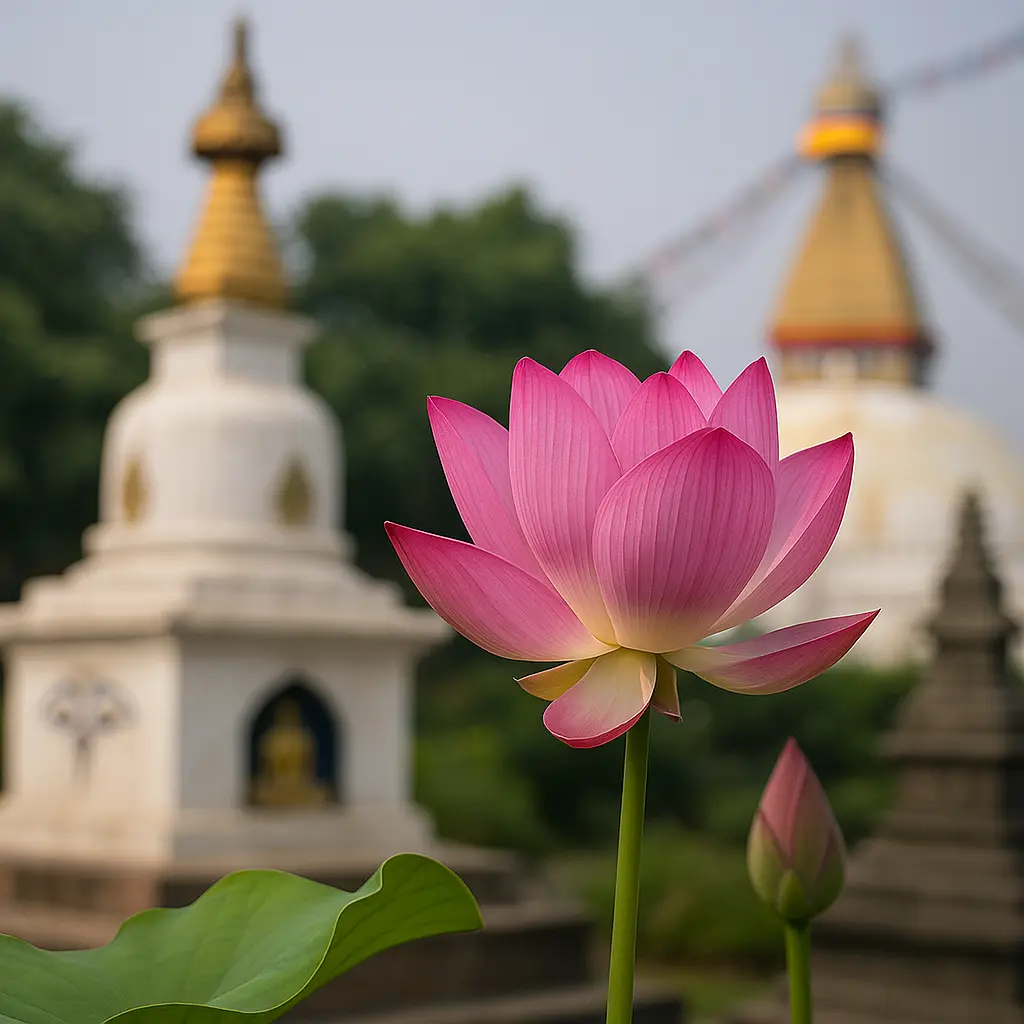
• The lotus flower is the most iconic Buddhist symbol, representing purity rising from suffering.
• Flowers are offered at temples, stupas and home altars as a gesture of devotion, impermanence, and mindfulness.
• Different flowers, like lotuses, champa, marigolds and blue poppies, carry specific meanings in Buddhist culture.
• The act of offering a flower is more than ritual, it’s a spiritual practice in itself, reminding us of transience and inner clarity.
• Sacred Buddhist sites like Boudhanath Stupa are surrounded by fresh flower stalls and monasteries where floral offerings shape daily life.
Why Flowers Matter in the Buddhist World
Spend a morning walking the kora path around Boudhanath Stupa, and you’ll see something deeply moving: hands, old and young, placing flowers at the feet of Buddha statues. No words. Just intention. A fresh bloom laid with care.
In the Buddhist tradition, a flower is never just a flower. It’s a mirror. A metaphor. A moment of beauty destined to fade, just like everything else in this world.
And yet, it’s precisely this impermanence that makes it sacred.
This is what makes the Buddhism flower not just botanical,but existential. It’s an offering. A teacher. A symbol of both the fleeting and the eternal.
The Lotus: Heart of Buddhist Flower Symbolism
Why the Lotus Is So Sacred
If you ask any Buddhist practitioner, whether in Nepal, Japan, or Tibet ,what flower represents Buddhism, the answer will be unanimous: the lotus.
Here’s why:
• It grows from the mud, yet rises unstained toward the light.
• Its petals unfold in still water, just like mindfulness and awareness in the calm of meditation.
• In Buddhist texts, the Buddha himself is called “The Lotus-Born” ,and many bodhisattvas are depicted seated on lotus thrones.
The lotus isn’t just beautiful, it’s a roadmap to liberation.
To live like the lotus is to rise from suffering with grace, without resentment, without clinging. This is the soul of the Buddhist path.
“Just like a lotus is born in water, grows in water, and rises out of water to stand above it unsoiled, so too does the Buddha rise above the world.”
, The Dhammapada
Flower Offerings in Daily Buddhist Life
The Ritual and Meaning of Offering Flowers
In Buddhism, offering a flower is an act of mindful generosity. It’s not meant to please a deity or bring luck, it’s a symbolic expression of:
• Impermanence: The flower will wilt. Like all things.
• Gratitude: To the Buddha, the Dharma (teachings), and the Sangha (community).
• Inner aspiration: To cultivate beauty, clarity, and presence within oneself.
When a pilgrim lays a single lotus at a shrine in Boudha, they’re not doing it out of habit. They’re saying: “I recognize the passing nature of this life, and I still choose to offer beauty.”
This is Buddhist hospitality at its deepest, not just welcoming the world, but offering it a heart that’s open, fleeting, and sincere.
Other Sacred Flowers in Buddhism (Beyond the Lotus)
While the lotus is the most well-known, many flowers hold symbolic weight across different Buddhist cultures. Here are a few you’ll find across Nepal and the wider Buddhist world:
1. Champa Flower (Plumeria)
Often used in Himalayan monasteries. Symbolizes devotion and fragrance of the heart. You’ll often see it in ritual garlands.
2. Marigold (Tika Phool)
Bright yellow and orange marigolds are common in Nepalese Buddhist ceremonies. They represent light, purification, and joy.
3. Blue Himalayan Poppy
Rare and native to high elevations. In Tibetan Buddhism, it’s sometimes associated with mystical states and visionary insight.
4. White Jasmine
Used in many Southeast Asian Buddhist temples. Represents purity, humility, and peaceful offering.
Each flower tells a story. Not in words, but in scent, texture, and quiet decay.
The Buddhist Lesson Behind Every Bloom: Impermanence
One of the Buddha’s core teachings is anicca, impermanence. Everything is changing, always. Nothing lasts.
The flower embodies this truth more beautifully than any scripture.
• It blossoms.
• It stirs awe.
• It withers.
And in that cycle is a silent teaching: Love what is here, while it is here. Because nothing, not even beauty, is permanent.
At temples across Nepal, from small village shrines to great stupas, you’ll see wilted flowers swept away each evening. Tomorrow, new ones will appear. This is the heartbeat of Buddhist life.
Buddhism, Flowers, and Sacred Spaces: A Living Experience
At Boudha Mandala Hotel, we see this every day.
Guests step out at dawn and walk the stupa path, often returning with fresh flowers bought from nearby stalls. Some leave them on their balcony altar. Others offer them at local monasteries. A few placed them by the hotel’s own small shrine.
They do this not as tourists, but as participants in a living tradition. A flower, in these moments, becomes more than a decoration. It becomes a prayer in form.
And in this small act, they enter the rhythm of Boudha, not just visiting, but belonging.
Final Thoughts
In the quiet act of offering a flower, we are reminded:
• That beauty is brief.
• That intention is everything.
• That even a simple bloom can point us toward enlightenment.
In Buddhism, the flower is not worshipped; it witnesses. It does not demand attention; it gives it freely. It teaches us, without speaking, how to live: openly, briefly, and in full bloom.
So the next time you pass a marigold garland or see a lotus opening in still water, pause. Bow your head. Remember.
“As a flower, beautiful and fragrant, blooms and fades, so too is this life. But from that fading, wisdom grows.”
Stay Where the Flowers Teach You Something
If you are seeking a space in Boudha that honors silence, presence, and small sacred gestures, Boudha Mandala Hotel offers:
• Stupa-view rooms for morning meditations and fresh flower offerings
• A peaceful café with locally sourced flowers and food
• Long-stay apartments for retreat, work, or study
• Warm staff who understand the rhythm of Buddhist life
Just steps from the stupa, yet tucked away in calm, this is a place to offer your own bloom to the shrine, to the moment, to yourself.