
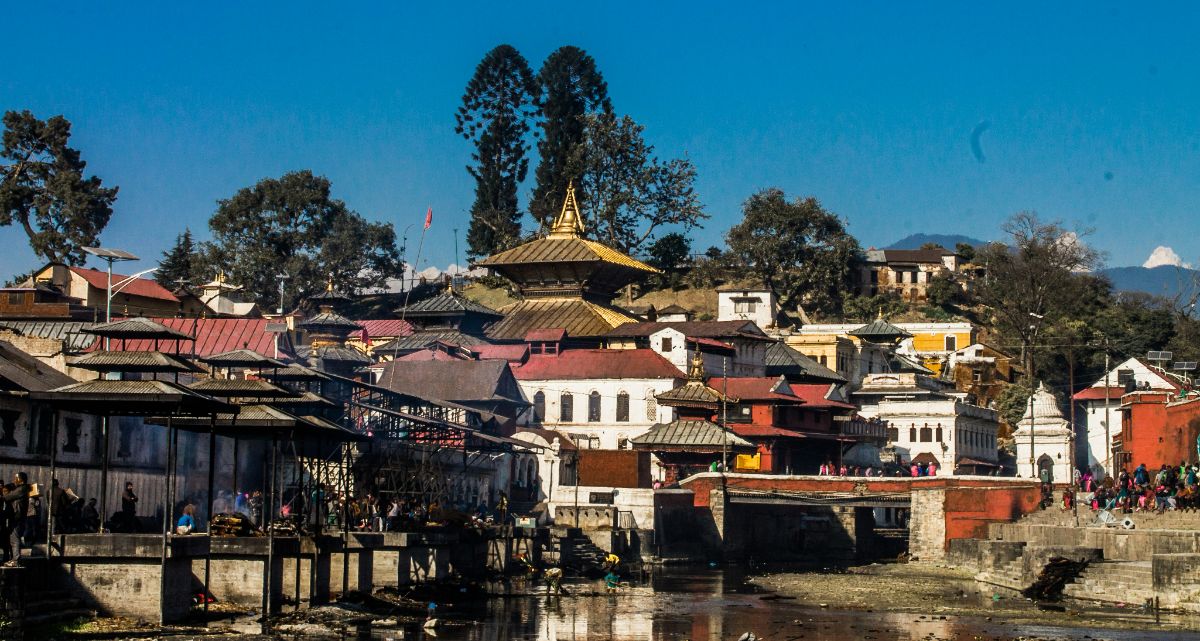
The Kathmandu Valley doesn’t reward speed. It rewards attention. Travelers who rush through it often leave confused or tired. Those who slow down and notice small things leave changed. This valley doesn’t announce what matters. It quietly waits to see if you’re paying attention.
This is not accidental. The valley has been shaped, lived in, and repeated for centuries in a way that demands awareness rather than efficiency.
Why does the valley feel overwhelming at first?
Because too much is happening at once, and none of it is prioritized for you. Sounds overlap. Smells mix. Streets don’t signal where to look or where to go. There is no clear foreground or background.
Most destinations guide attention with signs, sightlines, and highlights. The Kathmandu Valley does the opposite. Everything exists at the same level. Shrines sit beside shops. Rituals happen next to traffic. Private life spills into public space.
At first, the brain looks for order and doesn’t find it. Attention scatters. Fatigue sets in. This is the valley’s first lesson. You can’t consume it all. You have to choose what to notice.
How does walking change the way you see the valley?
Walking is not just transport here. It’s a way of learning. Streets are narrow, uneven, and rarely straight. You can’t zone out. You step carefully. You adjust constantly.
When you walk, details surface. A woman placing rice at a shrine. A metalworker tapping rhythmically inside a dark shop. A courtyard opening suddenly behind a doorway you almost missed.
Vehicles move too fast for this. Walking trains your eye to look sideways, not forward. That shift changes everything.
Why do small details matter more than landmarks?
Because meaning in the Kathmandu Valley lives in repetition, not spectacle. A single temple is impressive. A hundred small shrines used every day explain how life works.
Travelers who chase highlights often miss the logic of the place. Those who notice daily rituals begin to understand it. Bells at the same hour. Incense replaced each morning. The same path walked again and again.
Attention reveals patterns. Patterns reveal structure. Structure reveals calm.
How do sounds teach you where you are?
Sound is directional here. It tells you what’s happening without asking you to look. Bells signal prayer. Music signals movement. Chanting signals time passing.
You learn to locate yourself through sound. A sudden drumbeat means a procession nearby. A cluster of bells means a shrine. Silence in a courtyard means private space.
Paying attention to sound keeps you oriented in a place where maps often fail.
Why does the valley force you to slow down mentally?
Because nothing resolves instantly. Streets bend. Routes change. Plans dissolve. What you expect to happen often doesn’t.
At first, this feels inefficient. Then something shifts. You stop predicting. You start observing. Waiting becomes watching. Delays become information.
The valley trains patience by refusing to respond to urgency.
How do rituals sharpen awareness?
Rituals happen in public and without warning. They interrupt normal flow. A procession blocks a street. An offering pauses a shop. A prayer redirects attention.
You learn to read subtle cues. Movement slows. People gather. Music starts. Attention shifts collectively.
Once you notice this pattern, rituals stop feeling disruptive. They feel like punctuation. The valley teaches you when to pause and when to move by example.
Why do travelers feel more present here than elsewhere?
Because the valley doesn’t allow autopilot. You can’t move through it unconsciously for long. You have to look where you step. You have to read faces. You have to listen.
Presence becomes practical. Not spiritual. Not performative. Simply necessary.
This is why many travelers feel strangely grounded here, even amid noise and crowds. Attention anchors you.
How does this change the way travelers see themselves?
Paying attention changes behavior. You speak less. You watch more. You interrupt less. You react slower.
Many travelers realize how conditioned they are to speed, efficiency, and constant stimulation. The valley gently exposes that habit without judgment.
You don’t conquer the Kathmandu Valley. You adapt to it.
What happens when you stop trying to understand everything?
Understanding arrives anyway. Quietly. Not through explanation, but through familiarity. The same corner passed three times. The same sound heard each morning. The same rhythm repeating.
This is when the valley opens up. Not visually, but internally.
Attention turns confusion into coherence.
Why does this stay with travelers long after they leave?
Because attention reshapes memory. You don’t remember lists. You remember moments. The smell of incense at dusk. A bell you heard daily. The way streets felt alive but never hostile.
The Kathmandu Valley doesn’t give you a story to tell. It gives you a way of noticing that lingers long after the trip ends.
Staying somewhere calm helps travelers settle into this pace, and places like Boudha Mandala Hotel offer a quiet base while remaining connected to the everyday life of the Kathmandu Valley.