
How Do You Plan the Perfect Stay in Boudhanath, Kathmandu?
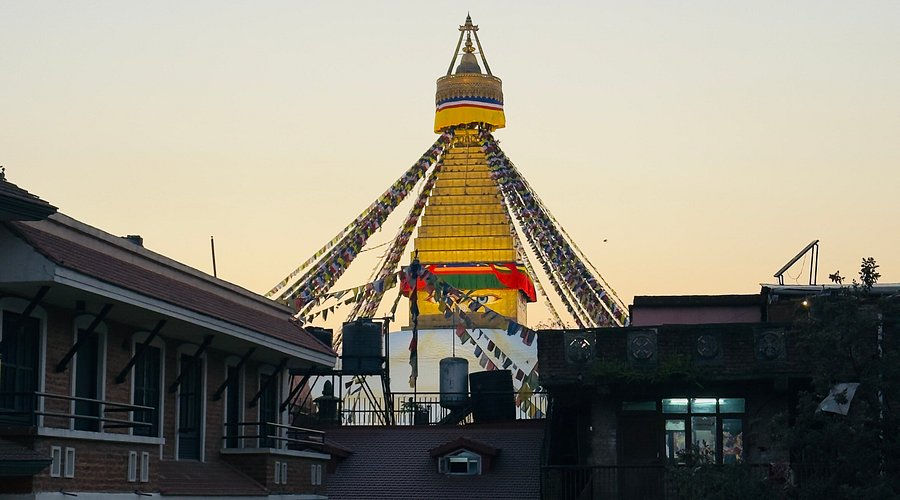
You open the hotel door and the stupa is already there so close you don’t need to search for it. On some mornings, a thin veil of mist rests on the white dome like a shawl. On others, the sky is a clean winter blue and prayer flags look almost electric against it. Either way, you’re not commuting into Boudha. You’re waking up inside it.
A quiet, culturally rooted stay just a 10-second walk from Boudhanath Stupa, held for those walking the path of practice, presence, and inner peace.
It is the functional advantage of staying at Boudha Mandala Hotel. It changes how your day operates. You can join the early kora without timing taxis. You can step back into stillness when the plaza swells at midday. You can return for a butter-lamp hour at dusk like it’s part of your home routine, not a scheduled attraction.
Why Boudha Mandala Hotel is the right place to stay in Boudha
Many hotels sit “near” the stupa. Boudha Mandala Hotel is placed and programmed for it. That distinction matters in Boudha, because the stupa is not a once-a-day stop; it is a recurring axis that shapes how you move through your hours.
You are inside the ritual radius
A neighborhood built around devotion runs on repetition. You don’t do a single circuit and tick a box. You circle at sunrise, drift back again at dusk, and sometimes return at night just to see the lamps shimmer in quiet. Being a 10-second walk away makes those returns effortless.
You get stillness without being removed
This is the balance travelers actually need. Boudha is active, and you want that energy. But you also need a room that does not feel like the plaza continues through the wall. The hotel gives you that clean boundary: full access outside, real quiet inside.
Your base includes cultural engagement
Boudha Mandala Hotel is not only a bed. It is a curated access point to meaningful experiences, wellness programs, small social gatherings, and Thangka painting so your stay becomes participatory rather than purely observational.
If you’re evaluating where to stay in Boudhanath Kathmandu, this is what completion looks like: proximity, quiet, and cultural structure in one place.
Boudhanath in 2026: what kind of neighborhood you’re entering
Boudhanath is a living spiritual district. That phrase is easy to say and easy to underestimate. What it means in practice is that the stupa is not a monument sitting apart from life; it is the neighborhood’s heartbeat. People don’t visit it for an hour. They build their day around it.
In 2026, Boudha will remain one of Kathmandu’s most coherent and walkable areas for travelers who want a peaceful spiritual stay in Kathmandu. The plaza is still pedestrian-centered. The backstreets stay dense with monasteries, artisan workshops, and Tibetan cafés.
Lonely Planet continues to recommend Boudhanath for its pilgrimage atmosphere and the way koras at dawn and dusk pull you into the neighborhood’s tide.
Boudhanath Stupa entrance fee and timings 2026
This is the operational layer you will use on day one.
Entrance fees
Foreign nationals: NPR 400
SAARC nationals: NPR 100
Nepali citizens and children under 10: Free
Timings
Visitor access commonly runs about 6:00 AM to 10:00 PM. Devotional movement begins before that and continues later into evening in a softer way. Sunrise and dusk are the best windows for meaning and atmosphere.
Etiquette that keeps you aligned
• Walk clockwise. If you forget once, you’ll feel it immediately because everyone else flows the other way.
• Avoid blocking the path when prayer groups are moving.
• Ask before photographing monks or close ritual moments.
• Step around, not through, offerings.
It’s simple: be attentive. The neighborhood does the rest.
Weather, seasons, and the best months to plan around
Boudha’s mood changes with air and light. Your perfect stay is partly a weather decision.
Best seasons for a 2026 visit
• October to November (autumn): Clear skies, crisp mornings, golden light. This is peak view season for rooftops and photography.
• February to April (spring): Warmer walking weather, consistent mornings, slightly lighter crowds than autumn.
• June to September (monsoon): Mist, dramatic clouds, fewer tourists. The stupa appears and disappears behind rain curtains. It’s atmospheric if you like it, slippery if you don’t.
• December to January (winter): Cold dawns (sometimes 3 to 10°C), clean air, quiet rings early on. The whole neighborhood feels slower and more inward.
Daily patterns you can rely on
Early morning: Cool, devotional, gentle.
Midday: Bright, busy, best for cafés or indoor monastery halls.
Dusk: The most charged time golden hour, lamps, chanting.
Night: Calmer plaza, thinner crowds, a quieter kind of beauty.
Because you’re staying at Boudha Mandala Hotel, you can match these patterns precisely without logistics friction.
How Boudha is laid out (a mandala, not a grid)
Boudha is easiest to navigate when you stop thinking like a driver and start thinking like a pilgrim.
Inner ritual ring (0 to 3 minutes)
This is the stupa kora path: prayer wheels, butter-lamp altars, clockwise flow. Every day begins and ends here.
Monastery belt (3 to 12 minutes)
Step outward and you enter lanes full of gompas and monastic schools. This belt exists because Boudha became the center of Kathmandu’s Tibetan Buddhist community after waves of settlement in the 20th century.
Rooftop belt (above and facing the dome)
Vertical space matters here. Rooftops provide uninterrupted stupa views and a calm place to sit in the two best windows of light: morning and late afternoon.
Market and local lanes (outer streets)
Craft studios, thanka workshops, Tibetan grocery corners, momo kitchens. The neighborhood runs normally even while devotion runs continually beside it.
Once you understand these layers, you don’t need a map. You just decide which layer you want to be in at each hour.
For a deeper sense of how walking reveals Kathmandu’s true texture, our in-house piece Walking in Kathmandu is worth reading before you arrive.
The perfect Boudhanath Stupa area itinerary (1, 2, or 3 days)
Your Boudhanath Stupa area itinerary should feel like a loop, not a line. Here are three designs that work without rushing.
Option A: One-day Boudha stay (short but complete)
5:30 to 7:30 AM, Sunrise kora + tea: You step out into cool air. Prayer flags shift above narrow alleys. Shop shutters open slowly. You join the clockwise current for your first Boudhanath kora sunrise experience. Wheels click softly under hands that have spun them for decades.
After one slow circuit, you take tea. A plain chai costs around NPR 50 to 80. If it’s winter, that first warm cup feels like a reset button.
8:00 to 11:00 AM One monastery, well-visited: Pick a single monastery and stay long enough to understand its rhythm. You listen more than you move.
11:30 to 3:00 PM, Craft lanes + rooftop lunch: Walk the artisan streets. Watch painters in open studios. Compare prices for bowls or beads across two or three shops. Then take lunch on a rooftop with stupa view.
4:30 to 8:00 PM, Golden hour + lamps + return: Come back to the ring for light. The dome turns warm, then pale, then softly lit by hundreds of lamps. You do a final short circuit and return to the hotel in minutes.
This day gives you devotion, culture, and rest without squeezing any of them.
Option B: Two-day stay (the best plan for first-timers)
Day 1: Arrival and orientation
• Check in at Boudha Mandala Hotel.
• Walk the ring at sunset.
• Dinner at a rooftop restaurant facing the stupa.
• Sleep early.
Day 2: Immersion and participation
• Sunrise kora (2 to 3 rounds if your body agrees).Breakfast.
• Two monasteries maximum, in different lanes.
• Mid-afternoon rest or wellness time at the hotel.
• Dusk lamps + last circuit.
Two days lets you experience Boudha as a rhythm rather than a visit.
If you want a gentle landing to Nepal before any trekking or longer routes, read Start Your Nepal Trip Gently it mirrors this two-day Boudha approach.
Option C: Three-day stay (for slow travelers and practitioners)
Day 1: ring life + rooftops
Day 2: monasteries + artisan lanes + Thangka class
Day 3: wider neighborhood walks + longer sitting time + sunset immersion
A third day gives you something subtle: familiarity. The plaza becomes less “spectacular” and more “yours.”
Sunrise kora: how your morning really unfolds
Sunrise in Boudha is not about taking a perfect photo. It is about how your nervous system changes when you walk in a calm devotional current.
You notice micro-things: roosters in back lanes crowing just before 6 AM, a monk laughing quietly as he adjusts his shawl, the small clatter of prayer wheels syncing with footfall. You walk clockwise. You keep pace with the elders. You don’t stop abruptly in the middle of the flow.
At this hour, Boudha feels like a village inside a capital. Your morning is held by repetition, not noise.
For context on how Buddhist and Hindu devotion braid together in everyday Nepal (including the Kathmandu Valley), our story Nepal’s Mix of Hindu and Buddhist Traditions expands the cultural background you’re seeing around the ring.
Tibetan monasteries in Boudha: visiting with depth
There are many Tibetan monasteries in Boudha. The mistake is trying to stack them. A monastery is not a widget; it’s a living house of practice.
A better method:
• Choose one major monastery where public prayer halls are broad and visitor access is natural.
• Choose one smaller gompa in the side lanes, often quieter and more intimate.
• Spend time in each. Sit if allowed. Observe before moving.
Some halls carry low horns in the morning. Others are so still you hear beads sliding through fingers. Either way, moving slowly is how you receive more.
Food and rooftops: where to eat and why timing matters
Boudha doesn’t rush meals, and neither should you.
Rooftops with stupa views
These are integral to the neighborhood experience. Morning rooftops feel like quiet observatories. Evening rooftops feel like front-row seats to a devotional theater of light.
Weather makes them even better. In autumn, light is sharp and clear. In monsoon, clouds swallow the dome, then release it again like a slow curtain. That shifting visibility is part of why Boudha Kathmandu rooftop restaurants remain a core recommendation.
Local plates worth making space for
• Momos: modest, filling, often NPR 180to350 depending on style and size.
• Thukpa: noodle soup that lands perfectly after cold sunrise koras.
• Tingmo + curry: soft Tibetan bread that turns lunch into a pause.
Let food be a break you respect. It’s how the neighborhood breathes.
Walkable places in Boudha Kathmandu beyond the stupa ring
The ring is the heart. The lanes are the body.
When the plaza is busiest mid-day, walk outward:
• Artisan streets: thangka painters working in daylight studios.
• Small courtyards: quiet shrines, benches, children practicing bicycle turns.
• Market lanes: incense, prayer beads, Tibetan groceries, routine life.
These walkable places in Boudha Kathmandu are where you understand what makes the neighborhood sustainable, not just sacred.
Boudha Mandala Hotel experiences that complete your stay
Boudha gives you culture. Boudha Mandala Hotel gives you structured ways to enter it.
Wellness programs
Your trip improves when your body is regulated. The hotel’s wellness offerings are oriented around presence, rest, and gentle practice ideal between koras and monastery visits.
Use them when:
• Kathmandu feels loud and your system wants quiet.
• You want your itinerary to be restorative, not extractive.
• You are traveling as a practitioner or a mindful explorer.
Social events
These social gatherings match Boudha’s frequency: calm, conversational, and naturally community-building. You meet people who are here for meaning, not noise.
Thangka Class: Paint with Presence
This is a standout experience for 2026 travelers.
You join a traditional Thangka class guided by local artists trained in sacred geometry and symbolism. You don’t need skill. You need patience.
What happens:
• You learn the spiritual meaning behind each brushstroke.
• You practice mindfulness through sacred art.
• You create a small piece to take home or offer.
Ask at the front desk to reserve. This experience shifts you from spectator to participant in Boudha’s visual language.
Who you meet here: the hotel’s traveler community
Boudha Mandala Hotel draws a specific kind of guest, and that shapes your stay.
Spiritual Travelers & Practitioners
• Buddhists on pilgrimage or retreat
• Monks, nuns, and teachers from surrounding monasteries
• Yoga teachers and spiritual seekers
Digital Nomads & Remote Workers
• NGO workers and social entrepreneurs
• Writers, artists, and creative professionals
• Early retirees seeking meaningful experience
Cultural Explorers & Mindful Adventurers
• Solo travelers who value quiet and presence
• Visitors curious about sacred traditions
• People looking for belonging, not just a landmark list
This community keeps the hotel calm, purposeful, and aligned with the neighborhood outside.
Budget, packing, and small local-useful tips
• Carry cash for small moments. Ticket booths, lamps, snacks remain cash-first.
• Layer your clothing. Cold dawns, warm midday sun, cool evenings.
• Don’t over-schedule. The best Boudha days include rest.
• Shop slow and compare. Two or three shops before buying a bowl or thanka is expected.
• Use the hotel as your reset point. Your ideal day shape is a circle: ring → rest → ring again.
Conclusion
Plan your Boudha stay around the stupa’s rhythm, not a checklist. When you base yourself at Boudha Mandala Hotel, everything becomes simple and walkable: sunrise kora while the ring is quiet, a slow breakfast and reset back at the hotel, one or two monasteries visited with real attention, rooftop cafés in the bright hours, and a calm mid-afternoon pause, wellness, rest, or a focused work block before returning for golden hour and butter-lamp dusk. This circular pacing is what makes Boudhanath feel coherent, restorative, and genuinely cultural in 2026.
Stay close, move clockwise, choose depth over speed, and let Boudha Mandala Hotel support the quiet between your koras.
FAQs
What is the best way to plan a stay in Boudhanath for 2026?
Follow this Boudhanath neighborhood guide 2026 rhythm: stay near the stupa ring, do sunrise and dusk koras, visit no more than two monasteries per day, and keep midday for cafés, walking lanes, or hotel wellness time.
Where should first-time travelers stay in Boudhanath Kathmandu?
Stay within a short walk of the stupa so you can join koras without transport stress. If your goal is a best hotel near Boudhanath Stupa that supports quiet and practice-friendly routines, Boudha Mandala Hotel is built for it.
What is the Boudhanath Stupa entrance fee and timings 2026?
Foreign nationals pay NPR 400, SAARC nationals NPR 100, and Nepalese are free. Visitor access is generally about 6:00 AM to 10:00 PM, with the most meaningful atmosphere at sunrise and dusk.
How many days are enough for a perfect Boudha stay?
Two days is ideal for first-timers. One day works for short layovers. Three days suits slow travelers and practitioners who want deeper immersion.
What are the best things to do around Boudhanath Stupa?
Do sunrise and evening koras, explore monasteries, walk artisan lanes, eat at rooftops facing the stupa, join butter-lamp offerings, and take a Thangka class for hands-on cultural depth.
Are Tibetan monasteries in Boudha open to tourists?
Yes, many are open outside prayer peaks. Dress modestly, keep voices low, follow clockwise flow near the ring, and ask before photographing rituals.
Why should visitors stay at Boudha Mandala Hotel?
Because the hotel gives you full access to the stupa’s daily rhythm with real quiet to return to, plus structured cultural and wellness experiences that deepen your stay rather than diluting it.
If you want your Boudha days to feel this seamless kora at dawn, rest at noon, lamps at duskbook your stay directly with Boudha Mandala Hotel: