
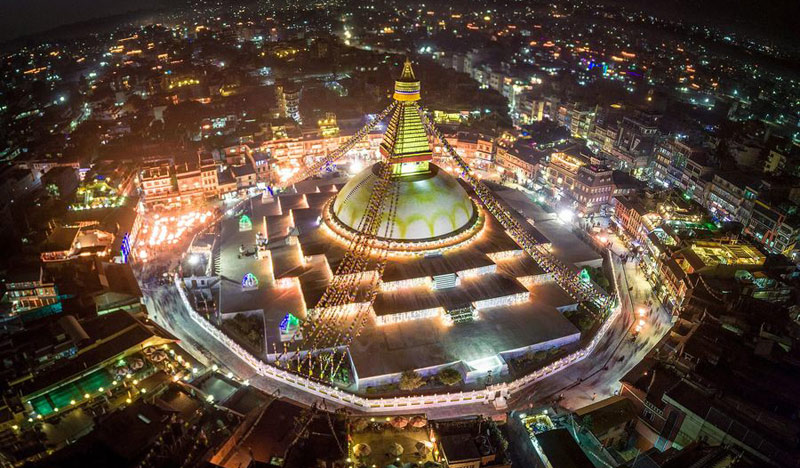
You don’t need a religious background to feel the pull of Boudhanath Stupa. You just need to arrive at the right hour. When the first light slips over the dome and the prayer flags start catching wind, you notice a simple truth: this place runs on devotion, not display. People come here to practice, to remember, to walk. Visitors are welcome but the stupa asks you to enter its rhythm correctly.
This guide is for first-time visitors who want clarity without being overwhelmed: the history that matters, what the symbolism actually means, how to do kora respectfully, and how to plan a day around Boudha’s living schedule.
A short, clear history & UNESCO status
Boudhanath (often called “Boudha”) is among Nepal’s largest and most important stupas, with roots tied to the Licchavi period (roughly 5th to 7th century CE). Over centuries, it has been restored and expanded by kings, local communities, and monastic traditions, which is why it still feels alive rather than frozen in time.
What matters for first-time visitors is its role today: Boudhanath is the spiritual center of Tibetan Buddhism in Nepal. After 1959, waves of Tibetan refugees settled around the stupa, establishing monasteries and a cultural economy that continues to shape the neighborhood’s identity.
UNESCO recognized the stupa as part of the Kathmandu Valley World Heritage listing in 1979.
So when you visit, you are stepping into a heritage site that is also someone’s daily spiritual home. Both truths coexist.
What the stupa’s symbolism means (eyes, dome, kora, prayer flags)
If you understand the stupa’s symbolic language, your visit becomes more than watching others perform rituals.
The white dome
The dome represents the vast world and the mind’s potential for awakening. Its smooth curve is deliberate: a reminder that realization isn’t angular or forced to it’s spacious, gradual, and inclusive.
The all-seeing eyes
The Buddha eyes painted on the harmika (square tower above the dome) symbolize wisdom and compassion looking in all directions. They are not meant as surveillance. They are meant as awareness: calm, present, non-judging.
The kora path
The circular walkway around the stupa embodies the Buddhist path as a lived practice. You circle because the transformation is cyclicaltoone round deepens the next. This is why locals do multiple circuits, not just one.
Prayer flags
The flags carry mantras and blessings outward through wind. You’ll see newer bright flags and older faded ones; both belong. Their fading is part of the lesson: practice continues even as cloth frays.
Once these elements make sense, the stupa reads like a map of practice, not just architecture where in buddhist meditation digs deeper and bridges first time friendly into meditation culture.
The daily rhythm you’ll witness around the stupa
Boudhanath is best understood through its daily cycle.
Early morning (around 5:00to7:30 AM)
The plaza is devotional and quiet. Elderly locals, pilgrims, and monastics do koras steadily. Prayer wheels click. Soft chants rise. The air is cooler and cleaner.
Midday (10:00 AMto3:00 PM)
The ring becomes social and commercial. Shops open fully. Visitors increase. Monasteries hold routine activities. If you want coffee, shopping, or monastery interiors, this is your window.
Dusk (4:30to6:30 PM)
The most emotionally charged time. The dome warms under golden light. Butter lamps appear in long rows. The kora current thickens again.
Evening (after 7:00 PM)
The crowd softens. Lights glow. The stupa feels contemplative again, especially on clear nights.
This rhythm is stable across seasons. If your itinerary matches it, your experience becomes naturally smoother.For a grounded way to watch these everyday rhythms without turning them into a “tour.”
Best times of day to visit (sunrise, dusk, full-moon nights)
First-time visitors often ask “When is Boudha at its best?” The honest answer: it depends on what you want to feel.
Sunrise
This gives you the calmest, most practice-filled atmosphere. If you want a genuine sunrise at Boudha experience, come early, walk a full clockwise circuit, and then sit on the outer ring for ten quiet minutes.
Dusk
Come if you want to witness devotion as shared energy: butter lamps, chanting clusters, a steady flow of koras. The light is also ideal for photography.
Full-moon nights
Many Buddhist observances fall on full-moon days, so the plaza often carries a stronger devotional presence, with more lamps and evening circumambulation.
If you can only pick one time, pick sunrise. If you can pick two, sunrise and dusk together form a complete arc.
How to do kora respectfully (direction, pace, behavior)
Kora is not a performance. It’s a moving meditation. To join respectfully:
- Walk clockwise.
- Always keep the stupa to your right. If you accidentally go the other way, you’ll feel the mismatch instantly.
- Blend into the flow.
- Don’t stop suddenly in the middle of the path. Step to the outer edge if you need to pause.
- Keep your voice low.
- Treat the ring as a sanctuary even when shops are busy.
- Respect elders and monastics.
- Give way. Let their pace lead the current.
- You may spin prayer wheels gently.
- If you do, spin them in the direction they naturally turn (clockwise).
Even one round done properly teaches more than five rounds done distractedly.
What to wear and photography etiquette
What to wear
Boudha is tolerant, but monasteries and devotional spaces still expect modesty.
- Covered shoulders and knees are safest.
- Light layers help: mornings in winter can be cold; midday warms quickly.
Photography etiquette
- Do not photograph monks or elders close-up without asking.
- Avoid flash during rituals.
- Some monastery interiors prohibit photos entirely to follow signs or staff guidance.
- If you want portraits, ask first, smile, and accept a no gracefully.
It’s fine to document your visit. It’s not fine to interrupt someone else’s practice to do it.
Tibetan Buddhist presence around Boudha, simply explained
Boudhanath is a Tibetan Buddhist hub because it became a refuge and spiritual center after Tibet’s mid-20th-century upheavals. Tibetan communities settled around Boudha, creating monasteries, schools, and artisan traditions that preserved their lineages in exile.
That’s why you see:
- Monks and nuns from multiple Tibetan traditions.
- Thangka studios and ritual-item shops.
- Tibetan-language signage and cafés serving thukpa and butter tea.
For visitors, the takeaway is simple: you are witnessing a living diaspora culture grounded in religion and community, not a staged attraction.
Key monasteries travelers can visit respectfully
You don’t need to visit many monasteries. Two or three, done slowly, are enough.
Commonly visited, culturally significant options include:
- Shechen Monastery (Nyingma tradition): known for its art, architecture, and daily rituals.
- Ka-Nying Shedrub Ling (White Monastery): a major teaching center with a welcoming layout for visitors.
- Kopan Monastery (nearby hilltop): especially known for meditation courses and retreats.
A good pattern is one large active monastery plus one smaller quiet gompa in the lanes.
Etiquette inside monasteries and during puja
Monasteries are working spiritual institutions. You’re welcome, but your behavior matters.
- Enter quietly; remove shoes if required.
- Sit where visitors are directed, often along walls.
- Don’t walk in front of teachers or prayer groups during puja.
- Keep phones silent; no calls in courtyards.
- If an offering bowl is present, you may contribute a small note respectfully.
If you’re uncertain, watch what locals do and follow.
Festivals and special days at Boudhanath
Festivals are when Boudha shifts from steady devotion to collective celebration. If your trip overlaps with one, you’re in for something unforgettable.
Major observances include:
- Losar (Tibetan New Year, Jan to Feb): prayer gatherings, mask dances, special offerings, festive atmosphere around the stupa.
- Buddha Jayanti / Vesak (April to May full moon): commemorates Buddha’s birth, enlightenment, and passing; the stupa is lit and crowded with candle processions.
- Lhabab Düchen (Oct to Nov, Tibetan lunar calendar): special prayers and merit-making ceremonies, often with intensified monastery activity.
Festival days are crowded but deeply alive. Go early and keep expectations flexible.
Annual festival calendar for Boudha and nearby temples
Here’s a simplified annual view for travelers (actual lunar dates shift year to year):
- Jan Feb: Losar (Tibetan New Year)
- April May: Buddha Jayanti / Vesak (full moon)
- Oct Nov: Lhabab Düchen + major autumn pilgrimage season
Nearby Kathmandu Valley temples and heritage sites also host seasonal festivals in the same windows, so autumn and late spring are the most culturally dense travel periods.
Best viewpoints and quiet corners
First-time visitors often stay glued to the ring. That’s understandable but the best perspective is sometimes one step away.
Rooftop cafés
These give broad mandala views and let you observe the ring without being inside it. Morning and dusk are best for light and atmosphere.
Side alleys
Walk outward a few lanes from the ring and you find quiet studios, smaller shrines, and less crowded prayer-wheel corners. These alleys are great for photography without blocking kora flow.
Quiet corners on the outer ring
There are subtle sitting spots along the edge where locals rest between rounds. Sit there for ten minutes. Watch the movement. Let it sink in. You’ll understand Boudha better than if you rushed another attraction.
How to join meditation sessions or teachings respectfully
Many monasteries and centers around Boudha offer public teachings or meditation sessions, especially in peak pilgrimage seasons.
If you want to join:
- Ask your hotel or a monastery staff member about schedules.
- Arrive early, dress modestly, and sit where directed.
- Keep your phone off.
- If a donation is customary, contribute quietly at the end.
Kopan Monastery, in particular, is known for structured retreats and short courses that welcome international visitors.
The key is humility: enter as a learner, not a consumer.
A practical first-timer itinerary (2 to 6 hours)
This is a realistic plan that respects the stupa’s rhythm.
2-hour “first contact” visit
- Enter the plaza and orient yourself.
- Do one full clockwise kora.
- Pause at prayer wheels, spin gently if you wish.
- Sit on the outer ring for ten quiet minutes.
- Finish with tea at a rooftop café.
Half-day “cultural immersion” visit
- Sunrise or dusk kora.
- Visit one major monastery.
- Walk artisan lanes for thangka studios and craft shops.
- Rooftop lunch or coffee.
- Return for a second short kora before leaving.
If you stay near the stupa, you can split this across morning and evening rather than compressing it into one stretch.
Conclusion
Boudhanath Stupa meets you at whatever depth you’re ready for. You arrive as a first-time visitor, but the place doesn’t treat you like one; it simply invites you into a living rhythm that has been repeating for centuries. When you understand the essential history, read the symbolism with clear eyes, and move through kora in the right direction and spirit, the stupa stops being “a site” and becomes a teacher of pace, attention, and shared practice. You notice how the day turns herequiet sunrise rounds, midday market hum, dusk lamps and chants, full-moon gatherings and you start planning your hours around that pulse rather than forcing your own. Visit fewer monasteries but stay longer in each. Take your photos without interrupting devotion. Sit in a quiet corner and watch a thousand tiny acts of faith happen without announcement. If you do that, your first Boudhanath visit in 2026 won’t feel like sightseeing. It will feel like participation in something stable, human, and still unfolding.
Walk slowly, circle clockwise, come at sunrise or dusk, and let the mandala do what it has always done: draw you into presence.
FAQs
What is Boudhanath Stupa and why is it important?
Boudhanath is one of Nepal’s largest stupas and the main center of Tibetan Buddhist pilgrimage in Kathmandu. It has been a UNESCO World Heritage Site since 1979.
What do the Buddha eyes on the stupa mean?
They symbolize wisdom and compassion looking in all directionstoawareness rather than judgment.
What is the best time to visit Boudhanath Stupa?
Sunrise is calmest and most devotional; dusk is most alive with lamps and chanting. Full-moon nights are special during Buddhist observances.
How do you do kora at Boudhanath respectfully?
Walk clockwise with the stupa on your right, blend into the flow, keep voices low, step aside to pause, and respect elders and monks.
What should you wear to visit Boudhanath and nearby monasteries?
Modest clothing that covers shoulders and knees is best. Bring layers for cold mornings and cool evenings.
Which monasteries near Boudhanath can tourists visit?
Shechen Monastery, Ka-Nying Shedrub Ling (White Monastery), and Kopan Monastery (nearby) are key visitor-friendly options when approached respectfully.
What festivals happen at Boudhanath Stupa?
Losar (Tibetan New Year), Buddha Jayanti/Vesak, and Lhabab Düchen are major annual observances with heightened rituals and crowds.
If you are staying at Boudha Mandala Hotel, you are already in the best position to experience Boudha gently and correctly steps from the ring, but with quiet to return to. When you are ready, you can book through Boudha Mandala Hotel