Nirvana Symbol in Buddhism: What Enlightenment Really Means

Key Takeaways

• Nirvana in Buddhism is the state of awakening, freedom from suffering, and release from the cycle of rebirth

• It is not a place, but the extinction of craving, aversion and ignorance

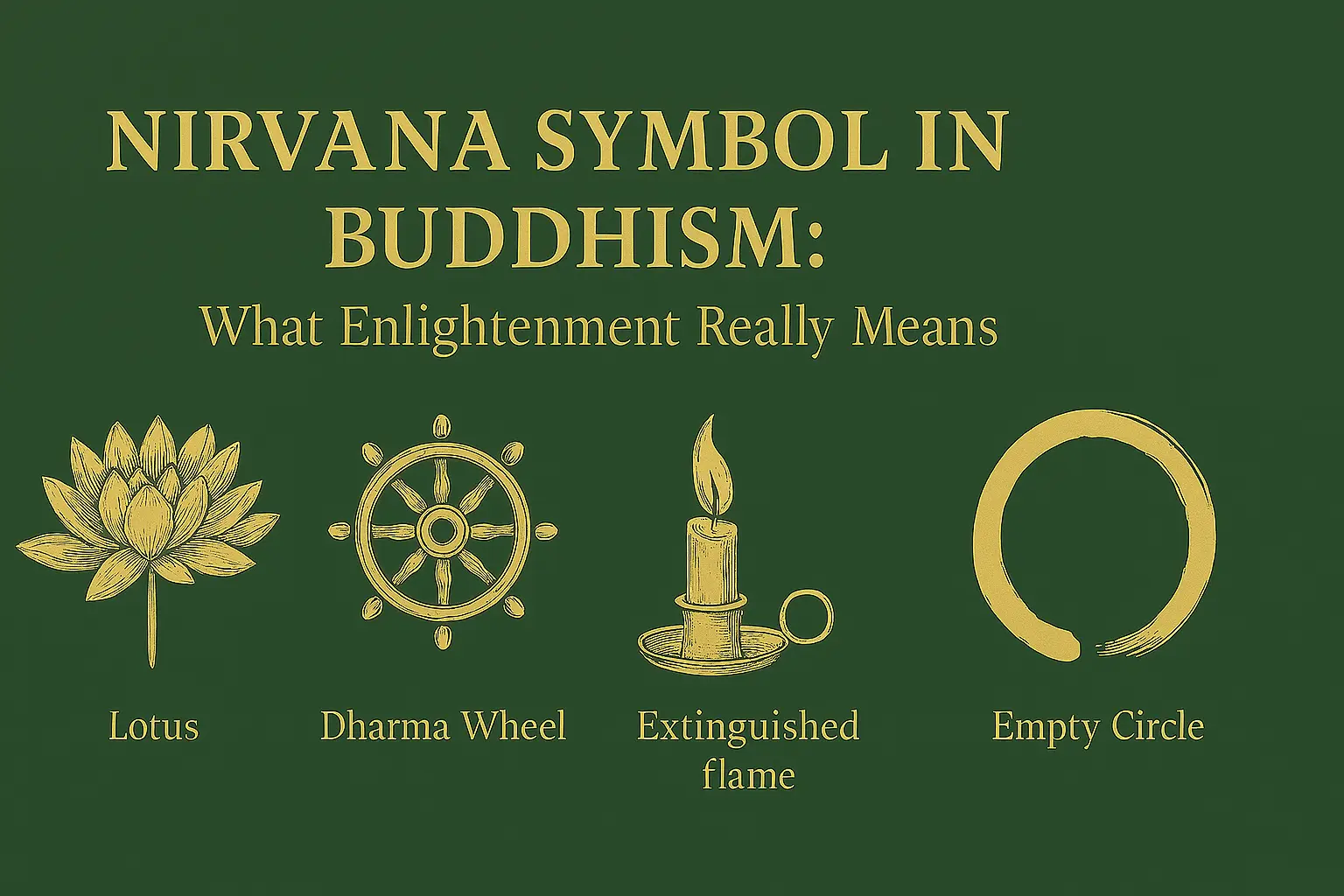
• Symbols like the lotus flower, the Eightfold Path, the Dharma Wheel, and the extinguished flame hint at the experience of nirvana

• Buddhist teachings emphasize that nirvana cannot be depicted, only realized through deep inner transformation

• Practicing meditation, ethics and mindfulness is the path toward that realization

What is Nirvana in Buddhism?

To understand the symbol of nirvana, we must first understand nirvana itself.

In Buddhist teachings, nirvana (or nibbāna in Pali) is the highest state of liberation, the end of suffering, the extinguishing of delusion, and the freedom from the endless cycle of birth and death.

It is often described by negation: not clinging, not craving, not ignorance. But at its heart, nirvana is not nihilism. It is peace without conditions, clarity without conflict.

Unlike religious heavens, nirvana is not a paradise. It’s not somewhere we go. It is something we uncover by removing what clouds the mind.

As Oxford Reference puts it, nirvana is “the extinction of all desires, passions, and delusions that bind one to the cycle of rebirth.”

Why Nirvana Has No Image

In a tradition rich with sacred art, why does nirvana have no fixed image?

The answer is simple. Nirvana is unconditioned. It lies beyond all things that arise and pass, including symbols themselves. Any attempt to draw it, define it, or box it in becomes something less than what it points to.

That said, Buddhist culture has long used indirect symbols to evoke the qualities of nirvana,its stillness, clarity, and spaciousness. These are not meant to describe nirvana, but to guide us toward it.

Symbols That Point Toward Nirvana

The Lotus Flower

The lotus, rising from muddy water, is one of Buddhism’s most powerful metaphors. It represents the practitioner’s journey from samsara (confusion and suffering) into the purity and openness of enlightenment.
In many traditions, the Buddha is shown seated on a lotus, not as decoration, but to remind us: awakening is possible in this very life, even amidst our pain.

The Dharma Wheel (Dharmachakra)

The Eight-Spoked Wheel, or Dharmachakra, symbolizes the Eightfold Path, the practical path the Buddha taught for walking toward nirvana. Each spoke represents a part of that path: right view, intention, speech, action, livelihood, effort, mindfulness, and concentration.
This wheel spins not in theory, but in daily life.

The Extinguished Flame

The literal meaning of nirvana is “to blow out,” like a flame going out. But it is not a flame extinguished in despair; it is the extinguishing of the fire that burns within: greed, hatred,and delusion.
Some early Buddhist images used a small empty circle, or a lamp being put out, to symbolize this freedom.

The Empty Circle or Open Sky

In some Zen or Mahāyāna traditions, nirvana is represented as an open circle, or even a blank space. These are reminders that what we seek cannot be grasped, only experienced.
As the Buddha said, “There is a realm where there is no earth, no water, no fire, no air… and that, monks, I call the end of suffering.”
You can read more about these interpretations at BuddhaNet, which provides trustworthy explanations from canonical texts.

The Path to Nirvana: A Daily Practice, Not a Concept

Buddhism is not a system of belief, but a system of practice. The way to nirvana is not through worship, but through ethical living, meditation, and insight.

• Practicing right speech and right action cultivates clarity.

• Mindfulness and meditation help untangle craving and illusion.

• Letting go of self-centered views gradually loosens the grip of suffering.

For lay practitioners, nirvana is not always a dramatic experience. It can begin as a subtle cooling, a release from clinging in the moment, a deep breath after long struggle.

Some traditions honor the bodhisattva vow, where enlightened beings choose to remain in the world rather than fully enter nirvana, so they can help others wake up. This points to another truth: compassion and awakening are not separate.

Final Thoughts

We live in a world full of striving. We reach for more, avoid pain, chase meaning. Nirvana is the gentle reminder that peace isn’t found by adding more, but by letting go.

It’s not about perfecting yourself. It’s about seeing clearly, perhaps for the first time, what has always been here.

You may never see a statue or mural that says, “This is nirvana.” But in the quiet moment after you release resentment, or in the pause before a reaction, you may glimpse it.

The symbol of nirvana is not a thing. It is the space where craving ends and freedom begins.

A Quiet Place to Begin Your Journey

If you are visiting Kathmandu to reflect, study, or simply breathe more deeply, staying near sacred sites can support your path.

At Boudha Mandala Hotel, we welcome seekers from all walks of life. Whether you’re beginning to explore Buddhism, attending a retreat, or walking the kora at dawn, our calm atmosphere helps you listen inward.

If you’re looking for a peaceful hotel near Boudhanath Stupa, or simply want the best boutique stay in Boudha where you can rest between temples, we are just 10 seconds from the stupa and surrounded by monasteries.

Sometimes, the journey toward nirvana begins with stillness. And stillness begins with where you choose to be.
5 Sacred Monasteries and Temples to Visit Near Boudhanath Stupa

Key Takeaways:
Near Boudhanath Stupa in Kathmandu, several revered monasteries and temples welcome visitors seeking deeper spiritual connection. From the massive Shechen Monastery to the peaceful Guru Lhakhang, these sacred sites offer glimpses into Tibetan Buddhist practice, art, and daily devotion. Whether you’re on pilgrimage or simply curious, each location offers a space for reflection, prayer, or simply sitting with presence, all within walking distance of the great stupa.

There’s something magnetic about Boudhanath. The way people walk clockwise in the early light, prayer wheels turning in rhythm with their breath. But beyond the main stupa, hidden in alleys or down quiet side roads, a whole world of spiritual depth awaits.
If you pause for a moment, step outside the circle, and follow the soft hum of chants or the faint aroma of incense, you’ll find living monasteries, gompas, and temples that have been part of this sacred neighborhood for generations.

These aren’t just sites to visit. They’re sanctuaries to enter with your whole heart.

Shechen Monastery (Shechen Tennyi Dargyeling)

Just a short walk northeast of the stupa lies Shechen Monastery, one of the six great Nyingma monasteries established outside Tibet. Founded by the great Dilgo Khyentse Rinpoche, Shechen is known for its beautiful architecture, extensive mural paintings, and peaceful inner courtyard.

This monastery doesn’t just preserve tradition, it lives it. Monks engage in daily study and ritual, and many teachings are open to the public, especially during special events or retreats. The atmosphere here feels timeless, respectful, spacious, and quietly welcoming.

Walk inside and you’ll hear the low murmur of chanting, the flutter of prayer flags above the garden, and maybe, if you’re lucky, a soft puja bell echoing through the halls.

Ka-Nying Shedrub Ling Monastery

To the west of the stupa lies Ka-Nying Shedrub Ling, a monastery steeped in both scholarship and deep spiritual practice. It was founded by Tulku Urgyen Rinpoche and is currently led by his son, Chökyi Nyima Rinpoche, a beloved teacher in both Tibetan and Western communities.

The monastery combines shedra (monastic college) and drubdra (meditation center), creating a balanced path for monks and lay practitioners alike. There’s a warm garden café nearby, and visitors often pause to reflect or attend one of the Sunday public teachings.

It’s a space of learning, but also of listening. You don’t need to understand Tibetan to feel the clarity in the air.

Thrangu Tashi Yangtse Monastery

A little further from the central stupa, near the banks of the Bagmati River, sits Thrangu Monastery, founded by Khenchen Thrangu Rinpoche. This Kagyu lineage monastery has a strong focus on education, hosting a full monk training program and a monastic school.

Visitors are welcome during daylight hours, especially on lunar calendar puja days. The setting is serene, a mix of rustling leaves and slow, purposeful footsteps.
If you’re seeking a quiet moment of reflection, the temple courtyard offers a view of open sky, golden prayer wheels, and the soft footfalls of maroon-robed monks returning from morning chants.

Guru Lhakhang

It’s easy to miss. But if you look closely while walking the outer kora around Boudhanath, you’ll find a narrow entrance tucked between two shops. Step inside and the sounds of the street dissolve.

Guru Lhakhang is a small temple dedicated to Guru Rinpoche (Padmasambhava), and it holds one of the oldest and most revered statues in the area. Butter lamps flicker at all hours. The scent of juniper and incense lingers.

Locals stop by quietly, leaving offerings or simply bowing for a moment. There are no signs or tours here. It’s just devotion, alive in its purest form.

Palyul Namdroling Monastery

This Nyingma lineage monastery sits slightly off the main road, but it welcomes visitors warmly. Namdroling offers regular tsok offerings, public events during Losar and other major festivals, and a peaceful prayer hall painted in vivid color.

There’s a sense of openness here, of practice being lived, not performed. If you sit quietly long enough, the chants might carry you into their rhythm.

It’s places like this where the line between observer and participant begins to blur.

How to Visit Respectfully

As you step into these sacred spaces, keep a few things in heart:

• Always remove your shoes before entering temple halls
• Walk clockwise around stupas or prayer wheels
• Speak softly, especially inside gompas
• Avoid pointing feet toward altars or statues
• Don’t photograph during pujas unless clearly permitted
When in doubt, pause. Watch how others move. The most respectful way is often the most still.

Why Staying Nearby Deepens the Experience

Staying near Boudhanath allows you to witness the daily rhythm of Tibetan life:

  • Monks sweeping courtyards at dawn
  • Nuns chanting prayers behind low wooden doors
  • Pilgrims lighting butter lamps in early light

It’s more than a visit. It’s an invitation to live alongside devotion, even for a few days.

If you’re seeking a peaceful, spiritual base, Boudha Mandala Hotel offers stupa-view rooms, long-stay options, and a deeply quiet atmosphere just ten seconds from the circle.

Conclusion
Each monastery or temple around Boudhanath is a presence, alive with prayer, shaped by generations, quietly luminous.
You don’t need a guidebook to feel their power. You just need to walk slowly, stay open, and listen.
Somewhere between the incense, the turning wheels, and the soft chants behind walls, you’ll begin to sense it: this is not just a neighborhood, it’s a mandala in motion.

The Stupa in Buddhism: A Symbol of Stillness, Wisdom, and Liberation

Key Takeaways
• A stupa is a sacred Buddhist monument that represents the mind of the Buddha, often containing relics or sacred objects

• Originally burial mounds in ancient India, stupas evolved into profound symbols of awakening and impermanence

• Their architecture mirrors the path to enlightenment, incorporating elemental and spiritual symbolism

• Walking around a stupa (circumambulation) is a meditative practice to generate merit, mindfulness, and devotion

• Stupas like Boudhanath, Sanchi, and Shwedagon are living pilgrimage sites that continue to inspire seekers across traditions

What Is a Stupa in Buddhism?

When you first stand before a stupa, there’s a stillness that meets you before thought. A silence that isn’t empty, but full. In Buddhist cultures, stupas are not mere monuments, they are beings. Silent teachers.

Historically, stupas began as mounds built over the ashes or relics of great sages and the Buddha himself. In early India, they were places of veneration, not only for memory, but for awakening. Over time, the structure of the stupa was refined, not just in form, but in meaning.

In Theravāda traditions, stupas house relics of the Buddha or his disciples. In Vajrayāna Buddhism, they also embody sacred geometry and symbolic blueprints of the awakened mind. Wherever they appear, they serve one purpose, to awaken something deep and still within us.

The Symbolism Within the Stupa’s Structure

A stupa is not designed randomly. Every shape, every layer, carries meaning. It’s a map of enlightenment, expressed in stone and space.

• The square base represents the earth element and mindfulness, the grounded beginning of the path

• The dome or anda represents water and the open, spacious nature of mind

• The spire (harmika and yasti) symbolizes fire, transformation, and insight

• The canopy and top relate to air and space, culminating in wisdom beyond concept

In Vajrayāna Buddhism, eight kinds of stupas mark eight major events in the Buddha’s life, from his birth to his final liberation (parinirvana). These include the Enlightenment Stupa, the Dharma Wheel Stupa, and the Parinirvana Stupa.

To walk around the stupa is to journey the path symbolically, with every step, you turn ignorance into understanding, agitation into calm, and confusion into clarity.

How Stupas Are Used in Buddhist Practice

In Boudha, I’ve seen an 80-year-old Tibetan grandmother doing kora (circumambulation) in slippers at 4 a.m., whispering mantras with each step. I’ve seen exhausted travelers sit in silence before the stupa, crying without knowing why. That is the power of a stupa.

Practices connected to stupas include:

• Circumambulation (walking clockwise) while reciting mantras or prayers.

• Offering butter lamps, incense, and flowers.

• Sitting silently, allowing the form of the stupa to quiet the mind.

• Chanting or reading texts, using the stupa as a center of reflection.

These rituals are not performances. They are gestures of sincerity, offerings to the Buddha, and reminders to the self.

Stupas are often built in monasteries, hills, crossroads, and sacred lands to bless the environment, purify negative energy, and act as a focal point for community devotion.

Sacred Stupas Across the Buddhist World

Each stupa is rooted in its land, culture, and people. But they all reflect the same sky, liberation.

• Sanchi Stupa (India)
One of the oldest surviving Buddhist monuments, built by Emperor Ashoka in the 3rd century BCE. A UNESCO World Heritage site, it reflects the early blossoming of Buddhist architecture. UNESCO Source

• Boudhanath Stupa (Nepal)
A living center of Tibetan Buddhist life outside Tibet. Walk around at dawn, and you’ll hear mantras, smell juniper smoke, and feel centuries of devotion under your feet. It is not a ruin, it is alive.

• Shwedagon Pagoda (Myanmar)
Towering at 112 meters and plated with gold, this stupa is said to enshrine relics of four Buddhas. At sunset, the light off its dome feels otherworldly.

• Ruwanwelisaya (Sri Lanka)
A key site in Theravāda Buddhism, built in the 2nd century BCE. Revered for its classical form and sacred power.

These stupas are not just tourist destinations. They are pilgrimage sites, where seekers come to walk, to bow, to ask nothing, and yet, receive something beyond language.

Why Stupas Still Matter in Our Time

In a world that moves too fast, stupas remain. They don’t ask us to believe. They ask us to slow down. To circle. To bow.

Whether in the Himalayas or the plains of Sri Lanka, they remind us that awakening is possible, not far away, but here. Not later, but now. The stupa is a pause that reveals presence.

In this way, stupas are not just ancient structures. They are invitations, to stillness, to remembrance, and to return to what matters.

As Thich Nhat Hanh once wrote, “Peace is every step.” So is every step around a stupa.

FAQs

What does a stupa represent in Buddhism?

A stupa symbolizes the enlightened mind of the Buddha and the path to awakening. It also contains relics or sacred texts, serving as a focal point for meditation and devotion.

Can anyone visit a stupa?

Yes. Stupas are open to all, regardless of background. They welcome those who come with sincerity, whether in silence, prayer, or simple presence.

What is the purpose of walking around a stupa?

Circumambulation is a meditative act that symbolizes walking the path of Dharma. It is often done mindfully, with a mantra or prayer, to purify negative karma and generate merit.

Are there different kinds of stupas?

Yes. Especially in Vajrayāna Buddhism, there are eight symbolic stupas representing events in the Buddha’s life, as well as regional variations in form and meaning.

Can I meditate at a stupa even if I’m not Buddhist?

Absolutely. The stupa doesn’t require identity, it invites intention. Many non-Buddhists find peace and insight simply sitting quietly beside one.

Want to Stay Near One of the Most Sacred Stupas in the World?

If you’ve ever dreamed of waking up to the sound of prayer wheels and walking to the stupa before sunrise, Boudha is where that dream becomes real.

Just 10 seconds from the great Boudhanath Stupa, Boudha Mandala Hotel offers a peaceful retreat space for pilgrims, meditators, and spiritual travelers. Whether you’re journaling after circumambulation or meditating in your balcony room, the stupa is always near.

The Meaning of Prayer Flags, Butter Lamps, and Tibetan Rituals

Key Takeaways
Tibetan prayer flags and butter lamps aren’t just decorations; they’re sacred symbols of compassion, clarity, and connection. Prayer flags carry mantras on the wind, blessing all beings they touch, while butter lamps represent the light of wisdom, dispelling inner darkness. Together with rituals like kora and prostrations, these practices create a living expression of Tibetan Buddhism, especially in sacred places like Boudhanath. To witness or participate with respect is to step into a centuries-old circle of prayer, breath, and presence.

Introduction

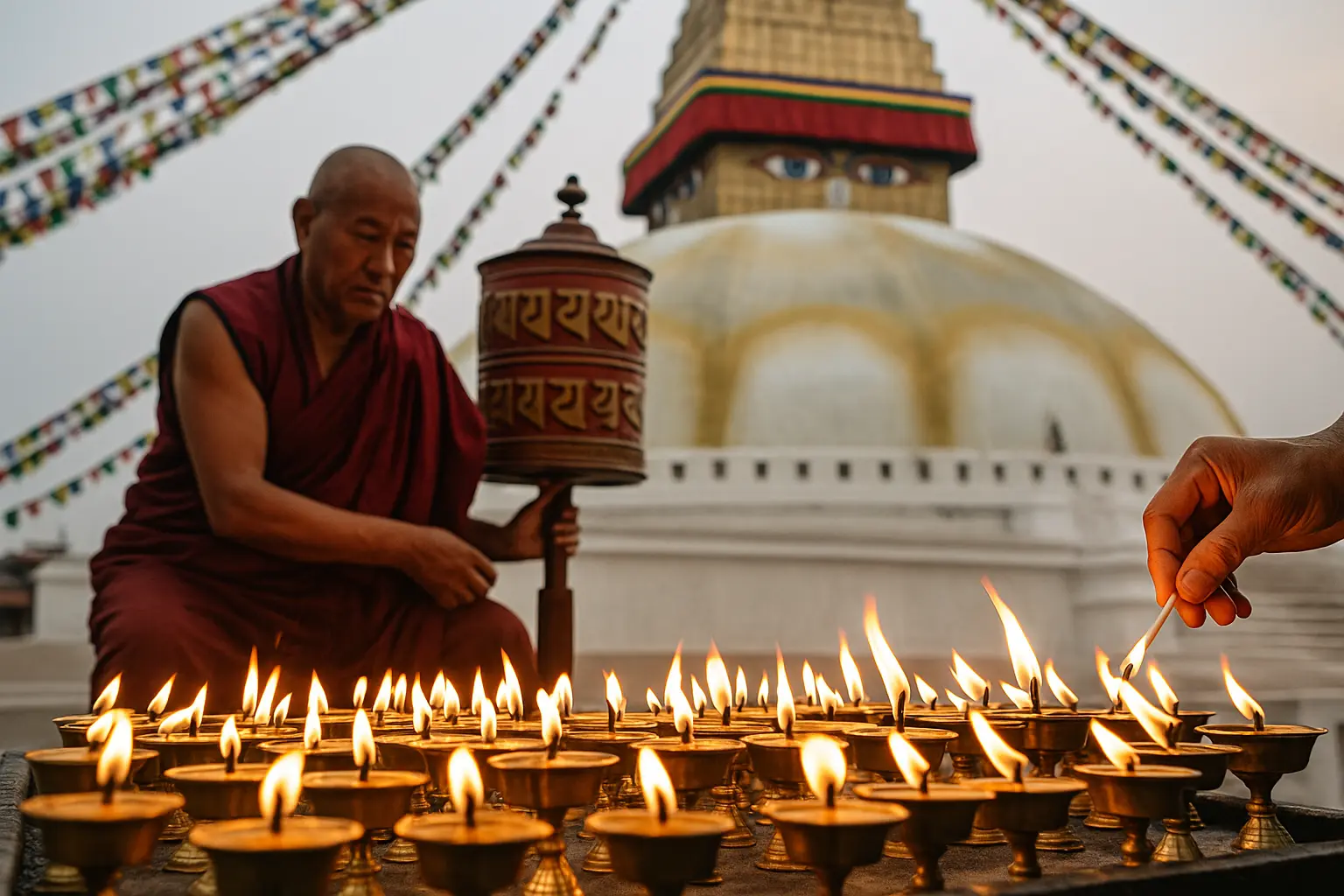
It was just after sunrise in Boudha. The first butter lamps were flickering to life, glowing amber against the white of the stupa. Wind tugged gently at rows of prayer flags above, carrying blessings across the rooftops. A nun passed quietly, her hands on a worn mala, her gaze steady.
This wasn’t a show. It was devotion. Alive, quiet, and deeply human.

Many visitors to Boudhanath are drawn in by the beauty, the colors, and the rituals. But behind every fluttering flag and glowing lamp is a prayer, a teaching, a tradition lived for generations. This is a guide for those who want to see deeper, to feel what these sacred symbols truly mean.

What Are Tibetan Prayer Flags?

Prayer flags, or Lungta (རླུང་རྟ་), are more than decoration. They are wind-borne prayers, rooted in Tibetan Buddhism and even older Bon traditions.

There are five colors, each representing an element:
• Blue, Sky/space
• White, Air/wind
• Red, Fire
• Green, Water
• Yellow, Earth

Each flag is printed with mantras, usually Om Mani Padme Hum, and sacred symbols like the Wind Horse, which carries prayers to the heavens. As the wind passes through the cloth, the prayers are believed to bless all beings.

Prayer flags are not meant to be permanent. They fade, tear, and return to the earth, a reminder of impermanence. New flags are often hung on full moon days or during festivals like Losar (Tibetan New Year).

Why Are Prayer Flags Hung at Boudha and Other Stupas?

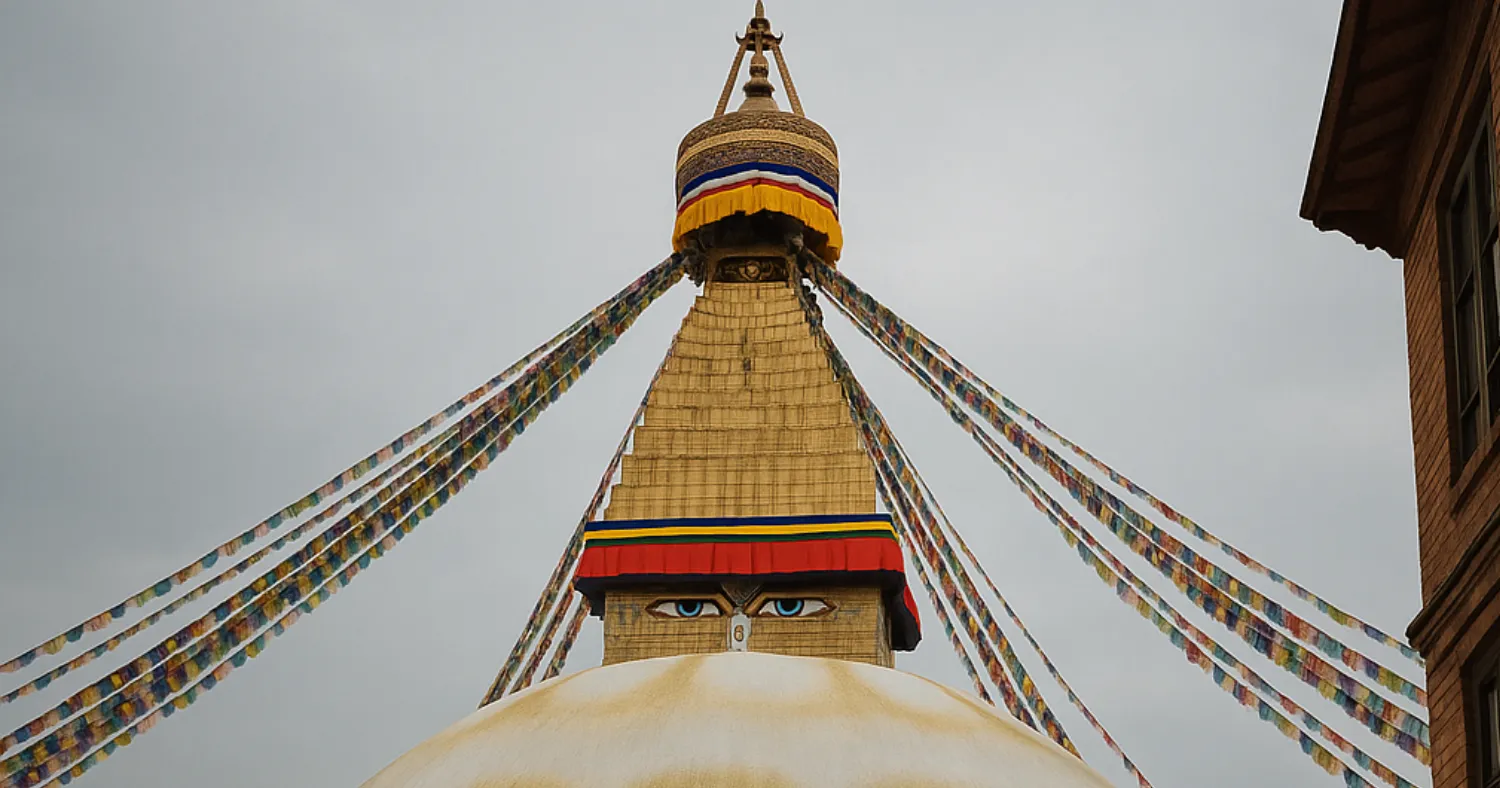
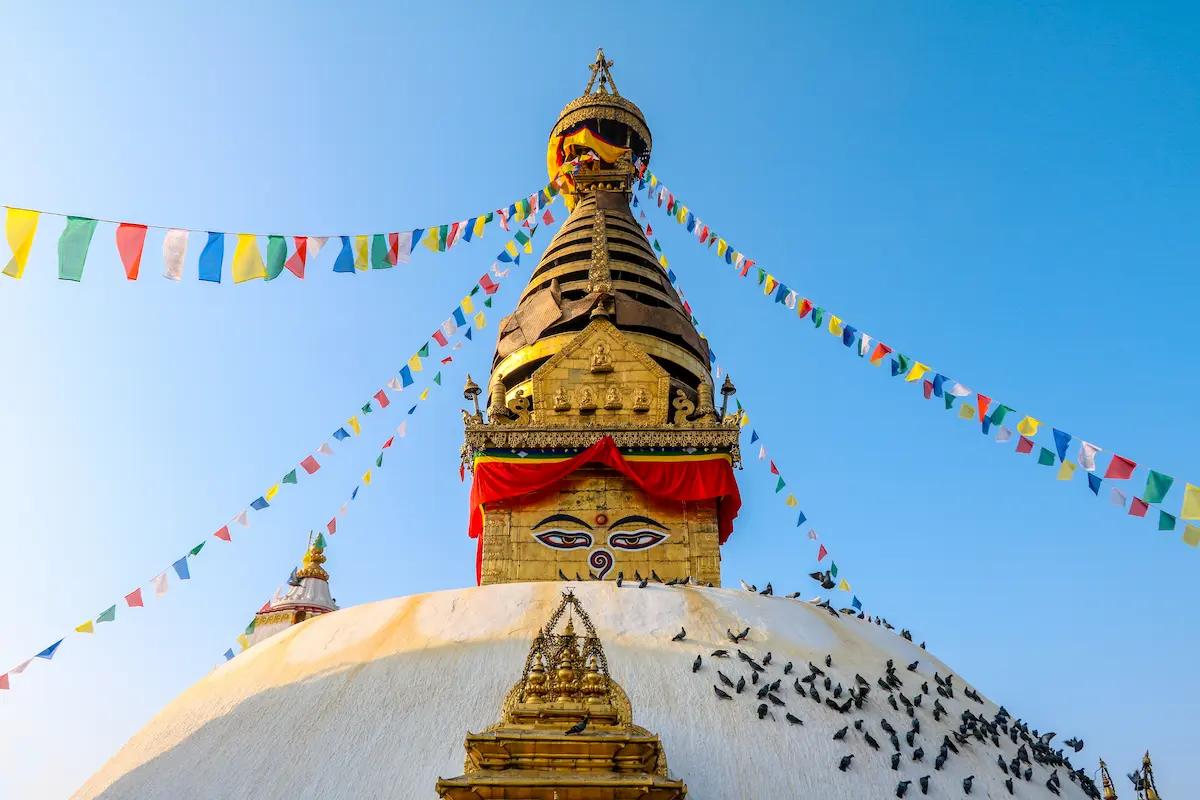
Boudhanath, one of the most important Tibetan Buddhist stupas in the world, is crowned with thousands of prayer flags. They stretch in geometric webs from the stupa’s peak to its base, dancing constantly in the breeze.

Hanging flags here is both an offering and a declaration. You’re adding your intentions to a collective prayer. The wind becomes your messenger.

Pilgrims often hang their own strings of flags before a long journey, after a family blessing, or in memory of a loved one. It’s not just what they mean, it’s what they carry.

The Deeper Meaning of Butter Lamps

To offer a butter lamp in Tibetan Buddhism is to offer light, both literal and symbolic.

The butter lamp (marme) represents the light of wisdom, cutting through the darkness of ignorance. In Himalayan monasteries, these lamps are offered daily during morning and evening pujas.

They’re traditionally made with yak butter, but now many use ghee or oil. You can see rows of lamps flickering around the base of Boudha Stupa, especially during dusk.

When you light a lamp with quiet intention, it becomes a prayer, for clarity, for healing, for someone who has passed.

According to Tibetan belief, offering lamps accumulates merit, especially when done with mindfulness. In some traditions, people offer 108 lamps at once, one for each delusion or obstacle in the mind.

Rituals You’ll See in Boudha (and What They Mean)

The stupa isn’t just surrounded by people, it’s circled by devotion. Each act you see has meaning:

Kora: Walking clockwise around the stupa, spinning prayer wheels, reciting mantras. It’s a moving meditation.

Prostration: A full-body bow done repeatedly, often for hundreds of cycles. It’s a physical expression of humility and purification.

Chanting: The most common mantra is Om Mani Padme Hum, associated with Avalokiteshvara, the bodhisattva of compassion.

Mala Beads: 108-bead strands used to count recitations of mantras. Each cycle is a journey inward.

All of these practices invite a slowing down, a shift from thinking to being.

How to Participate (or Observe) Respectfully

Whether you’re a pilgrim or a curious traveler, the key is presence and humility.

  • Walk clockwise around stupas. Never against the flow.
  • Speak quietly. Treat the space like a living temple.
  • Dress modestly. Shoulders and knees covered is appreciated.
  • Avoid selfies during rituals. It disrupts both the moment and the meaning.
  • Buy prayer flags and lamps from monasteries or pilgrims. It keeps the intention clean, and supports the local spiritual economy.

Remember: you’re entering a sacred rhythm. Step lightly.

Staying Close to the Ritual

Living near Boudha, even for a few days, gives you something deeper than a visit. You begin to feel the timing of the rituals, the rhythm of the kora, the quiet before the morning pujas.

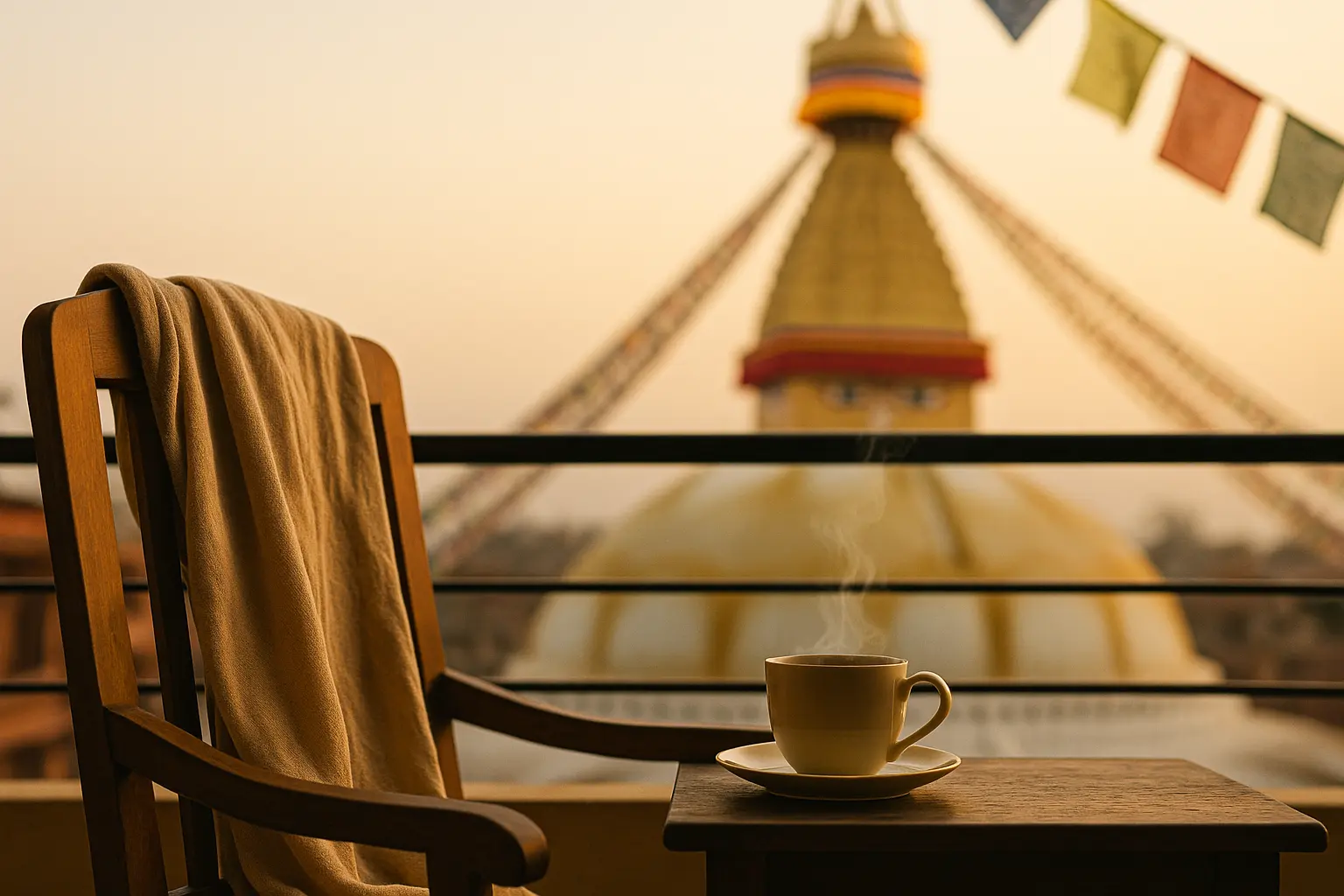
From the rooftop of Boudha Mandala Hotel, just 10 seconds from the stupa, you can see the flags unfurl, the lamps begin to glow, and the circle form again.

Whether you’re on a pilgrimage, writing a book, or simply needing stillness, this proximity brings you into the mandala of daily devotion.

Personal Reflection: One Morning Under the Flags

I once lit a butter lamp for someone I had lost. I didn’t know the prayers. I didn’t know the rituals. But I stood beside an old nun who nodded at me, as if saying, “You’re doing it right”.

She lit her lamp with trembling hands, and I followed. There was no language between us. But there was a connection.
That’s the thing about Tibetan rituals. You don’t always need to understand them to feel their truth.

Conclusion
Whether it’s a flag flapping in the wind or a flame dancing in stillness, these symbols stay with you. Tibetan rituals aren’t just things you see; they’re invitations to return to presence, to compassion, to light.

When you leave Boudha, you might not carry a prayer wheel or a mala. But the prayer stays, in how you walk, how you see, how you listen.

First-Time in Nepal: What Most Travelers Misunderstand at the Start

Most first-time travelers don’t struggle in Nepal because it’s difficult. They struggle because they arrive with the wrong expectations. Nepal doesn’t behave like other destinations, and it doesn’t try to. Once you understand where expectations clash with reality, the country becomes far easier to navigate and far more rewarding.

This isn’t about mistakes. It’s about misreading how Nepal actually works.

Nepal isn’t disorganized, it’s adaptive

One of the most common assumptions is that Nepal feels chaotic because it lacks structure. In reality, it runs on flexible structure rather than fixed systems. Plans change. Timelines shift. Routes adjust. This isn’t failure. It’s adaptation to terrain, weather, festivals, traffic, and human needs.

Travelers who expect rigid schedules feel frustrated. Travelers who expect adjustment feel fine. Nepal works best when you allow outcomes to evolve instead of forcing them to lock in early.

Getting from place to place is not the main activity

First-time visitors often underestimate how much effort movement takes. Distances look short on maps but feel long in practice. Roads wind. Traffic pauses. Conditions change without warning.

Nepal isn’t a country where you stack destinations back-to-back efficiently. Travel itself takes energy. Locals factor that in naturally. Travelers often don’t.

Once you treat movement as part of the day rather than something to “get through,” stress drops immediately.

Quiet doesn’t mean unfriendly

Many travelers expect warmth to be loud and expressive. In Nepal, politeness is subtle. Smiles may be reserved. Conversation may be brief. Help often arrives without commentary.

This isn’t coldness. It’s restraint. Respect is shown through action rather than performance. When travelers slow down and observe, they often realize people are paying attention even when they aren’t engaging theatrically.

Comfort works differently here

Nepal doesn’t optimize for convenience. It optimizes for function. You may need to adjust how you eat, sleep, shower, or move through the day. This isn’t hardship. It’s adaptation.

First-time travelers sometimes fight this, trying to recreate home routines exactly. Long-stay travelers adapt instead. They eat simply. They pace their days. They accept variation.

Nepal becomes easier when comfort is defined as “good enough” rather than “perfect.”

You don’t need to see everything

A common mistake is over-planning. Nepal rewards depth, not coverage. Trying to see too much too fast leads to exhaustion and surface-level experience.

Locals repeat places. They walk the same routes. They return to the same teashops. Familiarity matters more than novelty.

Travelers who choose fewer destinations and stay longer often leave with stronger memories and less fatigue.

Silence and pauses carry meaning

Many first-time visitors misinterpret pauses as confusion or lack of interest. In Nepal, silence is often part of communication. People think before answering. They avoid blunt refusals. They leave space in conversation.

Filling every pause with questions or pressure can disrupt this rhythm. Waiting often produces clearer answers than insisting.

Listening is a more effective travel skill here than talking.

Rules exist, but context matters more

Nepal has rules, signs, and systems, but they’re interpreted through situation and relationship. A process that works one day may adjust the next. This isn’t inconsistency for its own sake. It’s responsiveness.

Travelers who treat rules as absolute feel confused when exceptions appear. Travelers who read context adapt more easily.

Flexibility is not bending the rules unfairly. It’s understanding when circumstances require adjustment.

People will ask personal questions

First-time travelers are often surprised by questions about where they’re going, where they’re from, or how long they’re staying. This isn’t intrusion. It’s orientation. These questions help people place you socially.

Answering politely keeps interactions smooth. Defensiveness creates distance. Curiosity here is social glue, not interrogation.

Nepal isn’t trying to impress you

Unlike destinations designed around tourism, Nepal doesn’t perform itself. Daily life continues whether visitors are watching or not. Rituals happen. Shops open and close. Streets fill and empty.

Travelers who expect constant accommodation feel overlooked. Travelers who observe instead of evaluate feel welcomed.

Nepal meets you where you are, but it doesn’t adjust its identity to suit you.

Frustration usually peaks early

Many travelers hit a low point in the first few days. Noise, traffic, uncertainty, and fatigue stack quickly. This is normal. What often surprises people is how quickly that feeling passes once expectations reset.

By day three or four, patterns emerge. Sounds soften. Routes make sense. Interactions feel easier. The same environment that felt overwhelming begins to feel alive instead.

The shift isn’t Nepal changing. It’s perception catching up.

What understanding this changes

Once expectations align with reality, Nepal opens up. Delays feel manageable. Conversations feel warmer. Daily life feels legible.

You stop asking why things don’t work “properly” and start noticing how they work at all. That shift turns confusion into curiosity and stress into engagement.

Staying somewhere calm during those first days helps enormously, and places like Boudha Mandala Hotel offer a steady base while travelers adjust to Nepal at their own pace.

What is Service in a Hotel? A Spiritual Traveler’s Guide

When you Google what is service in hotel, you’ll mostly find answers, things like room service, front desk assistance, or housekeeping. But for spiritual travelers, digital nomads, and mindful explorers, the meaning of service goes deeper. It’s not just about what a hotel provides. It’s about how you’re made to feel. Service, at its most meaningful, is about being seen, respected, and gently supported through your journey.

At Boudha Mandala Hotel, located just ten seconds from the sacred Boudhanath Stupa in Kathmandu, we believe hotel service is not transactional. It is devotional and quiet offering.

Key Takeaways

Hotel service is more than providing clean rooms or meals—it’s about how a guest feels. For spiritual travelers, digital nomads, and those on a deeper journey, service means being seen, respected, and gently cared for.

True hotel service includes small acts of kindness, cultural understanding, and a peaceful environment that supports reflection, healing, or work. Whether it’s reliable Wi-Fi for long-stay guests, silent support during meditation hours, or heartfelt guidance near sacred sites like Boudhanath Stupa, great service is always about meaningful human connection and emotional comfort.

Rethinking What Hotel Service Really Means

On the surface, hotel service often includes things like welcoming guests at check-in, ensuring clean rooms, offering meals, and helping with logistics like transportation or tour bookings. These are necessary parts of hospitality.

But for guests on a spiritual or longer journey, true service often reveals itself in more subtle forms: a warm smile when you arrive jet-lagged, someone remembering how you take your tea, silence honored after your morning meditation, or directions shared with patience and sincerity.

At a spiritual hotel like Boudha Mandala, service means more than fulfilling requests. It means holding space for your experience.

The Deeper Layers of Hospitality

If you’re wondering what is service in hotel from a more human, soulful perspective, it includes:

– Presence: A staff member notices when you’re cold and brings a shawl without being asked.

– Respect: Your rituals, dietary needs, and preferences are honored without explanation.

– Kindness: Small gestures, a prayer scarf offered before your stupa visit, a reminder about puja times, carry great meaning.

– Adaptability: Whether you’re staying for one night or on a three-month sabbatical, your pace is understood and supported.

Imagine waking up at dawn to the sound of soft chants, stepping onto your balcony, and finding your tea already waiting. This is what deeply rooted hotel service feels like.

Service Near Sacred Sites Carries a Higher Responsibility

In a spiritual destination like Boudhanath, guests arrive not just for sightseeing but for inner reflection, healing, or pilgrimage. That changes everything about how service should be offered.

Hospitality here requires deep cultural and emotional understanding. A good hotel helps you find the monastery where the evening chanting calms your heart. It knows the difference between a visitor and a seeker.

At Boudha Mandala Hotel, our multilingual team grew up in the rhythms of this neighborhood. We understand when a guest skips breakfast to do their kora, or when they need directions to a less crowded monastery for quiet prayers.

What Service Means for Digital Nomads and Long-Stay Travelers

For remote workers, creatives, or those taking a spiritual sabbatical, service often means freedom without friction. Fast internet is essential, but so is having your laundry folded without disrupting your workspace. Cleanliness matters, but not at the cost of your rhythm.

That’s why we’ve designed long-stay apartments and rooms that feel like a peaceful base. Guests enjoy:

– Reliable Wi-Fi that supports video calls and creative flow.

– Kitchenettes to cook light, mindful meals.

– Flexible cleaning schedules that respect your hours.

– A retreat for focus and reflection.

This blend of independence and subtle support is where true long-stay service shines.

How to Know If a Hotel’s Service is Truly Aligned With You

If you’re still wondering what is service in hotel, try tuning into how a place makes you feel. The best service doesn’t need to advertise, it’s felt immediately. Ask yourself:

– Do I feel more grounded after check-in than I did before?

– Is the staff genuinely attentive, or simply polite?

– Are my quiet moments respected without explanation?

– Do I feel cared for even when I haven’t asked for anything?

These are often better indicators than any online review.

Service is Human Connection, Not Just a Checklist

Towels folded like swans or fast room delivery can be lovely. But the heart of hospitality lies in human connection. Service is the space held for your experience, the attention to detail that doesn’t intrude, and the invisible care that surrounds you.

At Boudha Mandala Hotel, we welcome you as you are. Whether you’ve come to work, to heal, or to simply rest by the stupa, our service meets you with warmth and calm.

If you’re looking for a peaceful hotel just steps from the Boudhnath stupa, Boudha Mandala offers stupa-view rooms, long-stay options, and a warm local welcome.

Where Did Buddhism Begin?

Key Takeaways

• Buddhism began in the 6th century BCE in Lumbini, present-day Nepal, with the birth of Siddhartha Gautama

• The Buddha awakened under a bodhi tree in Bodh Gaya, India, after years of sincere practice

• His first teaching, the Four Noble Truths, was shared at Sarnath, marking the beginning of the Sangha

• Buddhism’s origin is not just history, but a spiritual geography that shaped how awakening was lived, taught, and shared

• These sites, Lumbini, Bodh Gaya, Sarnath, remain living places of pilgrimage, reverence, and inner return

Lumbini: The Beginning Beneath the Sal Trees

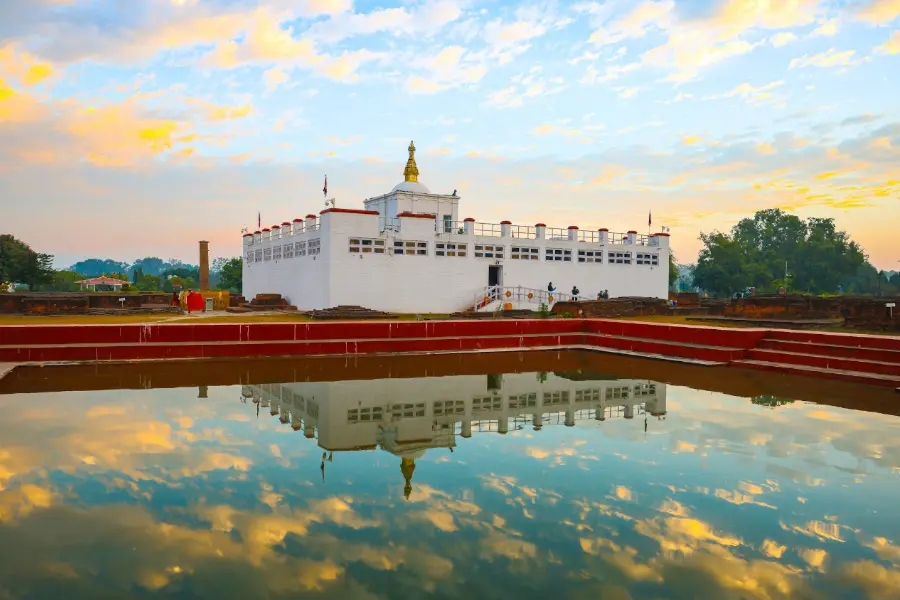
I remember walking barefoot through the quiet gardens of Lumbini just before dawn. A soft breeze passed through the prayer flags. Somewhere, a monk’s bell rang. And for a moment, I understood why so many come here to begin their inner journey.

Lumbini isn’t just a UNESCO site, it’s the very place where Prince Siddhartha was born over 2,600 years ago. According to tradition, his mother, Queen Māyā, gave birth standing under a sal tree while on pilgrimage. Even then, the path was framed by intention, not accident.
What began there wasn’t a religion, but a question: What causes suffering, and how can it end? That question still echoes in the stillness of the Lumbini monastic zone, where pilgrims from dozens of Buddhist traditions come not to agree, but to remember.

UNESCO – Lumbini, the Birthplace of the Lord Buddha

Bodh Gaya: The Silence of Realization

Not far from the banks of the Niranjana River, in the town of Bodh Gaya, Siddhartha sat beneath a fig tree and resolved not to rise until he understood the nature of suffering. Days passed. His mind turned inward, then opened.

What unfolded there was not revelation from a divine voice, but a direct seeing into impermanence, craving, and liberation. He became the Buddha, the Awakened One.

When I visited Bodh Gaya years ago, I saw monks from Tibet, Thailand, Burma, and Bhutan taking turns circumambulating the Mahabodhi Temple. Each brought their own language and robes, yet the devotion felt the same, quiet, humble, unwavering.

This is not a place for tourists. It’s a place for those ready to meet themselves.

Sarnath: When Wisdom Was Shared

After awakening, the Buddha walked to Sarnath, where five former companions were practicing asceticism. There, in the deer park, he offered his first teaching, the Four Noble Truths. In doing so, he turned the Wheel of Dharma, and the Sangha was born.

Unlike modern lectures, this wasn’t an intellectual exercise. It was a compassionate offering. A way to describe a path that anyone, monk or layperson, could walk toward peace.

I always tell our long-stay guests at Boudha Mandala Hotel, if you ever feel ready to hear the Dharma for the first time, read the Dhammacakkappavattana Sutta as if you were sitting among those five. Then listen to your breath.

Britannica – Origin and Spread of Buddhism

From India and Nepal, the Path Blossomed Outward

Buddhism did not remain local. Within a few centuries, the teachings traveled, carried not by conquest, but by monks on foot, pilgrims with alms bowls, and hearts stirred by compassion.

Emperor Ashoka played a critical role, sending emissaries across Asia. In Sri Lanka, Buddhism became deeply rooted as Theravāda. In Tibet, it flourished through ritual and tantric practice. In China, it blended with local thought to give birth to Chan (Zen). In Japan, it became embedded in art, tea, and temple life.

Yet the heart of it all still pulses in three places: Lumbini, Bodh Gaya, and Sarnath. Not as monuments to the past, but as mirrors for the present.

Why These Origins Matter Today

For many spiritual seekers today, Buddhism begins with a book, a retreat, or a YouTube talk. But something changes when you connect to its physical beginnings.

To stand where the Buddha walked is to see the teachings not as abstract ideas, but as lived truths. The silence of Bodh Gaya is not metaphor. It’s palpable. The morning chants in Lumbini are not performance. They are remembrance.

Whether you’re a pilgrim, a digital nomad seeking clarity, or someone simply longing for inner stability, the origins of Buddhism invite you to pause. To step out of theory and back into place. Into ground. Into being.

FAQs

Q1: Where did Buddhism begin?

A: Buddhism began in Lumbini, in present-day Nepal, with the birth of Siddhartha Gautama in the 6th century BCE. He later attained enlightenment in Bodh Gaya, India.

Q2: What are the key places tied to early Buddhism?

A: Lumbini (birth), Bodh Gaya (awakening), Sarnath (first teaching), and Kushinagar (passing into parinirvana). These form the core pilgrimage sites of Buddhism.

Q3: Was Buddhism always a religion?

A: No. It began as a path of liberation. The Buddha offered tools, mindfulness, ethics, meditation, for awakening, not worship.

Q4: Can I visit these places today?

A: Yes. Each is a maintained pilgrimage site. Lumbini and Bodh Gaya are especially vibrant with global monastic communities and daily rituals.

Q5: How does knowing the origin help my practice?

A: It roots your understanding. The teachings become not just philosophy, but part of the human journey, shaped by place, time, and silence.

Looking for a Place to Reflect on the Buddhist Path?

Just 10 seconds from the great stupa of Boudhanath lies a quiet space held with care. At Boudha Mandala Hotel, we host those who seek more than a room. We host those seeking refuge, rhythm, and return.

Whether you’re a pilgrim retracing the Buddha’s footsteps or a mindful traveler looking for a peaceful hotel near Boudha, let us be your base. Our stupa-view rooms, calm café, and retreat-like quiet offer more than comfort, they offer belonging.

You’re always welcome to begin again.

Best Buddhism Books for Every Stage of the Journey

Key Takeaways

• The best books on Buddhism depend on your path, whether you are just beginning, deepening, or remembering.

• Buddhist books are not merely to be read, but absorbed. They are companions for inner clarity.

• Start with Thich Nhat Hanh, Bhikkhu Bodhi, or Walpola Rahula for grounding.

• As you deepen, Pema Chödrön, Ajahn Chah, and the Dalai Lama become gentle yet radical voices.

• Buddhist scriptures are not reserved for scholars, they’re living texts meant to be lived.

• The most important book is the one that makes you stop, breathe, and soften.

How to Choose a Buddhist Book That Truly Resonates

If you walk into a monastery library, you’ll often see not just rows of texts, but flowers on the shelves. In Buddhism, the right book isn’t just a source of knowledge, it’s an offering. Something sacred. Something that meets the reader exactly where they are.

Some books speak when we’re broken. Others arrive when we’re ready. Your journey matters more than the book list. Ask yourself:

“Do I need to understand? Or do I need to feel held?”

For Beginners: Books That Gently Open the Dharma

When I first came across the Dharma, I was overwhelmed. So many teachings. So many traditions. But the right book felt like a hand on my back.

If you’re beginning, these books are clear, honest, and simple without being simplistic:

• “The Heart of the Buddha’s Teaching” by Thich Nhat Hanh
This is the kind of book that makes the Dharma feel like home. Gentle, poetic, but deeply rooted in core teachings, suffering, mindfulness, compassion.

• “What the Buddha Taught” by Walpola Rahula
Direct and scholarly, yet accessible. A Theravāda classic that lays out the Four Noble Truths and Eightfold Path with no frills or mysticism.

• “In the Buddha’s Words” edited by Bhikkhu Bodhi
A remarkable collection of sutta translations, carefully organized by theme. Bhikkhu Bodhi adds helpful introductions that bring ancient texts to life.

These are not just books for learning Buddhism. They are books for living it.

For Practitioners: Books That Deepen the Path

Once the teachings settle into your bones, you begin to see how real they are, in joy, in grief, in love, in confusion. These are the books that meet you there.

• “When Things Fall Apart” by Pema Chödrön
This is not a comforting book. It’s a truthful one. Pema speaks from the messy middle: heartbreak, impermanence, and the fierce grace of letting go.

• “The Art of Happiness” by the Dalai Lama & Howard Cutler
A dialogue between Tibetan wisdom and Western psychology. Kind, accessible, and surprisingly personal.

• “Being Dharma” by Ajahn Chah
A collection of talks from one of Thailand’s great forest masters. Practical, humorous, and sometimes painfully direct.

These books don’t offer escape. They offer mirrors.

For Meditators and Contemplatives

Meditation is not an achievement. It’s a returning. These books are practical and poetic roadmaps for that return.

• “Mindfulness in Plain English” by Bhante Gunaratana
As honest as the title suggests. Perfect for anyone starting or restarting their practice.

• “The Miracle of Mindfulness” by Thich Nhat Hanh
One of the most beloved introductions to present-moment awareness. More than a guide, it’s a meditation in itself.

• “The Attention Revolution” by B. Alan Wallace
A deeper dive into śamatha practice (calm abiding). Ideal for those wanting to refine focus and clarity.

These texts are best read slowly, like tea. Sip, pause, return

Buddhist Scriptures and Classical Texts (For Serious Study)

Some books are not just read, they are bowed to.

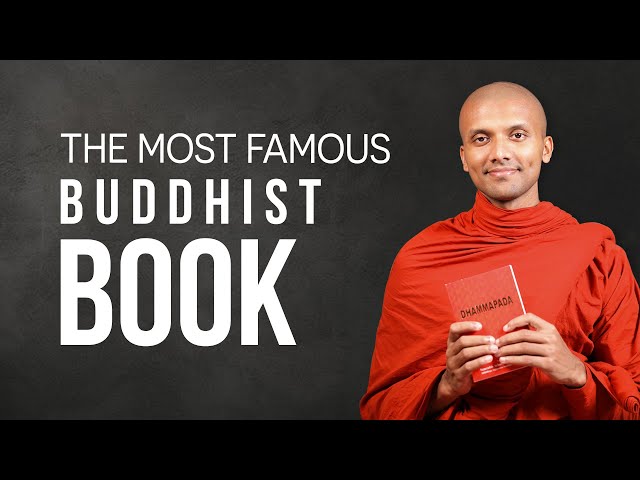
• The Dhammapada
Short verses with endless depth. You’ll return to this again and again.

• The Tibetan Book of Living and Dying by Sogyal Rinpoche
A bridge between Tibetan Buddhist views on death and modern spiritual inquiry. Especially powerful for hospice workers, healers, and those in grief.

• The Majjhima Nikāya (Middle-Length Discourses)
If you want to hear the Buddha’s voice as close to original as possible, start here. Not easy, but immensely rewarding with guidance.

For deeper study, you can explore Oxford Centre for Buddhist Studies or the Plum Village Library.

Final Reflection

Books in Buddhism are not meant to impress you. They’re meant to transform you. You might read a hundred titles and remain stuck. Then one sentence, at the right time, opens the sky.

Sometimes that sentence appears in a monastery. Sometimes in a guesthouse. Sometimes, alone, in the quiet of your own questioning.

Let the book find you. And when it does, don’t rush. Let it whisper. Let it challenge. Let it remind you that wisdom is not elsewhere, it’s here, in your breath, your body, your moment-to-moment response to life.

FAQs on Buddhist Books

What’s the best Buddhist book to start with?

“The Heart of the Buddha’s Teaching” by Thich Nhat Hanh is often the gentlest and clearest doorway for beginners.

Are Buddhist books religious or philosophical?

Both. But they’re also deeply experiential. Good books don’t just explain, they help you practice, reflect, and live differently.

Can I read Buddhist scriptures without being a monk?

Absolutely. The teachings were meant for all beings. With good commentary or a teacher, even dense texts become accessible.

What if a book feels too intellectual or abstract?

Set it down. Find another. Buddhism is vast. Your heart will recognize the book that’s right for you now.

Is it better to read many books or go deep into one?

Depth is better than quantity. Let one book change you, rather than reading ten that only touch the surface.

Want to Read, Reflect, and Stay in a Space That Honors the Teachings?

At Boudha Mandala Hotel, we meet travelers, monks, artists, and readers who arrive with a book in one hand and a quiet longing in the other.

Just steps from the great stupa of Boudhanath, we offer a peaceful base where the teachings feel close, whether you’re reading The Dhammapada in our garden or journaling after a monastery walk.
If you’re looking for a peaceful hotel near Boudha, we invite you to stay, breathe, and begin again.

Buddhist Meditation Techniques You Should Know

If you’ve ever searched for a meditation retreat in Kathmandu, you’ve likely felt that pull, the need to step away from noise and move toward something quieter and more grounded.

That’s why so many end up in Boudha.

Boudha feels like a different rhythm. Mornings begin with the low hum of chants and the soft turning of prayer wheels. So, what do you actually learn on a meditation retreat in Boudha?

Let’s take a closer look at the Buddhist meditation techniques from foundational breath practices to compassion-based methods rooted in Tibetan Buddhism.

Key Takeaways

The most common Buddhist meditation techniques techniques taught at Boudha retreats include:

– Shamatha (Calm-Abiding Meditation): A foundational breath-based practice to develop focus and mental stillness.

– Vipassana (Insight Meditation): Teaches you to observe sensations, thoughts, and impermanence with clarity and presence.

– Tonglen & Loving-Kindness (Metta): Compassion-based techniques that help open the heart and reduce self-centered thinking.

– Walking Meditation Around the Stupa: A unique local ritual of mindful walking and mantra recitation around Boudhanath Stupa.

– Mantra & Chanting Meditation: Sound-based practices using Tibetan mantras to calm the mind and connect with intention.

Why Boudhanath Feels Different

The stupa here has stood for centuries. It’s one of the most important sites in Tibetan Buddhism not just in Nepal, but in the world.
Around it, over fifty monasteries form a living circle of practice. You’ll hear chants, see butter lamps flickering at dusk, and feel something hard to describe.
Unlike Thamel or other tourist-heavy areas, Boudha moves slowly. It gives you permission to do the same.

Buddhist Meditation Techniques Taught in Boudha Retreats

Most retreats in this area are grounded in Buddhist tradition, especially Tibetan lineages. Whether you’re joining a group or practicing on your own, these are the buddhist mediation techniques you’re likely to learn.

Shamatha (Calm-Abiding Meditation)

This is the foundation. You focus on the breath, or sometimes a visual object. When your mind wanders which it will, you gently return.

That’s it. No pressure.

Shamatha trains attention and steadies the nervous system. You begin to notice space between thoughts. Many meditation retreats in Kathmandu use this as a base for deeper practices.

Vipassana (Insight Meditation)

Vipassana helps you see clearly. It’s not dramatic. You sit, observe sensations, and notice how everything changes, breath, sound, mood, thought.

This technique can be taught in both silent retreats and more interactive sessions. In Boudha, you’ll often find a Tibetan approach that includes guided reflection and time for questions.

It’s not about analyzing your life. It’s about learning to be with it, as it is.

Tonglen and Loving-Kindness (Metta)

These practices shift the focus from clarity to compassion.

In Tonglen, you breathe in discomfort or pain your own, or the world’s and breathe out relief, warmth, kindness.

Metta practice involves sending goodwill to others. You might begin with someone you love, then extend it to someone neutral, and eventually, even someone difficult.

Both techniques are common in retreats around Boudha, especially those led by Tibetan teachers. They balance awareness with heart.

Walking Meditation Around the Stupa

This isn’t always listed in retreat brochures, but it’s one of the most powerful practices here.

Each morning and evening, people walk slowly around Boudhanath Stupa. Some spin prayer wheels. Some count mala beads. Others just walk quietly, steady and present.

It’s informal but deeply meditative. You’re welcome to join anytime. No one will stare. No one will stop you.
You just walk.

Mantra and Sound Practices

Chanting is part of daily life in Boudha. Retreats often begin or end sessions with mantras, Om Mani Padme Hum is the most common.

You don’t need to sing well or believe in anything specific. You just let the rhythm carry your focus.

Some retreats include explanations. Others let the practice speak for itself. Both work.

Who Teaches These Practices?

Teachers in Boudha come from different traditions. Some are Tibetan lamas who’ve trained since childhood.

Others are Nepali monks, Western practitioners, or nuns fluent in English.

Most retreats are beginner-friendly. No robes, no dogma. Just real people sharing what they’ve learned, often with great care and humility.

You’ll find both structured retreats and informal drop-in sessions. The common thread is kindness and clarity.

What a Retreat Day Feels Like

Here’s a simple flow many Boudha retreats follow:

– Early morning meditation

– Silent breakfast

– Teaching or group practice

– Breaks for journaling or rest

– Afternoon session (chanting, compassion practice, walking meditation)

– Light dinner and evening reflection

Some retreats are silent. Others allow for questions and conversation. Most are gentle, respectful, and allow space for your own rhythm.

Where to Stay If You’re Practicing Near Boudha

Not everyone comes for a formal retreat. Some arrive needing quiet, and create their own rhythm.

Boudha Mandala Hotel is the one of the best hotels in Boudha that feels like a retreat.

It’s about 10 seconds from the stupa gates, but far enough from the crowds to stay peaceful. Here’s what it offers:

– Stupa-view rooms with small balconies

– Long-stay apartments with kitchens

– An organic café for quiet breakfasts

– Staff who understand retreat culture and respect your space

If you’re attending a meditation retreat in Kathmandu, or looking to do your own in a gentle way, this is a solid base.

What You’ll Actually Learn

The techniques matter. The teachers matter. But what you’ll really learn in Boudha is how to slow down.

How to listen. How to sit with yourself without fixing anything. How to walk a little more lightly in the world.

If that’s what you’re looking for, you don’t need to have it all figured out. Just come. Stay a few days. Let the place do its work.

Sometimes, the simplest practice is the most honest one.

Does Buddhism Believe in Karma? Teachings Explained

What Karma Really Means in Buddhism

In my early years of monastic life, I asked a senior teacher what karma was. He didn’t reach for scriptures. He didn’t even speak right away. He held up a cup of tea and simply said, “Everything that led to this moment, and what you choose next.”

In Buddhism, karma means volitional action. It’s not fate, not superstition, not reward or punishment from above. It is the natural echo of intention. What you plant in your speech, your thoughts, your hands, those seeds grow.

And here’s the nuance: karma is not only about the act. It’s about the intention behind it. Two people can give the same donation. One gives to impress, the other out of compassion. The outer action looks identical. But karmically, they are as different as storm and stillness.

Karma Isn’t About Blame. It’s About Possibility.

We often hear people say, “That’s my karma.” Usually with resignation, as if they’re stuck. But in the Buddha’s teaching, karma isn’t a prison. It’s an invitation. A chance to look closely at how our lives unfold, not because we’re being judged, but because we’re being shown something.

Think of karma as a kind and unrelenting teacher. If I speak with anger, I carry the heaviness of that anger in my body. If I lie, I fracture trust in the world around me. But if I respond with patience or generosity, peace becomes a little more available.

This is why mindfulness matters. Without seeing what we’re planting, how can we hope for a harvest of peace?

According to the Dhammapada:Key Takeaways

• Buddhism recognizes karma as intentional action, what we think, say, and do matters

• It’s not divine punishment, nor destiny. It’s a mirror, and a chance to wake up

• Karma influences not just rebirth, but how peace or suffering unfolds in each moment

• Buddhist practice invites us to see karma clearly, so we can live and respond with freedom

Our past shapes us, but never defines us. The future is shaped by how we meet this moment

“Mind is the forerunner of all actions. All deeds are led by mind. If one speaks or acts with an impure mind, suffering follows… If one speaks or acts with a pure mind, happiness follows.”
Source: Access to Insight

Does Karma Carry Into the Next Life?

Yes, in Buddhist cosmology, karma travels. It moves across lifetimes like wind shaping dunes. But it’s not a simple bookkeeping of good versus bad. It’s subtler.

At the time of death, the quality of mind we’ve nurtured matters deeply. Have we practiced letting go? Are we still clinging? That momentum carries forward, shaping where and how we’re reborn.
But, and this is essential, karma is not deterministic. A single moment of true insight can shift lifetimes of conditioning. The past is influential, yes. But never absolute.

According to the BBC, karma in Buddhism is both cause and condition, but the emphasis is always on responsibility, not guilt.

How Karma Differs From Other Views

Many religious traditions speak of karma, but Buddhism approaches it differently. There is no eternal soul (no atman), no divine scorekeeper. Karma in Buddhism flows through causal interdependence, the same principle that governs wind, decay, and sunrise.

Western interpretations often reduce karma to “you get what you deserve.” But the Dharma doesn’t moralize that way. It simply says: action has consequence. Craving creates suffering. Clarity opens peace.

And crucially, karma is not just about what happens to us. It’s about how we respond. Even if pain arises from past causes, our present response can transform that trajectory.

The Role of Karma in Liberation

Why does karma matter so deeply on the Buddhist path?
Because it helps us wake up to our patterns. The moment you realize that reacting with irritation only strengthens the roots of restlessness, you begin to soften. The first time you hold your tongue in compassion, a different path opens.

Through mindfulness, precepts, meditation, and especially wise intention, we begin to interrupt the cycles of suffering. Karma becomes less about avoiding pain, and more about planting conditions for awakening.

We are not bound by our past. We are bound by unawareness of our past. That’s what the Dharma helps undo.

Final Reflection

If you remember one thing from this, karma is not there to trap you. It’s there to reveal you, to reflect the causes we’ve set in motion, and the freedom we still have to choose differently.

At the heart of Buddhist hospitality is this: we greet each guest as a being with stories, causes, and possibilities. Just as we care for the outer space, we learn to care for the karmic space, the unseen atmosphere shaped by thought, speech, and deed.

You are not the sum of your past actions. You are the potential for a new one, right now.

A Space to Reflect on Karma

If you’re seeking a space in Kathmandu where the teachings aren’t just read, but lived, where the silence of the stupa echoes the stillness you’re cultivating, consider staying at Boudha Mandala Hotel.

If you’re searching for a peaceful hotel near Boudha, we welcome you with warmth, clarity, and the stillness to walk your path.

FAQs on Karma in Buddhism

Is karma the same as fate?

No. Karma is not fixed or final. It’s dynamic. We are always shaping it. Each mindful breath, each kind gesture, can shift old patterns.

Can karma be changed or purified?

Yes. Not through magic, but through sincere effort, ethical living, and awareness. Karma isn’t about punishment, it’s about patterns. And all patterns can be softened with clarity and love.

Is karma only about rebirth?

Not at all. While it influences rebirth, karma is also moment-to-moment. What you do now shapes your experience of now.

Can good karma cancel bad karma?

It’s not arithmetic. Karma isn’t a ledger. It’s a flow. Skillful actions shift the flow toward freedom, unskillful actions toward suffering. Both can exist simultaneously. But clarity changes everything.