
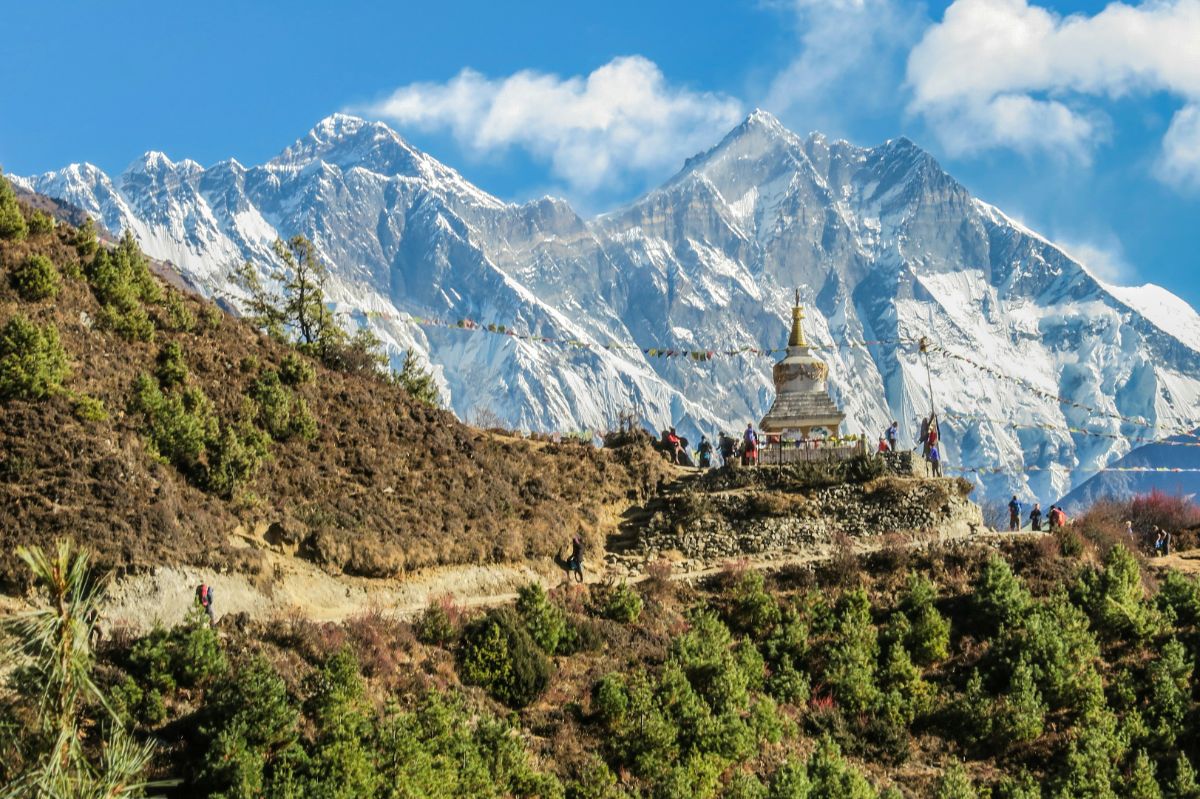
Nepal doesn’t just look different on a map. It thinks differently because of that map. When you understand how mountains, hills, valleys, and plains shape daily life here, Nepali attitudes toward time, effort, patience, risk, and community start to make sense. Geography in Nepal isn’t background. It’s the quiet force behind how people move, decide, and relate to the world.
This is not abstract. You feel it the moment you start traveling through the country.
Why geography matters more in Nepal than most places?
Because geography is unavoidable here, Nepal rises from near sea level to the world’s highest mountains in a short horizontal distance. Roads bend, disappear, and reappear. Weather changes fast. Access is never guaranteed.
In many countries, infrastructure overcomes geography. In Nepal, people adapt to it instead. That adaptation shapes mindset. You plan less rigidly. You accept uncertainty. You measure effort realistically rather than optimistically.
The land sets the tone, not the other way around.
How mountains shape patience and perspective?
Living among mountains teaches a long view. Nothing happens quickly when terrain decides the pace. A short distance can take hours. A delayed journey isn’t failure. It’s expected.
This is why impatience feels out of place in Nepal. People learn early that pushing harder doesn’t always get results. Waiting, adjusting, and trying again tomorrow often works better. Mountains train people to think in terms of endurance rather than speed.
That mindset extends beyond travel. It influences work, relationships, and problem-solving.
Why distance in Nepal is felt, not measured
In Nepal, distance isn’t counted in kilometers. It’s counted in time, effort, and energy. Two places close on a map can feel far apart if terrain intervenes. Two places far apart can feel connected if movement is familiar.
This changes how people plan. You don’t ask how far something is. You ask how long it takes and what conditions are like. Geography teaches practical thinking over theoretical thinking.
This is also why visitors often underestimate travel here. Locals don’t. They’ve learned to respect land rather than challenge it.
How hills and valleys encourage community thinking
Hills and valleys create natural pockets of life. Villages form where land allows, not where grids make sense. Access can be limited. Neighbors matter.
In these environments, self-reliance exists alongside deep interdependence. You learn to do many things yourself, but you also rely on others when terrain makes independence impossible. This balance shapes a collective mindset that values cooperation without constant coordination.
Community isn’t romantic here. It’s practical.
What living between extremes does to decision-making
Nepal stretches from tropical plains to alpine regions. People are constantly adjusting to contrast. Heat to cold. Flat to vertical. Scarcity to abundance depending on season and location.
This teaches flexibility. Fixed expectations don’t survive long. Decisions are made with contingencies in mind. People expect plans to change and rarely treat that as a crisis.
That adaptability is one reason Nepalis often appear calm in situations that unsettle visitors. Uncertainty is familiar territory.
Why risk is understood differently in Nepal?
Geography introduces real risk into daily life. Landslides, floods, snow, and weather shifts are not rare events. They are part of lived experience.
This produces a nuanced attitude toward risk. People don’t ignore it, but they don’t dramatize it either. Caution exists alongside acceptance. You prepare where possible and accept what can’t be controlled.
This outlook influences everything from travel choices to farming to business decisions. Risk is weighed against reality, not ideal outcomes.
How geography shapes work ethic without glorifying struggle
Work in Nepal is often physical and terrain-dependent. Effort is visible. Carrying, climbing, walking, and waiting are part of daily labor.
This creates respect for effort rather than obsession with speed. Hard work is normal, not performative. Complaining doesn’t change terrain. You do what’s needed and rest when you can.
This is why Nepali resilience often looks quiet. Strength isn’t announced. It’s practiced.
Why time feels different across the country
Time in Nepal stretches and compresses depending on location. In remote areas, time follows daylight, weather, and season. In cities, it bends around traffic, festivals, and social obligations.
Geography prevents full synchronization. This makes Nepalis comfortable with flexible timing. Being late is rarely moralized. Context matters more than clocks.
For travelers used to precision, this can feel frustrating. For locals, it feels logical.
How geography influences humility
Mountains dwarf everything. Rivers erase roads. Weather overrides plans. Nature asserts itself constantly.
Living with that reality encourages humility. Not submission, but awareness. People understand their place within a larger system they don’t fully control. This shapes how success, failure, and ambition are viewed.
Achievement is respected. Arrogance isn’t.
Why this mindset stays with travelers
Travelers who spend real time in Nepal often leave with a changed relationship to control. The land teaches indirectly. You stop forcing outcomes. You adapt. You observe. You recalibrate expectations.
This shift doesn’t happen because someone explains it. It happens because geography makes resistance exhausting and attention rewarding.
Nepal doesn’t persuade. It demonstrates.
What understanding this changes about your visit
When you recognize geography as the quiet architect of Nepali thinking, many things click into place. Delays feel less personal. Flexibility feels wiser than frustration. Conversations make more sense.
You stop comparing Nepal to how things work elsewhere and start understanding it on its own terms. That’s when the country opens up.
Staying somewhere that reflects this calm, grounded approach helps travelers settle into the rhythm, and places like Boudha Mandala Hotel offer a thoughtful base for exploring Nepal with patience rather than pressure.