
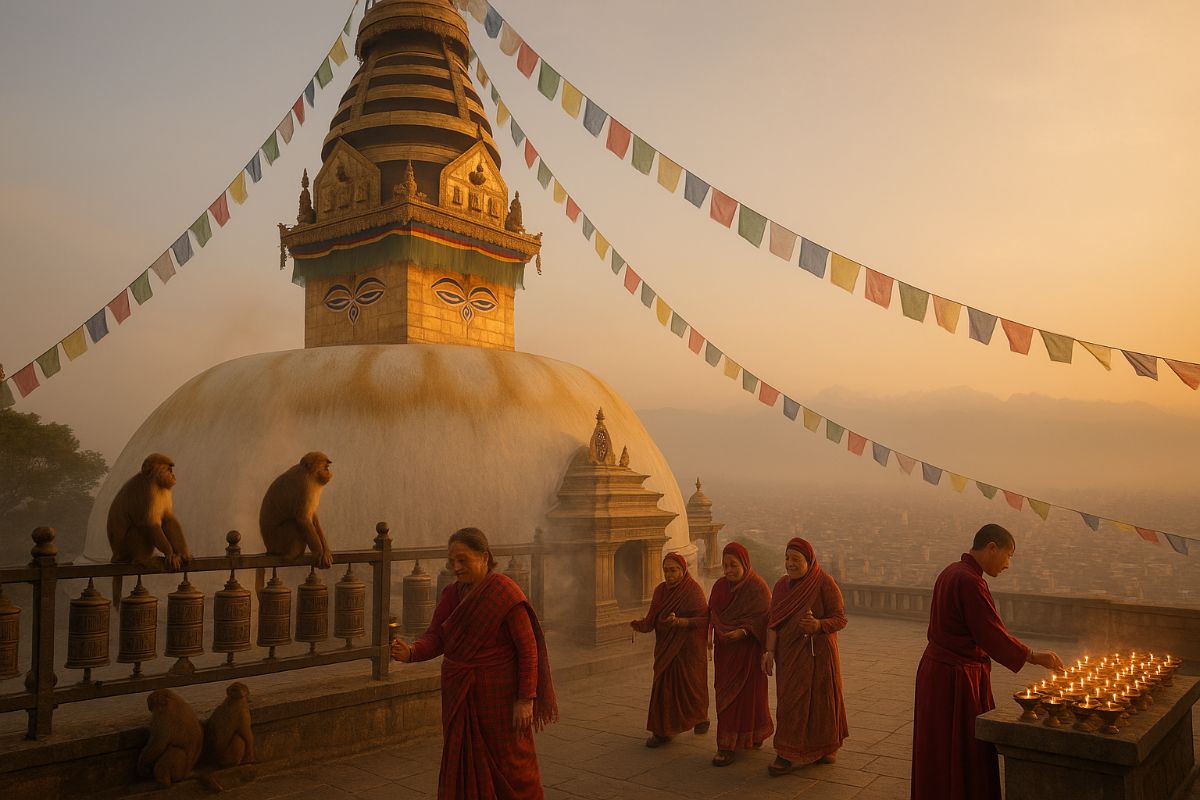
Kathmandu holds a quiet kind of spiritual energy that’s easy to sense but hard to understand at first. You see temples everywhere, people lighting lamps, monks walking with prayer beads, and rituals happening in open spaces. It can feel confusing if you don’t know where to begin. The good news is that you don’t need special knowledge to experience it in a genuine way. You just need simple steps and a calm approach.
Where should you start if you want to understand spirituality in Kathmandu?
You should start by visiting one major spiritual site early in the morning, when everything feels calm and open.
Morning shows the real rhythm of spirituality in Kathmandu. You see how locals pray, how monks move, and how energy around temples shifts from quiet to more active as the day starts.
Good starting points
• Boudhanath Stupa for Tibetan Buddhism
• Swayambhunath for a blend of Buddhism and Hindu elements
• Pashupatinath Temple for Hindu rituals
• Patan’s monastery courtyards for a quieter setting
Each place teaches you something different without needing explanations.
How can you experience a temple or stupa without feeling out of place?
You can experience a temple or stupa without feeling out of place by observing first and joining gently.
Most people worry about doing something wrong. You don’t need to. Locals care more about your respect than your knowledge of rituals.
Simple ways to feel comfortable
• Walk clockwise around stupas
• Keep a soft tone when speaking
• Remove shoes when entering inner areas
• Step aside during active rituals
• Watch how locals move and follow their cues
These small habits help you blend in naturally.
What rituals will you see in Kathmandu and what do they mean?
The rituals you see in Kathmandu usually include lighting butter lamps, spinning prayer wheels, offering flowers, chanting, and walking in circular paths around sacred sites.
Each ritual has meaning, but travelers don’t need full explanations to appreciate them. Watching with attention can feel grounding.
Common rituals you’ll notice
• Butter lamps meant as offerings for clarity and compassion
• Prayer wheels are believed to release mantras into the air
• Kora, the clockwise walk around sacred structures
• Incense offerings for purification
• Chanting inside monasteries
Seeing these up close gives you a clear sense of how spirituality shapes daily life.
Which places in Kathmandu feel the most spiritual for quiet moments?
Places in Kathmandu that feel the most spiritual for quiet moments include monasteries, inner courtyards, and early-morning stupa paths.
Some spots feel peaceful even when crowded because the energy stays focused and gentle.
Calm spiritual locations
• The upper walkways of Boudhanath Stupa
• The back courtyards of Swayambhunath
• Monastery gardens in Boudha
• Patan’s surrounding monastery lanes
• Small chapels around Pashupatinath
These areas give you time to breathe and sit without pressure.
How can you learn respectfully while visiting monasteries?
You can learn respectfully while visiting monasteries by entering slowly, observing quietly, and following simple manners that locals appreciate.
Monasteries welcome visitors, but they work best when you move with awareness.
Helpful habits
• Pause at the doorway before entering
• Sit quietly if monks are chanting
• Avoid stepping over prayer books
• Keep your phone silent
• Ask before taking photos
These small details show respect for the space.
How can travelers understand Tibetan and Hindu symbolism without guides?
Travelers can understand Tibetan and Hindu symbolism by focusing on a few key elements instead of trying to decode everything.
Kathmandu is full of symbols. You don’t need to know the full history to gain insight.
Look for these simple elements
• Eyes on stupas representing awareness
• Prayer flags meant to spread good intentions
• Carved deities showing protection or wisdom
• Mandalas symbolizing balance
• Bells marking the start or end of ritual moments
Understanding even three or four symbols makes the whole environment feel clearer.
How can visitors avoid feeling overwhelmed by spiritual sites?
Visitors can avoid feeling overwhelmed by visiting fewer places, staying longer at each one, and choosing calmer times.
Trying to see too much creates stress. Staying with one moment creates meaning.
Ways to keep things easier
• Pick one or two sites per day
• Visit early mornings or late evenings
• Sit for a few minutes before walking
• Watch rituals without rushing
• Take breaks for tea or quiet walks
Slow travel works best for Kathmandu’s spiritual side.
What simple route can travelers follow to explore spirituality in a single day?
A simple route travelers can follow begins at a stupa, continues to a monastery, and ends at a Hindu site in the afternoon.
This mix gives you a full picture of how spirituality flows through the city.
Suggested day route
• Start at Boudhanath Stupa for morning kora
• Visit a nearby monastery to listen to chanting
• Stop for tea and a slow break
• Head to Pashupatinath for afternoon rituals
• End at Swayambhunath for sunset views
This route keeps the day calm while giving you depth.
Why does ending your spiritual day in Boudha feel so grounding?
Ending your spiritual day in Boudha feels grounding because the neighborhood holds a soft atmosphere that stays steady from morning to night.
The stupa lights up, the chanting continues, and the walking path remains active but peaceful.
Evening feelings in Boudha
• Warm lights
• Quiet corners
• Monks heading to evening prayers
• Tea stalls still open
• Calm energy all around
It’s one of the easiest places in Kathmandu to unwind after a day of exploring.
Why is Boudha Mandala Hotel a good base for exploring the city’s spiritual side?
Boudha Mandala Hotel is a good base for exploring the city’s spiritual side because it sits within a short walk of Boudhanath Stupa and several monasteries, with easy access to taxis for the rest of Kathmandu.
Travelers appreciate having a quiet place to start and end their days, especially when exploring spiritual sites that rely on calm energy.
What the location offers
• A two minute walk to the stupa
• Close access to monasteries for morning visits
• Peaceful nights after long days
• Simple routes to Pashupatinath and Swayambhu
• A steady, gentle neighborhood atmosphere
For anyone who wants to experience Kathmandu’s spiritual side without feeling overwhelmed, Boudha is the right place to stay.