
Key Takeaways
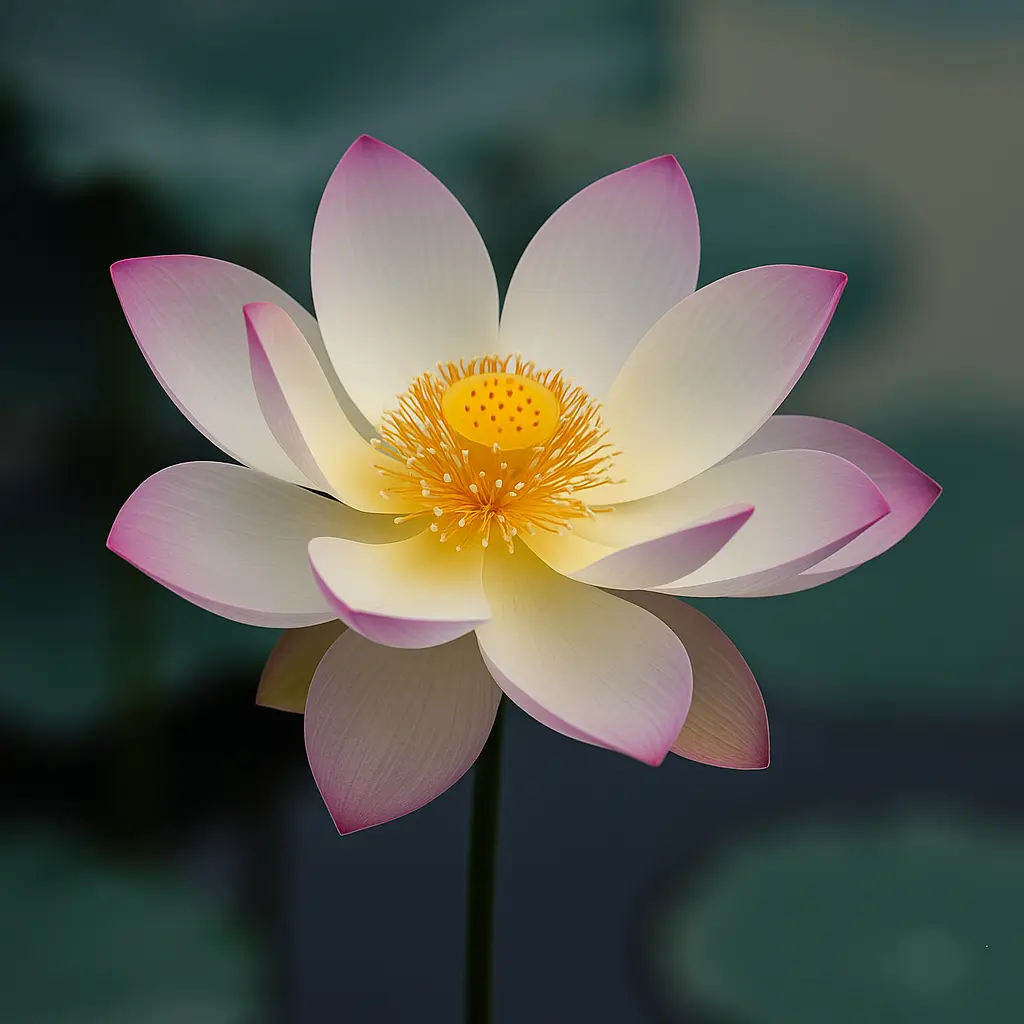
• The lotus flower in Buddhism symbolizes spiritual awakening, purity, and transformation
• It rises unstained from muddy waters, representing the path from ignorance to enlightenment
• Lotus imagery appears in statues, mantras, rituals, and meditation postures across Buddhist traditions
• The mantra Om Mani Padme Hum includes the lotus as a symbol of wisdom and compassion
• Different lotus colors carry different meanings, white for purity, pink for the historical Buddha and blue for wisdom
• Practicing with lotus symbolism can inspire resilience, calm, and presence in everyday life
Why the Lotus Matters in Buddhism
The lotus is more than a flower. It is a teaching, a metaphor, and a quiet revolution against despair. In the natural world, the lotus grows in still, muddy waters. Its roots are buried deep in the murk, yet the blossom rises untouched, blooming in the sunlight.
In Buddhist thought, this image is not a poetic accident. It reflects the very nature of the human path. We all begin in confusion, attachment, and suffering. But through practice, we rise,not by fleeing the mud, but by transforming through it.
That is why, in nearly every Buddhist tradition, the lotus is revered. It is the flower of awakening.
The Lotus as a Symbol of Spiritual Awakening
The Buddha is often shown seated upon a lotus. It is not meant to elevate him from the world, but to show his mastery of it. He did not escape suffering. He understood it deeply, and from that mud, clarity bloomed.
In Vajrayāna Buddhism, the lotus appears everywhere. The great teacher Padmasambhava, credited with bringing Buddhism to Tibet, is literally named “the Lotus-Born”. His life story begins not in a palace, but as a miraculous birth from a lotus on a lake.
When we see the lotus under the Buddha or cradling deities in thangka paintings, it reminds us: this, too, is possible for us. Enlightenment is not for the perfect. It is for the human.
Lotus Imagery in Meditation, Mantras, and Ritual
The lotus position (padmāsana) used in meditation is not just ergonomic. It reflects stability rooted in the earth, with openness at the crown. Like the lotus itself, the posture balances groundedness with spaciousness.
In chanting, the lotus also blooms. The most famous mantra in Tibetan Buddhism, Om Mani Padme Hum, translates loosely to “the jewel in the lotus.” The jewel is compassion, the lotus is wisdom. The phrase itself carries the complete intention of the Mahāyāna path.
As Tricycle explains in their deep dive on Om Mani Padme Hum, each syllable purifies aspects of our mind, helping us to unfold like the flower it praises.
Even lighting incense or placing a single lotus on an altar becomes a gesture of rising from the ordinary toward the sacred.
What the Different Lotus Colors Mean
In Buddhist iconography, color carries energy. The lotus is no exception. Each color reflects a specific quality of mind or spiritual stage.
• White lotus: Symbolizes spiritual purity, emptiness, and the awakened mind
• Pink lotus: Represents the historical Buddha and the supreme state of enlightenment
• Red lotus: Signifies heart-centered qualities like love, compassion, and emotional devotion
• Blue lotus: Associated with wisdom, intelligence, and insight into the true nature of reality
• Purple lotus: Rare and mystical, linked to esoteric teachings and hidden knowledge
These aren’t rigid categories. Sometimes, a flower simply speaks to you, regardless of color. The point is presence, not perfection.
For a trustworthy overview of these meanings, Learn Religions provides a detailed breakdown of lotus symbolism across Buddhist schools.
Lotus in Buddhist Art and Architecture
Walk into any monastery around Boudhanath, and you’ll see the lotus everywhere.
It forms the base of Buddha statues, suggesting that enlightenment rests on resilience. It’s woven into the painted mandalas of shrine rooms, used in offering bowls, carved into thrones, and shaped into butter lamp holders.
In temples across Nepal, India, Bhutan, Thailand, and beyond, the lotus is not a decoration. It is Dharma in visual form. It reminds practitioners that spiritual practice must grow from where we actually are mud, confusion, busy minds and from that, the sacred can rise.
Even the Boudhanath Stupa itself, viewed from above, forms a giant mandala that includes petal-like architecture around the base. The city moves around it, yet it remains still. Like a lotus, it holds space.
How You Can Practice With the Lotus in Daily Life
You don’t need to sit in a monastery to live with lotus energy. You can carry it into your morning routine, your workplace and your silence before sleep.
You might:
• Begin your day with one breath, imagining yourself rising like a lotus from any emotional mud
• Offer a flower or visualization of a lotus on your home altar
• Reflect on the mantra Om Mani Padme Hum, letting it unfold your heart
• Simply pause when life feels thick, and ask, “How would the lotus respond?”
The lotus does not rush. It grows slowly, rooted yet reaching. In a world that demands speed, its wisdom is radical.
Final Thoughts
The lotus is beautiful not in spite of the mud, but because of it. Its story is ours.
In Buddhist hospitality, we often welcome people who arrive not with answers, but with quiet questions. Sometimes they’ve left everything behind, hoping for peace. Sometimes they’re just curious.
And again and again, we return to the lotus. It doesn’t demand that you become pure first. It says, “Begin here. In this mess. This confusion. This longing.”
That is the invitation of Buddhism. That is the teaching of the flower.
Begin Your Journey Where the Lotus Blooms
If you are visiting Kathmandu to explore the spiritual path or simply seeking space to reconnect, staying near the sacred stupas and monasteries can open the way inward.
At Boudha Mandala Hotel, we offer more than rooms. We offer a quiet space to breathe, reflect, and bloom, just seconds from one of the world’s most revered stupas.
If you’re searching for the best hotel in Boudha, we hold a space where the flower of stillness has room to open.