
Key Takeaways
• Major travel publications consistently recommend Boudha as one of Kathmandu’s most authentic neighborhoods for spiritual travelers
• Staying near Boudhanath Stupa offers 24-hour access to sacred rituals without the noise and chaos of Thamel
• Travel experts praise Boudha’s walkability, safety, and genuine Tibetan Buddhist community
• The neighborhood is highlighted for its meditation centers, monasteries, and rooftop cafés with stupa views
• Accommodations in Boudha offer better value and character than tourist-heavy areas
• Digital nomads and long-term travelers are increasingly choosing Boudha for its peaceful work environment and reliable infrastructure
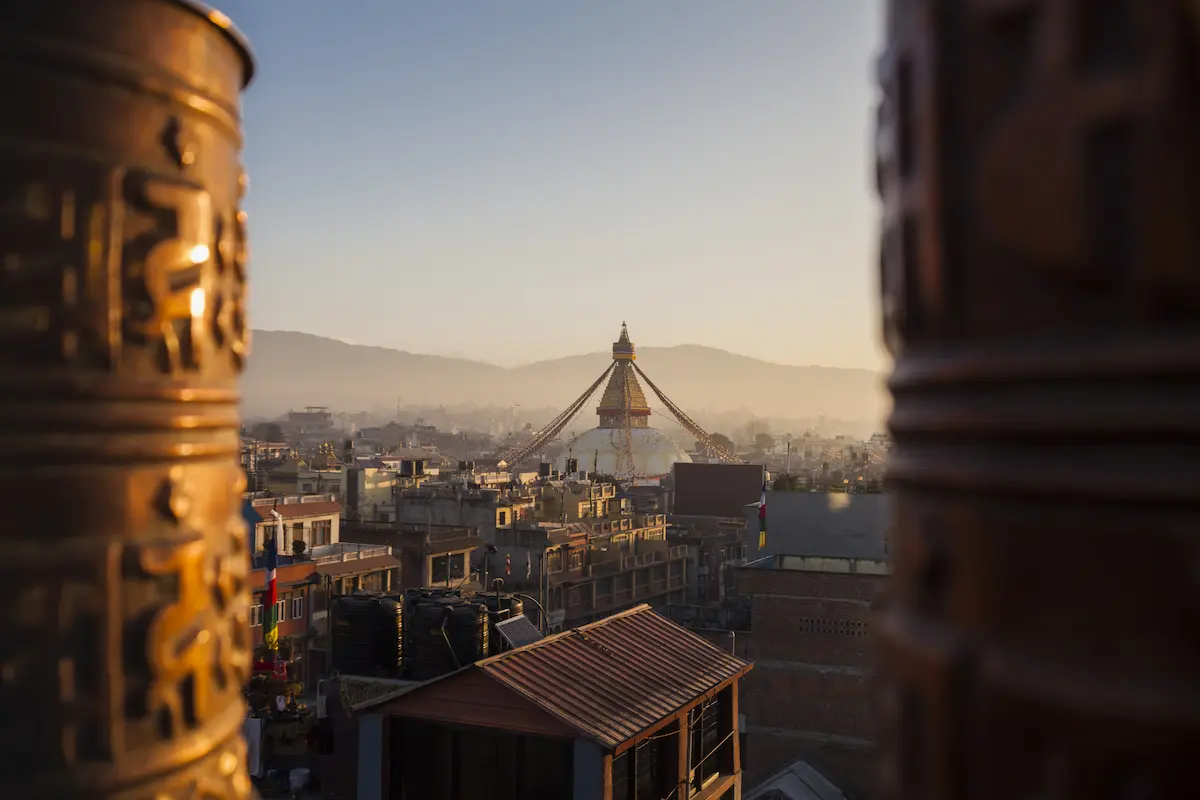
You wake to the sound of prayer wheels turning, their soft metallic hum mixing with the low murmur of mantras. The air carries incense and something else, something harder to name. Maybe it’s devotion, or maybe just the particular quality of morning light that falls on ancient stones.
This is what it means to stay in Boudha, not just visit it. While most travelers book rooms in Thamel and day-trip to Boudhanath Stupa, the travel writers and cultural guides who know Nepal best tell a different story.
They suggest something quieter, something that asks a little more of you. They suggest you stay here, in this neighborhood where the rhythm of life still follows the turning of prayer wheels, not the honking of tourist buses.
So what exactly do publications like Lonely Planet and Culture Trip say about choosing Boudha as your base in Kathmandu?
Why Travel Experts Recommend Boudha Over Thamel
Thamel has its place. It’s convenient, packed with restaurants, and you can buy trekking gear at 2 AM if you really need to. But it’s also loud, relentless, and designed for people passing through, not people paying attention.
Boudha offers something Thamel can’t: a sense of place that doesn’t perform for tourists. The neighborhood wraps around the stupa like a mandala, with narrow lanes radiating outward, each one revealing small monasteries, thangka workshops, and rooftop cafés where you can sit for hours without anyone rushing you to order more.
The stupa itself is open 24 hours, but it transforms depending on when you visit. Dawn brings the devout, dusk brings the contemplative, and if you’re staying nearby, you can experience both without the logistical gymnastics of crossing the city twice a day.
Learn more about the best time to visit Boudhanath to plan your experience around the stupa’s most powerful moments.
If you’re wondering where to base yourself for an authentic Kathmandu experience, we invite you to stay with us at Boudha Mandala Hotel.
Our rooms open onto the stupa’s energy, not away from it. You’ll hear the morning chants from your bed, watch butter lamps flicker from the rooftop, and step into the kora path in less than a minute. Book directly with us and save on booking platform fees, you get the same room for less, plus our team’s local knowledge included.
What Makes Boudha Different: A Neighborhood Built Around Ritual
Travel guides note that Boudha’s layout itself encourages mindfulness. The circular kora path around Boudhanath Stupa is the neighborhood’s heartbeat, and everything else, shops, monasteries, guesthouses, pulses in relation to it. You don’t visit the stupa here. You orbit it.
The experience of walking the kora at different times of day is one of Kathmandu’s most grounding rituals. Early morning walkers move clockwise in near silence, spinning prayer wheels, their breath visible in the cool air. By evening, the path fills with families, monks in maroon robes, and travelers who’ve learned to slow their pace to match the rhythm around them.
Boudha isn’t a single attraction but an ecosystem of spiritual practice. Within a ten-minute walk of the stupa, you’ll find meditation centers offering drop-in sessions, sacred monasteries where foreigners are quietly welcomed to observe pujas, and small shrines where locals leave offerings of rice and marigolds.
This isn’t the kind of place you check off a list. It’s the kind of place that asks you to sit down, be still, and notice what happens when you do.
Tibetan Culture Without the Filter
After the 1959 Tibetan uprising, thousands of refugees settled in Boudha, bringing with them centuries of Buddhist tradition, art, and practice. What resulted is one of the most vibrant Tibetan communities outside Tibet itself.
Travel writers consistently point to this cultural richness as Boudha’s defining feature. You’ll find thangka painters working in open studios, their brushes moving with the precision of meditation. Tibetan restaurants serve momos and thukpa recipes passed down through generations. Shops sell singing bowls, prayer flags, and malas, not as souvenirs but as tools for practice.
Boudha offers something rare: authenticity without gatekeeping. Monks will explain the meaning of mantras if you’re curious. Shopkeepers will tell you the proper way to hang prayer flags and light butter lamps.
There’s a generosity here that comes from confidence, not performance.
You can experience authentic local culture in Boudha simply by being present, by showing up with curiosity instead of a checklist. From our balcony at Boudha Mandala Hotel, mornings begin with soft chants and golden light. You’re not watching Tibetan Buddhist culture from the outside. You’re living alongside it.
Practical Reasons Travel Guides Recommend Staying in Boudha
Walkability and Safety
Boudha is consistently rated as one of Kathmandu’s safest and most walkable neighborhoods, particularly for solo travelers and women. The streets are well-lit, the community is tight-knit, and there’s a natural flow of people at all hours due to the stupa’s 24-hour accessibility.
Even after recent protests in Kathmandu, Boudha has remained a peaceful sanctuary.
You can walk from one end of Boudha to the other in about 15 minutes. Every turn reveals something worth pausing for. A monastery courtyard where monks debate philosophy. A rooftop café with views of the stupa’s all-seeing eyes. A small shrine where butter lamps flicker in rows, each one a prayer made visible.
Access to Authentic Experiences
Staying in Boudha gives you access to experiences that day-trippers simply can’t have. You can attend early morning pujas at Boudhanath, where the sound of horns and drums fills the prayer hall. You can join meditation sessions at nearby centers, where teachers welcome beginners with patience and humor.
You can also just sit. On the stupa steps at sunset, watching the light turn the white dome golden. In a café with a book you’re not really reading. On a bench while prayer wheels spin beside you, turned by hands that have been turning them for decades.
These aren’t activities you can schedule. They’re rhythms you fall into when you’re not rushing to the next thing.
Better Value and Character
While Thamel’s hotels cater to trekkers and tour groups, Boudha’s accommodations tend to be smaller, quieter, and more thoughtfully designed. Travel guides point out that you often get more character and better value here, whether you’re staying in a family-run guesthouse or a boutique hotel. Read more about the differences between guesthouses, boutique hotels, and monastery stays to understand your options.
The focus isn’t on luxury for its own sake but on creating spaces that honor the neighborhood’s spirit. Rooftop terraces face the stupa. Courtyards are designed for quiet conversation. Rooms are simple but intentional, with details that show someone cared about how the space feels, not just how it photographs.
Why Digital Nomads are Choosing Boudha
Travel publications have started noticing another trend: digital nomads choosing Boudha over Thamel for long-term stays. The neighborhood offers reliable Wi-Fi, peaceful work environments, and a cost of living that makes extended stays feasible.
But more than that, Boudha offers something harder to quantify: a rhythm that supports creative work. The morning kora clears your mind before you open your laptop. The afternoon light on the stupa reminds you to look up from the screen. The evening chants signal it’s time to close the work and open the evening.
Boudha attracts a particular kind of traveler, the kind who wants to work remotely without losing connection to place, who values community over nightlife, who understands that productivity and peace aren’t opposites.
At Boudha Mandala Hotel, we’ve designed every corner with this philosophy in mind. Our apartment-style accommodations offer the space and comfort digital nomads need, with dedicated work desks, high-speed fiber internet, and 24-hour power backup. Our rooftop and courtyard preserve the contemplative atmosphere spiritual seekers come here to find. Over 60% of our guests extend their original booking, many staying for weeks or months.
Planning Your Stay in Boudha
Best Time to Visit
October through March offers the clearest skies and most comfortable temperatures, with mornings cool enough for a shawl and afternoons warm enough for rooftop tea. Monsoon season, June through September, brings afternoon rains but also fewer crowds and a particular kind of green stillness.
If you’re planning around festivals, Losar, Tibetan New Year in February or March, transforms Boudha into a celebration of color, music, and ceremonial dance. Buddha Jayanti in May brings thousands of pilgrims, and the stupa is draped in prayer flags and marigold garlands. Explore Buddhist festivals to time your visit with these sacred celebrations.
Getting There
Boudha is about 6 kilometers from Thamel and 8 kilometers from Tribhuvan International Airport. A taxi takes 20 to 30 minutes depending on traffic, and costs around 500 to 700 Nepali rupees. Read our detailed guide on how to get from Tribhuvan Airport to Boudha for step-by-step directions and transport options.
Once you’re here, you won’t need much transportation. Everything worth experiencing is within walking distance, and part of Boudha’s gift is that it encourages you to slow down enough to walk.
Etiquette and Respect
Always walk the kora clockwise, keeping the stupa on your right. Dress modestly when visiting monasteries, covering shoulders and knees. Remove shoes before entering prayer halls. If you’re photographing, be discreet and ask permission when photographing people, especially monks.
Butter lamps can be lit at small shrines around the stupa for a donation of 20 to 50 rupees. Prayer flags are sold nearby, and if you’d like to hang them, ask a local about the proper way and the best day, traditionally Tuesdays and Fridays are considered auspicious.
What Artists and Writers Say About Boudha
Beyond the mainstream travel guides, Boudha has long been a magnet for artists, poets, and monks. The neighborhood’s creative energy is palpable, from the thangka painting studios to the poets who’ve found inspiration walking these same streets.
There’s something about the combination of stillness and aliveness here that opens creative channels. Maybe it’s the way time moves differently when you’re circling a stupa. Maybe it’s the constant reminder, in the form of prayer wheels and butter lamps, that everything is impermanent, so you might as well create while you can.
Comparing Boudha and Thamel: What Travel Guides Won’t Tell You
Here’s what most guidebooks gloss over: Boudha isn’t perfect. The streets can flood during heavy monsoon rains. You’ll hear construction occasionally. Some shops close early. The restaurant scene, while authentic, isn’t as diverse as Thamel’s international options.
But these aren’t flaws, they’re trade-offs. What you lose in 24-hour convenience, you gain in 24-hour access to something most travelers spend their whole lives searching for: a sense of belonging to a place that doesn’t need you to validate it.
Thamel performs. Boudha simply is.
If you want to party until 3 AM, book Thamel. If you want to wake at 5 AM and walk the kora with monks who’ve been doing it for 40 years, stay in Boudha. Both are valid. Just know what you’re choosing.
Conclusion
The prayer wheels never stop turning here, and neither does life’s quiet rhythm. Maybe that’s why everyone who visits Boudha leaves a little lighter.
Travel writers return to the same themes when they write about this neighborhood: authenticity, stillness, and a sense of being held by something larger than yourself. It’s not that Boudha is perfect or untouched by modernity. It’s that the things that matter here, devotion, community, the turning of prayer wheels, continue regardless of who’s watching.
Travel guides can tell you where to stay and what to see. But what they’re really pointing toward is something you can only understand by being here. By waking to the sound of morning chants.
By walking the kora until your mind stops narrating and just walks. By sitting on a rooftop as the light fades and realizing you’ve been still for an hour without checking your phone once.
That’s what staying in Boudha offers. Not a list of attractions, but a different way of moving through the world, even if just for a few days.
Related Guides
Best Restaurants and Cafes in Boudha
Hidden Gems for Travelers Around Boudha
Instagram-Worthy Spots Around Boudha Stupa
Where to Find Handcrafted Art and Souvenirs in Boudha
Famous People Who Visited Boudha
FAQs
What do travel guides say is the best thing about staying in Boudha?
The consistent answer is proximity to authentic spiritual practice. Unlike staying in Thamel and visiting the stupa as a day trip, staying in Boudha lets you experience the neighborhood’s rhythms at dawn and dusk, when the atmosphere is most powerful and the crowds are thinnest.
Is Boudha safe for solo travelers?
Yes. Travel guides consistently rate Boudha as one of Kathmandu’s safest neighborhoods, with well-lit streets, a strong sense of community, and a welcoming atmosphere for solo travelers, particularly women. The constant flow of pilgrims and monks around the stupa means the area never feels deserted.
How far is Boudha from Kathmandu’s main tourist area?
Boudha is about 6 kilometers from Thamel, roughly 20 to 30 minutes by taxi depending on traffic. Many travelers appreciate this distance, it’s close enough for convenience but far enough to feel like a completely different experience.
Can I visit monasteries and meditation centers if I’m not Buddhist?
Absolutely. Most monasteries in Boudha welcome respectful visitors, and many meditation centers offer drop-in sessions or beginner courses. The community here is generous with knowledge and practice, as long as you approach with genuine curiosity and respect.
What’s the best time of day to experience Boudhanath Stupa?
Dawn and dusk are transformative. Early morning, around 6 AM, brings serious practitioners and a meditative quiet. Evening, just before sunset, offers golden light and a more social atmosphere as families complete their koras together. Staying nearby means you can experience both without rushing.