Boudha Stupa (Boudhanath) Visitor Guide: What to Know Before You Go

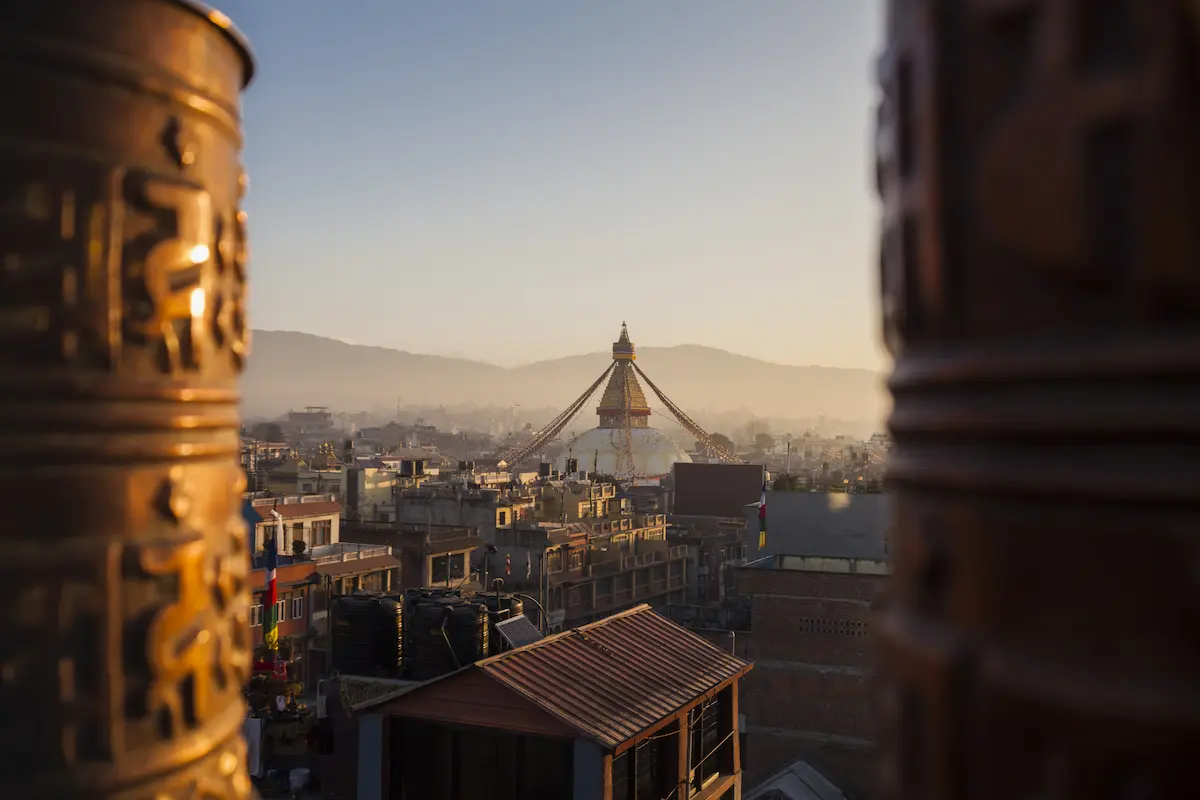
Boudha Stupa is part of the UNESCO-listed Kathmandu Valley World Heritage Site and one of Kathmandu’s most iconic Tibetan Buddhist pilgrimage landmarks. Known for its giant white dome, all-seeing Buddha eyes, prayer wheels, and the daily kora (clockwise circumambulation), Boudhanath is one of the best places in the city for cultural immersion in a powerful spiritual atmosphere, especially outside peak festival times.

Tip: For an easy sunrise visit, staying in the Boudha neighborhood lets you walk over before the crowds and traffic build. Boudha Mandala Hotel is located near Boudhanath Stupa, making early-morning and evening visits effortless.

Boudhanath Stupa quick visitor essentials

  • Where: Boudha, Kathmandu (near Tribhuvan International Airport)
  • Best time to visit: dawn or sunset
  • What to do: kora (clockwise; keep the stupa on your right), spin prayer wheels, light butter lamps, visit nearby monasteries
  • Ticket: required for non-Nepali visitors (SAARC discounted); Nepalis and children under 10 enter free


1. Boudhanath Stupa at a Glance (Quick Facts for Visitors)

Boudhanath sits in the Boudha neighborhood of Kathmandu, a short ride from Tribhuvan International Airport. It’s among the world’s largest stupas and the spiritual heart of Tibetan Buddhism in Nepal, especially vibrant at dawn and dusk when locals, monks, and visitors circle the stupa with prayer beads and spinning wheels.

Quick facts (visitor-friendly):

  • Location: Boudha, ~6–8 km northeast of central Kathmandu
  • Entry fee: NPR 400 (foreign nationals), NPR 100 (SAARC), free for Nepalis and children under 10
  • Access & hours (important distinction):
  • Stupa area/plaza: often accessible very early and late
  • Ticketed entry points/booths: typically run morning to evening (commonly reported around ~5:00 AM–9:00 PM, but can vary; booths may close earlier)

For the most peaceful experience (and best photos), arrive early before the plaza fills or come near sunset when butter lamps glow and chanting drifts from nearby monasteries.

2. Why Boudhanath Is a UNESCO World Heritage Site

Boudhanath is recognized by UNESCO as one of the seven “Monument Zones” that make up the Kathmandu Valley World Heritage property, inscribed in 1979. In the UNESCO listing, Boudhanath is singled out as the largest stupa in Nepal, an extraordinary religious ensemble that still functions as a living pilgrimage site rather than a museum piece.

UNESCO highlights the Valley’s Outstanding Universal Value through its rare concentration of sacred architecture, exceptional craftsmanship, and continuous cultural life. The Kathmandu Valley inscription is based on criteria (iii), (iv), and (vi) recognizing it as an exceptional testimony to the Valley’s civilization and Newar traditions, an outstanding set of architectural ensembles, and a place deeply tied to rituals, legends, and festivals in Boudha. UNESCO also notes that the integrity of these monument zones is safeguarded within formally defined boundaries (with a boundary modification accepted in 2006).

Boudhanath embodies those values in a single, instantly recognizable landmark: its massive white dome and gilded tower with the all-seeing Buddha eyes express powerful Buddhist symbolism, while the daily rhythm of prayer, circumambulation (kora), and monastic life keeps the heritage actively practiced.

3. History of Boudhanath Stupa (Origins, Legends, and Timeline)

The history of Boudhanath blends verifiable records with powerful sacred storytelling. Many visitor-facing histories date the stupa to around the 5th century CE, during the Licchavi era, when Kathmandu Valley was emerging as a major Buddhist crossroads. Its location mattered: Boudha lay along historic trade and pilgrimage routes linking Tibet and the Kathmandu Valley, making it a natural place for merchants and pilgrims to rest, pray, and exchange culture.

Local and Tibetan traditions add the legends that made Boudhanath unforgettable. One of the best-known stories tells of Jhazima (or Jyazima) a poor widow/poultry keeper who requested land “as big as a buffalo skin,” then cleverly cut it into a long strip to mark out enough space to build the stupa. In Tibetan Buddhism, this origin myth is closely tied to the name Jarung Khashor and the idea that devotion (not wealth) can create a monument of immense merit.

4. Architecture and Symbolism (Dome, Mandala, Buddha Eyes, Prayer Flags)

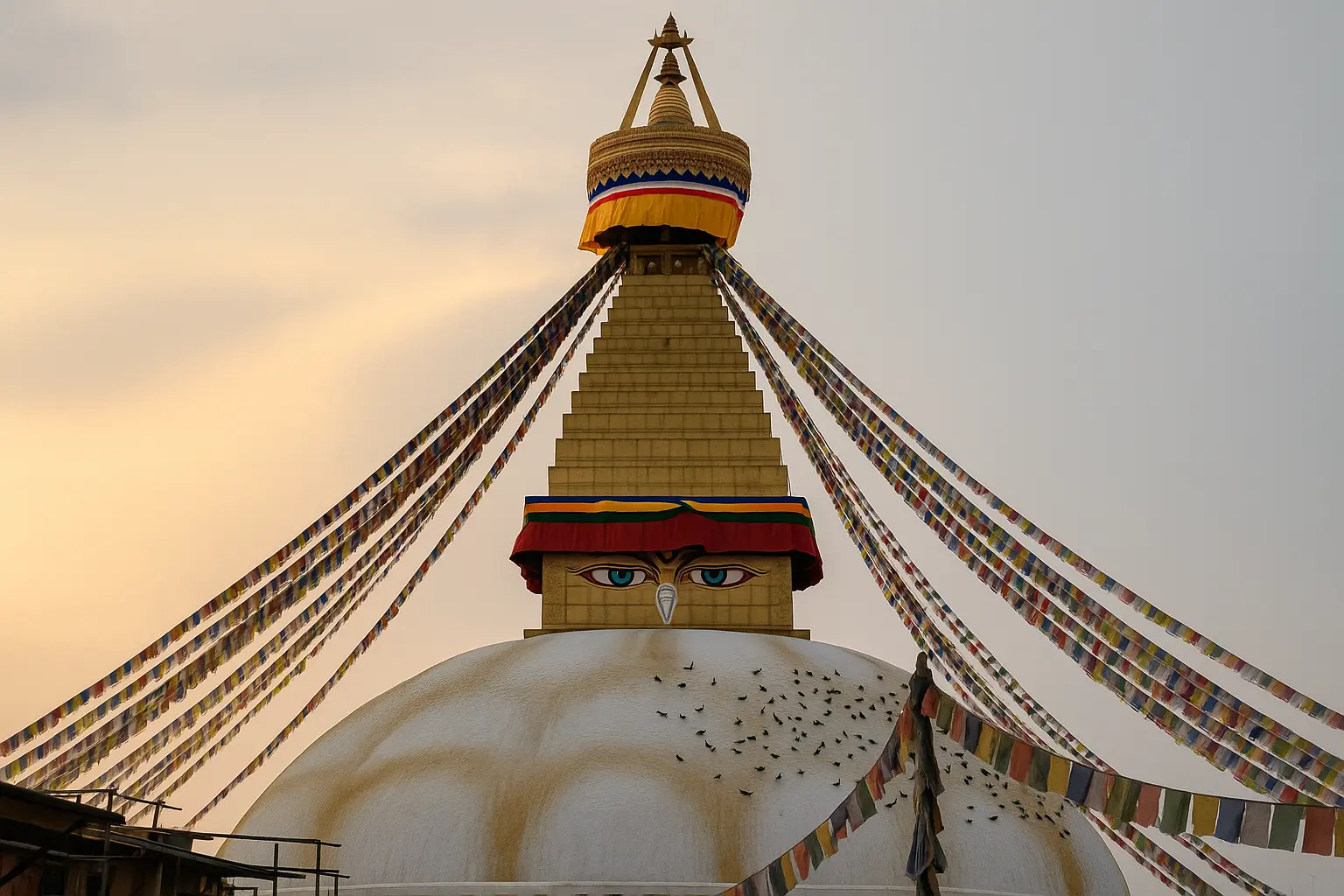
Boudhanath’s design is often described as a three-dimensional mandala, a sacred map of the universe built as a massive white hemispherical dome crowned by a square tower (harmika) and a gilded spire. The harmika, clad in gilded metal, features the Buddha’s all-seeing eyes painted on each side.

Symbolically, every layer reads like a visual teaching. The mandala base represents the ordered cosmos and the spiritual path; the dome is often explained as the universe or a “treasure vase” of blessings; the harmika is the “seat” of enlightened mind; and the 13 steps on the spire are commonly interpreted as progressive stages toward awakening. The famous Buddha Eyes looking out in all directions reinforce the idea of wisdom and awareness that sees beyond appearances.

Prayer flags strung around the stupa flutter as wind-borne prayers Tibetan tradition holds that mantras on the flags spread goodwill on the breeze. The classic five-color set (in order blue, white, red, green, yellow) represents the five elements, which is why you’ll often see them kept together rather than separated.

5. Tibetan Buddhist Culture Around Boudha (Monasteries and Local Life)

Boudha isn’t just a stupa, it’s Kathmandu’s most visible pocket of Tibetan Buddhist life. After the 1959 Tibetan uprising, many Tibetans settled around Boudhanath, and the neighborhood grew into a dense ring of gompas (monasteries), pilgrim hostels, cafés, and artisan shops the kind of place where you’ll see monks, elders, and families doing kora from dawn to nightfall.

Monasteries near Boudha shape the area’s daily rhythm. Shechen Tennyi Dargyeling, reviving the lineage of one of Tibet’s great Nyingma monasteries, was re-established in exile near Boudha under Dilgo Khyentse Rinpoche and remains a major center for teachings and ceremonies. Nearby, Ka-Nying Shedrub Ling (a Kagyu–Nyingma community) became another cornerstone of practice and education in the 1970s.

For visitors, “local life” at Boudhanath is wonderfully tangible: prayer wheels turning clockwise, offerings at shrines, lanes lined with thangkas and ritual items, and rooftop viewpoints where the stupa feels close enough to touch. For a quieter extension of the same culture, Kopan Monastery on the valley’s hills is a well-known Tibetan-tradition monastery welcoming visitors for courses and practice.

6. Things to Do at Boudhanath Stupa (Kora, Rooftops, Markets, Meditation)

Start with a kora (clockwise circumambulation) the classic Boudhanath experience. Join pilgrims as you circle the stupa clockwise, keeping the stupa on your right, pausing to spin prayer wheels and watch offerings being made at shrines around the square. If you can, come at dawn or dusk when the atmosphere feels most devotional and at night you may see rows of butter lamps/candles glowing around the base.

Next, head upstairs: the ring of buildings around the stupa is packed with rooftop cafés and restaurants designed for one thing, stupa views. A slow tea or meal from a rooftop is one of the easiest ways to appreciate the scale of Boudhanath and the constant movement of the kora below.

Finally, explore the markets and mindful corners around the plaza. The lanes are lined with shops selling thangkas, malas, incense, statues, and ritual items, making it a great place for meaningful souvenirs (and people-watching). For a quieter reset, step into nearby gompas respectfully or pair your visit with a dedicated meditation experience at a Tibetan-tradition monastery like Kopan, which welcomes visitors for courses and retreats.

7. Entry Fee and Access Hours (Visitor Info)

For most travelers, Boudhanath entry fees are straightforward: NPR 400 for foreign nationals, NPR 100 for SAARC nationals, and free for Nepali citizens (children under 10 are also free).

On hours, it helps to separate two meanings of “open”:

  • The stupa area/plaza can often be experienced very early and late.
  • Ticket checks/booths and controlled entry points typically follow a more limited daily schedule (commonly reported around ~5:00 AM–9:00 PM, and booths may close earlier).

Pro tip: Buy your ticket at the entry point and keep it handy especially if you plan to step out for a rooftop café and come back in. If anything seems different on the day (holiday, festival, or local adjustments), follow onsite signage.

8. Rules, Etiquette, and Dress Code (What Tourists Should Know)

At Boudhanath, etiquette is simple yet important because the site is both a major tourist destination and an active place of worship. Always walk clockwise (pradakṣiṇa) around the stupa, keeping the stupa to your right and if you spin prayer wheels, do so clockwise as well. Keep the flow moving by avoiding sudden stops in narrow sections, and don’t block the kora path, especially during busy prayer hours.

Dress and behavior should match the sacred setting. Aim for modest clothing (cover shoulders and knees) and keep your voice low; this is one of the easiest ways to show respect to monks, pilgrims, and families doing their daily rounds. If you enter monasteries or prayer halls, remove your shoes and follow any signs or instructions from residents and caretakers.

Photography is generally fine around the stupa, but be mindful: avoid interrupting rituals, and assume you’ll need permission inside gompas/shrines. If someone is praying, chanting, or making offerings, give them space capturing the moment should never come before honoring it.

9. How to Reach Boudhanath (From Thamel, Airport, and Patan)

From Thamel: The easiest option is a taxi/private car, a straightforward cross-city ride, with travel time varying widely by traffic. Public buses/minivans also go to Boudha via the Ring Road (slower, more “local” experience).

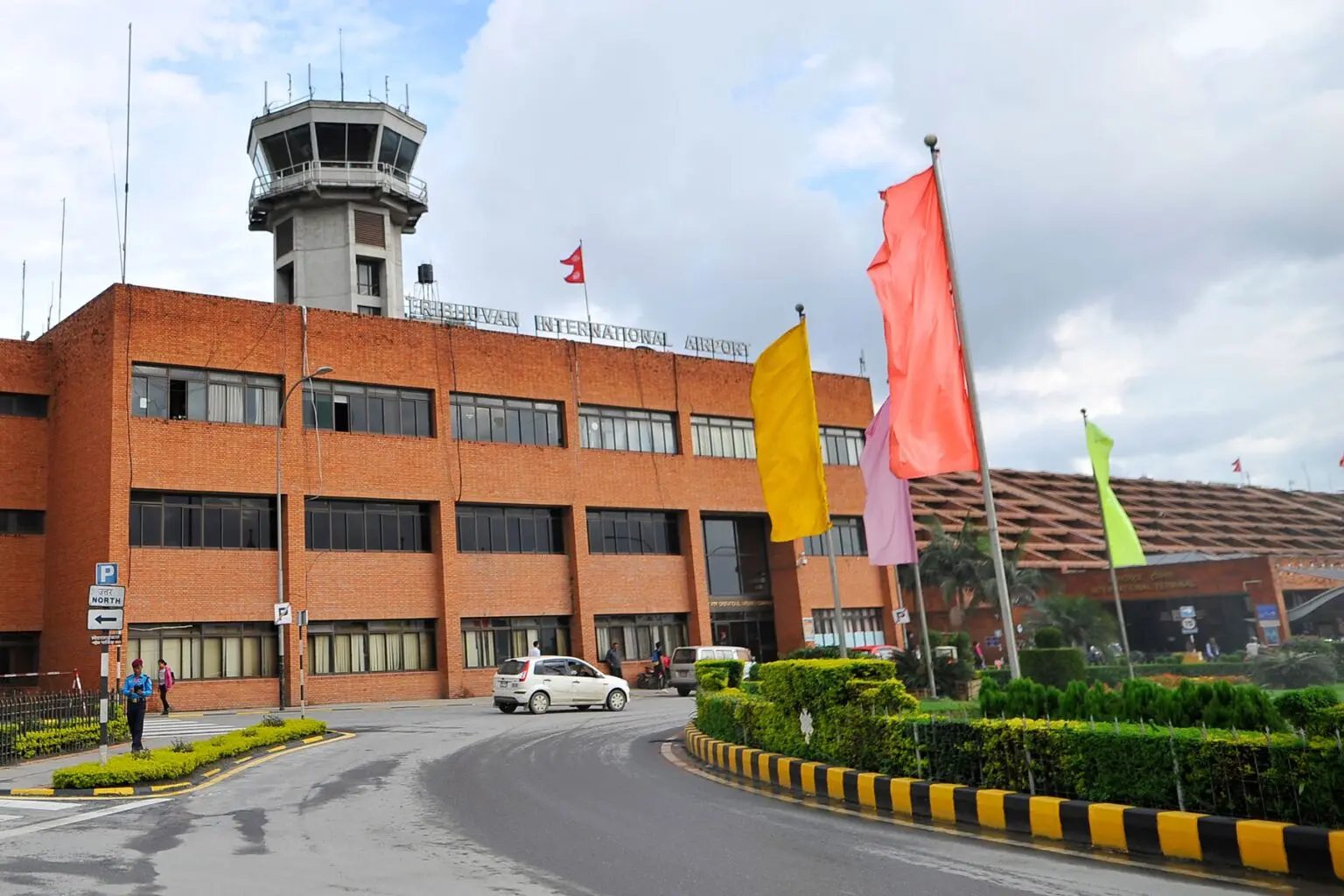
From Tribhuvan International Airport (TIA): Boudhanath is one of the closest major landmarks. Many travelers use a taxi, which takes roughly 15–30 minutes, depending on congestion. Pre-arranged pickups through hotels/tour operators can be simplest if you have luggage.

From Patan (Lalitpur), you’ll usually head toward eastern Kathmandu. A taxi or private car is the most direct; public options often involve switching vehicles at busy junctions.

Tip: In Kathmandu, time matters more than distance, plan buffer time during rush hours, and aim for dawn or sunset for the best atmosphere.

10. Earthquake Damage, Repairs, and Restoration (2015 and After)

The 7.8-magnitude Gorkha earthquake on April 25, 2015, shook Boudhanath hard, damaging key parts of the monument most notably the gold spire (pinnacle) while the main white dome was largely spared. Because the stupa is a focal point for daily pilgrimage, the impact was immediate for worship and the wider Boudha community.

Restoration moved forward through a mix of private donations from Buddhist groups and local community support. After about a year and a half of work, the stupa reopened to the public on November 22, 2016, marked by ceremonies and a surge of pilgrims returning to complete their kora.

11. Festivals and Best Time to Visit (Buddha Jayanti, Losar, Quiet Hours)

Boudhanath comes alive during major Buddhist dates, and two big ones to know are Buddha Jayanti (Buddha Purnima/Vesak) and Losar (Tibetan New Year).

  • Buddha Jayanti is observed on the full moon of Vaisakha/Baishakh (usually April–May) and is one of the most atmospheric days to be at Boudhanath except butter lamps, offerings, and devotional crowds into the evening.
  • Losar falls in late winter to early spring, typically February or March, and Boudha becomes a focal point for Tibetan community celebrations, fresh prayer flags, incense, monastery rituals, and families gathering for the new year. Dates shift each year because Losar follows the Tibetan lunisolar calendar.

For the best overall visit, aim for autumn (late September–November) when skies are clearer, and conditions are comfortable. Within a day, the most peaceful quiet hours are early morning and late afternoon to sunset.

12. Nearby Attractions (Pashupatinath, Kopan, and More)

A classic combo with Boudhanath is Pashupatinath Temple, a vast Hindu temple complex on the Bagmati River and, like Boudhanath, one of the key monument zones inside UNESCO’s Kathmandu Valley World Heritage listing. Many travelers visit them back-to-back for two different (but equally powerful) sides of Kathmandu’s sacred life.

For a quieter, panoramic escape, head to Kopan Monastery, set on a hill just north of Boudhanath. Kopan is known for calm grounds, sweeping valley views, and a meditation-friendly atmosphere.

If you want “nearby but less crowded,” look toward Chabahil, home to the Licchavi-era Dhando Chaitya (often cited as among the valley’s oldest stupas), plus the nearby Guhyeshwari Temple, a Shakti shrine associated with the Pashupati area. And if you’re up for another iconic stupa with big views, Swayambhunath (Monkey Temple) is also part of the same UNESCO Kathmandu Valley listing and makes a great half-day add-on.

Tip: Visit Boudha Stupa, experience one of the holiest buddhist pilgrimage sites in the world. Boudha Mandala Hotel is located near Boudhanath Stupa, making early-morning and evening visits effortless allowing you to be at peace with the all seeing eyes of Buddha.

Frequently Asked Questions

1) Where is the Boudha Stupa located in Kathmandu?

Boudha Stupa (Boudhanath Stupa) is in the Boudha/Boudhanath neighborhood in northeastern Kathmandu, close to Tribhuvan International Airport (TIA) and an easy taxi ride from Thamel.
For navigation, search “Boudhanath Stupa” or “Bouddhanath Stupa” on Google Maps (both work). The location is approximately 27.721° N, 85.362° E.

2) How far is Boudha Stupa from Tribhuvan International Airport (TIA), and how long does it take?

Boudha Stupa is very close to Kathmandu airport, typically about 4–6 km by road, depending on the route.
By taxi/private car, it usually takes 15–30 minutes, but traffic in Kathmandu can increase travel time during rush hours.

3) What are the opening hours for Boudha Stupa, and when do ticket counters open/close?

Boudha Stupa is an open public monument zone, so “hours” can mean two things:
Outer area (streets, cafés, outer ring): often accessible early and late
Ticketed monument zone (main stupa plaza/kora area): entry is typically enforced during daytime hours
In practice, many travelers plan around a rough window from early morning to evening (often cited as ~5:00 AM–9:00 PM, though it can vary). Always follow on-site signage and local guidance, especially on festivals/holidays.

4) How much is the Boudha Stupa entry fee?

Boudha Stupa entry fees are usually tiered by nationality. A commonly posted structure is:
Foreign nationals: NPR 400
SAARC nationals: NPR 100
Nepali citizens: free
Children under 10: free
Tickets are purchased at the entry gates. Fees can change, so treat the ticket booth signage as the final word on the day you visit.

5) Is the Boudha Stupa entry ticket valid for same-day re-entry?

Usually, yes. If you plan to step out for a rooftop café or shopping and return, keep your ticket and be ready to show it at the gate.
Tip: snap a quick photo of the ticket as a backup.

6) What is “kora” at Boudha Stupa, and why do people walk clockwise?

Kora means clockwise circumambulation, a devotional walking loop around the Boudha Stupa that serves as both a pilgrimage and a moving meditation.
People walk clockwise as a sign of respect, typically keeping the stupa on their right. Prayer wheels are also spun clockwise.

7) What are the key etiquette rules at Boudha Stupa?

 Boudha Stupa is a living religious site, so small etiquette details matter:
Walk clockwise (stupa on your right) and don’t block the kora flow
Dress modestly (cover shoulders and knees), especially if entering monasteries
In gompas (monasteries): remove shoes (and often hats)
Photography: fine in open areas, but be discreet, avoid interrupting rituals and ask before photographing people up close.
Treat butter lamps/offerings as look, don’t touch.

8) Is Boudha Stupa safe to visit alone, including in the evening?

Generally, yes the main plaza is often active in the evening with pilgrims doing kora and cafés open.
Basic precautions apply: stick to well-lit central areas, watch for pickpocketing, and take a taxi back if it’s late rather than walking quiet side streets. If there are protests/large gatherings, avoid the area and follow local guidance.

9) Is Boudha Stupa wheelchair- and stroller-friendly?

Mostly yes, especially compared to many heritage sites in Kathmandu. The main kora path is generally wide and manageable, but expect:
uneven paving and occasional curbs/short steps
tight spots when crowds are heavy
limited access in many rooftop cafés and older monasteries (stairs are common)
Best tip: visit early morning for fewer crowds and easier movement.
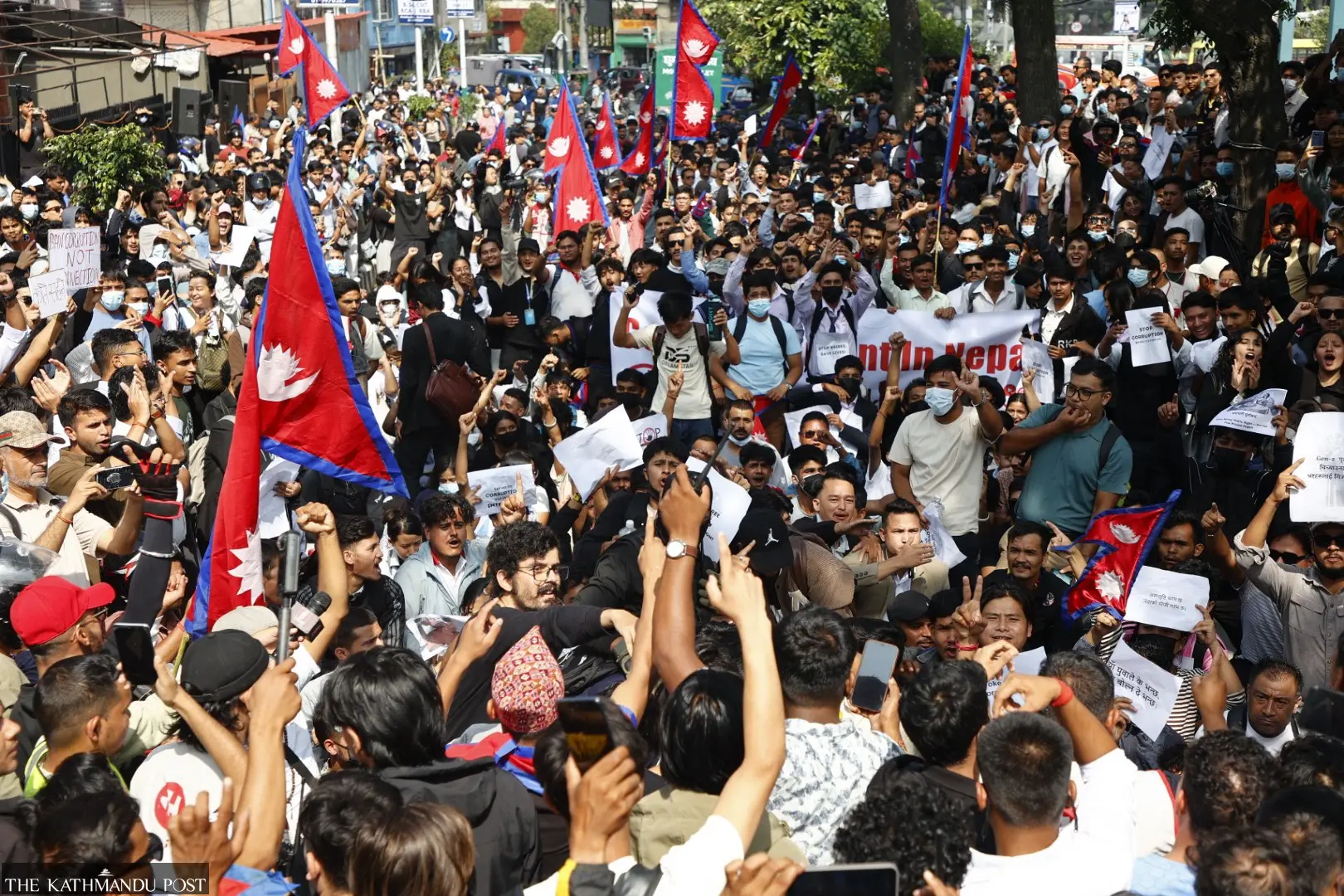
How the Country’s Tourism Industry Is Rebounding After the Gen-Z Protests

When fire rose over Singha Durbar and the streets of Kathmandu filled with chants for justice, the world held its breath. News headlines flashed with images of unrest and anger, the kind that make travelers hesitate and tour operators brace for cancellations. But behind the smoke and headlines, another story quietly unfolded one of resilience, reassurance, and remarkable recovery.

Key Takeaways
• No tourists were harmed during the recent Gen-Z protests, Nepal remains a safe and welcoming destination.
• The tourism industry faced damages exceeding $187 million, yet visitor arrivals continue to rise steadily.
• Trekking routes, flights, and hotels across the country are open and operating normally.
• A powerful diaspora movement and local resilience are driving Nepal’s tourism comeback.

“No Tourists Were Harmed” A Message That Matters

At a recent community event in New York, Nepal’s Consul General, Dadhiram Bhandari, stood before members of the Nepali diaspora with a clear message: “No tourists were harmed during the recent protests. Nepal is safe to visit.”

This wasn’t just diplomacy. It was a lifeline for an industry that has endured more challenges than most nations could imagine. From the 2015 earthquake to the pandemic, Nepal’s travel sector has always found a way to rise again. And this time, even as Gen-Z-led protests rocked the country, that same spirit of endurance returned in full force.

A Nation at a Crossroads

The protests that began in early September 2025 weren’t about tourism, they were about transformation. Sparked by frustration over corruption, inequality, and a sweeping ban on social media platforms, thousands of young Nepalis poured into the streets demanding change.

But even amid the chaos, something remarkable happened: the protests never turned against visitors. Around 15,000 foreign tourists were in the country at the time, trekking the Annapurna trails, exploring Chitwan’s jungles, and sipping coffee in Pokhara’s lakeside cafés. Not one was targeted or harmed.

While the capital city saw tense moments roadblocks, curfews, and the tragic loss of over 76 lives most of Nepal continued its rhythm of normal life. The mountains remained calm, the monasteries continued their chants, and locals, ever warm-hearted, helped travelers navigate safely through uncertain days.

The Hit and the Hope

Of course, the industry took a financial blow. The Hotel Association of Nepal reported damages exceeding $187 million, with about two dozen hotels vandalized or looted. The Hilton in Kathmandu alone faced losses of over $60 million. For a sector just regaining momentum after years of setbacks, it felt like another cruel test.

And yet optimism endures. In September alone, 78,711 foreign visitors entered Nepal, including nearly 10,000 Americans. That’s fewer than last year, yes, but higher than many expected after the unrest. Many were members of the Nepali diaspora returning home for Dashain and Tihar a subtle but powerful show of faith in their homeland.

Life After the Protests: Calm, Open, and Ready

Fast-forward to today, and the reality on the ground tells a very different story from the sensational headlines.

• Trekking routes like Everest Base Camp, Langtang, and Annapurna are open and operating normally.
• Airports and domestic flights are running smoothly.
• Hotels and restaurants outside protest zones are buzzing again, their doors wide open to travelers.
• Curfews are lifted, and city life in Kathmandu is back to its vibrant self, with just a few government buildings still under repair.

Tour guides report that most disruptions were logistical not dangerous. “Tourists faced delays, not danger,” says one Kathmandu-based operator. “Even during the peak of the protests, our guests were safe locals made sure of it.”

Diaspora Power: Promoting Nepal’s Positivity

Consul General Bhandari’s call to the Nepali diaspora was more than symbolic. Across social media, travel blogs, and community events, Nepalis abroad are amplifying a unified message: Nepal is open, safe, and as breathtaking as ever.

From trekking companies offering flexible rebooking options to influencers sharing serene mountain footage with hashtags like SafeNepal and VisitNepalNow, a grassroots movement is rebuilding global confidence one post at a time.

Lessons From the Crisis

The Gen-Z protests were a turning point not just politically, but socially. They reflected a younger generation’s demand for transparency and opportunity, values that resonate with travelers seeking authenticity and connection.

For the tourism industry, this moment underscored vital lessons:

• Transparency builds trust. Honest updates and quick communication from tour operators helped avoid panic.
• Resilience is Nepal’s brand. After earthquakes, pandemics, and protests, Nepal’s ability to bounce back is part of what makes it unforgettable.
• Community matters. From locals guiding tourists to safety to diaspora members promoting Nepal abroad unity became the country’s greatest strength.

Why You Should Visit Now

If you’ve been wondering whether it’s the right time to visit Nepal, here’s the truth: it’s the perfect time.

By coming now, you don’t just enjoy serene trails and timeless temples you become part of Nepal’s recovery story. You help a guide pay his staff again, a hotel reopens its doors, and a nation remind the world of its unshakable hospitality.

The mountains are still waiting. The prayer flags still flutter. And the people, ever warm and welcoming, are ready to greet travelers with open hearts and fresh hope.

Frequently Asked Questions (FAQs)

Q: Is Nepal safe for tourists now after the protests?

A: Yes. The unrest was largely concentrated in parts of Kathmandu, and major tourist areas including trekking routes, national parks, and cities like Pokhara were not affected. The situation has stabilized, and tourism operations (flights, hotels, tours) are running normally.

Q: Are trekking routes like Everest, Annapurna, and Langtang open and safe?

A: Absolutely. These trails were never fully shut down by protest-related disruptions. Guides report that while some logistical delays happened in Kathmandu, the mountain areas remained peaceful and accessible.

Q: Should travelers avoid Kathmandu (or certain areas) because of unrest?

A: You don’t need to avoid Kathmandu altogether. Most parts are open and busy again but exercising caution in proximity to political or governmental zones is wise. Avoid protests or mass gatherings, and follow local guidance.

Q: What precautions should I take when traveling in Nepal now?

A:Stay informed via trustworthy sources and local news updates.
Avoid protest zones and demonstrations.
Confirm bookings and schedules with tour operators before heading out.
Carry travel insurance that covers emergency evacuation.
Be mindful of altitude, health, and road/transport conditions.

Q: Will my visit help Nepal’s recovery?*

A: Yes, your travel dollars matter. Every trek booked, every meal eaten, and every hotel night stayed helps local guides, staff, and small businesses reemerge. Visiting now is a meaningful way to support the tourism sector’s rebound.

Final Thought:

Nepal’s Gen-Z protests may have shaken its streets, but not its spirit. Today, that same spirit stands tall, stronger, braver, and smiling inviting the world to come see beyond the headlines.
Because in Nepal, even after the storm, the view is always worth the climb.

What Lonely Planet and Culture Trip Say About Staying in Boudha

Key Takeaways

• Major travel publications consistently recommend Boudha as one of Kathmandu’s most authentic neighborhoods for spiritual travelers
• Staying near Boudhanath Stupa offers 24-hour access to sacred rituals without the noise and chaos of Thamel
• Travel experts praise Boudha’s walkability, safety, and genuine Tibetan Buddhist community
• The neighborhood is highlighted for its meditation centers, monasteries, and rooftop cafés with stupa views
• Accommodations in Boudha offer better value and character than tourist-heavy areas
• Digital nomads and long-term travelers are increasingly choosing Boudha for its peaceful work environment and reliable infrastructure

You wake to the sound of prayer wheels turning, their soft metallic hum mixing with the low murmur of mantras. The air carries incense and something else, something harder to name. Maybe it’s devotion, or maybe just the particular quality of morning light that falls on ancient stones.

This is what it means to stay in Boudha, not just visit it. While most travelers book rooms in Thamel and day-trip to Boudhanath Stupa, the travel writers and cultural guides who know Nepal best tell a different story.

They suggest something quieter, something that asks a little more of you. They suggest you stay here, in this neighborhood where the rhythm of life still follows the turning of prayer wheels, not the honking of tourist buses.

So what exactly do publications like Lonely Planet and Culture Trip say about choosing Boudha as your base in Kathmandu?

Why Travel Experts Recommend Boudha Over Thamel

Thamel has its place. It’s convenient, packed with restaurants, and you can buy trekking gear at 2 AM if you really need to. But it’s also loud, relentless, and designed for people passing through, not people paying attention.

Boudha offers something Thamel can’t: a sense of place that doesn’t perform for tourists. The neighborhood wraps around the stupa like a mandala, with narrow lanes radiating outward, each one revealing small monasteries, thangka workshops, and rooftop cafés where you can sit for hours without anyone rushing you to order more.

The stupa itself is open 24 hours, but it transforms depending on when you visit. Dawn brings the devout, dusk brings the contemplative, and if you’re staying nearby, you can experience both without the logistical gymnastics of crossing the city twice a day.

Learn more about the best time to visit Boudhanath to plan your experience around the stupa’s most powerful moments.

If you’re wondering where to base yourself for an authentic Kathmandu experience, we invite you to stay with us at Boudha Mandala Hotel.

Our rooms open onto the stupa’s energy, not away from it. You’ll hear the morning chants from your bed, watch butter lamps flicker from the rooftop, and step into the kora path in less than a minute. Book directly with us and save on booking platform fees, you get the same room for less, plus our team’s local knowledge included.

What Makes Boudha Different: A Neighborhood Built Around Ritual

Travel guides note that Boudha’s layout itself encourages mindfulness. The circular kora path around Boudhanath Stupa is the neighborhood’s heartbeat, and everything else, shops, monasteries, guesthouses, pulses in relation to it. You don’t visit the stupa here. You orbit it.

The experience of walking the kora at different times of day is one of Kathmandu’s most grounding rituals. Early morning walkers move clockwise in near silence, spinning prayer wheels, their breath visible in the cool air. By evening, the path fills with families, monks in maroon robes, and travelers who’ve learned to slow their pace to match the rhythm around them.

Boudha isn’t a single attraction but an ecosystem of spiritual practice. Within a ten-minute walk of the stupa, you’ll find meditation centers offering drop-in sessions, sacred monasteries where foreigners are quietly welcomed to observe pujas, and small shrines where locals leave offerings of rice and marigolds.

This isn’t the kind of place you check off a list. It’s the kind of place that asks you to sit down, be still, and notice what happens when you do.

Tibetan Culture Without the Filter

After the 1959 Tibetan uprising, thousands of refugees settled in Boudha, bringing with them centuries of Buddhist tradition, art, and practice. What resulted is one of the most vibrant Tibetan communities outside Tibet itself.

Travel writers consistently point to this cultural richness as Boudha’s defining feature. You’ll find thangka painters working in open studios, their brushes moving with the precision of meditation. Tibetan restaurants serve momos and thukpa recipes passed down through generations. Shops sell singing bowls, prayer flags, and malas, not as souvenirs but as tools for practice.

Boudha offers something rare: authenticity without gatekeeping. Monks will explain the meaning of mantras if you’re curious. Shopkeepers will tell you the proper way to hang prayer flags and light butter lamps.

There’s a generosity here that comes from confidence, not performance.
You can experience authentic local culture in Boudha simply by being present, by showing up with curiosity instead of a checklist. From our balcony at Boudha Mandala Hotel, mornings begin with soft chants and golden light. You’re not watching Tibetan Buddhist culture from the outside. You’re living alongside it.

Practical Reasons Travel Guides Recommend Staying in Boudha

Walkability and Safety

Boudha is consistently rated as one of Kathmandu’s safest and most walkable neighborhoods, particularly for solo travelers and women. The streets are well-lit, the community is tight-knit, and there’s a natural flow of people at all hours due to the stupa’s 24-hour accessibility.

Even after recent protests in Kathmandu, Boudha has remained a peaceful sanctuary.
You can walk from one end of Boudha to the other in about 15 minutes. Every turn reveals something worth pausing for. A monastery courtyard where monks debate philosophy. A rooftop café with views of the stupa’s all-seeing eyes. A small shrine where butter lamps flicker in rows, each one a prayer made visible.

Access to Authentic Experiences

Staying in Boudha gives you access to experiences that day-trippers simply can’t have. You can attend early morning pujas at Boudhanath, where the sound of horns and drums fills the prayer hall. You can join meditation sessions at nearby centers, where teachers welcome beginners with patience and humor.

You can also just sit. On the stupa steps at sunset, watching the light turn the white dome golden. In a café with a book you’re not really reading. On a bench while prayer wheels spin beside you, turned by hands that have been turning them for decades.
These aren’t activities you can schedule. They’re rhythms you fall into when you’re not rushing to the next thing.

Better Value and Character

While Thamel’s hotels cater to trekkers and tour groups, Boudha’s accommodations tend to be smaller, quieter, and more thoughtfully designed. Travel guides point out that you often get more character and better value here, whether you’re staying in a family-run guesthouse or a boutique hotel. Read more about the differences between guesthouses, boutique hotels, and monastery stays to understand your options.

The focus isn’t on luxury for its own sake but on creating spaces that honor the neighborhood’s spirit. Rooftop terraces face the stupa. Courtyards are designed for quiet conversation. Rooms are simple but intentional, with details that show someone cared about how the space feels, not just how it photographs.

Why Digital Nomads are Choosing Boudha

Travel publications have started noticing another trend: digital nomads choosing Boudha over Thamel for long-term stays. The neighborhood offers reliable Wi-Fi, peaceful work environments, and a cost of living that makes extended stays feasible.

But more than that, Boudha offers something harder to quantify: a rhythm that supports creative work. The morning kora clears your mind before you open your laptop. The afternoon light on the stupa reminds you to look up from the screen. The evening chants signal it’s time to close the work and open the evening.

Boudha attracts a particular kind of traveler, the kind who wants to work remotely without losing connection to place, who values community over nightlife, who understands that productivity and peace aren’t opposites.

At Boudha Mandala Hotel, we’ve designed every corner with this philosophy in mind. Our apartment-style accommodations offer the space and comfort digital nomads need, with dedicated work desks, high-speed fiber internet, and 24-hour power backup. Our rooftop and courtyard preserve the contemplative atmosphere spiritual seekers come here to find. Over 60% of our guests extend their original booking, many staying for weeks or months.

Planning Your Stay in Boudha

Best Time to Visit

October through March offers the clearest skies and most comfortable temperatures, with mornings cool enough for a shawl and afternoons warm enough for rooftop tea. Monsoon season, June through September, brings afternoon rains but also fewer crowds and a particular kind of green stillness.

If you’re planning around festivals, Losar, Tibetan New Year in February or March, transforms Boudha into a celebration of color, music, and ceremonial dance. Buddha Jayanti in May brings thousands of pilgrims, and the stupa is draped in prayer flags and marigold garlands. Explore Buddhist festivals to time your visit with these sacred celebrations.

Getting There

Boudha is about 6 kilometers from Thamel and 8 kilometers from Tribhuvan International Airport. A taxi takes 20 to 30 minutes depending on traffic, and costs around 500 to 700 Nepali rupees. Read our detailed guide on how to get from Tribhuvan Airport to Boudha for step-by-step directions and transport options.

Once you’re here, you won’t need much transportation. Everything worth experiencing is within walking distance, and part of Boudha’s gift is that it encourages you to slow down enough to walk.

Etiquette and Respect

Always walk the kora clockwise, keeping the stupa on your right. Dress modestly when visiting monasteries, covering shoulders and knees. Remove shoes before entering prayer halls. If you’re photographing, be discreet and ask permission when photographing people, especially monks.

Butter lamps can be lit at small shrines around the stupa for a donation of 20 to 50 rupees. Prayer flags are sold nearby, and if you’d like to hang them, ask a local about the proper way and the best day, traditionally Tuesdays and Fridays are considered auspicious.

What Artists and Writers Say About Boudha

Beyond the mainstream travel guides, Boudha has long been a magnet for artists, poets, and monks. The neighborhood’s creative energy is palpable, from the thangka painting studios to the poets who’ve found inspiration walking these same streets.

There’s something about the combination of stillness and aliveness here that opens creative channels. Maybe it’s the way time moves differently when you’re circling a stupa. Maybe it’s the constant reminder, in the form of prayer wheels and butter lamps, that everything is impermanent, so you might as well create while you can.

Comparing Boudha and Thamel: What Travel Guides Won’t Tell You

Here’s what most guidebooks gloss over: Boudha isn’t perfect. The streets can flood during heavy monsoon rains. You’ll hear construction occasionally. Some shops close early. The restaurant scene, while authentic, isn’t as diverse as Thamel’s international options.

But these aren’t flaws, they’re trade-offs. What you lose in 24-hour convenience, you gain in 24-hour access to something most travelers spend their whole lives searching for: a sense of belonging to a place that doesn’t need you to validate it.
Thamel performs. Boudha simply is.

If you want to party until 3 AM, book Thamel. If you want to wake at 5 AM and walk the kora with monks who’ve been doing it for 40 years, stay in Boudha. Both are valid. Just know what you’re choosing.

Conclusion

The prayer wheels never stop turning here, and neither does life’s quiet rhythm. Maybe that’s why everyone who visits Boudha leaves a little lighter.

Travel writers return to the same themes when they write about this neighborhood: authenticity, stillness, and a sense of being held by something larger than yourself. It’s not that Boudha is perfect or untouched by modernity. It’s that the things that matter here, devotion, community, the turning of prayer wheels, continue regardless of who’s watching.

Travel guides can tell you where to stay and what to see. But what they’re really pointing toward is something you can only understand by being here. By waking to the sound of morning chants.

By walking the kora until your mind stops narrating and just walks. By sitting on a rooftop as the light fades and realizing you’ve been still for an hour without checking your phone once.
That’s what staying in Boudha offers. Not a list of attractions, but a different way of moving through the world, even if just for a few days.

Related Guides
Best Restaurants and Cafes in Boudha
Hidden Gems for Travelers Around Boudha
Instagram-Worthy Spots Around Boudha Stupa
Where to Find Handcrafted Art and Souvenirs in Boudha
Famous People Who Visited Boudha

FAQs

What do travel guides say is the best thing about staying in Boudha?

The consistent answer is proximity to authentic spiritual practice. Unlike staying in Thamel and visiting the stupa as a day trip, staying in Boudha lets you experience the neighborhood’s rhythms at dawn and dusk, when the atmosphere is most powerful and the crowds are thinnest.

Is Boudha safe for solo travelers?

Yes. Travel guides consistently rate Boudha as one of Kathmandu’s safest neighborhoods, with well-lit streets, a strong sense of community, and a welcoming atmosphere for solo travelers, particularly women. The constant flow of pilgrims and monks around the stupa means the area never feels deserted.

How far is Boudha from Kathmandu’s main tourist area?

Boudha is about 6 kilometers from Thamel, roughly 20 to 30 minutes by taxi depending on traffic. Many travelers appreciate this distance, it’s close enough for convenience but far enough to feel like a completely different experience.

Can I visit monasteries and meditation centers if I’m not Buddhist?

Absolutely. Most monasteries in Boudha welcome respectful visitors, and many meditation centers offer drop-in sessions or beginner courses. The community here is generous with knowledge and practice, as long as you approach with genuine curiosity and respect.

What’s the best time of day to experience Boudhanath Stupa?

Dawn and dusk are transformative. Early morning, around 6 AM, brings serious practitioners and a meditative quiet. Evening, just before sunset, offers golden light and a more social atmosphere as families complete their koras together. Staying nearby means you can experience both without rushing.

Why the Kathmandu Valley Forces You to Slow Down and Notice Everything

The Kathmandu Valley doesn’t reward speed. It rewards attention. Travelers who rush through it often leave confused or tired. Those who slow down and notice small things leave changed. This valley doesn’t announce what matters. It quietly waits to see if you’re paying attention.

This is not accidental. The valley has been shaped, lived in, and repeated for centuries in a way that demands awareness rather than efficiency.

Why does the valley feel overwhelming at first?

Because too much is happening at once, and none of it is prioritized for you. Sounds overlap. Smells mix. Streets don’t signal where to look or where to go. There is no clear foreground or background.

Most destinations guide attention with signs, sightlines, and highlights. The Kathmandu Valley does the opposite. Everything exists at the same level. Shrines sit beside shops. Rituals happen next to traffic. Private life spills into public space.

At first, the brain looks for order and doesn’t find it. Attention scatters. Fatigue sets in. This is the valley’s first lesson. You can’t consume it all. You have to choose what to notice.

How does walking change the way you see the valley?

Walking is not just transport here. It’s a way of learning. Streets are narrow, uneven, and rarely straight. You can’t zone out. You step carefully. You adjust constantly.

When you walk, details surface. A woman placing rice at a shrine. A metalworker tapping rhythmically inside a dark shop. A courtyard opening suddenly behind a doorway you almost missed.

Vehicles move too fast for this. Walking trains your eye to look sideways, not forward. That shift changes everything.

Why do small details matter more than landmarks?

Because meaning in the Kathmandu Valley lives in repetition, not spectacle. A single temple is impressive. A hundred small shrines used every day explain how life works.

Travelers who chase highlights often miss the logic of the place. Those who notice daily rituals begin to understand it. Bells at the same hour. Incense replaced each morning. The same path walked again and again.

Attention reveals patterns. Patterns reveal structure. Structure reveals calm.

How do sounds teach you where you are?

Sound is directional here. It tells you what’s happening without asking you to look. Bells signal prayer. Music signals movement. Chanting signals time passing.

You learn to locate yourself through sound. A sudden drumbeat means a procession nearby. A cluster of bells means a shrine. Silence in a courtyard means private space.

Paying attention to sound keeps you oriented in a place where maps often fail.

Why does the valley force you to slow down mentally?

Because nothing resolves instantly. Streets bend. Routes change. Plans dissolve. What you expect to happen often doesn’t.

At first, this feels inefficient. Then something shifts. You stop predicting. You start observing. Waiting becomes watching. Delays become information.

The valley trains patience by refusing to respond to urgency.

How do rituals sharpen awareness?

Rituals happen in public and without warning. They interrupt normal flow. A procession blocks a street. An offering pauses a shop. A prayer redirects attention.

You learn to read subtle cues. Movement slows. People gather. Music starts. Attention shifts collectively.

Once you notice this pattern, rituals stop feeling disruptive. They feel like punctuation. The valley teaches you when to pause and when to move by example.

Why do travelers feel more present here than elsewhere?

Because the valley doesn’t allow autopilot. You can’t move through it unconsciously for long. You have to look where you step. You have to read faces. You have to listen.

Presence becomes practical. Not spiritual. Not performative. Simply necessary.

This is why many travelers feel strangely grounded here, even amid noise and crowds. Attention anchors you.

How does this change the way travelers see themselves?

Paying attention changes behavior. You speak less. You watch more. You interrupt less. You react slower.

Many travelers realize how conditioned they are to speed, efficiency, and constant stimulation. The valley gently exposes that habit without judgment.

You don’t conquer the Kathmandu Valley. You adapt to it.

What happens when you stop trying to understand everything?

Understanding arrives anyway. Quietly. Not through explanation, but through familiarity. The same corner passed three times. The same sound heard each morning. The same rhythm repeating.

This is when the valley opens up. Not visually, but internally.

Attention turns confusion into coherence.

Why does this stay with travelers long after they leave?

Because attention reshapes memory. You don’t remember lists. You remember moments. The smell of incense at dusk. A bell you heard daily. The way streets felt alive but never hostile.

The Kathmandu Valley doesn’t give you a story to tell. It gives you a way of noticing that lingers long after the trip ends.

Staying somewhere calm helps travelers settle into this pace, and places like Boudha Mandala Hotel offer a quiet base while remaining connected to the everyday life of the Kathmandu Valley.

Is Nepal Safe to Travel? What Visitors Often Get Wrong

Many travelers arrive in Nepal with a sense of caution that doesn’t quite fit the reality on the ground. They worry about the wrong things and overlook the ones that actually matter. Nepal is not unsafe in the way headlines or vague warnings sometimes suggest, but it does require a different understanding of risk.

Safety here isn’t about constant alertness. It’s about context, awareness, and knowing what deserves your attention.

Why Nepal feels less safe before you arrive than after

Before arriving, safety concerns are usually abstract. News stories, government advisories, and online forums blur together. Once in Nepal, many travelers are surprised by how normal daily life feels.

This disconnect happens because Nepal’s risks are rarely aggressive or intentional. There’s very little violent crime directed at travelers. What feels unsafe at first is often unfamiliar, not dangerous.

Crowded streets, noise, informal systems, and visible poverty can trigger anxiety for visitors used to cleaner, more regulated environments. Over time, that tension usually fades as patterns become clear.

Why crime is not the main safety issue for travelers

Most first-time visitors expect theft, scams, or personal danger to be the primary risk. In reality, violent crime against travelers is rare, and opportunistic theft is relatively minor compared to many other destinations.

Basic precautions matter:

• Don’t leave valuables unattended
• Be mindful in crowded areas
• Avoid isolated places late at night

But these are common-sense measures, not signs of high risk. Travelers who stay aware without becoming defensive generally feel comfortable quickly.

What travelers overlook about traffic and movement

The most underestimated safety risk in Nepal is movement, especially traffic. Roads are busy. Pedestrian rules are informal. Vehicles don’t always behave predictably.

This doesn’t mean chaos. It means you need to adjust how you cross streets and navigate space. Eye contact, patience, and steady movement matter more than right-of-way.

Many minor injuries happen not because travelers were careless, but because they assumed systems would protect them. In Nepal, personal awareness replaces infrastructure.

Why altitude and fatigue are safety factors, even in cities

Travelers often associate altitude risk only with trekking. Even cities like Kathmandu sit high enough to affect energy levels, sleep, and hydration.

Fatigue lowers awareness. Dehydration affects judgment. Overpacked itineraries increase accident risk more than crime ever will.

Safety improves dramatically when travelers:

• Rest more than they think they need
• Eat simply
• Hydrate consistently
• Avoid stacking long travel days

Physical care is a safety strategy here.

Why health concerns are often misunderstood

Food and water safety cause anxiety for many visitors. While care is needed, most issues come from sudden changes, not danger.

Digestive discomfort often results from:

• Overeating unfamiliar food
• Eating too late at night
• Constant snacking
• Ignoring rest

Travelers who simplify meals and respect local rhythms tend to adjust without problems. Panic and over-restriction often cause more issues than the food itself.

Why “unsafe” neighborhoods are rarely what travelers think

Travelers sometimes label areas as unsafe because they feel poor, crowded, or unfamiliar. In Nepal, these traits don’t reliably indicate danger.

Some of the busiest, messiest neighborhoods are socially tight-knit and highly observant. Strangers stand out, which often means people notice you more, not less.

Actual discomfort usually comes from sensory overload, not threat. Learning to separate the two is key.

Why solo travelers often feel safer than expected

Nepal is widely regarded as safe for solo travelers, including women, especially during the day. Curiosity from locals is common, but it’s usually social, not predatory.

Attention doesn’t automatically signal risk. Context matters. Body language, tone, and persistence tell you more than the fact of being noticed.

Trust your instincts, but don’t assume interest equals danger.

Why emergencies are handled differently

One real difference travelers should understand is how emergencies are managed. Responses may be slower, more improvised, or less formal than visitors expect.

This doesn’t mean help won’t come. It means preparation matters:

• Travel insurance is essential
• Knowing where hospitals are helps
• Buffer time in plans reduces stress

Safety in Nepal relies more on personal preparedness than on rapid-response systems.

Why locals appear calm in situations that alarm visitors

Travelers often feel unsettled by how calmly locals react to things that seem unsafe or chaotic. This isn’t indifference. It’s familiarity.

People here have learned what is genuinely risky and what simply looks dramatic. This local calibration is useful. Observing how others behave often gives better safety cues than assumptions.

If locals are relaxed, it’s usually a good sign.

Why safety advice online can be misleading

Much online advice about Nepal is outdated, generalized, or written without context. Warnings tend to stack without hierarchy, making everything sound equally dangerous.

In reality, risks are uneven. Some matter a lot. Others barely matter at all. Knowing the difference keeps you calm and alert at the same time.

Fear flattens nuance. Experience restores it.

What travelers should actually focus on

If you reduce safety in Nepal to a short list, it looks like this:

• Manage fatigue and health
• Stay aware around traffic
• Keep valuables secure
• Allow extra time
• Read situations instead of assuming

Everything else tends to fall into place.

Why Nepal feels safer the longer you stay

Most travelers report the same pattern. Initial concern fades quickly. Confidence rises. Movements become smoother. Interactions feel easier.

Nepal doesn’t become safer over time. You become more attuned to how safety works here.

That adjustment is the real protection.

What this understanding changes about your trip

When you stop worrying about the wrong things, Nepal opens up. You move more freely. You engage more naturally. You trust your experience instead of second-guessing it.

Safety becomes a background consideration, not a constant preoccupation.

Staying in a stable, familiar area during your first days helps build this confidence, and places like Boudha Mandala Hotel offer a calm base where travelers can orient themselves before exploring more widely.

How to Get Helpful Answers When You Ask for Help in Nepal

Most travelers assume asking for help is universal. You ask clearly, someone answers clearly, and the problem gets solved. In Nepal, help works differently. People are willing, observant, and generous, but the way you ask matters as much as what you ask.

When travelers struggle to get useful help here, it’s rarely because people don’t want to assist. It’s because the request doesn’t fit how help is offered.

This guide shows how to ask in a way that works.

Why asking for help in Nepal feels confusing at first

Nepal runs on context more than clarity. People often prioritize politeness, harmony, and possibility over direct accuracy. A vague answer doesn’t mean indifference. It usually means the person is trying not to shut you down.

First-time travelers often expect precision and get reassurance instead. They hear “yes” when the real message is “maybe,” or “it should be fine” when conditions are still uncertain.

Understanding this gap changes everything.

Who you ask matters more than what you ask

Not everyone is positioned to help you, even if they want to. The most reliable help usually comes from people who are stationary and socially anchored.

Good people to ask:

• Shopkeepers
• Café staff
• Security guards
• Older locals sitting or working nearby

Less reliable sources:

• People walking quickly
• Young students in groups
• Anyone clearly in transit

Someone rooted in a place usually knows it well. Someone passing through may not, even if they answer confidently.

Why asking indirectly works better than asking directly

Direct questions demand final answers. Indirect questions invite conversation. In Nepal, conversation is how accuracy emerges.

Instead of asking:
“Is this the right way?”

Try:
“I’m trying to get to this place. Is this how you would go?”

The second approach allows adjustment, clarification, and follow-up without forcing a yes or no. It also gives the person space to think aloud.

Help here often unfolds, not delivers.

Why “yes” doesn’t always mean yes

One of the biggest misunderstandings travelers face is the polite yes. Saying no directly can feel uncomfortable or disrespectful. So people keep possibilities open.

“Yes” may mean:

• I think so
• It should be possible
• Someone else might know better
• I don’t want to disappoint you

This is why confirmation matters. Ask the same question in a slightly different way, or ask a second person nearby. Patterns reveal truth faster than single answers.

How repetition improves accuracy

In Nepal, asking twice is not rude. It’s normal. Information often becomes clearer through repetition and cross-checking.

If two people give similar directions using different words, you’re probably on the right track. If answers vary wildly, conditions may be changing or the route may not be fixed.

Treat help as a process, not a transaction.

Why body language matters more than words

Your posture, patience, and tone influence the quality of help you receive. Rushing signals urgency, which can shorten answers. Calm curiosity invites engagement.

Standing still, smiling lightly, and giving people time to respond often results in better guidance than rapid-fire questions.

Help flows more easily when the interaction feels human, not procedural.

Why directions are often landmark-based

Addresses and street names matter less here than visible reference points. Directions often rely on temples, shops, intersections, or turns rather than distances.

Listen for landmarks, not measurements. If someone says “near the big tree” or “after the old temple,” that information is more useful locally than a street name.

If you don’t recognize the landmark, ask what it looks like.

How to ask for help without drawing a crowd

In busy areas, questions can attract attention quickly. This isn’t hostility. It’s curiosity. If you want focused help, step slightly aside or address one person directly.

Crowds produce multiple answers, which can overwhelm instead of clarify. One calm interaction usually works better than five simultaneous suggestions.

Why locals may walk with you instead of explaining

Sometimes people won’t explain at all. They’ll just start walking. This isn’t impatience. It’s practicality.

Walking together removes ambiguity. Accept it when it happens. It’s one of the clearest forms of help you’ll receive.

If someone walks you part of the way, that’s a sign of genuine care, not inconvenience.

How to thank people appropriately

A simple thank you is enough. Over-effusiveness can feel awkward. A smile, eye contact, and a clear expression of gratitude fit local norms better than exaggerated praise.

Help here isn’t framed as a favor. It’s part of daily interaction.

Why asking for help gets easier the longer you stay

As you spend more time in Nepal, you start asking differently without realizing it. Your questions soften. Your expectations adjust. You learn when to wait, when to follow up, and when to accept uncertainty.

The quality of help improves because your approach does.

What travelers often misunderstand

Travelers sometimes think unclear answers mean people don’t know or don’t care. In reality, people are protecting possibility. They’d rather keep a door open than close it prematurely.

Once you see this, confusion turns into cooperation.

What this changes about traveling in Nepal

When you ask in a way that fits local logic, Nepal becomes easier. Directions make more sense. Delays feel manageable. Interactions feel warmer.

You stop forcing clarity and start receiving guidance.

Staying in a neighborhood where people are used to travelers also helps, and areas like Boudha, with familiar rhythms and attentive locals, make these interactions smoother. Places such as Boudha Mandala Hotel offer a stable base where travelers can practice this approach comfortably while navigating Kathmandu and beyond.

Authentic Handcrafted Art & Souvenirs in Boudha | A Local Guide

Boudha Beyond the Souvenir Stalls

Most travelers arrive at Boudhanath Stupa expecting beauty. And they find it. But nestled between the prayer wheels and maroon robes is something quieter,a sense that what you take home should mean more than a souvenir.

Plastic trinkets and “Made in China” magnets line the outer circle, but if you pause, step into a side alley, or duck into a quiet monastery shop, you’ll find something else: soul. The kind of art born from devotion, not just design.

This guide is for the traveler who wants to carry something real.

Why Authentic Matters: Souvenirs with Soul

In Boudha, souvenirs are more than objects. They are carriers of lineage, memory, and presence.

When you choose a thangka painted by a local artist or incense wrapped by monastery hands, you’re not just shopping, you’re supporting the living traditions of the Himalayas. You’re helping a young monk attend school, preserving a family art form, or sustaining a lineage of teachers through your offering.

Ethical shopping in Boudha is a quiet practice of reverence.

Boudha Café De Mandala Gift Corner (if applicable)

If you’re staying at Boudha Mandala Hotel, don’t miss the small gift nook in our in-house café. We often carry curated local items,monk-made incense, prayer flags blessed in pujas, and handmade journals from Nepali women’s cooperatives.

Perfect for mindful gifting, or simply something to remember the stillness of your stay.

The Himalayan Art Council: Sacred Art with Integrity

For truly exceptional Himalayan art, the Himalayan Art Council stands as a cultural landmark. Located near the Boudha circle, this nonprofit institution preserves and promotes Himalayan art as a living tradition.

Here you’ll find:
• Museum-quality thangkas and paubha paintings.
• Sculptures and sacred items created by master artists.
• Digital certification and provenance, protecting both artist and buyer.
• Rotating exhibitions, lectures, and artist residencies

The Council is committed to honoring spiritual integrity. When you purchase here, you’re not just supporting artists,you’re participating in a movement to safeguard Nepal’s cultural soul.

Explore certified Himalayan art with integrity at the Himalayan Art Council.

Monastery Shops: Offerings from the Devoted

Some of the most heartfelt items can be found in monastery shops:

• Ka-Nying Shedrub Ling Monastery Gift Shop
Handmade incense, practice books, blessed prayer flags, and puja items. All proceeds support the monastery’s education and retreat programs.

• Shechen Monastery Store
Books on Tibetan Buddhism, CDs of chants by Dilgo Khyentse Rinpoche’s lineage, simple thangkas, and ritual tools used in teachings and ceremonies.

Buying from these shops is a direct way to support the daily life of monks and nuns.

Local Artisan Studios in Hidden Alleys

Wander a few steps away from the stupa and you’ll discover family-run studios, some no bigger than a single room, where thangka painters, paubha artists, and woodcarvers work quietly.

Ask if the artist is present. Many are happy to talk about their craft. You may even catch a painter mid-stroke or a silversmith setting a turquoise stone.

Look especially near:
• Alleyways leading toward Shechen Monastery.
• The northeast path beyond the stupa toward Pashmina Galli.
• Small shops with hand-painted signage (a good sign it’s not mass-produced).

Tibetan Handicraft Boutiques That Care

Not all stores are traps. A few boutiques on the outer circle and Mandala Street work with fair-trade cooperatives and Tibetan refugee artisans.

Look for:
• Yak wool shawls handwoven in Mustang.
• Copper and silver jewelry made by local Tibetan smiths.
• Meditation tools like singing bowls that are actually hand-hammered

Always ask: Who made this? Where does the money go? Ethical stores will answer proudly.

What Not to Buy (and Why)

Even in a sacred space like Boudha, not every stall respects the tradition. Be mindful of:

• Cheap thangkas printed or made by factory artists with no lineage

• “Antique” items with no clear provenance

• Religious icons (like tsa-tsas or Buddha heads) being sold casually on the street

These items, especially if they’re sacred or old, may be inappropriate to purchase or display without knowing their origin. When in doubt, choose something handmade and local.

Final Reflection
The best souvenirs don’t come from a checklist. They come from a feeling.

Maybe it’s the scent of juniper incense rising from your altar at home. A thangka that reminds you of stillness. A piece of jewelry that carries the weight of mountains.

In Boudha, the sacred is everywhere, but only if you walk slowly enough to notice.

And if you’re staying at Boudha Mandala Hotel, just ask our team. We’ll point you toward artists we know, monks we trust, and shops that respect the spirit of this sacred circle.

Because in the end, what you carry home should carry the peace you felt here.

How to Keep Your Body Happy While Traveling in Nepal

Many travelers think their bodies struggle in Nepal because of food, altitude, or hygiene alone. More often, it’s because they keep their old routines in a place that runs on different rhythms. Nepal asks for small physical adjustments. When you make them early, your body settles in quickly. When you don’t, fatigue and discomfort pile up fast.

This guide isn’t medical advice or survival tips. It’s about aligning your body with how daily life in Nepal actually works.

Why bodies react differently in Nepal

Nepal places subtle stress on the body. Walking replaces driving. Stairs replace elevators. Meals come later or earlier than expected. Noise, dust, and sensory input stay high all day. Even without trekking, your system works harder than usual.

Most travelers don’t notice this immediately. The impact shows up after two or three days as heaviness, disrupted sleep, digestive issues, or general exhaustion. The solution isn’t pushing through. It’s recalibrating.

How to eat in Nepal without shocking your system

The biggest mistake travelers make is chasing variety too quickly. Nepali daily eating is repetitive for a reason. Simple meals stabilize digestion in a demanding environment.

Early in your trip:
• Eat fewer meals, not more
• Choose warm, cooked food over cold or raw
• Repeat dishes that sit well instead of sampling constantly

Dal bhat works not because it’s traditional, but because it’s balanced, warm, and predictable. Rice, lentils, vegetables, and mild spices give steady energy without overstimulation.

Avoid mixing heavy meals with constant snacking. Let your stomach rest between meals. Hydration matters, but sipping steadily works better than forcing large amounts at once.

Why eating times matter more than menus

In Nepal, meals follow energy cycles, not strict clock rules. Eating late at night or skipping breakfast strains digestion here more than travelers expect.

A stable pattern works best:
• Light breakfast
• Solid mid-day meal
• Simple, early dinner

Late, heavy dinners combined with early mornings and long walks often cause sleep disruption and stomach issues. This isn’t about food quality. It’s about timing.

How to rest properly in a high-stimulation environment

Rest in Nepal doesn’t happen automatically. You have to protect it deliberately. Noise, light, and activity don’t drop off the way they do in quieter destinations.

Short, intentional breaks work better than waiting for full exhaustion. Sit down mid-day even if you don’t feel tired yet. Step out of traffic and crowds when you can. Let your nervous system reset before it demands it.

Sleep improves when evenings are calmer. Dimming lights, limiting screens, and avoiding heavy stimulation late at night helps more than sleeping pills or drastic schedule changes.

Why sleep feels lighter for many travelers

Many people report lighter or fragmented sleep in Nepal, especially at first. This is normal. Your senses stay alert longer in a new environment.

Instead of fighting this:

• Go to bed earlier
• Accept waking briefly during the night
• Focus on total rest over perfect sleep

Deep, uninterrupted sleep usually returns after several days once the body adjusts to new sounds and rhythms.

How to move without burning yourself out

Movement in Nepal is constant. Even city days involve more walking, standing, and navigating than most travelers expect. Trying to “power through” leads to soreness and fatigue quickly.

Adopt a slower movement style:

• Walk shorter distances more often
• Sit whenever the opportunity appears
• Take stairs slowly and deliberately

This isn’t about fitness. It’s about pacing. Locals move steadily, not aggressively, for a reason.

Why walking posture and footwear matter here

Uneven surfaces, steps, and slopes put extra strain on feet, calves, and lower back. Supportive footwear matters even in cities. Thin soles and fashion shoes often cause issues within days.

Pay attention to posture. Slightly shorter steps reduce impact. Looking ahead instead of down constantly eases neck and shoulder tension.

These small adjustments prevent cumulative strain.

How to combine movement and rest naturally

Nepal offers built-in rest opportunities if you take them. Tea shops, courtyards, temples, and cafés aren’t just social spaces. They’re part of how people pace their days.

Use them. Sit without ordering much. Pause without a goal. Let rest be visible, not hidden.

This rhythm keeps energy stable over long days.

Why dehydration sneaks up on travelers

Cooler temperatures and busy days hide dehydration. You may not feel thirsty until you’re already low. Dry air, dust, and walking increase fluid loss.

Sip consistently. Add warm drinks like tea or soup. Avoid relying only on cold bottled water, which some bodies find harder to process in large amounts.

How altitude affects you even at lower levels

You don’t need to be trekking to feel altitude’s effects. Kathmandu and many hill towns sit high enough to subtly increase fatigue. Your body uses more energy for the same tasks.

This makes rest, nutrition, and pacing more important than travelers expect. Overexertion shows up sooner here than at sea level.

What most travelers misinterpret as illness

Many first-time visitors assume mild fatigue or digestive shifts mean something is wrong. Often, it’s just adjustment. The body needs time to recalibrate to new inputs.

When you simplify food, slow movement, and protect rest, symptoms often resolve without intervention.

Listening early prevents escalation.

How long adjustment usually takes

For most travelers, physical adjustment takes three to five days. During this time, the goal isn’t maximizing experiences. It’s stabilizing energy.

Once the body settles, travel becomes easier, lighter, and more enjoyable. Ignoring this phase often leads to burnout halfway through a trip.

Why this approach improves the entire trip

When eating, resting, and moving align with Nepal’s realities, everything else improves. Mood stabilizes. Curiosity replaces irritation. You notice more because you’re not fighting discomfort.

Nepal isn’t demanding. It’s specific. Once you meet it on its terms, your body follows.

Staying in a calm area during this adjustment period helps enormously, and places like Boudha Mandala Hotel provide a steady base where travelers can eat simply, rest well, and move at a sustainable pace while settling into Nepal.

White Gumba: A Peaceful Hilltop Escape for Mindful Travelers in Kathmandu

There’s a place above the Kathmandu Valley where silence feels sacred. Where prayer flags dance freely in the mountain air, and the city’s noise becomes a distant hum. Locals call it Seto Gumba, but travelers know it as White Gumba, the white monastery.

If you’ve walked the circle at Boudhanath, sat with the monkeys at Swayambhunath, and now yearn for a quieter space away from the crowds, White Gumba is your next step.

This is not a tourist attraction. It’s a spiritual pause.

What is White Gumba?

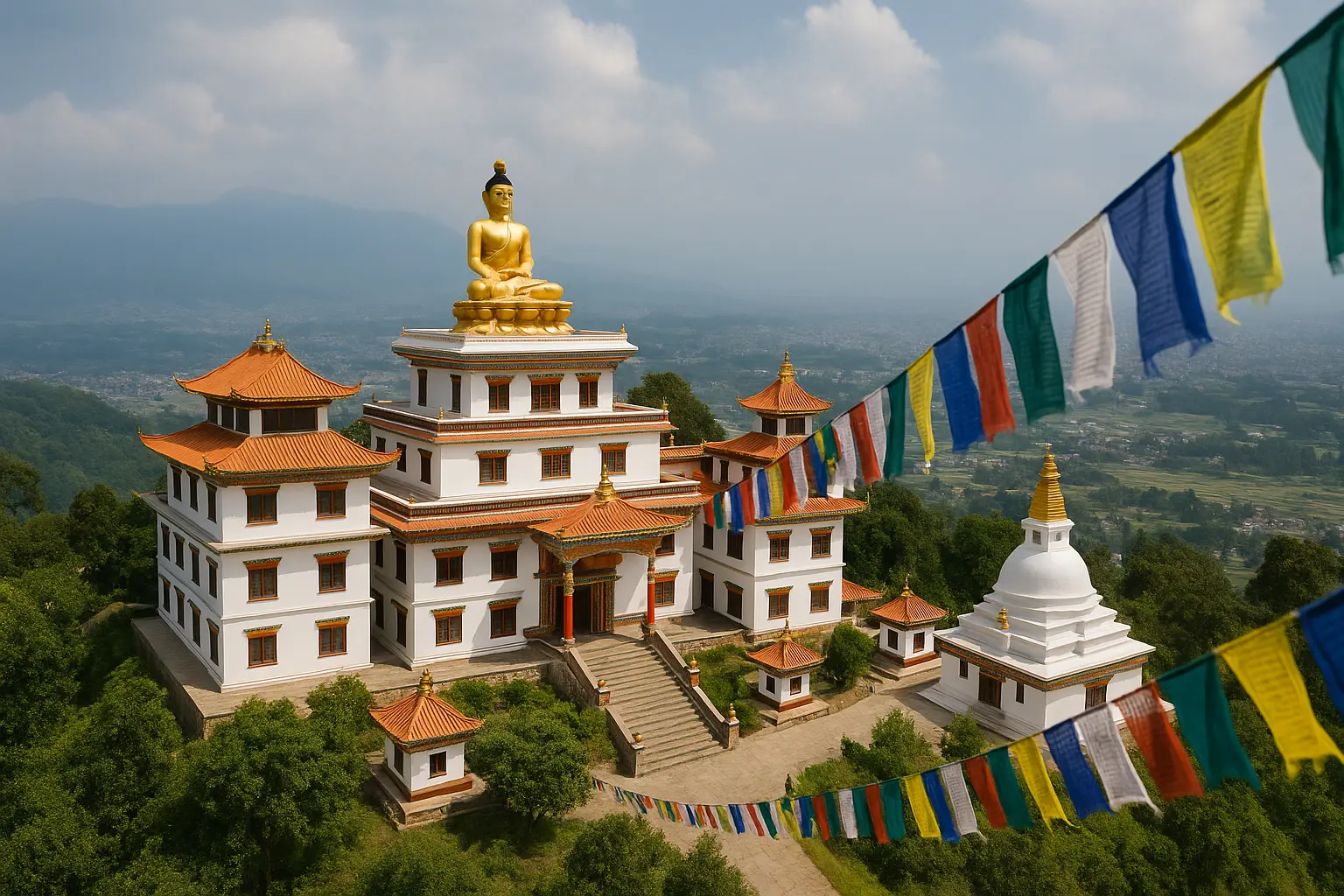
White Gumba, or Seto Gumba, is a Tibetan Buddhist monastery nestled on a peaceful ridge to the northwest of Kathmandu. The name comes from its stunning white walls, which glow in the sunlight and offer a striking contrast against the green hillside.

What sets it apart is not just its location, but its energy. It’s not just quiet, it’s reverent. You feel it the moment you arrive, as if even your thoughts begin to soften.

A Brief History of Seto Gumba

Seto Gumba is officially known as Druk Amitabha Mountain. It is part of the Drukpa lineage of Tibetan Buddhism, under the spiritual guidance of His Holiness the Gyalwang Drukpa.

The monastery was originally established in the early 2000s and has since grown into one of the most beautifully maintained monastic centers in Nepal. It’s not ancient in age, but its spirit is timeless.

The complex includes meditation halls, prayer rooms, gardens, and even eco-conscious living quarters for nuns and practitioners. While not as famous as Boudha or Swayambhu, it holds deep meaning for those who discover it.

Why Spiritual Travelers Are Drawn Here

White Gumba is not for the hurried tourist. It’s for the seeker.
Here’s why many travelers choose to visit:

• Peace and Space: Unlike the busier Buddhist sites, White Gumba feels open. You can walk, sit, breathe, and not feel watched.

• Scenic Overlook: From its height, you can see the entire Kathmandu Valley stretching beneath you. At sunset, the view turns golden.

• Presence of Monastic Life: You’ll often see nuns chanting, sweeping, or walking in silence. There are no staged rituals here, only real devotion.

• Art and Architecture: Murals, statues, and sacred motifs line the corridors. The colors are vivid, the symbolism rich.

It’s a place that meets you where you are, whether you need reflection, stillness, or simply a break from the noise of the world.

Getting There: How to Reach White Gumba

The monastery sits in the Nagarjun area, about 6–7 km northwest of Thamel or 4–5 km from Swayambhunath.

Here are your best options:

• By Taxi: Easiest and most direct. Ask for “Seto Gumba” or “White Monastery near Ramkot”. Cost is around NPR 800–1000 from Thamel.

• By Hike: If you’re up for a meditative walk, you can hike from Swayambhunath or Ichangu Narayan. It’s a gentle 1.5–2 hour trek through pine forests and village roads.

• By Public Transport: Take a microbus from Balaju to Ramkot, then walk 30–40 minutes uphill.

Tip: Bring water, a light jacket, and maybe some fruit for offering. There’s a small shop at the top, but it’s best to come prepared.

Best Times to Visit and Entry Info

Opening Days: White Gumba is usually open to the public on Saturdays and public holidays. Other days may be restricted or require permission.

Hours: 9 AM to 4 PM (best to go early for a quieter atmosphere and clearer views)

Entry Fee: There’s typically no fee, but donations are welcome. Dress modestly and speak softly.

Before visiting, it’s wise to confirm the open day with locals or your hotel staff. Schedules can change based on rituals or internal monastic events.

What You’ll Experience: Atmosphere, Views, and Rituals

The first thing you notice is the stillness.

Then come the views, which stretch as far as the eye can see, interrupted only by prayer flags or temple roofs. The buildings themselves are beautifully maintained, with crimson and gold trim, carved wooden eaves, and stone walkways that invite bare feet.

Inside the main gompa, you’ll see a towering statue of Amitabha Buddha, surrounded by butter lamps and murals of fierce and peaceful deities. Occasionally, you may hear the soft echo of a drum or bell from inside.

This is a place for:

• Silent meditation.
• Gentle walks around the stupa.
• Sitting in gardens beneath Bodhi trees.
• Watching the clouds shift above the city.

It’s less about sightseeing, more about soul seeing.

Combining a Visit with Boudha or Swayambhu

If you’re staying in Boudha, you can visit White Gumba as a half-day excursion. It pairs beautifully with a spiritual itinerary that includes:

• Boudhanath Stupa in the early morning.

• Lunch at a peaceful rooftop cafe.

• Taxi to Swayambhunath, then hike to White Gumba in the afternoon.

Many travelers prefer this over day trips that require long hours in traffic. It keeps you connected to the spiritual pulse of the valley without overwhelming your senses.

Meditation, Art, and Silence: The Gifts of the Gumba

Seto Gumba isn’t just a pretty place. It’s a space of real spiritual activity.

Many of the nuns here are engaged in long-term retreat or daily study. The murals reflect the teachings of Mahayana Buddhism. The entire architecture is a mandala, built to support inner stillness and clarity.

Some travelers come here and end up staying in nearby guesthouses, using the space for personal retreats. Others return week after week, using the climb as a form of walking meditation.

You don’t need to have a religious affiliation to benefit. Just come with respect and a willingness to slow down.

Final Thoughts

White Gumba is not the most famous monastery in Nepal. But for many who find it, it becomes the most remembered.

It’s the kind of place that stays with you. In a photo, in a memory, or maybe just in the way you exhale a little more gently after leaving.

If you’re looking for a quiet refuge above the city, a space to walk barefoot and feel sky above your head, White Gumba is waiting.
And if you’re staying nearby in Boudha, the journey is short. But the effect, you’ll find, is lasting.

If you’re staying in Boudha and seeking peaceful spiritual experiences nearby, White Gumba is a must-visit. And just 10 seconds from the stupa gate, Boudha Mandala Hotel offers stupa-view rooms and a quiet retreat for travelers like you.

How to Get from Tribhuvan Airport to Boudha

Key Takeaways
Boudhanath is just 4–5 kilometers from Kathmandu’s Tribhuvan International Airport, making it a perfect first destination. Travelers can choose from prepaid taxis (NPR 800–1200), ride apps like Pathao or InDrive (NPR 350–500), budget microbuses (NPR 20–30), or a pre-arranged hotel pickup. This guide explains all options clearly, with up-to-date fares, safety advice, and helpful cultural tips.

Introduction
The moment you step out of Tribhuvan International Airport, you’re hit by a mix of warm air, honking traffic, and the unfamiliar rhythm of Kathmandu. For many travelers, especially those coming for retreat, pilgrimage, or mindful exploration, Boudha is the perfect place to begin.
Unlike Thamel’s backpacker chaos, Boudha greets you with prayer wheels, monks in maroon robes, and the gentle presence of the great stupa, and it’s only about 20 minutes away from the airport.

But how do you get there easily, safely, and without overpaying? Let’s break down your options.

How Far Is Boudhanath Stupa from Tribhuvan Airport?

Boudhanath is just 4 to 5 kilometers northeast of Tribhuvan International Airport (TIA). In smooth traffic, it takes about 15–20 minutes by vehicle. During peak hours, like late afternoon or festivals, it may take up to 30 minutes.

The drive follows the Ring Road and turns off near Gaushala, leading into the peaceful Boudha neighborhood.

Option 1: Taking a Prepaid Taxi from the Airport
For many first-time travelers, the prepaid taxi counter inside the airport terminal is the most straightforward choice.
• Where to find it: Inside the arrivals area, just past customs
• Cost: NPR 800–1200 to Boudha, depending on your arrival time

Tips:
• Always confirm the destination and fare
• Carry small change if possible
• Don’t feel pressured by unofficial taxi drivers

Prepaid taxis are safe and official, and drivers generally know where Boudha is.

Option 2: Using Ride-Hailing Apps like Pathao or InDrive

If you have a Nepali SIM or access to Wi-Fi/data, ride apps are cheaper and increasingly reliable.

• Apps to use: Pathao (Nepali Uber alternative), InDrive (you bid your price)
• Estimated fare: NPR 350–400 to Boudha
• Wi-Fi: Tribhuvan Airport has limited free Wi-Fi, but local SIMs are cheap
• Tip: You may need to walk a few steps outside the airport gate to meet your driver

Digital nomads and younger travelers often prefer this method.

Option 3: Public Bus or Microbus (Budget Option)

For the adventurous or ultra-budget traveler, you can take a microbus or public Sajha Yatayat bus from the main road outside the airport gate.

• Cost: NPR 20–30
• Route: Get on any bus heading toward Gaushala or Chabahil. From there, walk or take a short local ride to Boudha
• Best for: Light packers, frequent travelers, or those seeking a local experience

Note: There are no direct buses from inside the airport. You’ll need to walk to the Ring Road.

Option 4: Hotel Pickup (Stress-Free Arrival)

If you’re staying at a spiritual retreat hotel like Boudha Mandala Hotel, you can request an airport pickup in advance.

Why choose it:
• Guaranteed safe driver
• No haggling or confusion
• Someone will be waiting for you with your name

Ideal for: First-time visitors, solo women travelers, or those arriving late at night

After a long flight, there’s peace in knowing exactly who’s picking you up.

Safety, Etiquette & Arrival Tips

• Cash vs Digital: Get NPR at airport ATMs or exchange booths. Some apps like eSewa and Khalti are widely used, but cash is best initially
• Politeness: A soft “Namaste” goes a long way
• Airport touts: Be polite but firm if approached by unofficial transport offers
• Dress modestly: Especially if heading to spiritual areas like Boudha.

Where to Stay Near the Stupa

Boudha is peaceful, safe, and deeply spiritual. Unlike the noisy tourist zones, here you’ll find monasteries, local bakeries, monks walking silently at dawn, and rooftop cafés.
Boudha Mandala Hotel is a favorite for spiritual travelers, digital nomads, and long-stay guests. With stupa-view rooms and a quiet café, it’s just 10 seconds from the stupa gate, and worlds away from the city’s noise.

Final Tips

Boudha is one of the few places where your journey begins the moment you arrive. Whether you take a cab, hop on a local bus, or glide through with a ride app, the goal is the same: to reach a place of peace, prayer, and presence.

Let the buzz of the airport fade as you walk slowly toward the giant white dome, listening to the low murmur of mantras in the air. Welcome to Boudha.