The History of Boudha: A Sacred Center of Tibetan Buddhism in Kathmandu

Key Takeaways
Boudhanath Stupa in Kathmandu is one of the holiest Buddhist sites in the world and the heart of Tibetan Buddhism in Nepal. Rooted in ancient legends and built during the Licchavi period, it has grown from a simple act of devotion to a sacred monument that holds relics, prayers, and generations of seekers.

After the 1959 Tibetan diaspora, Boudha became a refuge and spiritual center, now surrounded by dozens of monasteries. More than history, Boudha is a living shrine of resilience, faith, and inner peace.

Introduction
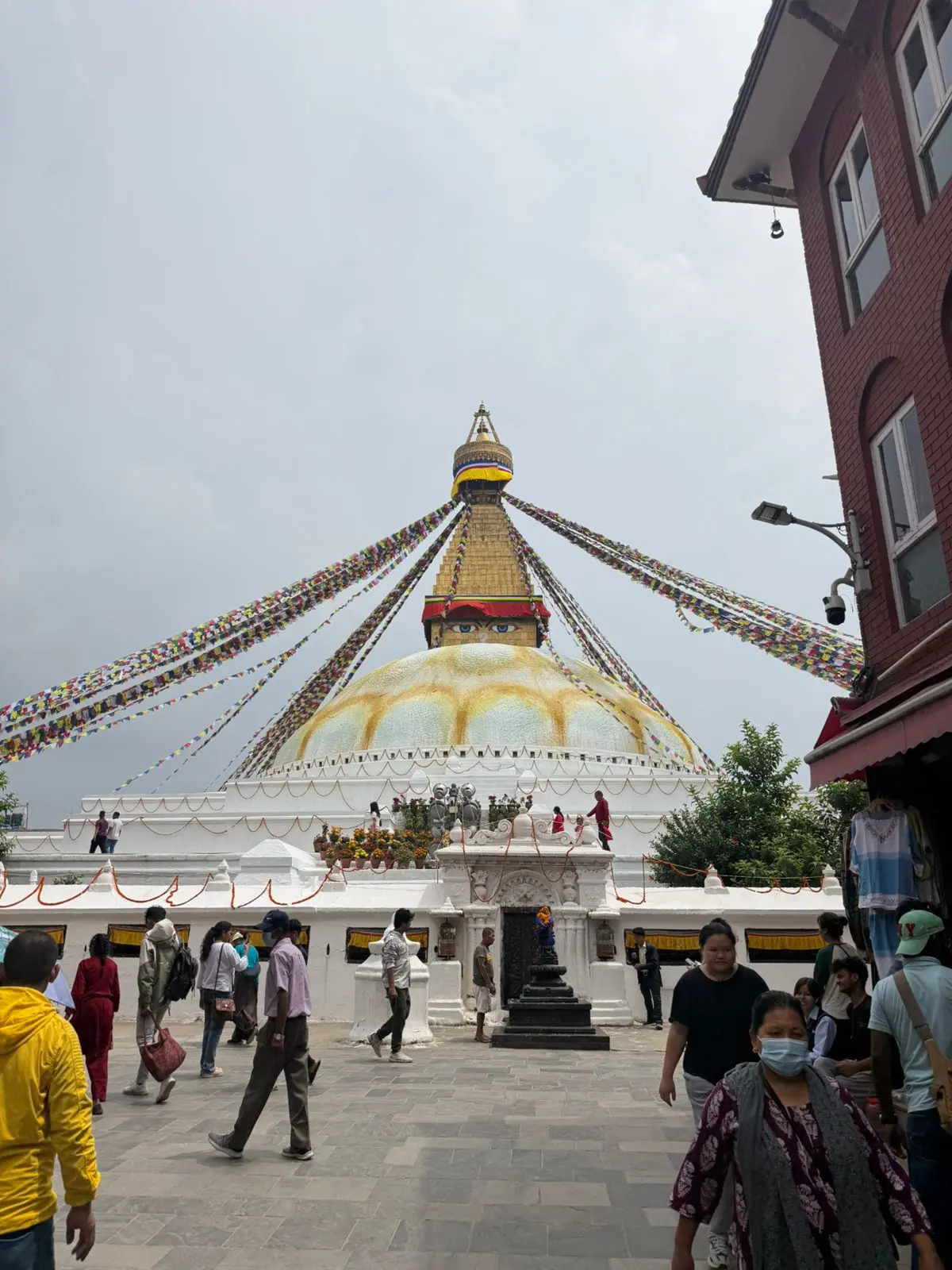
When you walk through the narrow lanes of Boudha and suddenly emerge into the vast circle of sky and stupa, something shifts. The pace of life slows. The air smells like juniper and melted butter. Prayer wheels spin in sync with ancient mantras. And at the center, like a spiritual compass, stands the towering white dome of Boudhanath Stupa.

This isn’t just a monument. It’s a witness to centuries. A sacred pulse in the middle of Kathmandu. Its story is woven with myth, migration, ritual, and quiet resilience. To know Boudha is to understand why the spiritual heartbeat of Tibetan Buddhism continues to echo from this place.

The Legend of a Poultry Keeper: The Mythical Origin

According to Buddhist legend, Boudhanath was built by a humble poultry-keeping woman and her four sons. Moved by faith, she petitioned the king for a small piece of land to build a shrine for the relics of Kassapa Buddha. The king granted her wish, and with love, devotion, and the help of her sons, she constructed what became one of the greatest stupas of the Buddhist world.

This legend continues to live in the local consciousness, a reminder that deep faith, even from someone seen as ordinary, can create something timeless and holy. The stupa is more than a structure; it’s a monument to the power of intention.

Historical Foundations: Licchavi Period and Early Buddhism

Beyond the myth, historical evidence places the construction of Boudhanath during the Licchavi era, around the 5th to 6th century CE. In ancient texts, the stupa was known as Khasti Chaitya , with “Khasti” meaning “dew.” During a long drought, locals are said to have cultivated the land with collected dew to support the construction.

This was a time when Nepal was a vital center of Buddhist learning and trade between India and Tibet. Boudhanath became a sacred stop on early pilgrimage routes. It was, and remains, a powerful representation of the dharma in stone.

A New Chapter: The Tibetan Refugee Era Post-1959

The year 1959 marked a profound transformation for Boudha. After the Chinese invasion of Tibet, thousands of Tibetan refugees crossed the Himalayas and settled in the Boudha area. The stupa, already sacred, became a new spiritual home for a displaced people.

Dozens of Tibetan Buddhist monasteries, including Shechen Monastery, Ka-Nying Shedrub Ling, and Thrangu Tashi Yangtse, were built around the stupa. Each lineage, from Nyingma to Gelug, found space here. The stupa became more than a historical site. It became a living monastery, a center for ritual, community, and the continuation of a threatened tradition.

Even today, Boudha is one of the only places outside Tibet where Tibetan Buddhism thrives so openly and fully.

Boudhanath as a UNESCO World Heritage Site

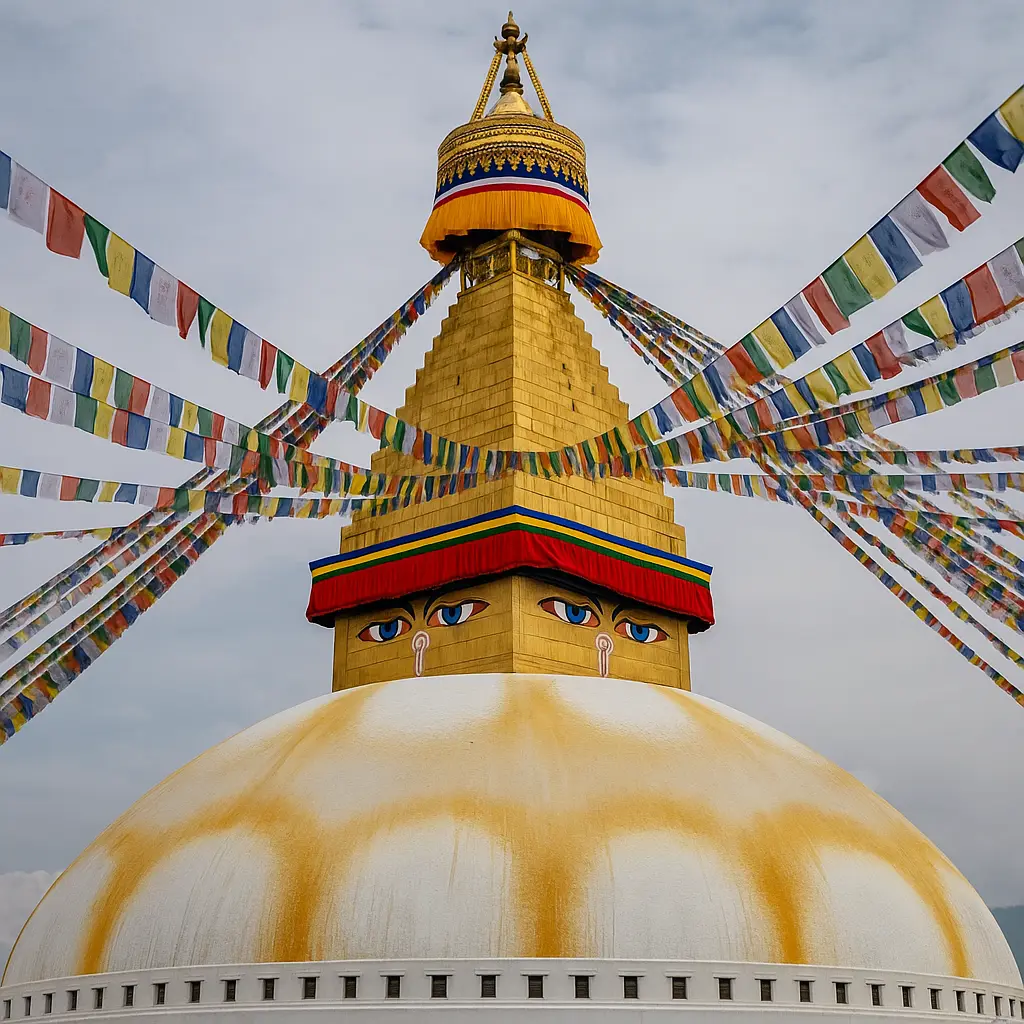
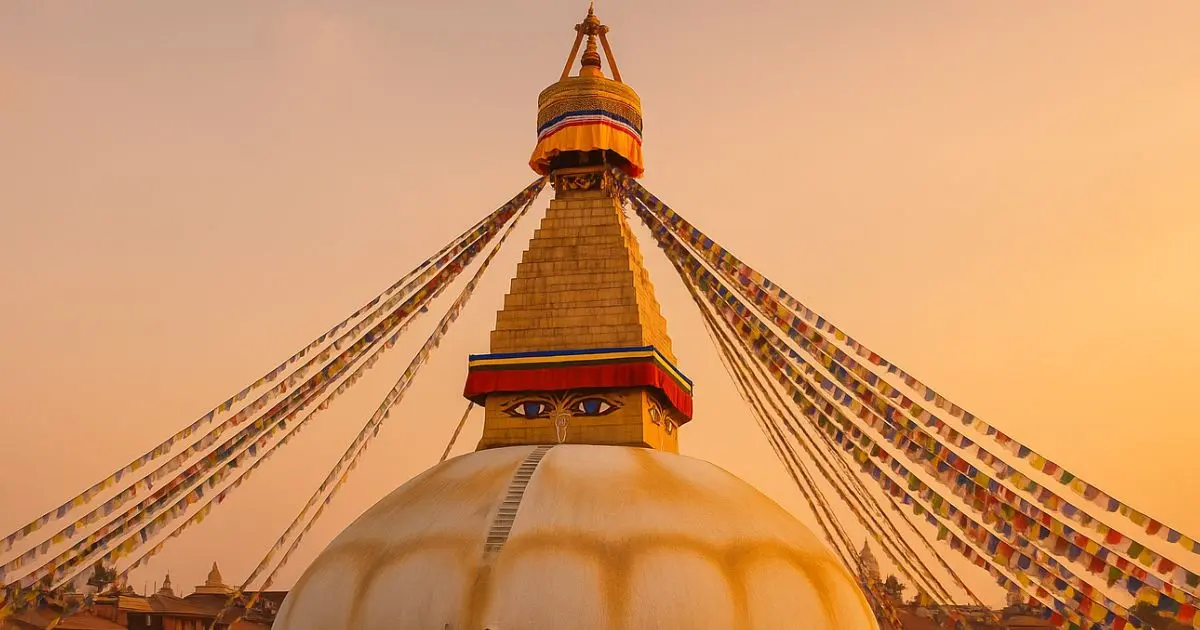
In 1979, UNESCO declared Boudhanath a World Heritage Site, not just for its architecture, but for its cultural and spiritual value. The stupa is one of the largest spherical stupas in the world. Its design follows a mandala pattern, representing the universe, with the dome symbolizing emptiness, and the 13 spires representing stages toward enlightenment.

After the 2015 earthquake, the stupa suffered significant damage. But the restoration that followed, funded by local monasteries and global Buddhist communities, became a symbol of collective healing and resilience.

Spiritual Importance in Tibetan Vajrayana Practice

Boudhanath isn’t just sacred because of history , it is sacred because of what happens there every single day.

– Circumambulation (kora): Devotees walk clockwise around the stupa while reciting mantras.

– Butter lamp offerings: Symbolic acts of light and wisdom

– Prayer flags: Sending compassion to all directions

– Prostrations: Practiced with full-body devotion, especially during dawn and dusk

It’s believed that walking the kora mindfully purifies lifetimes of karma. For Vajrayana practitioners, Boudha is a place where the veil between seen and unseen feels especially thin.

Festivals and Ritual Rhythms at the Stupa

Some of the most powerful experiences at Boudha come during major Tibetan and Buddhist festivals:

– Losar: Tibetan New Year marked with music, prayer, and color

– Buddha Jayanti: Celebrating the Buddha’s birth, enlightenment, and passing

– Lhabab Duchen: Honoring the Buddha’s return from heavenly realms

These aren’t tourist events. They are living rituals, participated in by monks, nuns, and families. Butter lamps line the base of the stupa. Chanting fills the air. It is devotion in motion.

A Living Pilgrimage Site: Why Boudha Still Matters

In a fast-moving world, Boudhanath remains a place where the sacred slows you down. For many Tibetans and Himalayan Buddhists, visiting Boudha at least once is a lifetime goal. For others, it becomes a daily rhythm , a morning kora, an evening lamp.
The stupa radiates peace not only because of its design, but because of the countless acts of devotion offered here for over 1500 years. It is a center of collective consciousness, a space for refuge, remembrance, and recommitment to the path.

Reflection: The Wisdom Hidden in the Stones

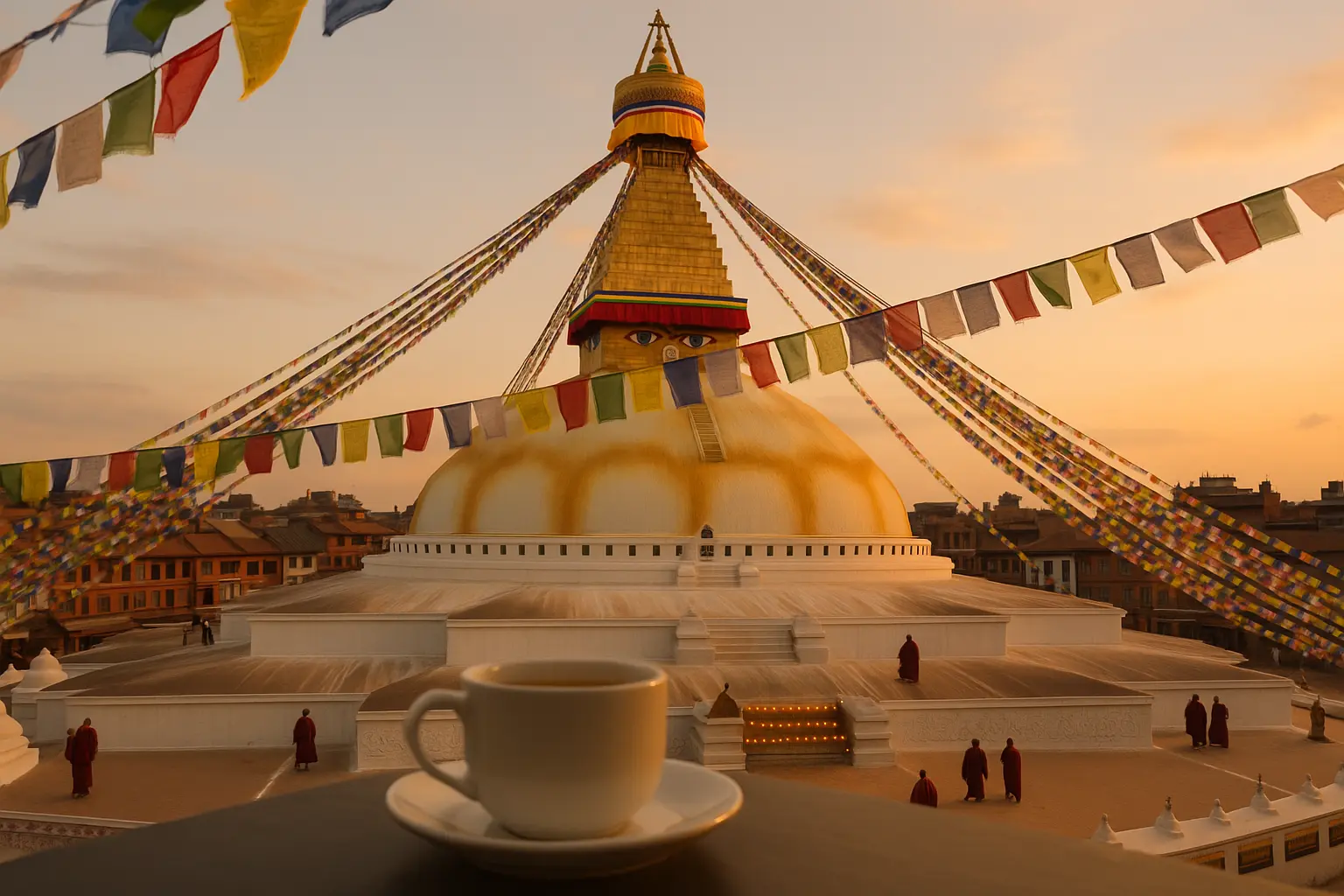
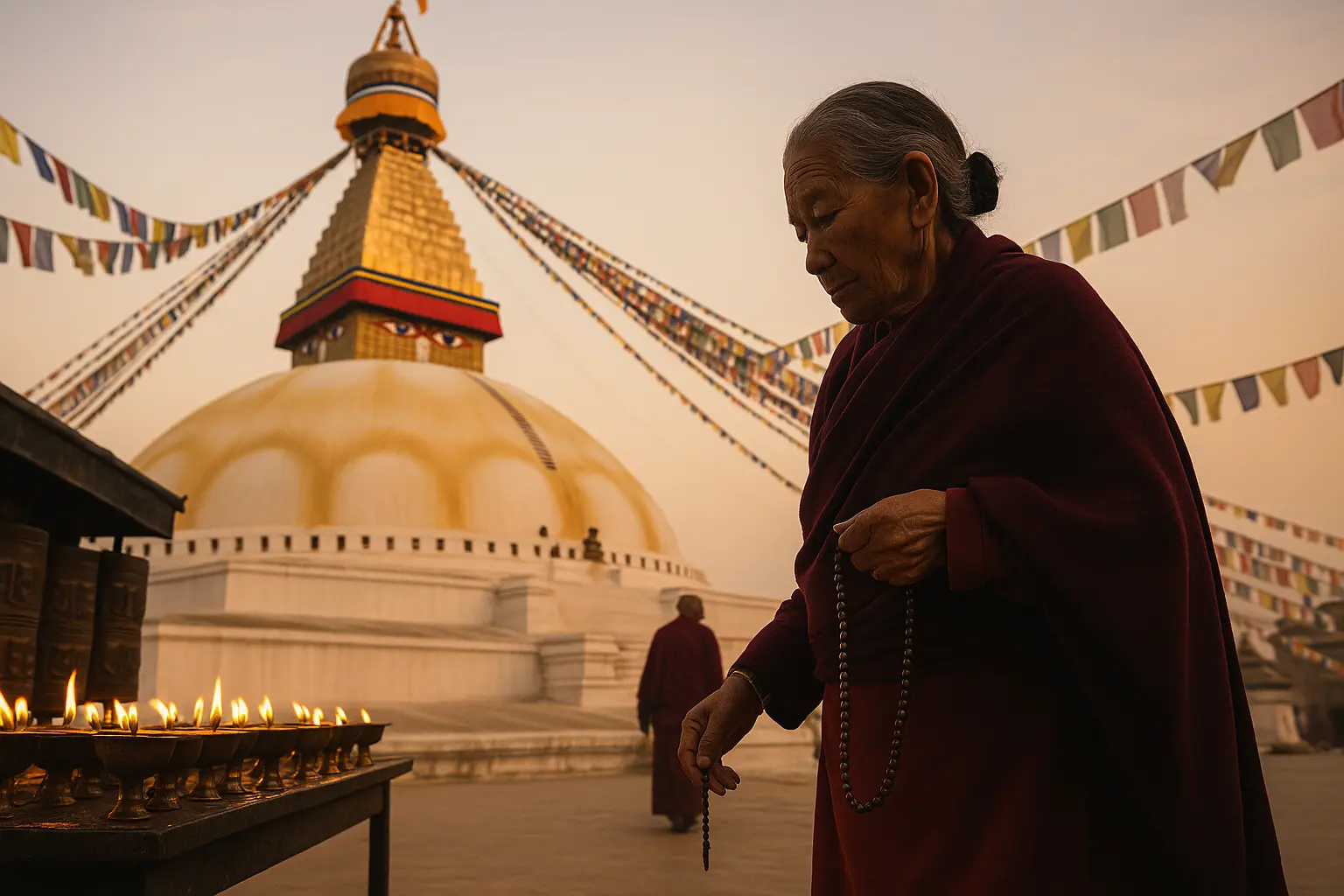
I remember sitting on a rooftop café one dusky evening, sipping salt-butter tea while watching hundreds of butter lamps flicker around the stupa. An old monk passed by below, spinning a prayer wheel slowly. Children chased pigeons. Somewhere, a bell rang.

In that moment, I felt what many before me have felt: Boudha is not just a place you visit. It is a place that visits something inside you.

Conclusion
The history of Boudha is not written in dry records; it is carried in footsteps, lit in butter lamps, and whispered through mantras. From the humble prayer of a poultry keeper to the resilience of an exiled community, Boudha teaches us that the sacred is not fixed in stone, but renewed with every offering.

To walk around Boudhanath is to walk with history, with spirit, and with generations of hope.

If you wish to stay immersed in the peaceful rhythm of this sacred place, Boudha Mandala Hotel offers spiritually aligned rooms just 10 seconds from the stupa, a perfect base for slow travel, retreat, and reflection.
How to Experience Authentic Local Culture in Boudha: A Mindful Traveler’s Guide

Key Takeaways

If you’re looking to experience the real Boudha, not just see it, immerse yourself in local life. Walk the morning kora alongside Tibetan grandmothers. Light a butter lamp with intention. Taste fresh thukpa made by families who’ve lived here for generations. True cultural immersion in Boudha begins when you slow down, listen deeply, and let the stupa’s rhythm shape your days.

Arriving in Boudha: First Impressions That Stay With You

The first time I stepped into Boudha, it wasn’t the scale of the stupa that struck me. It was the sound. The deep, low hum of mantras swirling in the air, carried by pilgrims circling clockwise in quiet devotion. Prayer wheels turned with well-worn palms. Butter lamps flickered along the stupa’s base. Something about it all, so ordinary, so sacred, made me want to stay.

Unlike Thamel’s tourist energy, Boudha feels slower, rooted, and protective. It’s not performative culture; it’s lived culture. To truly experience it, you have to meet Boudha on its terms.

1. Start with the Kora: The Spiritual Pulse of Boudha

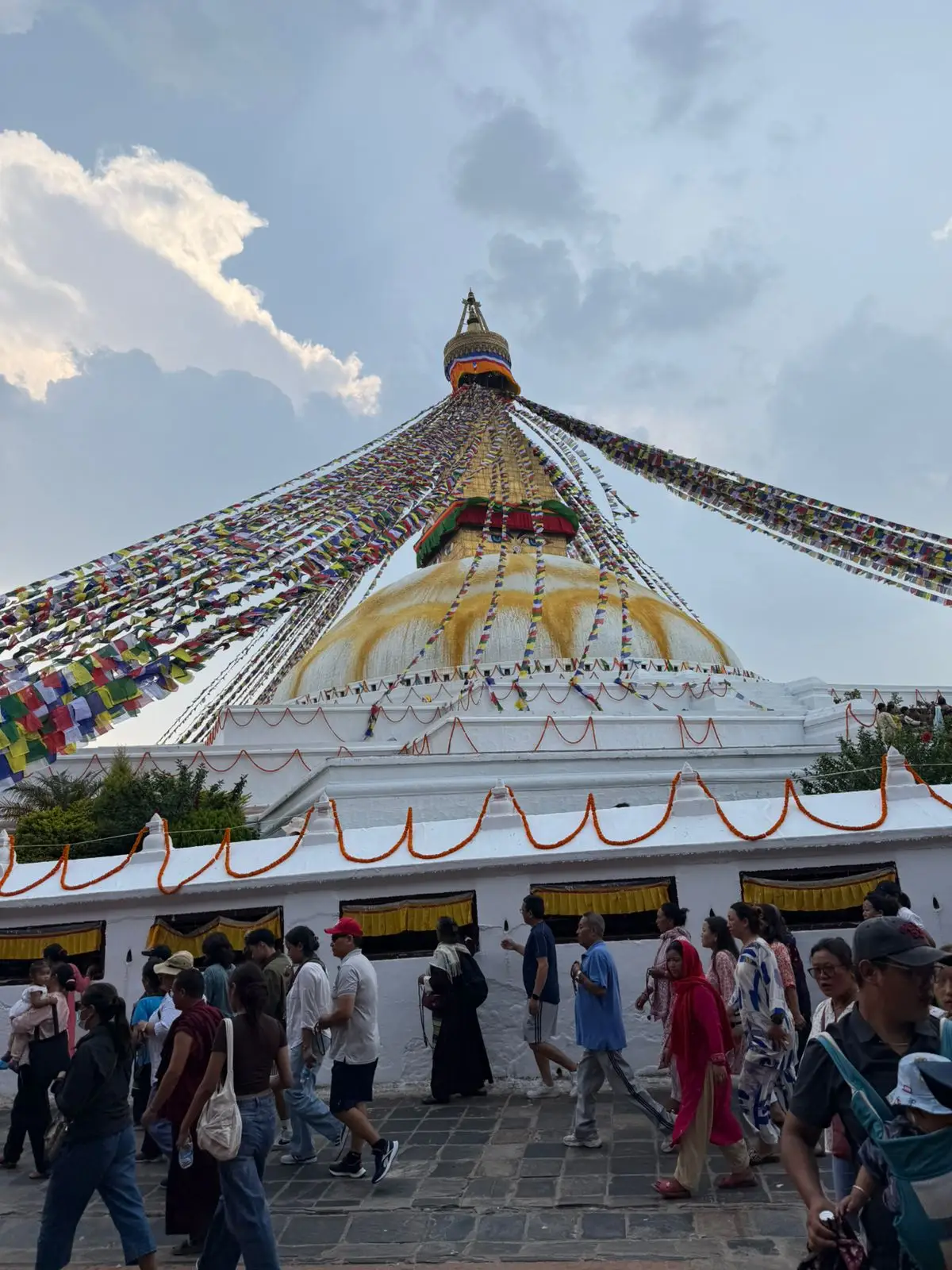
Every morning and evening, the local community walks the kora, the clockwise circuit around the stupa. Some carry prayer beads, others walk in silence. Some whisper mantras, others listen.

Join them, not as a spectator, but as a fellow traveler. Walk slowly. Notice the rhythm. Spin the prayer wheels if it feels right. Don’t rush. This isn’t a performance, it’s a spiritual practice, and being part of it, even quietly, is the first step toward understanding Boudha.

Tip: Arrive around 6:00 AM. The first light over the stupa, mixed with soft chanting and the smell of incense, is unforgettable.

2. Visit the Monasteries, But Stay for the Moments

Boudha is home to dozens of monasteries representing different schools of Tibetan Buddhism. You can visit the grand Shechen Monastery with its vivid murals or the tucked-away Ka-Nying Shedrub Ling Monastery near the east gate.

But the real moments? They’re often unplanned:

– Sitting quietly during a prayer session and feeling the chants resonate through your chest.

– Watching young monks laugh as they sweep the courtyard.

– Lighting a butter lamp in memory of someone you love.

You don’t need to understand the rituals. Just be present.

3. Eat Where the Locals Eat: A Taste of Tibetan-Nepali Life

Food is a powerful entry point into any culture, and in Boudha, it’s deeply comforting. Skip the Western cafés (though there are good ones) and try the spots hidden in alleyways where aunties serve steaming bowls of thukpa and hand-folded momos.

Some favorites:

– Tsangpo Restaurant – homestyle Tibetan dishes in a no-frills setting.

– La Casita de Boudhanath – rooftop views with a mix of Nepali and Spanish-inspired dishes.

– Stupa View Cafe – a peaceful spot for butter tea or lemon ginger honey.

Groceries are also a cultural experience here. Walk through Boudha’s Saturday organic market to find local honey, buckwheat, or handmade incense.

4. Learn the Language of Butter Lamps and Prayer Flags

Culture in Boudha isn’t always spoken. It’s symbolized through offerings, color, gesture, and ritual.

– Butter lamps: Lighting one is an act of remembrance, aspiration, or prayer. You can do this yourself for a small donation at most temples.

– Prayer flags: Each color and mantra has meaning. When strung across rooftops, they bless the winds and the beings they touch.

– Mala beads: Often seen in the hands of older Tibetans walking kora, they aren’t jewelry; they’re spiritual tools.

Ask before photographing these moments. Better yet, participate when appropriate.

5. Shop Mindfully: Support Local Artisans and Keep the Culture Alive

Boudha has its share of souvenir stalls, but look deeper. There are families who’ve painted thangkas for generations, young women learning metalwork from their grandfathers, and shopkeepers who can tell you the story behind each piece.

When you:

– Buy a hand-painted thangka

– Commission a custom mala

– Support an NGO-run handicraft store

…you’re not just shopping. You’re sustaining a living tradition.

Ask how things are made. Be curious. Choose handmade over mass-produced.

6. Participate in a Local Festival or Puja

If you’re in Boudha during Losar (Tibetan New Year) or Buddha Jayanti, don’t just watch, participate. You’ll witness:

– Giant sand mandalas being created, then ritually dissolved.

– Monks chanting for days in preparation.

– Community feasts where you may be warmly invited to sit and eat.

These festivals are vibrant, sacred, and grounded in devotion. Bring an open heart, dress modestly, and ask your host or hotel how to participate respectfully.

7. Stay in a Place That Reflects the Spirit of Boudha

Where you stay shapes how you experience a place. In Boudha, staying at a mindful hotel like Boudha Mandala Hotel means waking up to the stupa’s morning chants, sipping tea on a stupa-view balcony, and being cared for by staff who understand why you came.

The hotel is just 10 seconds from the stupa, close enough to feel its energy, but tucked away enough to offer peace. With multilingual staff, spiritual travelers in mind, and long-stay rooms for remote workers or sabbatical-goers, it supports your inner journey too.

It’s not just a hotel, it’s a gentle space to arrive and belong.

8. Let Boudha Change Your Rhythm

Perhaps the biggest shift when you truly engage with Boudha’s culture is not what you do, but how you do it.
You learn to:

– Walk slower

– Listen more

– Eat without multitasking

– Sit in silence without filling it

Local culture isn’t something to “check off.” It’s something that seeps in when you let go of rushing and lean into presence. Boudha teaches that without words.

Final Reflection

I came to Boudha thinking I’d stay a few days. I stayed three months. Not because there was a checklist of things to do, but because it felt like home in a way few places ever have.

To experience the authentic culture of Boudha, don’t try to consume it. Instead, be in a relationship with it. Walk the stupa path every morning. Make friends with a momo vendor. Sit quietly in a monastery courtyard. Let the prayer flags do their work above you.

If you’re looking for the best stupa view hotel in Boudha, Boudha Mandala offers more than a room; it offers a welcome into the spirit of this place.

Why People Circle the Boudhanath Stupa: Ritual, Meaning & the Power of Kora

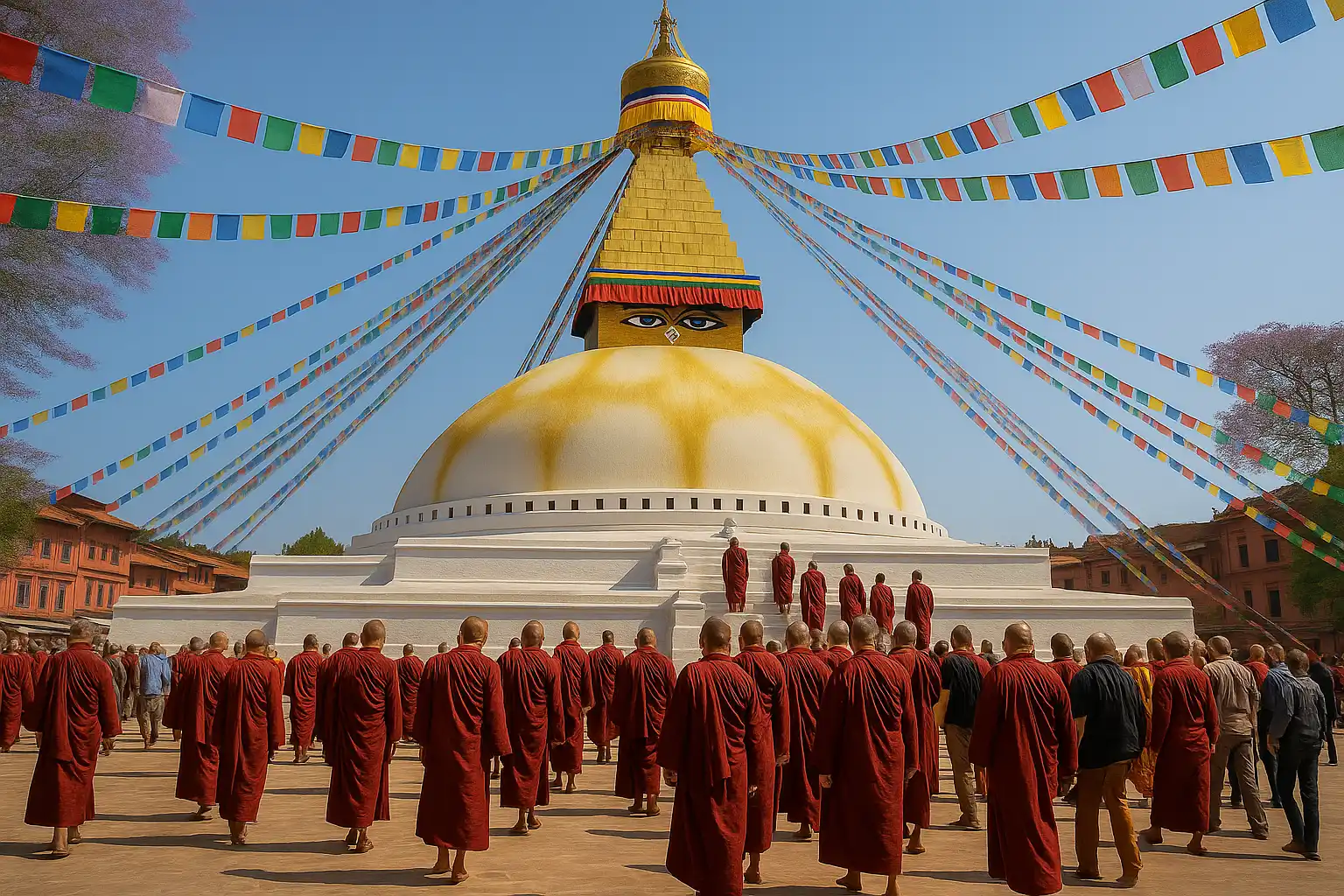
Every morning and evening, the path around Boudhanath Stupa in Kathmandu comes alive with the gentle shuffle of footsteps, the soft hum of mantras, and the rhythmic spin of prayer wheels.

Locals, monks, pilgrims, and spiritual travelers walk clockwise around the stupa in a centuries-old ritual known as Kora. But why do people circle the Boudhanath Stupa, and what does it mean and what is it’s significance?

Kora is a meditation, devotion, purification, and connection. Here’s why this practice holds a deep significance in the heart of Tibetan Buddhism and the lives of those who come here.

What Is Kora? Understanding the Ritual of Circumambulation

Kora (also spelled “korra”) is the act of walking clockwise around a Buddhist sacred site. In Tibetan Buddhism, it’s a powerful form of moving meditation that channels focus, reverence, and spiritual merit. At Boudhanath, kora happens daily around one of the most sacred stupas outside of Tibet.
Pilgrims often recite the mantra “Om Mani Padme Hum” as they walk, some spinning prayer wheels embedded into the stupa’s base. Each step is a prayer, each lap a small act of transformation.

Accumulating Merit & Purifying Karma

One of the main reasons people circle the Boudhanath Stupa is to accumulate merit and purify past karma. In Buddhism, merit is the positive spiritual energy generated through good deeds, and kora is seen as one of the most effective ways to cultivate it.

Boudhanath is lined with 147 prayer wheels. Each wheel contains scrolls inscribed with mantras, spinning one is believed to have the same effect as reciting the mantra aloud thousands of times. One full lap around the stupa is said to generate the equivalent of over 1.6 million prayers, amplifying one’s karmic benefit.
In a world full of distractions, this simple act becomes a path to inner clarity.

Meditation in Motion

Kora also serves as a deeply grounding meditation practice. Instead of sitting still, practitioners move mindfully around the stupa, synchronizing breath, chant and movement.

This ritual quiets mental chatter and cultivates present-moment awareness. You might hear murmured chants of “Om Mani Padme Hum,” feel the cool brass of the wheels, or watch monks robed in maroon robes walk slowly, step by sacred step.

Even for non -buddhists, the experience offers a rare stillness. Many travelers describe a sense of deep calm, like being inside a living prayer.

Respect and Devotion to the Buddha

Circling the stupa is devotional. In Buddhist tradition, walking clockwise around a sacred object is called pradakshina, a practice that symbolizes honoring the enlightened mind of the Buddha.

Boudhanath itself represents different aspects of Buddhist cosmology: the dome symbolizes the Buddha’s enlightened consciousness, the all-seeing eyes signify omnipresent compassion, and the spire connects heaven and earth.

By walking around it, pilgrims offer their respect, devotion, and aspirations for awakening.

Feeling the Energy of a Sacred Space

Boudhanath is a living and breathing sacred space. Designated a UNESCO World Heritage Site in 1979, the stupa is surrounded by more than 50 Tibetan monasteries.

Many describe feeling an unexplainable energy in the courtyard: a magnetic pull toward stillness, reflection, or even tears. It’s believed that this spot lies on a powerful energy line, making it especially potent for spiritual practice.

Community, Resilience & Cultural Continuity

Kora also connects people to each other and to their heritage. Locals gather here daily: elders with malas, young monks in training, Tibetans in traditional dress, and curious visitors.

After the 2015 earthquake, when the stupa was partially damaged, the community came together to restore it. And with that, the daily practice of kora continued uninterrupted, an act of resilience and unity in motion.

Joining the Kora: What to Know as a Visitor

You’re welcome to join.
Just walk slowly, clockwise, and respectfully. Refrain from loud conversations, dress modestly, and try spinning the prayer wheels with intention.
Best times to go?

Early morning (around 6–7 am) or at dusk, when butter lamps flicker and the stupa glows gold. Whether you walk one lap or many, the experience can be deeply grounding.

Final Thought

So why do people circle the Boudhanath Stupa?

Because it brings them closer to peace, to presence, to the Buddha, and to a spiritual community that transcends borders.
If you’re looking for a peaceful hotel just steps from the stupa, Boudha Mandala Hotel offers stupa-view rooms and long-stay options. You’ll be close enough to hear the morning chants and join the kora yourself.

Top 5 Instagram Spots Around Boudha Stupa

Key Takeaways:
Boudhanath is more than a place to take photos; it’s a sacred atmosphere where the spiritual meets the visual. This guide, written by someone who’s walked the kora many times, takes you to five of the most heartfelt and photogenic corners around Boudha, from early morning rituals to golden hour rooftops designed for mindful travelers who want their images to reflect reverence.

1. Introduction

Every time I circle the stupa, camera slung across my shoulder, I’m reminded you don’t capture Boudha, you receive it. There’s something in the air here: the scent of incense, the flutter of prayer flags, the rhythm of quiet footsteps. This isn’t just a place to pose, it’s a place to pause. A place where your photo is just a whisper of something much deeper.

This guide isn’t about trending spots, it’s about the places that moved me, and might move you too.

2. Rooftop Cafes at Golden Hour

There’s a certain hush that falls over Boudha in the late afternoon. The stupa glows gold, the prayer flags cast soft shadows, and from rooftops like Garden Kitchen or Stupa View Cafe, you feel like you’re inside a living thangka painting.

You don’t need a professional camera. Just sit with a warm cup of tea, and wait for the light to touch the dome. That’s when the photo comes to you.

Tip: Best around 4:30–6 PM. Use a foreground element like your tea, a candle, or a silhouette for a frame that tells a story.

3. Morning Kora with the Devout

There’s something about Boudha in the morning that feels ancient. The air is cool. The chants echo softly. Monks, elders, and travelers like you and me walk the path in silence.

That’s when I like to walk with my camera low, almost forgotten in my hand. Because here, it’s not about snapping, it’s about sensing. The golden spire catching first light, the gentle hands spinning a prayer wheel, these are the photos that feel alive.
Tip: Go between 5:30–7:00 AM. Walk slowly, don’t rush. Let the frame come together as it happens.

4. Butter Lamps Behind the Stupa

You’ll find it if you linger. In the evenings, behind the stupa or near Tamang Gompa, someone always lights the lamps. Hundreds of small flames flickering in the breeze, prayers rising with the smoke.

I once spent an hour just watching one woman light them one by one. I didn’t even lift my camera until the last row. That’s when I realized the photo wasn’t about the fire; it was about her stillness.

Tip: Arrive just after sunset. Keep your settings low-light. No flash lets the lamps light your subject.

5. Prayer Flag Alleys That Catch the Sky

Tucked between courtyards and rooftops, there are little-known alleys where the flags stretch from home to home, dancing in the wind.

I discovered one after a local monk smiled and waved me down a quiet lane. The flags above me, the stupa peeking through, and children playing below it were the kind of beauty you don’t find unless you wander.

Tip: Try near Shechen Monastery or Ka-Nying alleyways. Aim your camera up, follow the lines of the flags, and capture the movement.

If You’re Serious About Catching the Moment…

Stay close. You can’t predict when the light, the chants, or the monks will align in just the right way. Boudha Mandala Hotel is just 10 seconds from the stupa.

Final Thought

You might leave Boudha with a hundred photos. But I hope you leave with something else too: a quieter way of seeing.

Not every shot will be perfect. Some will be blurry, some too dark. But if even one of them carries the stillness, the devotion, the sky full of flags, then you’ve done more than take a picture.
You’ve listened.

“The stupa doesn’t pose for your camera, it waits for your presence”.

10 Interesting Facts About Buddhism That Most People Don’t Know

Key Takeaways

• Buddhism is over 2,500 years old and originated in Nepal, not India.

• It is a nontheistic spiritual tradition, meaning it does not worship a creator god.

• The Buddha was a real historical figure, not a mythical being.

• Core teachings like the Four Noble Truths and Ethe Eightfold Path are practical life philosophies, not dogma.

• Buddhism spread peacefully across Asia via pilgrimage routes and cultural exchange, not conquest.

• There are multiple schools of Buddhism, including Theravāda, Mahāyāna, and Vajrayāna.

• Meditation in Buddhism is not for relaxation, it’s a tool for awakening and insight.

• The idea of reincarnation in Buddhism is more nuanced than often understood.

• Buddhist art and architecture, like stupas and mandalas, are rich with symbolic meaning.

• Today, over 500 million people practice Buddhism globally, blending tradition with modern life.

Buddhism is one of the most widely practiced spiritual paths in the world,but it’s also one of the most misunderstood. You may associate it with monks in saffron robes, chanting mantras, or quiet meditation halls filled with incense. But beyond those images lies a vast, rich, and deeply human philosophy that has shaped cultures, ethics, and ways of being for more than two millennia.

Here are ten lesser-known but fascinating facts about Buddhism that reveal its depth, diversity, and enduring relevance.

1. The Buddha Was Born in Nepal, Not India

Many people assume that Buddhism began in India. While it’s true that the Buddha attained enlightenment in Bodh Gaya (present-day India), Siddhartha Gautama,the historical Buddha,was born in Lumbini, in what is now southern Nepal, around 563 BCE.

Today, Lumbini is a UNESCO World Heritage Site and an important pilgrimage destination, attracting visitors from all over the world.

2. Buddhism Has No Central God

Unlike many major religions, Buddhism is non-theistic. It doesn’t worship a supreme creator. Instead, it teaches that all beings have the potential for enlightenment (bodhi) within themselves.

This philosophical framework places responsibility for liberation squarely on one’s own actions, which is why karma, mindfulness, and ethical living are so central in Buddhist thought.

3. The Teachings Are Designed to Be Tested, Not Believed Blindly

The Buddha often said, “Don’t believe anything just because I said it. Test it for yourself.” This approach to wisdom is rare among ancient teachings.

In fact, many Buddhist traditions encourage practitioners to question, investigate, and directly experience truth through meditation, study, and ethical living. This aligns with modern values of critical thinking and inner inquiry.

4. There Are Many Forms of Buddhism,And They’re All Valid

Buddhism isn’t a monolith. Over centuries, it evolved into several distinct lineages, each emphasizing different aspects of the Dharma (Buddha’s teachings):

• Theravāda Buddhism: Common in Sri Lanka and Southeast Asia; focuses on early scriptures and monastic practice.

• Mahāyāna Buddhism: Found in China, Korea, Japan; introduces Bodhisattvas and expansive teachings.

• Vajrayāna Buddhism: Practiced in Tibet, Bhutan, and Mongolia; uses mantras, visualizations, and tantric rituals.

Despite differences, all schools maintain the foundational principles of the Four Noble Truths and Eightfold Path.

5. Meditation Is Just One Part of the Path

While often associated with meditation, Buddhism sees it as one aspect of a larger path. In the Eightfold Path, meditation (samādhi) is only one of eight limbs.

Ethical conduct (sīla) and wisdom (paññā) are just as vital. This holistic path encourages the cultivation of right speech, right livelihood, and right understanding,not just inner calm.

6. Nirvana Is Not a Place,It’s a State of Liberation

Popular culture sometimes portrays nirvana as a Buddhist “heaven.” In truth, nirvana (nibbāna) means “to extinguish” the fires of craving, hatred, and delusion.

It’s a state of complete freedom, where one no longer clings to ego, desire, or identity. Attaining it is considered the ultimate goal of Buddhist practice, but the path toward it is what gives daily life meaning.

7. Buddhism Spread Through Peace, Not Force

Unlike many religions that expanded through conquest, Buddhism spread across Asia through cultural exchange, trade routes, and missionary monks.

King Ashoka of India (3rd century BCE) played a crucial role by supporting Buddhist missions to Sri Lanka, Nepal, and beyond. Later, the Silk Road helped carry Buddhist texts, art, and monastic traditions into Central and East Asia.

8. Rebirth in Buddhism Is Not About the Soul

One of the most misunderstood ideas in Buddhist philosophy is rebirth. Unlike the Hindu concept of an eternal soul (ātman), Buddhism teaches anattā,the doctrine of “no-self.”

This means that what continues after death is a stream of consciousness conditioned by karma, not a fixed soul. It’s a subtle but profound view, emphasizing cause and effect rather than eternal identity.

9. Buddhist Art Is Rich with Symbolism

Buddhist visual culture,especially thangka paintings, mandalas, stupas, and mudras,is not merely decorative. These forms are symbolic maps of the mind and reminders of key teachings.

• A stupa represents the enlightened mind

• A mandala maps the universe of awakening

• Mudras (hand gestures) express specific energies like compassion or fearlessness

For spiritual travelers, these symbols offer visual doorways into Buddhist wisdom.

10. Buddhism Is Still Evolving and Thriving

Buddhism is not a museum relic. It’s a living tradition practiced by over 500 million people globally, from Himalayan monks to urban meditation teachers in New York or Tokyo.

In the modern age, Buddhism has found fresh expression through:
Secular mindfulness movements

• Socially engaged Buddhism

• Digital sanghas and online retreats

• Cross-cultural dialogue between East and West

Despite its ancient roots, the Dharma continues to adapt, offering refuge and clarity in a complex world.

Final Reflection

Buddhism is often seen as serene and quiet,but beneath its calm surface lies a fierce compassion, a precise psychological map, and a deeply human invitation: to know yourself, free yourself, and live with wisdom.

If you’re visiting sacred sites like Boudhanath or Lumbini, or simply sitting quietly with your own thoughts, remember, the Buddha didn’t want followers. He wanted people to awaken.

List of Artists Who Found Inspiration in Boudha (From Abroad and Nepal)

Introduction

Some places speak louder than words. They speak in colors, shadows, rituals, and rhythms. Boudhanath Stupa in Kathmandu is such a place, quiet yet compelling, vibrant yet meditative. Every dawn, artists quietly unfold sketchbooks, photographers focus lenses, and poets sharpen pencils, drawn here by something intangible yet powerful.

Boudha’s gentle morning chants, vibrant prayer flags, and ever-turning prayer wheels have inspired countless creative souls. Below, you’ll meet a diverse collection of Nepali and international artists whose work has been profoundly touched by Boudha’s sacred presence.

International Artists Inspired by Boudha

Richard Gere: Actor and Photographer

Best known for Hollywood films, Richard Gere’s deeper life is entwined with Tibetan Buddhism. A frequent visitor to Kathmandu, Gere’s photography often quietly explores daily life and spiritual devotion around Boudha. For him, the stupa represents spiritual clarity, a space to rediscover stillness.

Matthieu Ricard: Photographer and Buddhist Monk

French-born Matthieu Ricard, known globally as “the happiest man alive,” finds endless inspiration around Boudha. His photos, intimate portrayals of monastic life, pilgrims at prayer, and everyday acts of devotion, are stunning windows into the quiet beauty that thrives here.

Keanu Reeves: Capturing the Spirit in Film

During the filming of “Little Buddha,” Reeves visited Boudha multiple times, quietly absorbing the atmosphere. Though not primarily an artist, his respectful engagement with the local community brought global attention to the stupa’s tranquil presence.

Prominent Nepali Artists Drawn to Boudha

Lok Chitrakar: Master of Paubha Painting

Lok Chitrakar, an esteemed Nepali paubha painter, has long been inspired by the stupa’s spiritual symbolism. His artworks embody traditional Newari spiritual painting, blending precision with spiritual devotion. Chitrakar believes Boudha has a special energy that feeds his creativity and spirituality alike.

Uday Charan Shrestha: Capturing Inner Stillness

Shrestha, one of Nepal’s most respected contemporary painters, regularly visits Boudha to paint and reflect. His canvas often captures scenes of devotion, monks walking the kora, the play of light and shadow on prayer wheels, bringing Boudha’s spiritual aura to life through vibrant colors and textures.

Ragini Upadhyay Grela: Spiritual Symbolism

Known for her symbolic, thought-provoking work, Ragini Upadhyay Grela draws profound inspiration from the quiet yet powerful presence around Boudha. Her paintings often weave spiritual symbolism with modern interpretations, reflecting Boudha’s blend of ancient tradition and contemporary life.

Photographers Who Captured Boudha’s Essence

Kevin Bubriski: Witness of Devotion

Internationally renowned photographer Kevin Bubriski documented Nepal’s spiritual life for decades. His black-and-white photography of Boudhanath captures subtle details, a child lighting a butter lamp, elderly hands spinning a prayer wheel, offering viewers a reflective glimpse into daily rituals around the stupa.

Mani Lama: A Local Eye on Spiritual Life

Nepali photographer Mani Lama beautifully portrays everyday devotion around Boudha. His photographs offer an insider’s intimate perspective, showing moments of tenderness and authenticity that only someone deeply connected to the place could capture.

Writers and Poets Who Found Their Voice in Boudha

Manjushree Thapa: Narratives Rooted in Spirituality

Nepali author Manjushree Thapa has often described Kathmandu, particularly Boudha, as an endless source of inspiration. In her works, the stupa’s rituals and quiet spaces often appear as metaphors for deeper explorations of identity, spirituality, and belonging.

Pico Iyer: Finding Quiet in Chaos

World-famous travel writer Pico Iyer, known for exploring places of spiritual refuge, has frequently cited Boudha as a place of unique tranquility amidst Kathmandu’s bustling chaos. His writings vividly portray the stupa as a serene oasis, perfect for reflection and rejuvenation.

Why Boudha Continues to Inspire

What draws these diverse creators to Boudha is more than aesthetics; it’s an atmosphere of gentle spiritual resonance, a quiet power that nurtures creativity. Here, daily rituals blend seamlessly with creative rhythms. Art and spirituality merge naturally, without effort or pretension.

When you come to Boudha, you step into this gentle, inspiring field. Perhaps it’s the continuous motion of prayer wheels, the way light dances on colorful flags, or the deep silence that inspires such creativity. Whatever it is, artists from around the globe continue to find something profoundly meaningful here.

Staying Inspired Near Boudha Stupa

To truly tap into this creative energy, nothing beats staying near Boudhanath itself. Boudha Mandala Hotel, just seconds from the stupa, offers stupa-view rooms, a peaceful rooftop café, and quiet spaces perfect for reflection and creativity.

Whether you’re an artist, writer, photographer, or simply a traveler seeking a mindful retreat, staying here lets you experience the same daily rhythms that inspired so many before you. When you rise with the sun, walk the morning kora, and quietly watch life unfold around the stupa, you’ll understand exactly why artists keep coming back.

Final Thought: Your Own Creative Journey Begins Here

Boudha invites everyone, artist or not, to pause, breathe, and feel deeply. It’s a place where inspiration isn’t something you chase; it’s something you discover quietly within yourself.

Maybe your own journey will begin with a simple stroll, a sketchbook in hand, or a blank page waiting to be filled. Maybe you’ll find your own quiet voice in the whispering flags or spinning wheels.

After all, Boudha doesn’t just inspire art, it inspires life.

Planning your creative journey to Boudha?

Stay steps away from inspiration at Boudha Mandala Hotel, where comfort, calm, and creativity align.

Lotus in Buddhism: Meaning, Symbolism, and the Flower of Awakening

Key Takeaways

• The lotus flower in Buddhism symbolizes spiritual awakening, purity, and transformation

• It rises unstained from muddy waters, representing the path from ignorance to enlightenment

• Lotus imagery appears in statues, mantras, rituals, and meditation postures across Buddhist traditions

• The mantra Om Mani Padme Hum includes the lotus as a symbol of wisdom and compassion

• Different lotus colors carry different meanings, white for purity, pink for the historical Buddha and blue for wisdom

• Practicing with lotus symbolism can inspire resilience, calm, and presence in everyday life

Why the Lotus Matters in Buddhism

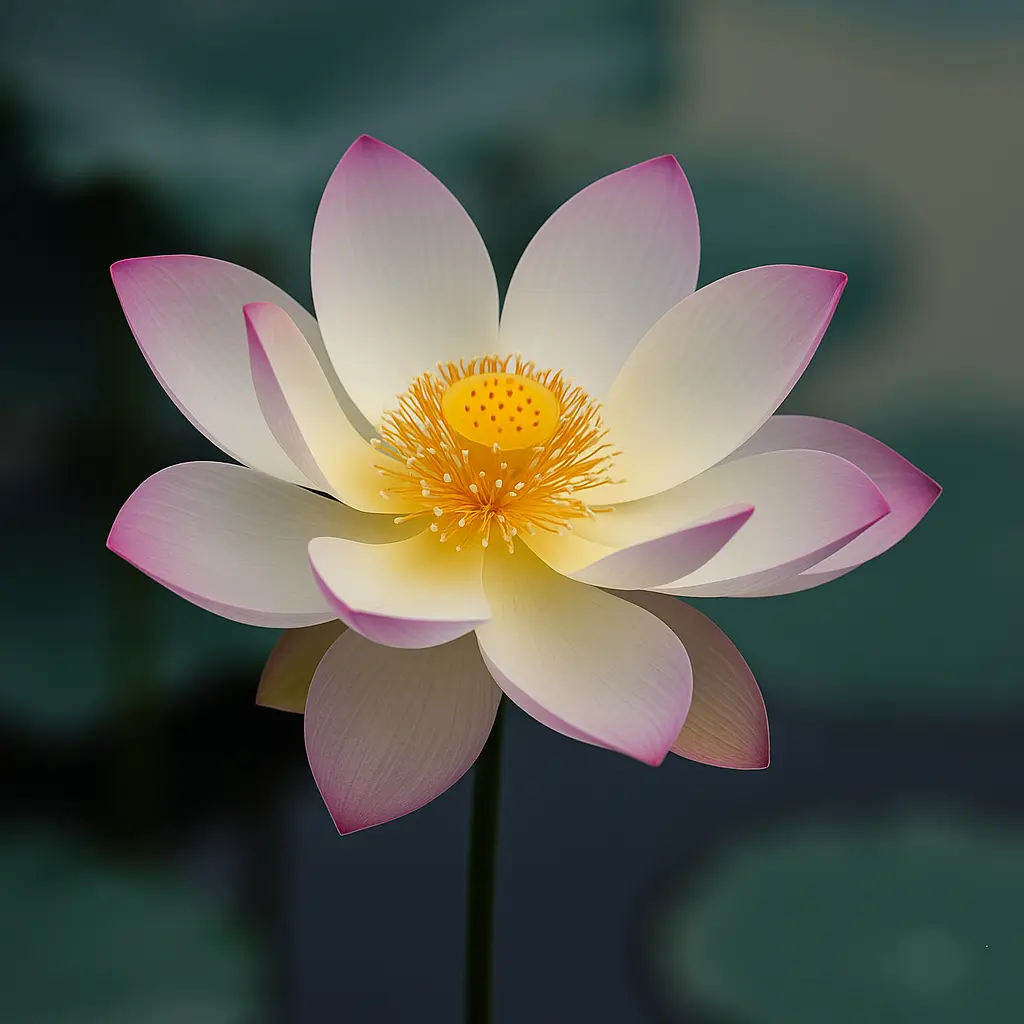
The lotus is more than a flower. It is a teaching, a metaphor, and a quiet revolution against despair. In the natural world, the lotus grows in still, muddy waters. Its roots are buried deep in the murk, yet the blossom rises untouched, blooming in the sunlight.

In Buddhist thought, this image is not a poetic accident. It reflects the very nature of the human path. We all begin in confusion, attachment, and suffering. But through practice, we rise,not by fleeing the mud, but by transforming through it.

That is why, in nearly every Buddhist tradition, the lotus is revered. It is the flower of awakening.

The Lotus as a Symbol of Spiritual Awakening

The Buddha is often shown seated upon a lotus. It is not meant to elevate him from the world, but to show his mastery of it. He did not escape suffering. He understood it deeply, and from that mud, clarity bloomed.

In Vajrayāna Buddhism, the lotus appears everywhere. The great teacher Padmasambhava, credited with bringing Buddhism to Tibet, is literally named “the Lotus-Born”. His life story begins not in a palace, but as a miraculous birth from a lotus on a lake.

When we see the lotus under the Buddha or cradling deities in thangka paintings, it reminds us: this, too, is possible for us. Enlightenment is not for the perfect. It is for the human.

Lotus Imagery in Meditation, Mantras, and Ritual

The lotus position (padmāsana) used in meditation is not just ergonomic. It reflects stability rooted in the earth, with openness at the crown. Like the lotus itself, the posture balances groundedness with spaciousness.

In chanting, the lotus also blooms. The most famous mantra in Tibetan Buddhism, Om Mani Padme Hum, translates loosely to “the jewel in the lotus.” The jewel is compassion, the lotus is wisdom. The phrase itself carries the complete intention of the Mahāyāna path.

As Tricycle explains in their deep dive on Om Mani Padme Hum, each syllable purifies aspects of our mind, helping us to unfold like the flower it praises.

Even lighting incense or placing a single lotus on an altar becomes a gesture of rising from the ordinary toward the sacred.

What the Different Lotus Colors Mean

In Buddhist iconography, color carries energy. The lotus is no exception. Each color reflects a specific quality of mind or spiritual stage.

• White lotus: Symbolizes spiritual purity, emptiness, and the awakened mind

• Pink lotus: Represents the historical Buddha and the supreme state of enlightenment

• Red lotus: Signifies heart-centered qualities like love, compassion, and emotional devotion

• Blue lotus: Associated with wisdom, intelligence, and insight into the true nature of reality

• Purple lotus: Rare and mystical, linked to esoteric teachings and hidden knowledge

These aren’t rigid categories. Sometimes, a flower simply speaks to you, regardless of color. The point is presence, not perfection.

For a trustworthy overview of these meanings, Learn Religions provides a detailed breakdown of lotus symbolism across Buddhist schools.

Lotus in Buddhist Art and Architecture

Walk into any monastery around Boudhanath, and you’ll see the lotus everywhere.

It forms the base of Buddha statues, suggesting that enlightenment rests on resilience. It’s woven into the painted mandalas of shrine rooms, used in offering bowls, carved into thrones, and shaped into butter lamp holders.

In temples across Nepal, India, Bhutan, Thailand, and beyond, the lotus is not a decoration. It is Dharma in visual form. It reminds practitioners that spiritual practice must grow from where we actually are mud, confusion, busy minds and from that, the sacred can rise.

Even the Boudhanath Stupa itself, viewed from above, forms a giant mandala that includes petal-like architecture around the base. The city moves around it, yet it remains still. Like a lotus, it holds space.

How You Can Practice With the Lotus in Daily Life

You don’t need to sit in a monastery to live with lotus energy. You can carry it into your morning routine, your workplace and your silence before sleep.

You might:

• Begin your day with one breath, imagining yourself rising like a lotus from any emotional mud

• Offer a flower or visualization of a lotus on your home altar

• Reflect on the mantra Om Mani Padme Hum, letting it unfold your heart

• Simply pause when life feels thick, and ask, “How would the lotus respond?”

The lotus does not rush. It grows slowly, rooted yet reaching. In a world that demands speed, its wisdom is radical.

Final Thoughts

The lotus is beautiful not in spite of the mud, but because of it. Its story is ours.

In Buddhist hospitality, we often welcome people who arrive not with answers, but with quiet questions. Sometimes they’ve left everything behind, hoping for peace. Sometimes they’re just curious.

And again and again, we return to the lotus. It doesn’t demand that you become pure first. It says, “Begin here. In this mess. This confusion. This longing.”

That is the invitation of Buddhism. That is the teaching of the flower.

Begin Your Journey Where the Lotus Blooms

If you are visiting Kathmandu to explore the spiritual path or simply seeking space to reconnect, staying near the sacred stupas and monasteries can open the way inward.

At Boudha Mandala Hotel, we offer more than rooms. We offer a quiet space to breathe, reflect, and bloom, just seconds from one of the world’s most revered stupas.

If you’re searching for the best hotel in Boudha, we hold a space where the flower of stillness has room to open.

Packing Guide for Your Spiritual Trip to Boudhanath

Key Takeaways

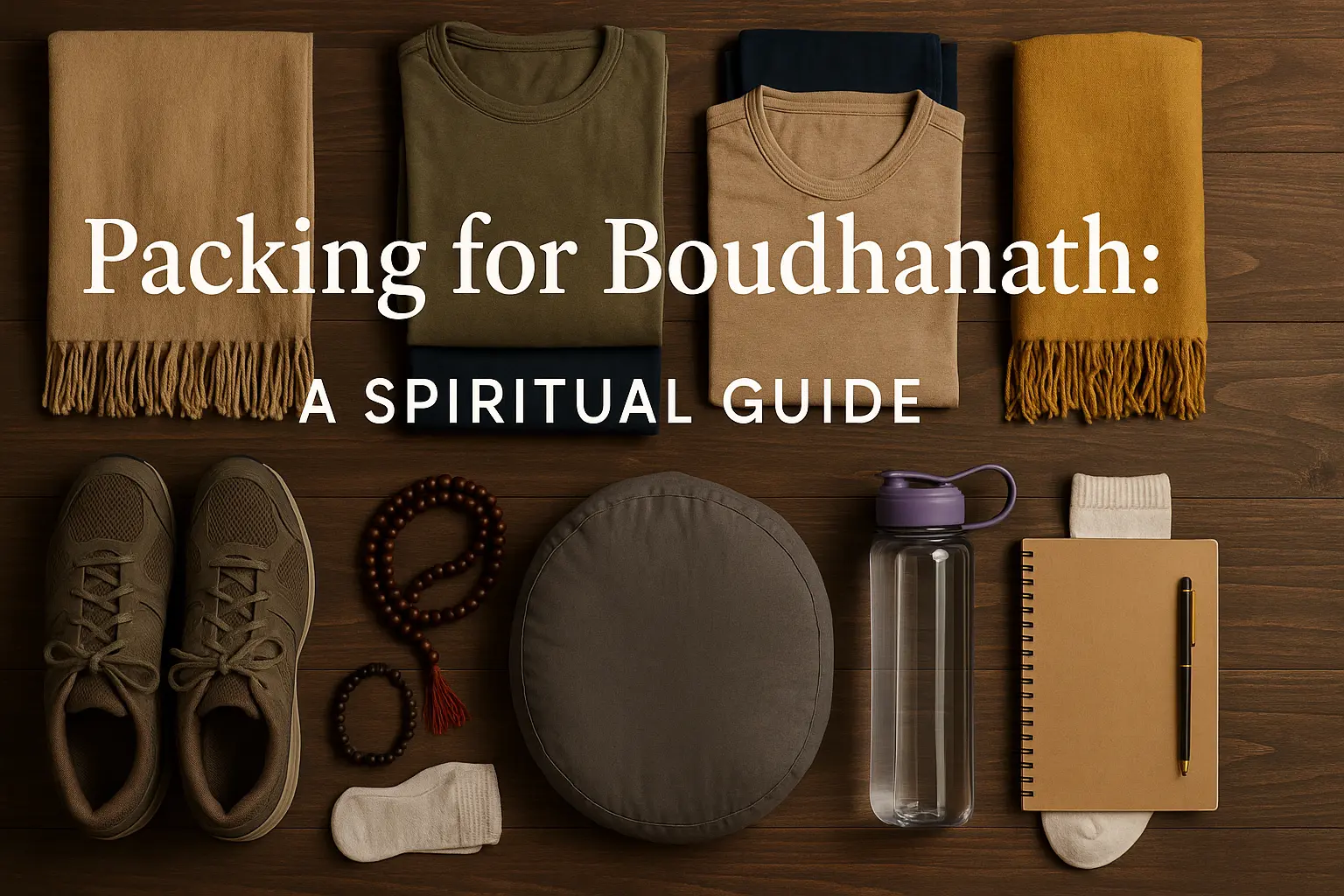
Packing for a spiritual trip to Boudhanath requires thoughtfulness and simplicity. Bring modest clothing that covers shoulders and knees, comfortable walking shoes for circumambulating the stupa, a scarf or shawl for temples, a journal, a meditation cushion (if needed), and weather-appropriate layers. Avoid flashy items, revealing clothes, or disruptive electronics. This guide helps you pack with intention and respect, so your journey begins in alignment with the spirit of Boudha.

Introduction

Packing for Boudhanath isn’t just about fitting things into a suitcase, it’s about preparing your mind and heart. Whether you’re coming for a retreat, a silent meditation, or simply to walk the sacred kora path around the stupa, how you pack will shape the tone of your experience.

Boudha is not just a destination, it’s a spiritual presence. Every scarf, every step, every offering reflects a deeper intention. So let’s begin where every pilgrimage begins, with awareness.

Clothing Essentials
In Boudhanath, the atmosphere is gentle, sacred, and quiet. Your clothing should reflect that.

• Light, breathable long pants or long skirts
• Shirts with sleeves (avoid sleeveless tops)
• Scarf or shawl for temple visits or cool mornings
• Layers for chilly mornings and warm days
• Avoid shorts, tight clothes, and bold graphics

Simple, clean clothing shows respect for the space, and invites calm into your own body.

Footwear for Sacred Ground

You’ll be walking a lot in Boudha, especially along the smooth stone paths of the kora.

• Comfortable walking shoes or sandals
• Easy-to-remove footwear (you’ll be taking them off often)
• Lightweight socks if entering temples barefoot

Heavy boots aren’t needed unless you plan to trek beyond the valley. Simplicity is key.

Meditation and Retreat Items

Many people come to Boudha for inner stillness. If that’s your path, pack with your practice in mind.

• Travel meditation cushion or seat pad
• Shawl or blanket for early morning sessions
• Mala beads (if you use them)
• Journal and pen for reflections
• Eye mask or earplugs if staying near the stupa (early mornings can be lively)

You don’t need much, just the tools that support your stillness.

Health, Safety and Self-Care

Boudha is generally very safe, but having a few basics can make your stay smoother.

• Refillable water bottle
• Natural sunscreen and lip balm
• Basic first aid (plasters, antiseptic, rehydration salts)
• Insect repellent (especially in warmer months)
• Any prescription medications

You’ll find pharmacies and clinics nearby, but it’s wise to bring essentials.

Digital and Practical Gear (Minimal and Mindful)

Your tech should support your peace, not distract from it.

• Unlocked smartphone with Nepali SIM (optional but helpful)
• Portable charger or power bank
• Flashlight or small headlamp (power outages still happen)
• Universal adapter for charging devices

Leave heavy gadgets behind. If possible, even try a digital detox for a day or two.

Items to Avoid

Boudhanath is a sacred space, and many temples are active places of practice.

• Loud tech or Bluetooth speakers
• Flashy jewelry or luxury accessories
• Revealing or tight clothing
• Drones or professional photography gear (unless approved)

When in doubt, ask yourself, “Does this support my spiritual intention?”

Seasonal Considerations

Kathmandu’s weather varies; here’s how to adapt:

Winter (Dec–Feb):
• Thermal base layers
• Wool socks and warm shawl
• Down jacket or puffer

Monsoon (Jun–Aug):
• Rain jacket or poncho
• Waterproof sandals or slip-on shoes
• Travel umbrella

Spring and Fall (Mar–May, Sept–Nov):
• Light sweaters
• Layerable tops
• Cotton pants and scarf

Packing with Purpose: A Spiritual Mindset

Imagine walking the kora at dawn, your backpack light, your steps steady. You’ve brought only what you need, and nothing more. In that quiet simplicity, something shifts.

Packing this way isn’t just practical, it’s spiritual. You make space, inside and out.

Quote:
“Take only what you need. Leave space for the sacred.”

Final Tips

Staying close to the stupa can simplify everything. Boudha Mandala Hotel offers:

• Safe space to store bags or excess luggage
• Peaceful rooms just 10 seconds from the kora path
• Helpful local staff who understand your spiritual needs

Forgot something? You’ll find local shops selling shawls, malas, incense, and travel essentials all around the circle.

When you pack lightly and mindfully, your whole journey feels more sacred.

Best Time to Visit Boudhanath: Festival & Season Guide

If you want to experience the deeper rhythms of life in Kathmandu, visiting Boudhanath during one of its sacred festivals can feel magical. But when exactly should you go?

The answer depends on what kind of experience you’re seeking: quiet reflection, cultural immersion, or high-energy celebration.

This guide is for spiritual travelers, solo seekers, and remote workers who want more than sightseeing. Here’s everything you need to know about the best time to visit Boudhanath for festivals.

Understanding the Spiritual Calendar at Boudhanath

Boudhanath follows both the Tibetan and Nepali lunar calendars, so festival dates shift each year. However, the seasonal rhythm remains predictable. If you time your visit right, you can witness age-old rituals, masked dances, and butter-lamp ceremonies that offer a window into Tibetan Buddhist life.

The most spiritually significant festivals include:

– Losar (Tibetan New Year) – Feb or March

– Buddha Jayanti (Vesak) – Full moon in May

– Mohani/Dashain – Late September to mid-October

– Tihar (Festival of Lights) – October to early November

– Monthly Full Moon Days (Purnima) – All year round

Spring (March to May): Clear Skies & Sacred Celebrations

Spring is arguably the best time to visit Boudhanath. The sky is clear and the stupa pulses with life during Losar and Buddha Jayanti. Flowers bloom along the kora path, monks chant in the courtyards, and the whole area feels vibrantly awake. Days are comfortably warm (15–25 °C), perfect for long, peaceful walks or outdoor rituals.
Ideal for: Spiritual immersion, mild weather, high-energy rituals.

Festivals: Losar (Feb–Mar), Buddha Jayanti (May).

Travel tip: Book accommodation early, monks and pilgrims arrive in waves.

Autumn (Mid-September to November)

Autumn is another best time to visit Boudhanath, especially for culture lovers. Mohani (Newar Dashain) and Tihar light up the stupa with sword dances, butter lamps, and ancestral rituals. The skies are crystal clear, and the weather is cool but pleasant (10–22 °C). It’s the perfect time to blend spiritual depth with rich local culture.

– Ideal for: Cultural travelers, photography, festive atmosphere

– Festivals: Mohani (Sept–Oct), Tihar (Oct–Nov)

– Travel tip: Arrive a few days before Tihar to experience the buildup of lights and energy.

Winter (December to February)

Winter at Boudhanath is quiet and soul-stirring. Cold mornings (as low as 5 °C) give way to bright, clear afternoons ideal for reflection and ritual. Losar often falls at the end of February, bringing the Tibetan New Year energy to life. This is a peaceful time for long-stay travelers or anyone seeking retreat-like calm.

– Ideal for: Meditators, long-stay guests, spiritual solitude.

– Festivals: Full Moon Pujas, Losar (late Feb).

– Travel tip: Book a room with a stupa view to watch morning kora from your balcony.

Monthly Full Moon Days

Every full moon, Boudhanath becomes quietly electric. Devotees circle the stupa at dusk, butter lamps line the base, and the energy shifts. Many locals say this is the most auspicious day to offer prayers.

– Ideal for: Solo travelers, spiritual seekers, retreat guests.
– Vibe: Intimate, candlelit, communal.
– Travel tip: Time your stay to include at least one full moon evening.

Planning Tips for a Festival-Season Visit

– Stay close to the stupa: Being within walking distance makes all the difference. Boudha Mandala Hotel is just 10 seconds from the stupa, offering peaceful rooms and long-stay options.

– Respect the space: Dress modestly, walk clockwise, and avoid photography during ceremonies.

– Book early: Especially in spring and autumn, accommodation near the stupa fills quickly.

– Carry cash: Offerings and local shops around the stupa often prefer it.

The best time to visit Boudhanath depends on the experience you’re seeking. Each season at Boudhanath offers its own rhythm. Whenever you come, come with intention and if you need a peaceful retreat just steps from the stupa, Boudha Mandala Hotel offers long-stay comfort and stupa view rooms with a deeply warm welcome.

Place of Worship of Buddhism: Where Stillness Meets Sacred Space

Key Takeaways

• Buddhist places of worship include monasteries (viharas, gompas), stupas, pagodas, temples (wats), and home altars

• These spaces are less about formal ritual, more about creating environments for meditation, generosity, and ethical living

• Different Buddhist traditions shape their spaces uniquely, but all encourage mindfulness and reflection

• Symbolic architecture, statues, offerings, and silence define these sacred spaces

• Famous worship sites like Boudhanath Stupa, Mahabodhi Temple, and Shwedagon Pagoda continue to serve as spiritual hubs

• Buddhist hospitality welcomes everyone with stillness, presence, and quiet belonging

What Is the Main Place of Worship in Buddhism?

In Buddhism, worship is not confined to a single building or weekly gathering. It is woven into daily life and inner experience. That said, most traditions gather around physical spaces where teachings can be heard, meditation practiced, and offerings made.

The most common public spaces for this are monasteries, often called viharas in Theravāda Buddhism or gompas in Tibetan Vajrayāna tradition. These monasteries typically include a shrine room with Buddha images, accommodation for monastics, and areas for group practice.

Rather than emphasizing worship as a formal act, Buddhism treats these spaces as environments that support the cultivation of the mind and heart. Even in the most ornate temples, the invitation is inward.

Core Types of Buddhist Worship Spaces

Monasteries (Viharas and Gompas)

Monasteries are the spiritual centers of Buddhist communities. They serve as homes for monks and nuns, but also as places for laypeople to study, receive teachings, and engage in devotional practices.

In Kathmandu, especially around Boudha, monasteries like Shechen and Ka-Nying are open to visitors for early morning chants or evening pujas. Inside, you’ll find altars adorned with statues, butter lamps, and ritual implements, yet the most powerful presence is often the silence between the rituals.

Stupas and Pagodas

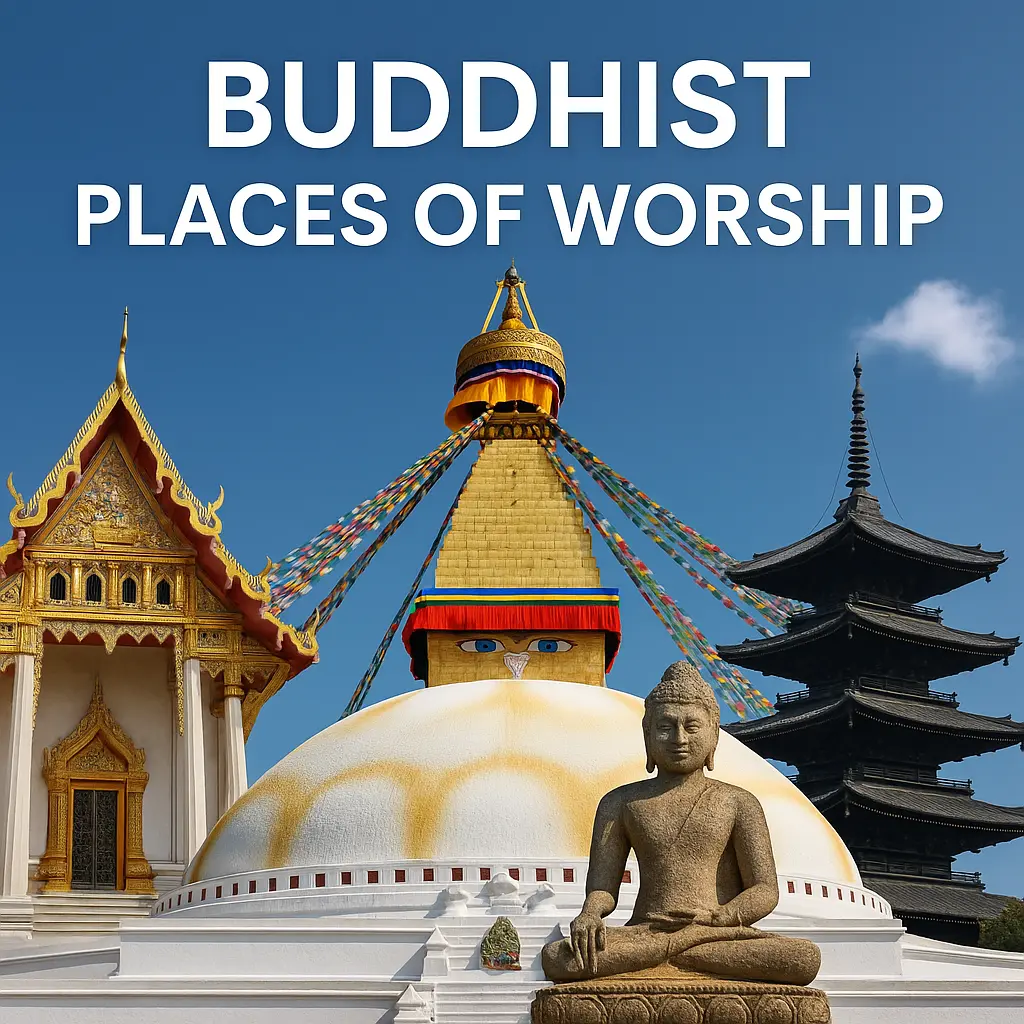
The stupa is one of the oldest and most iconic forms of Buddhist sacred architecture. Shaped like a dome and often housing relics or scriptures, stupas represent the awakened mind of the Buddha. Devotees walk around them clockwise in meditative reflection, sometimes chanting quietly.

In East Asian countries, the stupa evolved into the pagoda, a vertical, multi-tiered structure that still carries the essence of Buddhist symbolism while adapting to local aesthetics.

Boudhanath Stupa in Nepal, Shwedagon Pagoda in Myanmar, and Sanchi Stupa in India are among the most spiritually vibrant of these forms.

Temples and Wats

In Southeast Asia, Buddhist temples are often part of a wat, which is more than a single building. It’s a complex that may include a teaching hall, meditation spaces, stupas, and monks’ quarters. These temples often feature bright murals, golden statues, and expansive courtyards filled with light and incense.

Temples in Thailand, Laos, and Cambodia reflect a deep blend of cultural artistry and spiritual symbolism, but always center around the teachings of the Buddha and the practice of mindfulness.

Home Altars and Personal Shrines

Many lay Buddhists maintain simple altars at home. These spaces are deeply personal, often including a Buddha image, a candle or butter lamp, fresh flowers, and offerings of water or fruit.

The practice of maintaining a home altar reflects the belief that awakening is not confined to a monastery, and that every home can become a sacred space.

What Do All Buddhist Worship Spaces Have in Common?

Despite differences in region and tradition, certain features consistently appear across Buddhist worship spaces.

Most include a central Buddha image, representing not just reverence for a teacher, but a reminder of one’s own capacity for awakening. Offerings like incense, flowers, and lamps are not given to a deity, but to cultivate generosity and reflect impermanence.

Silence is highly respected. Even in bustling temples, the atmosphere often invites stillness. Architecture is built with symmetry and symbolism in mind, guiding the eye and heart inward.

Prayer wheels and flags, especially in Tibetan regions, offer tactile and visual tools for mindfulness, while the act of circumambulating a stupa helps cultivate meditative attention and purification.

Symbolism Behind the Architecture

Buddhist places of worship are filled with symbolism meant to support contemplation. A stupa, for instance, is a visual map of the path to enlightenment. Its base represents morality, the dome symbolizes concentration, and the spire points toward wisdom and final liberation.

The design of monasteries, temples, and altars is not arbitrary. It is meant to embody the Dharma, not as doctrine, but as environment.
Colors, directions, shapes, and images are arranged with intention, inviting the practitioner to absorb not just the aesthetic, but the meaning behind it.

Important Buddhist Worship Sites Around the World

Some places have carried the spirit of Buddhist worship for centuries and remain active pilgrimage sites today.

Mahabodhi Temple in Bodh Gaya, India, is where the Buddha attained enlightenment beneath the Bodhi tree. It remains one of the holiest sites for Buddhists globally.

Boudhanath Stupa, in Kathmandu, is surrounded by monasteries and sacred shops, and acts as a daily gathering place for monks, nuns, and spiritual travelers who circle it at sunrise and sunset.
Other examples include the Shwedagon Pagoda in Yangon, Wat Pho in Bangkok, and the cave temples of Ajanta and Ellora in India. Each of these is not just a destination, but a vessel of accumulated devotion.

What It’s Like to Visit a Buddhist Worship Space

Entering a Buddhist temple, monastery, or stupa for the first time often evokes an unexpected emotional response. It’s not about being impressed, but about being invited to slow down.

Shoes are removed not just as a courtesy, but as a way to leave worldly dust behind. The smell of incense, the flicker of butter lamps, the gentle murmur of chanting, all of it pulls you into a rhythm deeper than thought.

Travelers who stay near sacred spaces like Boudhanath often speak of waking with a sense of peace they hadn’t expected. Many begin offering small gestures, flowers on an altar, a few minutes of meditation each morning, not because they are told to, but because the space itself calls for it.

At Boudha Mandala Hotel, which sits just seconds from the stupa, guests often describe the experience not as staying in a hotel, but as living inside a pilgrimage.

Final Thoughts

The place of worship in Buddhism is not defined by walls or rituals. It is defined by what happens to your heart when you enter.

Whether you’re lighting incense at a village stupa, sitting silently in a Himalayan gompa, or bowing before a modest home altar, you are practicing the Dharma.

And the real sacred space, the Buddha always said, is within.

A Place to Stay, Close to the Sacred

If you’re seeking a space where silence feels alive and devotion is part of the air, Boudha Mandala Hotel offers:

• Rooms with direct views of the Boudhanath Stupa

• Long-stay apartments for retreats or spiritual sabbaticals

• A quiet café with nourishing meals and peaceful corners

• Easy access to monasteries, teachings, and rituals

More than just a place to sleep, it is a space where the sacred becomes part of your everyday rhythm.